What Search and Rescue Teams Need to Know About NIMS Radio Net Operations
You rely on NIMS radio nets when cell service fails and GPS is unreliable, using strict protocols to keep communication brief, clear, and coordinated. Check in with your call sign, location, and status-nothing extra. Hold transmissions only when essential, let net control manage traffic, and give priority to emergencies. Use plain language, avoid clutter, and stick to tactical call signs. Cross-agency responses stay aligned through unified command and standardized procedures. There’s more to how this plays out under pressure.
Notable Insights
- Maintain strict radio discipline by transmitting only when necessary and following net control instructions precisely.
- Use standardized call signs and check-in format to ensure clear identification and avoid confusion on the net.
- Keep all transmissions brief, clear, and focused on essential tactical information to prevent channel congestion.
- Prioritize emergency traffic immediately, suspending routine communications during critical incidents.
- Coordinate across agencies using unified command and NIMS protocols to ensure interoperability and operational unity.
How the NIMS Radio Net Works: and Why It’s Critical
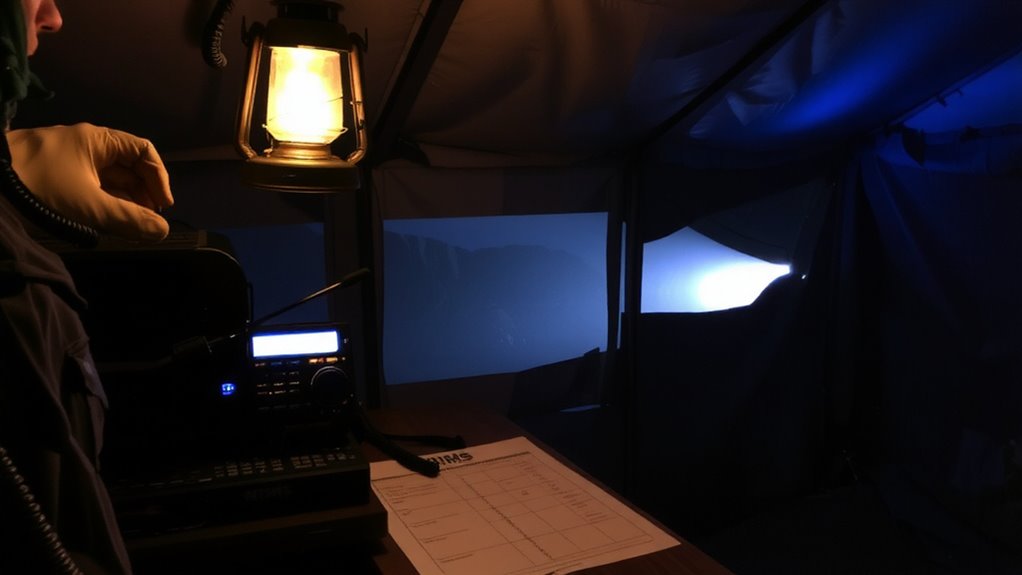
How do you stay connected when every second counts and infrastructure fails? You rely on the NIMS radio net. It’s designed for coordination when cell towers are down and GPS isn’t enough. You follow strict radio protocols to keep transmissions brief, clear, and orderly. That structure reduces confusion and prevents overlap, especially when multiple teams are active. Signal clarity matters-you’ll often operate in rugged terrain where interference and weak reception are common. Proper net discipline, correct frequencies, and tested equipment preserve intelligibility. The net uses standardized call signs and set intervals to confirm presence and status. You don’t improvise; you adhere. This system doesn’t promise flawless communication, but it delivers predictable performance under stress. When rescue hinges on accurate info, the NIMS radio net isn’t optional-it’s essential. It’s not about technology’s limits. It’s about working within them reliably.
Check In Correctly on a NIMS SAR Radio Net
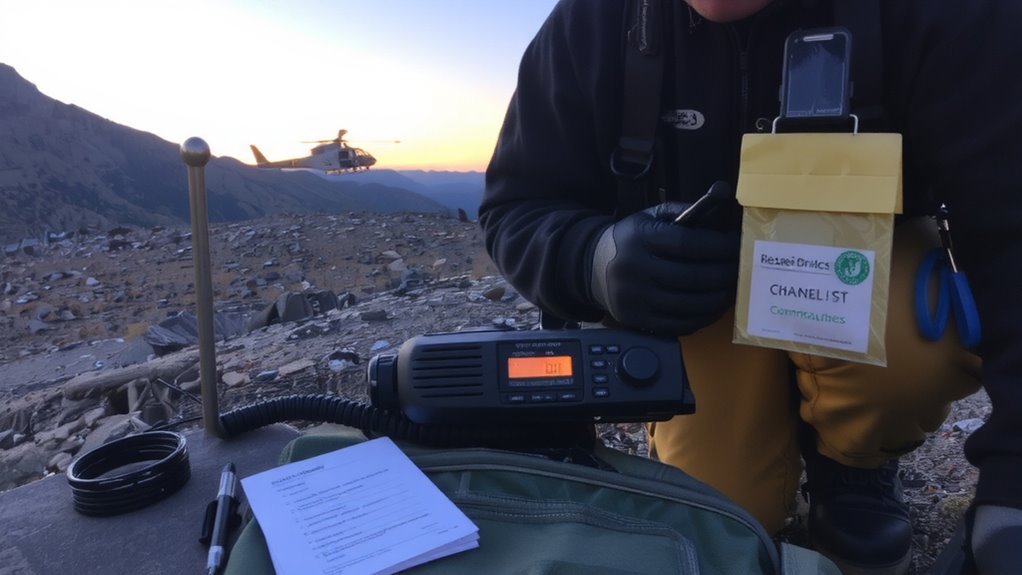
A proper check-in keeps the net running clean and efficient-you’re not just identifying yourself, you’re confirming readiness and location. Use proper greetings and clear identification so the net knows who you are and what you’re doing. Here’s how it breaks down:
| Element | Purpose | Example |
|---|---|---|
| Greeting | Signals intent to check in | “Net Control, Team Alpha” |
| Identification | Confirms unit and role | “Team Alpha, Ground Search” |
| Status/Location | Reports position and readyness | “At Checkpoint 3, fuel at 70%” |
Say it once, say it right. No repeats, no chatter. You get heard, the net stays orderly, and operations keep moving. Skip the fluff-just give what’s needed. Misidentified calls waste time and risk coordination. Stick to the format, and you’ll support seamless SAR execution. When operating in remote areas where water resupply may be limited, ensure your team’s hydration plan includes reliable water storage tanks.
Follow Net Discipline to Prevent Chaos
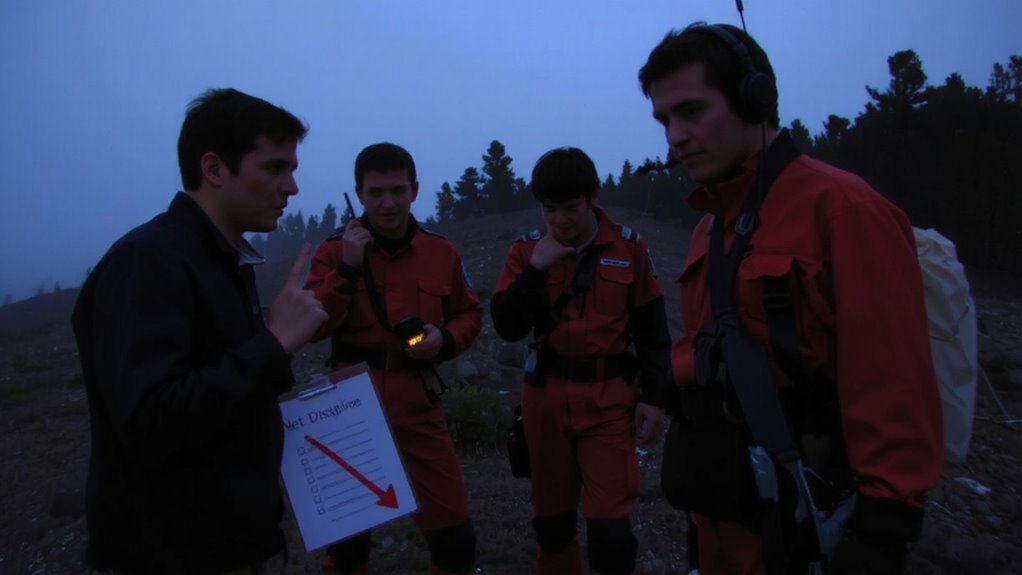
While the net’s only as strong as its weakest link, your role in maintaining discipline directly impacts SAR effectiveness. You must respect radio silence unless transmitting critical information-unnecessary chatter blocks urgent messages and delays responses. Net control manages traffic for a reason: adherence keeps operations synchronized. Practice message prioritization by holding non-urgent updates until lower-traffic periods. Emergency transmissions get immediate airspace; routine reports wait their turn. Speaking out of order disrupts flow and risks confusion, especially during complex missions. You’re not just communicating-you’re ensuring clarity under pressure. Think before keying the mic. If your message isn’t urgent, log it and wait for your cue. Discipline isn’t optional. It’s operational necessity. Clean, structured communication reduces errors, speeds coordination, and supports team safety. Stick to protocol, and you’ll help keep the net functional when it matters most. Choosing reliable equipment like the best two-way radios ensures consistent communication in challenging environments.
Share Critical Info Without Clogging the Channel
When seconds count, you’ve got to relay essential details fast-but that doesn’t mean flooding the channel with every update. Keep transmissions short and focused-message brevity prevents confusion and keeps the net open. You don’t need complete phrase structures; you need clear phrasing. Say “Subject spotted, grid 42, injured, needs medevac” instead of a long narrative. Avoid repeating info already shared unless clarification is necessary. Acknowledge only when required; unnecessary roger calls add clutter. Use tactical call signs and avoid personal identifiers. Report conditions, locations, and actions-skip opinions. If it doesn’t change operations or safety, it doesn’t need airtime. Think before you key the mic: is this critical, concise, and clearly worded? When everyone practices disciplined speaking, the channel stays functional under pressure. That’s how teams stay coordinated without gridlock. Choose reliable communication tools like best two-way radios to ensure clarity and range during critical missions.
Coordinate Across Agencies Using NIMS Protocols
If you’re working alongside teams from different agencies, sticking to NIMS protocols guarantees everyone operates on the same page-without it, coordination breaks down fast. Using interagency protocols guarantees clear roles, consistent messaging, and smooth resource sharing, even when teams have different standard operating procedures. You’ll rely on unified command to make joint decisions without delay, keeping operations efficient and focused. Unified command doesn’t slow things down-it speeds them up by eliminating conflicting orders. When everyone follows the same structure, you reduce confusion during high-pressure moments. Interagency protocols also streamline logistics and accountability, so you know who’s doing what. This isn’t theory-it’s been tested in real incidents where mixed-agency responses succeeded because they used NIMS. You don’t need perfect compatibility between agencies-just agreed-upon processes. Stick to the system, and you’ll operate as one team, not a collection of disconnected units.
Avoid Common NIMS Radio Communication Mistakes
You’ve got unified command working across agencies, and roles are clear, but none of that matters if your radio messages don’t get through correctly. Cutting corners on radio etiquette causes confusion and delays. Always use clear, short phrases and avoid overlapping transmissions. Say your unit first, then the recipient, and keep messages under 30 seconds. Use plain language unless operating under established emergency protocols. Avoid codes or slang-others might not understand them. Don’t key the mic until you’re ready to speak, and pause briefly after keying to prevent clipped audio. Misusing channels or failing to monitor the net breaks coordination. Confirm critical instructions with readbacks. Background noise, like wind or engine sound, often drowns out speech-position the mic close to your mouth. These habits aren’t optional; they’re part of standard emergency protocols. Good radio etiquette guarantees reliable communication when every second counts.
On a final note
You’ll rely on clear, disciplined radio use during SAR ops, and NIMS nets make that possible. Check in properly, stick to protocols, and keep transmissions brief. Missteps cause delays; discipline guarantees coordination across teams. This isn’t theory-it’s tested practice. When seconds count, structured comms work. Use them right, and you’ll get the job done.