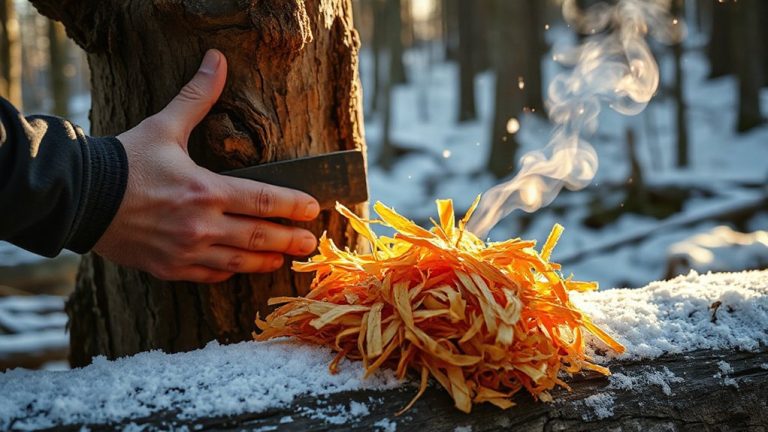
Foraging Cattail Rhizomes: A High-Starch Survival Food Source
You can find cattail rhizomes in shallow, muddy wetlands from fall to spring, where they offer a rich starch source. Harvest young, white sections by hand or with a tool, avoiding toxic lookalikes like poison iris-check for flat, spongy stems and a mild scent. Scrub and slice them clean, then boil for 15–20 minutes to make them digestible. Roast for flavor or fry if oil’s available. They’re reliable, calorie-dense, and best when prepared carefully. There’s more to using the whole plant effectively.
Notable Insights
- Cattail rhizomes are best harvested from late fall to early spring in shallow, muddy wetlands.
- Look for dense stands in 6–12 inches of water with soft, dark sediment for optimal rhizome access.
- Harvest young, white rhizomes near the base of the plant for the highest starch content and best texture.
- Always scrub and slice rhizomes to remove mud and check for rot before cooking.
- Boil, roast, or fry rhizomes to improve digestibility and calorie availability; boiling is safest and most reliable.
Find Cattail Rhizomes in Wetlands
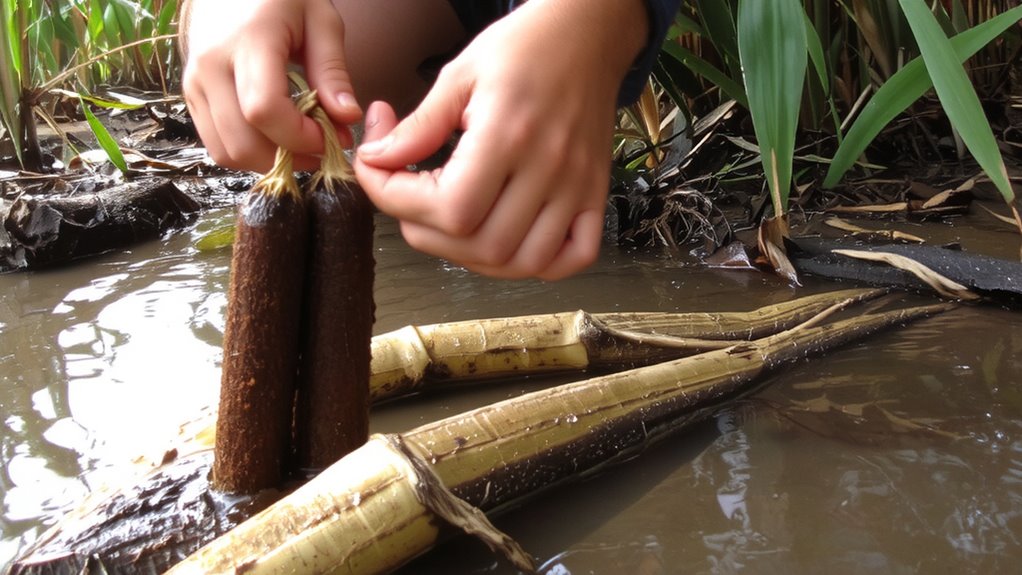
While cattails thrive in marshes, ditches, and pond edges, you’ll want to focus on dense stands in shallow water where rhizomes are most accessible. The best time for wetland exploration is late fall to early spring, after new growth begins but before full canopy blocks access. During this season, cattail tops die back, making stands easier to identify and navigate. You’ll need reliable mud identification skills-look for soft, dark sediment that yields underfoot but isn’t suction-heavy, signaling ideal rhizome depth. Avoid areas with fast-moving water or thick silt, which hinder digging and reduce rhizome quality. Dense, healthy stands in 6 to 12 inches of water typically host robust rhizomes just below the surface. Use a stick or trowel to probe the mud and confirm presence before committing to harvest. This approach maximizes yield per effort without equipment or guesswork.
Harvest Cattail Rhizomes Safely From Mud
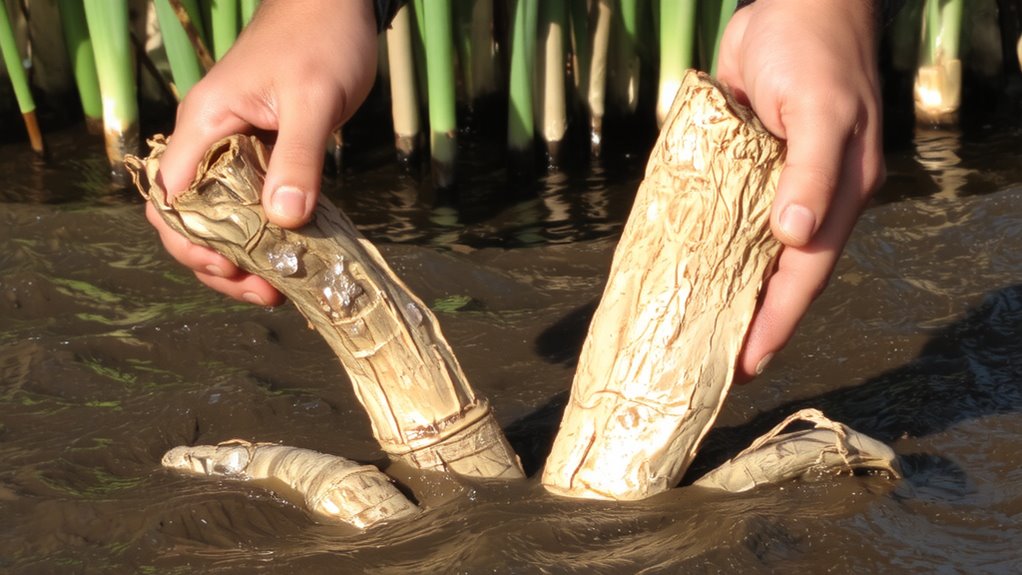
From late fall through early spring, pull on sturdy gloves and waders before stepping into the mud, since cold water and sharp plant debris are common. Push your hands or a digging tool deep into the muck to locate the thick rhizomes branching beneath mature cattail stands. Muddy extraction demands patience-you’ll need to loosen the soil around the roots to avoid breaking them. Use steady pressure to lift the interconnected network from the silt. Once exposed, perform root separation by snapping or cutting the white, fleshy rhizomes from the older, inedible sections. Focus on younger, tender parts near the shoot base; they offer higher starch content and better texture. Avoid areas with polluted water or chemical runoff. You can gather several pounds per hour with practice, depending on stand density. Efficiency improves with experience, but safety and accuracy matter more than speed.
Scrub and Slice Rhizomes for Safe Cooking
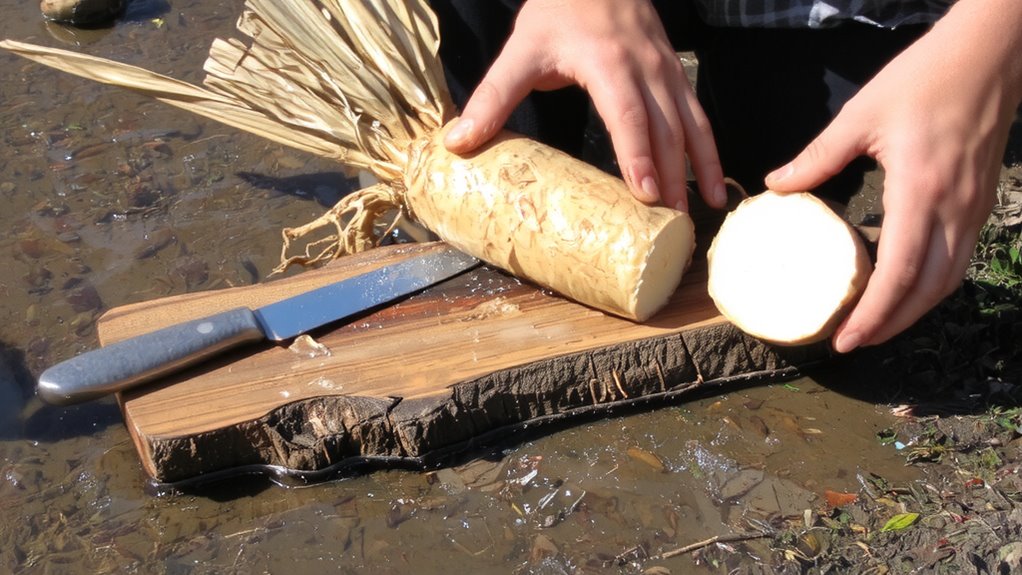
Give each harvested rhizome a thorough scrub using a stiff brush under cold running water-this removes mud and any surface contaminants that could affect safety or taste. Once clean, slice the rhizomes into thin rounds or strips to expose the inner flesh. This improves cooking efficiency and helps you check for discoloration or rot. Proper slicing also preserves the edible texture and maximizes access to the high starch content, which is vital in survival scenarios. Always inspect each piece-discard any that appear dark or soft. Uniform slices cook more evenly and reduce risk.
| Condition | Edible Texture | Starch Content |
|---|---|---|
| Fresh, white | Firm, crisp | High |
| Slightly aged | Tender | Moderate |
| Overripe | Mushy | Low |
| Mold-affected | Slimy | None |
| Fully dried | Hard | Minimal |
Boil, Roast, or Fry Wild Cattail Rhizomes
If you’ve cleaned and sliced your cattail rhizomes properly, boiling is your most reliable cooking method in the wild. You’ll need to boil tenderize the fibrous pieces-typically 15 to 20 minutes-to make them digestible and soft. This method requires only water and heat, making it ideal when resources are limited. Once boiled, the starch becomes accessible, and the mild flavor works in most diets. Roasting over coals can roast enhance the taste, adding a subtle nuttiness; however, it demands careful attention to avoid burning. You’ll need to wrap slices in leaves or foil to cook evenly. Frying isn’t common without oil, but if you have fat, it adds calories and texture. Each technique affects calorie availability and effort: boiling is safest, roasting improves palatability, and frying increases energy intake. Choose based on your tools and needs.
Watch for Poisonous Cattail Lookalikes
How can you tell the difference between a safe cattail and a dangerous imposter? Mistaking toxic lookalikes for cattails can lead to serious health risks, so safety precautions are essential. The most common imposters are poison iris and yellow flag, both of which grow in similar wetlands. Don’t rely on height or leaf shape alone-check the stem and odor. Cattails have flat, spongy, air-filled stems with a distinct mild, cucumber-like scent when crushed. Imitators have round, solid stems and little to no odor.
| Feature | Cattail | Poison Iris |
|---|---|---|
| Stem Shape | Flat, spongy | Round, solid |
| Crushed Scent | Mild, fresh | None or bitter |
| Flower (if present) | Brown, cigar-like | Showy, yellow or purple |
Always verify multiple traits before harvesting.
Why Cattail Rhizomes Are Survival Superfood
You’ve confirmed the plant is a true cattail, not poison iris or yellow flag-now it’s time to contemplate what’s underground. The rhizomes are your most reliable energy reserve during extended survival situations. Packed with starch, they offer high nutritional density compared to other wild edibles. Each pound of rhizome provides roughly 220–270 calories, mostly from complex carbohydrates that digest slowly, sustaining energy levels over time. They’re not nutrient-rich in vitamins or protein, but their caloric yield per unit weight makes them effective for preventing starvation. You’ll need to process them properly-wash, crush, and rinse to separate fibers from starch-but the effort pays off. In marshes or wetlands, cattail rhizomes are among the most accessible, year-round energy sources available. Their availability through winter and early spring gives them an edge when other foods are scarce. No other common wetland plant matches their caloric return rate.
Use the Whole Cattail Plant in Survival Situations
Cattail isn’t just about rhizomes-every part of the plant has a role when survival’s on the line. The young shoots taste mild and offer vitamins, while the pollen, high in protein, thickens stews. In late spring, the stalk’s white base is edible raw or cooked. The fluffy seed heads insulate bedding or signal aircraft, and their down aids wound care with proven medicinal uses, reducing infection risk in field dressings. You can chew the roots for starch, but boiling yields more calories efficiently. For fiber extraction, peel dry leaves into strands for weaving cordage or mats-each stalk delivers up to six feet of usable fiber. The stalks themselves bind into rafts or shelters. No part goes to waste. Cattail’s versatility under real stress outperforms most wild plants, giving food, tools, and medicine in one package. It’s reliable, abundant, and predictable-key traits when choices are limited.
On a final note
You can rely on cattail rhizomes when you need calories fast-each pound yields about 250 calories, mostly from starch. They’re available year-round in wetlands, but watch for lookalikes like poison iris. Boil or roast them to make digestion easier. They won’t taste exciting, but they’ll keep you fueled. Just clean them well, cook thoroughly, and use the whole plant-nothing goes to waste.