Evaluating Airway Compromise in Burn Victims in the Backcountry
You need to act fast when facial burns and soot in the mouth coincide, because that combination signals immediate airway danger in backcountry burn victims. Check for singed nasal hairs, hoarseness, or stridor-each hints at airway damage. Swelling can close your airway within hours, especially 12–24 after injury. Wheezing or stridor means trouble. Even if breathing seems OK now, watch hourly. Evacuate early-before symptoms worsen-it’s safer than waiting. A delay could cost you the window for safe airway management.
Notable Insights
- Singed nasal hairs, facial burns, and soot in the mouth suggest possible airway injury from smoke or heat.
- Hoarseness or stridor indicates laryngeal swelling and imminent airway compromise.
- Facial or neck swelling can rapidly narrow airways; monitor for tight, shiny skin or worsening edema.
- Wheezing may reflect lower airway irritation, while stridor signals upper airway obstruction.
- Evacuate early, as airway swelling can progress over 2–24 hours, even if breathing appears stable initially.
Spot Early Signs of Airway Compromise
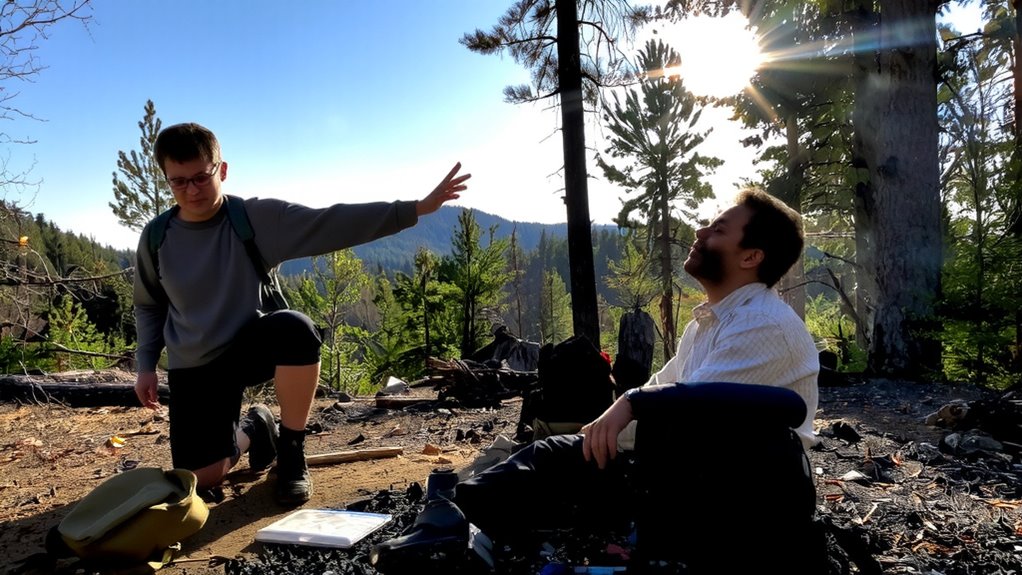
You’ll want to act fast if you notice singed nasal hairs, facial burns, or soot in the mouth-these are reliable early clues that heat or smoke has damaged the upper airway. Watch for respiratory distress, like rapid or labored breathing, as it signals airway swelling or obstruction. Vocal changes, such as hoarseness or stridor, are red flags; they mean inflammation is affecting the larynx. These signs can worsen fast in burn victims, especially in remote settings where help is hours away. Don’t wait for all symptoms-early intervention improves outcomes. If the person’s breathing becomes noisier or more difficult, assume airway compromise. Use available tools to monitor oxygen levels, but rely primarily on observable signs. Swelling can progress rapidly, so plan for evacuation at the first hint of trouble. Time matters more than comfort. Act decisively.
Check for Facial and Neck Burn Dangers
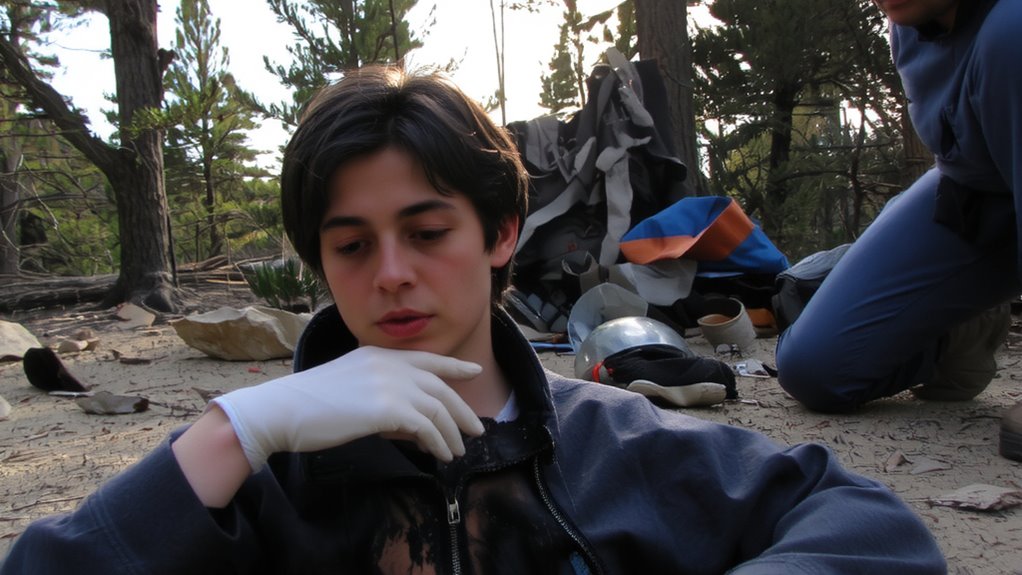
Why do facial and neck burns raise immediate red flags? Because they can rapidly obstruct your airway. You must act fast. Facial edema swells critical tissues, narrowing breathing passages. Neck blisters suggest deep injury and may expand, further compressing airways. These signs don’t always mean immediate danger, but they’re markers of potential deterioration-especially in remote settings where help is hours-or days-away.
Assess visually and monitor closely:
| Symptom | What You See |
|---|---|
| Facial edema | Swollen eyelids, puffy cheeks |
| Neck blisters | Fluid-filled sacs on the neck |
| Skin tightness | Shiny, tense skin on face or neck |
You can’t ignore swelling or blistering in these areas. Even if breathing seems stable now, changes can happen fast. Watch for progression. Early recognition gives you time to plan evacuation before crisis hits.
Listen for Critical Breathing Sounds
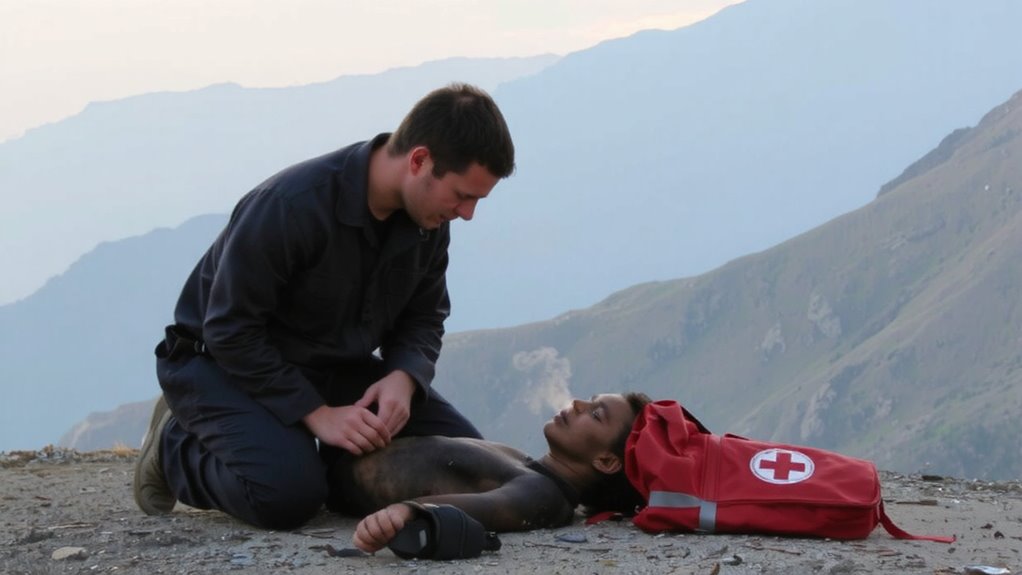
When airway swelling progresses, you’ll start hearing it before the person can tell you something’s wrong. Listen closely-wheezing breaths suggest lower airway irritation, often from smoke or heat inhalation. Stridor sounds, a high-pitched noise during inhalation, signal upper airway obstruction and are a red flag. These aren’t subtle; they’re urgent warnings the airway is narrowing. Stridor especially means swelling is likely near the larynx, risking rapid blockage. Wheezing may respond slightly slower but still demands attention. You won’t need tools to catch these-your ears are enough. Don’t wait for cyanosis or distress to worsen. If you hear either sound post-burn, assume airway compromise is active. Plan for immediate evacuation. Delaying risks complete obstruction. In the backcountry, where help’s far off, recognizing these sounds early is one of your few advantages. Act on them.
Watch for Delayed Airway Swelling
Even if the airway seems clear at first, swelling can develop hours after the burn injury, especially with facial or neck involvement. You need to stay alert for delayed airway edema, which can worsen rapidly in remote settings. This is particularly true if there’s suspicion of thermal inhalation-exposure to hot gases or smoke-since it damages airway tissues and triggers inflammation. Signs may not show immediately, so ongoing assessment is critical.
| Time Post-Burn | Risk of Airway Edema |
|---|---|
| 0–2 hours | Low to moderate |
| 2–6 hours | Increasing |
| 6–12 hours | High |
| 12–24 hours | Peak risk |
| 24+ hours | Gradual decline |
Thermal inhalation doubles the concern, so monitor closely even if breathing appears stable now. Don’t wait for severe symptoms-changes can escalate fast.
Decide When to Evacuate for Airway Support
If you’re managing a burn victim with facial or neck involvement, you’ll need to act before airway swelling worsens-once stridor or hoarseness appears, evacuation may already be delayed. Early evacuation is critical when there’s significant burn severity or evidence of smoke exposure, even if the person seems stable. Inhalation injury from smoke can cause rapid airway deterioration, and signs like soot in the mouth, singed nasal hairs, or coughing indicate high risk. Don’t wait for symptoms to worsen. Assess breathing frequency, voice changes, and respiratory effort hourly. If either burn severity or smoke exposure suggests impending compromise, initiate evacuation immediately. In the backcountry, delayed access to intubation means prevention is your only reliable strategy. Transport decisions made early improve outcomes more than any field intervention. Trust the indicators, not reassurance from the patient. Airway collapse can occur suddenly, leaving little room for error.
On a final note
You’ll need to act fast if you spot singed nasal hairs or soot around the mouth-those mean inhaling hot gases is likely. Wheezing or stridor means swelling’s already narrowing the airway. Don’t wait for symptoms to worsen; backcountry clinics can’t intubate. Evacuate early, because once swelling peaks in 12–24 hours, your margin for error drops to zero. Carry a simple airway kit, but know its limits.