How Controlled Fire Use Affects Edible Plant Regeneration in Burn Scar Zones
You’ll see edible plants bounce back faster in burn scars because controlled fire clears overhead shade and returns nutrients like potassium and nitrogen to the soil. Heat triggers seeds that need smoke to sprout, while blackened ground warms faster, boosting early growth. Raspberries, fireweed, and huckleberries often return within a season. Spring burns work best when followed by rain. Too hot or too frequent burns, though, can damage soil structure and delay regrowth-timing and intensity make or break the results. There’s more to how different plants respond.
Notable Insights
- Controlled fires stimulate edible plant regeneration by exposing soil to sunlight and triggering seed germination through heat and smoke.
- Nutrient-rich ash from burned vegetation enhances soil fertility, boosting growth of edible species like berries and fireweed.
- Fire removes competing vegetation and canopy shade, allowing sunlight-dependent edible plants to establish and thrive.
- Timing of controlled burns affects regrowth; spring burns align best with moisture and temperature for rapid edible plant emergence.
- Excessive or improperly timed burns can degrade soil, erode nutrients, and delay edible plant recovery in burn scar zones.
Why Fire Helps Forests Regrow Edible Plants
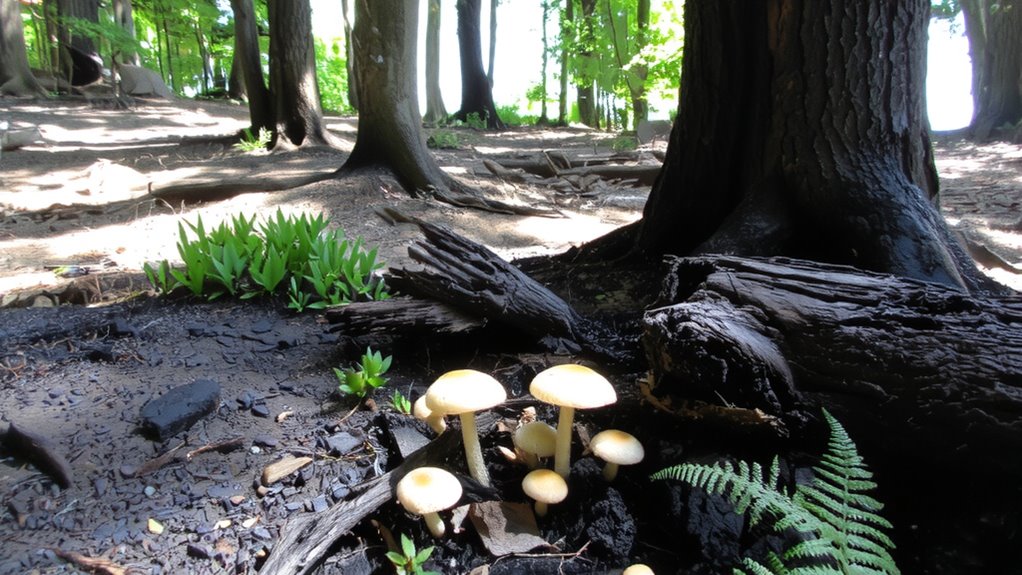
Why do some of the best edible plants thrive after a wildfire? You’re seeing fire ecology in action. Many edible plants evolved with fire, relying on it to clear competition and trigger germination. Their seeds lie dormant, waiting for smoke or heat-signals to sprout. This adaptation shows remarkable plant resilience. Blackened ground absorbs more sunlight, warming the soil just enough to help seedlings establish. Without dense canopy cover, sunlight reaches the forest floor, fueling rapid growth. You’ll often find berries, greens, and tubers flourishing in these open conditions. These plants aren’t just surviving; they’re optimized for post-fire recovery. Fire doesn’t harm them-it resets the system they depend on. In burn scar zones, you’re not witnessing destruction. You’re seeing regeneration, timed and tuned by nature. Controlled fire mimics this process, giving you predictable, productive regrowth without uncontrolled risk.
How Fire Improves Soil for Edible Plants
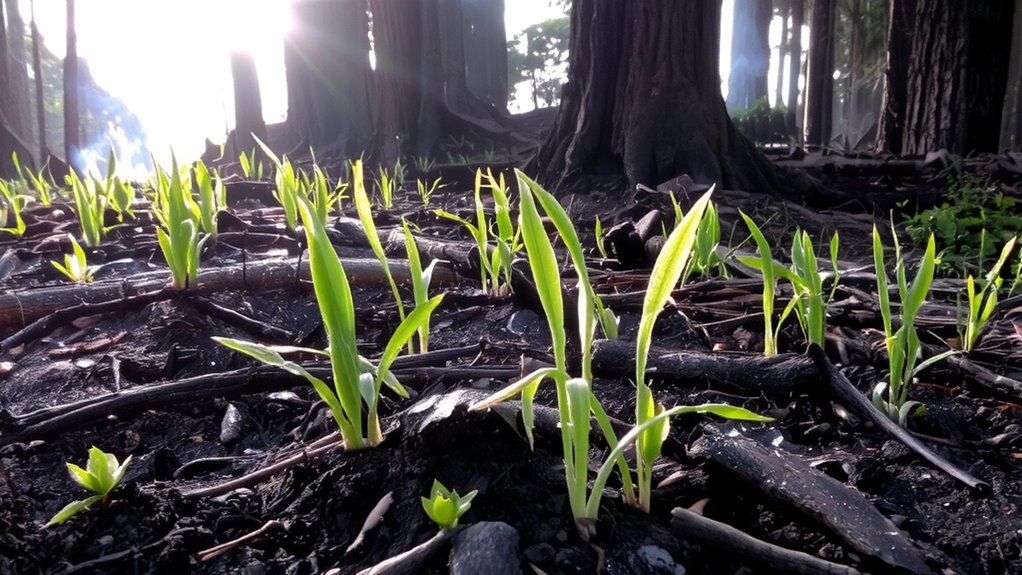
Though fire may seem destructive, it actually enriches the soil in ways that boost edible plant growth. When vegetation burns, it returns nutrients to the soil, accelerating nutrient cycling and making nitrogen, phosphorus, and potassium more accessible. The heat breaks down organic matter quickly, reducing it to ash that mixes with the topsoil. This process increases mineral availability, especially calcium and magnesium, which are essential for plant development. Fire also alters soil pH slightly, often reducing acidity and improving conditions for certain edible species. You’ll notice better water retention and reduced compaction in burn zones, aiding root establishment. These changes don’t last forever, but they create a temporary window where soil fertility peaks. Controlled burns reset poor growing conditions, giving plants a clearer path to thrive. The result? More productive land for edible plant regeneration without artificial inputs.
Which Edible Plants Come Back After Fire?
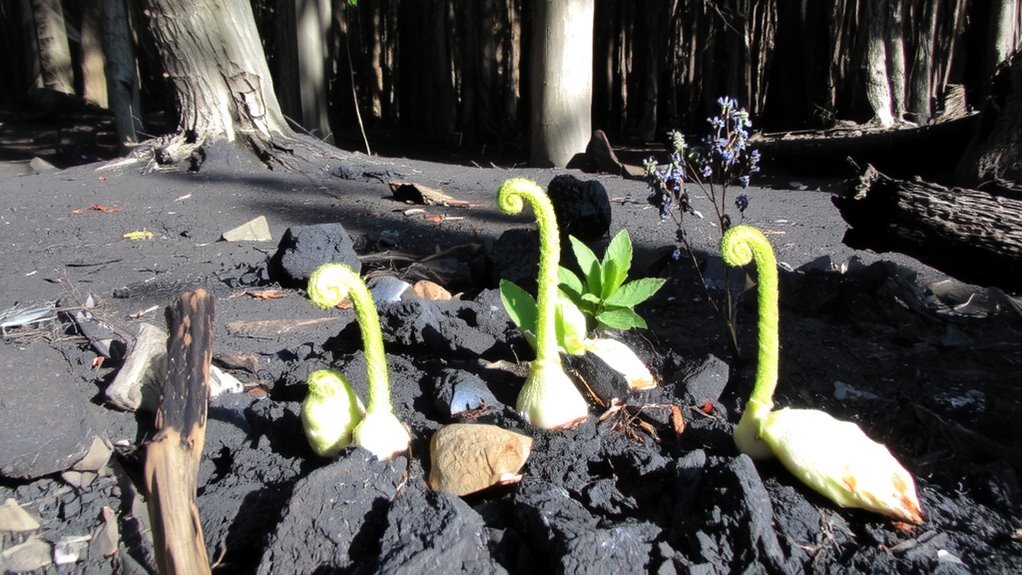
Fire doesn’t wipe out all edible plants-it actually triggers regrowth for many species adapted to thrive after the flames. You’ll see berries like raspberries and huckleberries return quickly, thanks to plant adaptations that use heat to open seed coats. Some pines rely on fire for seed dispersal, melting resin to release seeds into nutrient-rich ash. Fireweed colonizes burn scars within weeks, its seeds carried by wind to cleared ground. Currants and wild strawberries spread through underground rhizomes, resprouting where flames passed. These plants aren’t just survivors-they’re specialists. Their regeneration speed depends on fire intensity and local conditions. You can expect edible yields in one to three seasons post-burn, depending on species. Don’t assume all food plants recover equally; some depend on specific plant adaptations to fire cues. Monitoring regrowth patterns helps identify reliable food sources in scorched zones. Seed dispersal mechanisms and resprouting ability determine what you’ll find-and when.
When Burn Timing Matters Most for Regrowth
When does a burn happen-spring, summer, or fall-and just how much does that timing affect what comes back? A lot, actually. Burn season directly shapes the regrowth cycle of edible plants. Spring burns clear debris early, letting sunlight hit soil when moisture is still high-ideal for seeds needing warmth and wet to sprout. You’ll often see quicker green-up and denser shoots. Late summer or fall burns, though, can dry the soil too much, delaying germination until the next spring. Some plants need that cold dormancy after a fall burn; others miss their window. If you time it wrong, you disrupt natural triggers like rain patterns and temperature shifts. Getting the burn season right means syncing with the regrowth cycle, not working against it. It’s not just about burning-it’s when you burn that decides what-and how well-comes back.
What Traditional Knowledge Teaches About Fire and Food
You’ve seen how timing shapes regrowth, but knowing when to burn isn’t just about seasons-it’s also about knowledge built over generations. Indigenous communities use fire ceremonies not just for ritual, but as practical signals for when to burn based on plant life cycles and weather patterns. These ancestral practices align burns with ecological cues: soil moisture, wind direction, and plant dormancy. That precision supports food security by promoting nut, berry, and root crop yields in burn scar zones. Fire is applied at low intensity, targeting specific areas to avoid damage while clearing undergrowth. This method outperforms random or high-intensity burns in plant diversity and edible yield. Decisions aren’t guessed-they’re tested over centuries. You can observe repeatable outcomes: faster sprouting, fewer pests, better access to crops. Ancestral practices integrate observation, timing, and purpose, making them reliable tools for sustainable food production in fire-prone landscapes.
When Fire Damages Ecosystem Recovery
How do you know when a burn does more harm than good? You see excessive soil erosion stripping away topsoil within weeks, leaving roots exposed and slopes unstable. That’s a clear sign. High-intensity fires destroy organic matter, weakening soil structure and accelerating runoff. Without vegetation to anchor it, rain washes nutrients downstream, worsening nutrient leaching. You’ll notice diminished microbial activity and poor water retention, both critical for recovery. If repeated burns occur before vegetation reestablishes, the land can’t rebuild. These conditions degrade habitat and delay natural regeneration long-term. You can’t assume fire always helps, even with traditional practices. Monitoring slope stability, soil depth, and nutrient levels post-burn gives objective data. When erosion and leaching outweigh benefits, the fire regime isn’t sustainable. Adjust timing, frequency, or intensity. Recovery isn’t guaranteed-it depends on your choices.
How Fast Edible Plants Return After Burning?
Though some edible plants sprout within weeks after a low-intensity burn, most return depends on fire severity and local climate. You’ll see quicker recovery when fire intensity is controlled and rainfall follows soon after. Plant maturity also plays a role-fast-growing perennials like fireweed reach harvestable size in months, while shrubs may take years.
| Plant Type | Return Time | Fire Intensity Tolerance |
|---|---|---|
| Grasses | 2–8 weeks | Low to moderate |
| Fireweed | 6–10 weeks | Moderate |
| Berry shrubs | 1–3 years | Low |
| Nut-bearing trees | 3+ years | Very low |
You can’t speed up plant maturity, but choosing sites with lighter burns gives you edible yields sooner. High-intensity fires delay regrowth and reduce edible species diversity. Plan burns carefully-timing and intensity directly impact how fast you’ll resupply from the land.
On a final note
You’ll see edible plants return within months after a controlled burn, especially in nutrient-rich soils. Fire clears competition and boosts light, helping species like berries and tubers regrow. Timing matters-spring burns often work best. But if fires are too hot or frequent, recovery slows. Traditional practices show cooler, spaced fires support sustainable food regrowth. You get quicker yields with moderate burns, but must balance intensity to avoid soil damage. It’s effective, but not foolproof.