Disaster Preparedness for Extreme Heat Events: Understanding the Risks and Implementing Cooling Measures
You’re facing longer, hotter heatwaves because climate change raises baseline temperatures. Older adults, kids, and those with health conditions are at greater risk, especially in cities where concrete traps heat. Cooling centers offer safe spaces with AC and medical help. Green roofs and shade trees lower temps by up to 10°F. At home, use insulation, weatherstripping, and fans. You’ll cut heat exposure fast-and see which strategies work best where.
Notable Insights
- Climate change increases heatwave frequency and intensity, raising risks for vulnerable populations and urban areas.
- Older adults, children, and those with chronic illnesses face higher health risks during extreme heat events.
- Cooling centers in accessible locations provide life-saving relief for those without air conditioning at home.
- Green infrastructure like urban trees and green roofs reduces local temperatures and mitigates heat island effects.
- Home cooling strategies include insulation, window films, and ceiling fans to lower indoor heat exposure.
Why Deadly Heatwaves Are Getting More Common
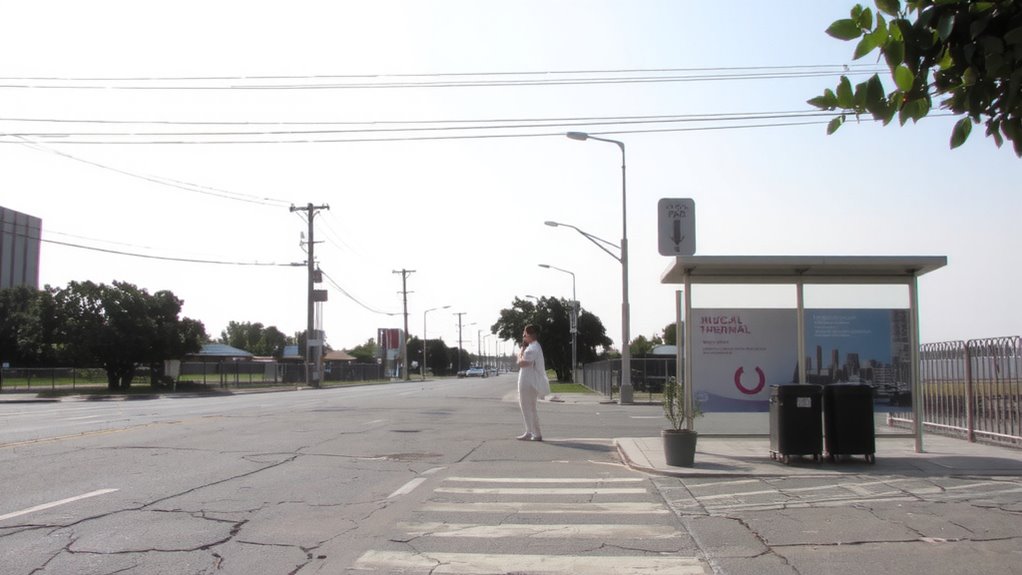
While heatwaves have always been a natural occurrence, you’re seeing them become deadlier and more frequent simply because climate change is raising baseline temperatures. Higher averages mean extreme heat events start from a hotter point, increasing intensity and duration. Climate change doesn’t just shift numbers-it alters risk. Urban sprawl compounds the problem. Expanses of asphalt, concrete, and buildings absorb and trap heat, creating urban heat islands where nighttime temperatures stay dangerously high. These areas cool slower, increasing exposure. More people live in cities now, and sprawling development limits green space that could provide relief. You can measure the difference: cities often report temperatures 5–10°F higher than rural zones. Infrastructure wasn’t built for this. Air conditioning demand spikes, overloading grids when power is needed most. The combination of rising global temperatures and localized heat retention means you’re facing more dangerous conditions, more often, with systems under added stress.
Who’s Most at Risk During Extreme Heat?
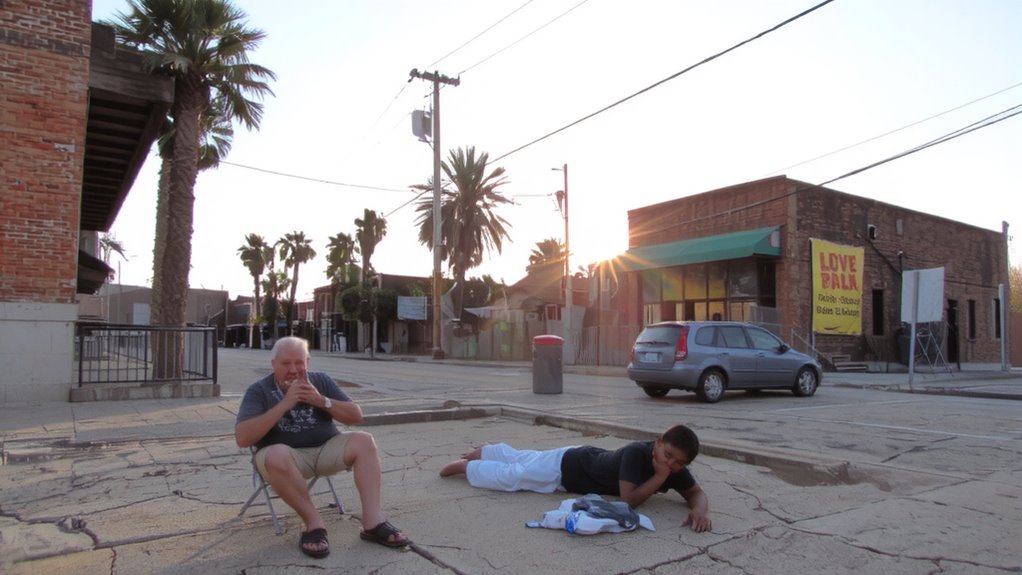
You’re not equally at risk when the temperature climbs-some face far greater danger, and that’s tied directly to age, health, environment, and access to cooling. Older adults and young children are especially vulnerable due to less efficient thermoregulation. If you have chronic conditions like heart disease or diabetes, your body struggles to cope with heat stress. Living in urban areas worsens exposure due to the heat island effect, increasing heat vulnerability. Poor housing without insulation or functioning AC raises risk, especially during prolonged heat events. Low-income communities often lack resources to afford cooling, increasing dependence on strained public services. Infrastructure strain during heatwaves can lead to power outages, disabling critical cooling systems. Renters may not control building conditions, limiting adaptation options. Geographic location matters-areas unprepared for extreme heat lack emergency planning. These factors combine to dictate real-world survival odds when temperatures soar.
How Cooling Centers Protect Urban Communities
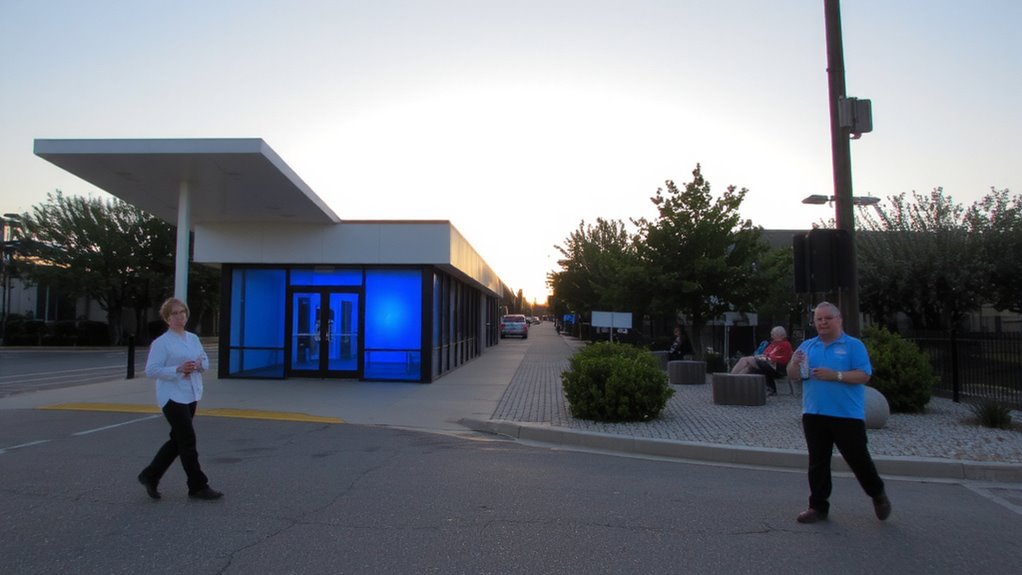
When heatwaves strike cities, cooling centers give you a reprieve by providing accessible, air-conditioned spaces where temperatures stay within safe limits. You can enter public buildings like libraries, community centers, or designated facilities that activate during extreme heat, guaranteeing cooling accessibility for vulnerable populations. These centers are strategically placed in neighborhoods with high risk and limited home cooling, so you don’t have to travel far. Emergency coordination guarantees they open quickly, staff are ready, and resources like water and medical aid are available. They operate on predictable schedules and are promoted through local alerts, so you know where to go. While they’re not a permanent fix, they reduce heat stress during critical days. Relying on existing infrastructure keeps costs low and response fast. You benefit from a tested, scalable system when power, transportation, or health issues limit your options at home.
How Cities Can Beat Extreme Heat With Green Design
A city doesn’t need to swelter just because temperatures rise-smart green design cuts heat where it collects. You can reduce surface temperatures by up to 30°F using green roofs, which absorb less solar radiation than standard materials. They also manage stormwater, cutting runoff by 50–90% depending on design. Urban forestry complements this: mature trees lower air temps up to 10°F through shade and evapotranspiration. Planting them along streets and near buildings targets heat pockets effectively. Together, these strategies lower cooling demands citywide. Green roofs last 2–3 times longer than conventional roofs but cost more upfront. Urban forestry requires long-term maintenance but delivers compounding benefits. You don’t need full overhauls-start with high-heat zones. Prioritize species with high canopy spread and drought tolerance. These solutions won’t eliminate extreme heat, but they measurably reduce its intensity and impact when implemented strategically across neighborhoods.
How to Prepare Your Home for Extreme Heat
Though heat waves are unavoidable, you can considerably reduce their impact at home by focusing on insulation, airflow, and solar exposure. Install window insulation film to block solar heat gain-tested models reduce indoor temperatures by up to 10°F. Close blinds during peak sun hours to enhance effectiveness. Use ceiling fans set to rotate counterclockwise; they circulate air efficiently, creating a wind-chill effect that makes rooms feel 4–6°F cooler. Run them only when occupied to save energy. Seal air leaks around doors and windows with weatherstripping to maintain cooled air. Upgrade attic insulation to at least R-30 to limit heat transfer. Avoid relying solely on portable fans in extreme heat-they don’t lower temperature and offer limited relief when humidity rises. These measures, grounded in thermal physics and field testing, deliver measurable comfort with minimal energy cost.
On a final note
You need working AC or a nearby cooling center-people without either face real risk during heatwaves. Fans help below 95°F but fail when it’s hotter. Reflective window film cuts indoor heat by up to 30%. Check local alerts and have water, meds, and backup power ready. Green roofs and shade trees lower block temps, but they take years. For now, plan access to cool spaces. It saves lives.