How Satellite Devices Enable Emergency Communication in Desert Environments
You can’t rely on cell service in the desert, but satellite devices connect directly to orbiting satellites, bypassing towers entirely. They’re compact, durable, and work in extreme heat, sending SOS signals and messages even when lost. Models like the Garmin inReach Mini 2 offer global coverage, 14-day battery life, and reliable reconnection after signal loss-key when every second counts. Choosing the right one means balancing ruggedness, battery, and network reliability. There’s more to weigh before heading out.
Notable Insights
- Satellite devices connect directly to orbiting satellites, bypassing absent cell networks in remote desert areas.
- They transmit emergency messages and GPS coordinates even in extreme heat and harsh conditions.
- Durable designs with IP67 or MIL-STD-810 ratings resist dust, shock, and temperature fluctuations common in deserts.
- Compact, lightweight units like the Garmin inReach Mini 2 maintain reliability and extended battery life in tracking mode.
- SOS signals are routed to 24/7 monitoring centers that coordinate rescue using precise location data from the device.
Why the Desert Demands a Satellite Device
While cell service might seem reliable in populated areas, you’ll find it nearly nonexistent once you’re deep in the desert, where vast stretches lack infrastructure-making a satellite device not just useful, but vital. Desert isolation means help is hours or even days away, and without a signal, standard phones are useless. Environmental extremes, from 120°F heat to sudden cold snaps, strain electronics and human endurance alike. Satellite devices operate reliably in these conditions, functioning where cell towers don’t reach and resisting dust, shock, and temperature shifts. They provide precise GPS coordinates, essential for rescue teams traversing featureless terrain. Most models weigh under 7 ounces and run for days on a single charge, balancing portability with durability. Unlike smartphones, they don’t depend on local networks. In short, carrying one isn’t an option-it’s a core survival tool when venturing into remote, unforgiving landscapes.
How Satellite Devices Work Without Cell Service
Satellite devices bypass cell networks entirely by connecting directly to orbiting satellites, so you’re not left stranded when your phone shows zero bars. You get network independence, meaning your communication doesn’t rely on ground-based towers that are scarce in remote deserts. Instead, these devices use direct signal transmission to satellites in low Earth orbit or geostationary orbit, ensuring coverage across vast, uninhabited regions. The process takes slightly longer than a standard cell call-typically several seconds for message delivery-but it’s reliable where traditional service fails. Devices are compact and energy-efficient, designed for minimal power use during transmission. While latency exists and clear sky visibility helps, the trade-off is consistent access in extreme locations. You’re not paying for luxury; you’re investing in verified connectivity when survival depends on it.
Essential Features for Harsh Desert Conditions
Because desert conditions push gear to its limits, you’ll want a satellite device built to handle extreme heat, dust, and physical shocks. Look for high durability ratings, like IP67 or MIL-STD-810, which confirm resistance to dust ingress and drops. These standards aren’t just marketing-they’re tested outcomes that matter when sand infiltrates seams or a device tumbles off a vehicle. Heat dissipation is equally critical; prolonged sun exposure can overheat electronics, so aluminum housings or vented designs help regulate internal temperatures. Plastic casings may crack under thermal stress, reducing reliability. A device might work fine in shade but fail when left on a dashboard at noon. Models with passive cooling and UV-resistant materials perform better over time. Battery efficiency also drops in extreme heat, so check real-world runtime under load. Choose a device that maintains function when it’s most needed-not just in labs.
Top Satellite Messengers for Remote Safety
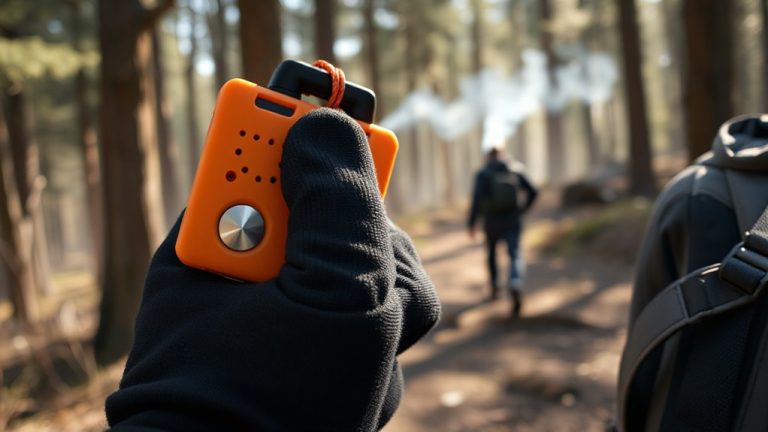
You’ve got your eye on durability-devices that stand up to sand, shocks, and triple-digit heat-but when you’re miles from help, the right satellite messenger can make the difference between a close call and a crisis. Look at the Garmin inReach Mini 2: it’s compact, IPX7-rated, and delivers strong signal reliability across Iridium’s global network. Its device durability shines in sandstorms and drops. The Zoleo Satellite Communicator links to your phone and offers solid performance at a lower cost, though its antenna is less rugged. The SPOT X provides basic two-way messaging and GPS tracking, but signal reliability drops in canyons. All three endure extreme heat, but only the inReach consistently reconnects after signal loss. Battery life varies-Mini 2 lasts 14 days in tracking mode, Zoleo about 10. Choose based on coverage needs, size, and how often you’ll rely on signal reliability when seconds count.
What Happens When You Send an SOS in the Desert?
What happens once that SOS button is pressed? Your device sends a signal to satellites orbiting overhead. In the desert, signal delays can occur due to satellite positioning or terrain blocking the line of sight. Most modern devices retry automatically until confirmation is received. The message reaches a 24/7 monitoring center, where operators assess your GPS coordinates and initiate contact if possible. Response time depends on location accuracy and resource availability. False alarms remain a real concern-accidental presses happen-and they strain emergency services. Operators typically attempt verification before dispatching teams. Devices with confirmation prompts reduce false alarms markedly. Your alert triggers coordination with local search and rescue, but success hinges on correct setup and clear transmission. Even in open deserts, it can take 30 minutes or more for help to be notified and mobilized, depending on region and infrastructure support.
How to Keep Your Device Running in Extreme Heat
When temperatures soar above 115°F, standard batteries start losing charge fast, and screens can black out under direct sun-so protecting your device isn’t optional, it’s essential. You’ll want to power down when not in use; this improves power efficiency and reduces heat buildup. Keep your device in the shade or inside a reflective sleeve to enable passive battery cooling. Avoid metal cases, which trap heat-opt for ventilated or insulated carrying solutions tested in desert trials. Lithium-based batteries degrade faster above 120°F, so cycling power instead of continuous operation helps maintain function. Turn on power-saving modes to extend runtime without compromising signal transmission. Some satellite messengers maintain 60% battery life after 2 hours in direct heat using these methods. You can’t change the environment, but with smart battery cooling and better power efficiency, you can keep your device functional when it matters most.
On a final note
You need a satellite device in the desert because cell signals don’t reach remote dunes or canyons. Models like the Garmin inReach Mini 2 work globally, sending SOS and texts via satellite. They resist dust and heat, lasting 5–7 days on a charge. Solar chargers boost uptime. GPS accuracy stays within 3–5 meters. You pay for reliability-not bells and whistles-but when help’s 50 miles away, that’s exactly what you need.