How to Assess for Spinal Injuries After a Fall on a Remote Trail
Stay calm and secure the scene to prevent further injury. Check if the person responds clearly when you ask if they’re okay-confusion or slurred speech is a red flag. Look for deformities, neck or back pain, and numbness. Have them squeeze your hands and move limbs; weakness means possible spinal damage. Keep them still and immobilized. Evacuate fast if symptoms worsen. Clear assessment now improves outcomes later.
Notable Insights
- Stay calm and secure the scene to prevent further injury from hazards like loose rocks or drop-offs.
- Check responsiveness by speaking clearly and tapping the shoulder to assess alertness and orientation.
- Look for signs of spinal injury, including deformity, numbness, tingling, or inability to move limbs.
- Test motor function by asking the person to squeeze hands, lift shoulders, push feet, and raise thighs.
- Stabilize the spine, keep the person still, and initiate evacuation if symptoms suggest spinal damage.
Stay Calm and Secure the Scene
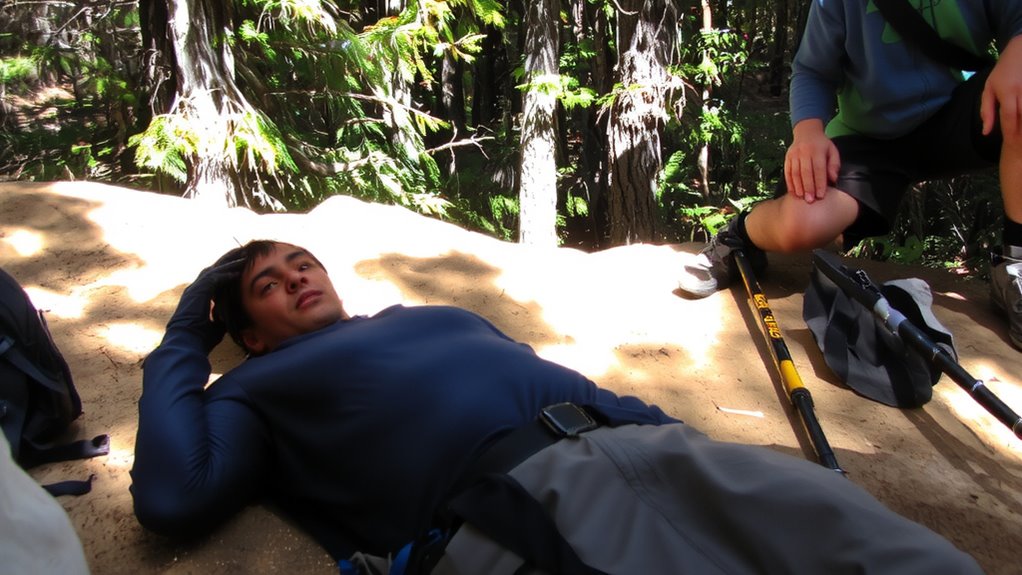
If you’re the first on the scene, staying calm isn’t just advice-it’s critical, because panicking slows your reaction time and increases the risk of making mistakes. Your first move is securing the area to prevent further harm. Assess immediate dangers like loose rocks, steep drop-offs, or weather-this risk assessment determines whether the victim should be moved. If the trail navigation is unclear or hazardous, mark your approach with visible signals to guide rescuers. Don’t assume the safest path; retrace your steps only if you’re certain of stable footing and visibility. Keep bystanders back to reduce clutter and confusion. You’re not just managing the injury-you’re managing the environment. A clear head lets you spot hazards others miss. Every decision hinges on observation, not instinct. Staying calm improves your judgment, which is essential when seconds count and help isn’t nearby.
Check If the Person Is Alert and Responsive
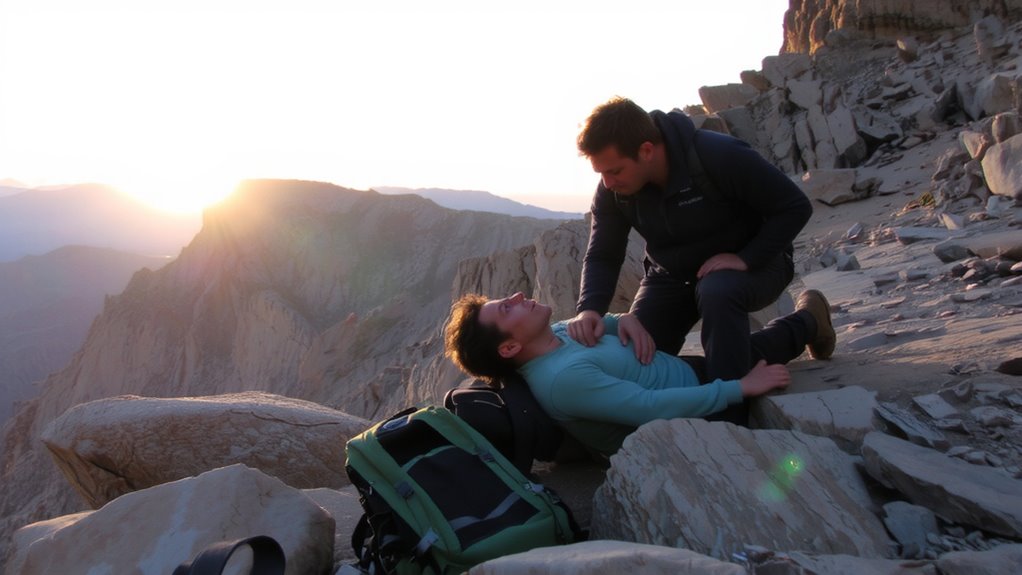
How alert is the person right now? Check their mental status by speaking clearly and asking simple questions. If they respond quickly and appropriately, their verbal response suggests they’re oriented and aware. A confused or slurred reply may signal altered mental status. Tap their shoulder gently and say, “Can you hear me?” noting whether they open their eyes or follow commands. Any delayed or absent verbal response requires concern. Don’t shout or shake-keep assessment calm and controlled. If there’s no response after two clear attempts, assume serious impairment. A strong verbal response improves odds of stable condition, but it doesn’t rule out injury. Always link mental status with physical findings. This step guides urgency. It tells you if immediate spine protection is needed while waiting for help. Assess fast, stay objective.
Identify Signs of Spinal Injury
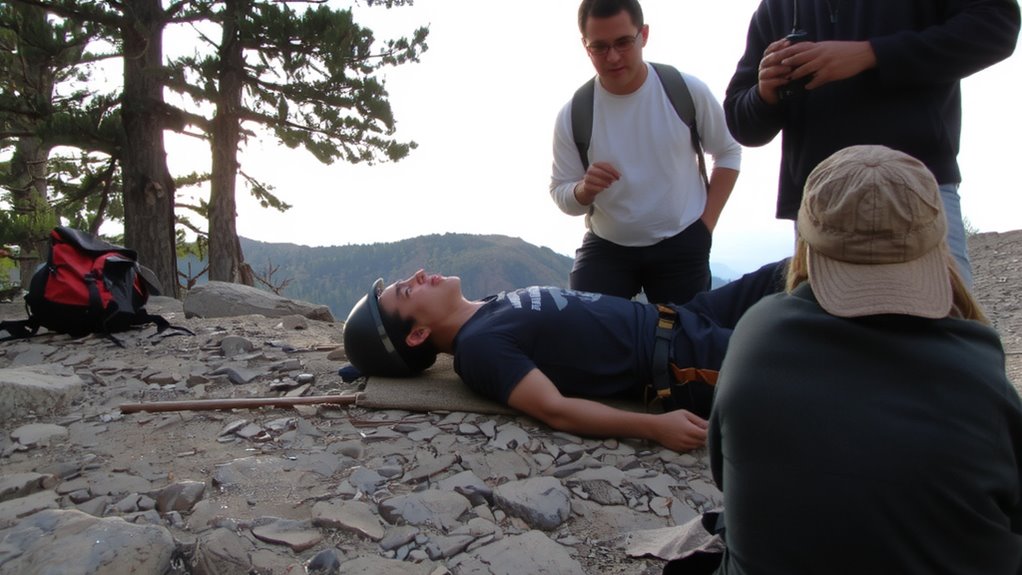
While checking mental status gives you a baseline, spotting clear signs of spinal injury sharpens your assessment. Look for obvious spinal deformity-any unnatural curves, bumps, or misalignments along the back or neck. That’s a red flag. You can’t afford to ignore it. Check for neurological symptoms like numbness, tingling, or loss of sensation, especially in the limbs. If the person reports weakness or can’t move a body part, assume spinal involvement. Don’t probe or push-just observe. Even slight tenderness along the spine matters if paired with mechanism of injury. On a remote trail, you won’t have imaging; you rely on visible cues and reported symptoms. A person might be alert but still have spinal damage. Recognizing deformity and neurological symptoms narrows risk fast. These signs don’t confirm severity, but they demand immobilization. Moving someone with suspected spinal injury could worsen harm.
Test for Spinal Injury in Arms and Legs
What can you actually do to check for spinal injury when you’re far from help? Perform a basic neurological assessment by testing motor function in the arms and legs. Ask the person to squeeze your hands and push against your resistance with their feet. Note any weakness, numbness, or lack of coordination. Even small differences between sides can signal spinal damage. A well-stocked first aid kit can include tools like gloves and splints to help manage spinal injury risks during assessment. Below is a quick reference for key motor tests:
| Limb | Action to Test | Normal Response |
|---|---|---|
| Arm | Grip strength | Firm squeeze |
| Arm | Shoulder lift | Holds arm up |
| Leg | Foot push | Strong push |
| Leg | Toe raise | Lifts foot |
| Leg | Hip flexion | Raises thigh |
These checks help spot immediate problems in motor function. Keep movements minimal and stop if pain increases. This assessment isn’t definitive but guides urgency.
Keep the Person Still to Prevent Further Injury
You’ve checked for obvious weaknesses or numbness in the arms and legs, and now the priority shifts to minimizing movement. Any shift could disrupt spinal alignment and worsen damage. You should keep the person as still as possible, ideally lying flat unless breathing is compromised. Support the head and neck with your hands or available gear, but don’t lift or adjust-just maintain position. Movement risks compressing nerves or damaging the spinal cord, which directly affects neurological function. Even if the person feels fine, internal changes may not be immediately obvious. Stabilizing the spine reduces the chance of converting a minor injury into paralysis. Talking helps monitor awareness, but avoid jerking or sudden motions when responding. Every adjustment should be deliberate and minimal. The goal isn’t comfort-it’s safety. Keeping the spine neutral preserves the best chance for full recovery.
Begin Emergency Evacuation When Needed
How do you know when staying put becomes more dangerous than moving? If the person shows worsening symptoms-like increasing numbness, trouble breathing, or unstable essential signs-waiting could risk their life. In remote areas, delays in care can turn manageable injuries into emergencies. You’ll need to initiate evacuation, especially if shelter, weather, or terrain threatens survival. Call for help immediately-helicopter transport is often the fastest, safest option for spinal injuries in inaccessible spots. It minimizes movement and cuts rescue time. But no evacuation should happen without medical clearance when possible. Remote guidance from medics helps confirm that moving the patient won’t cause further harm. If you’re unsure, weigh the dangers of delay against risks of transport. Clear signals of deterioration mean acting fast outweighs waiting. Move only when staying puts them at greater risk.
On a final note
You should assume a spinal injury after any fall in the backcountry if there’s neck or back pain, numbness, or weakness. Don’t move the person unless necessary-they stay immobilized. Use a bear-hug or manual inline stabilization during evacuation if help is hours away. A litter or improvised sled cuts movement by 70% versus carrying. You trade speed for safety, but preventing paralysis beats fast extraction. Know your limits-delaying when unsure beats a worse outcome.