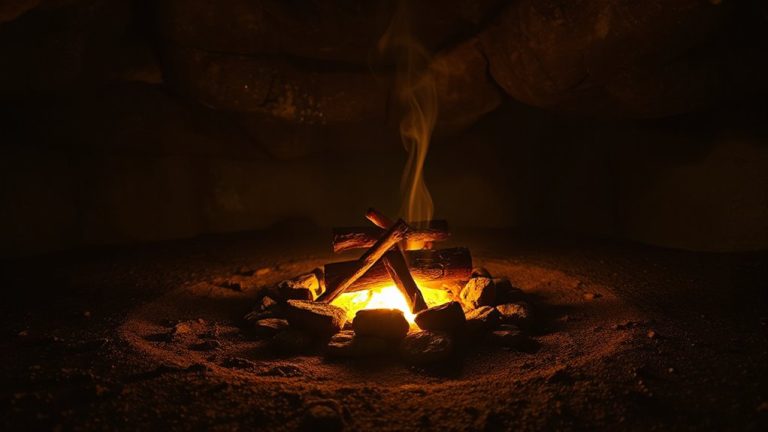
Rock-Ring Shelter for Open Desert: 6-8 Ft Build Guide
Pick a natural rise or shallow depression to cut wind exposure by at least 60%. Build a 12–18 inch rock ring with snug, interlocked stones, base-weighted for stability. Anchor a 10×10 ft silnylon tarp or dense brush overhead to block sun and wind. Position west-side rocks to shield afternoon heat, and adjust openings for airflow by day, sealed insulation at night. You’ll get better results by following the full build sequence.
Notable Insights
- Choose a natural terrain break like a shallow depression to minimize wind exposure in open desert areas.
- Build a 6 to 8-foot diameter rock ring 12 to 18 inches high using snugly fitted, heavy base stones for stability.
- Position the shelter’s opening away from prevailing winds and use western rock masses to block afternoon heat.
- Anchor a lightweight 10×10 ft tarp with paracord to rocks or stakes for effective overhead weather protection.
- Adjust shelter ventilation and cover throughout the day to manage heat and retain warmth during cold desert nights.
Pick the Best Spot for a Rock-Ring Shelter
Where should you start when the wind’s already whipping across the open desert? You start by reading the land-immediately. Look for natural breaks in the terrain that disrupt wind direction, like a low rise or a shallow depression. These spots reduce your exposure and lessen the shelter’s structural strain. Avoid open, elevated areas where wind accelerates. Check sun exposure carefully; position your shelter so the morning sun reaches it, but guarantee afternoon shade is possible. A site with rock formations to the west blocks intense late heat. Wind direction shifts matter-don’t rely on a single observation. Watch dust movement and feel wind changes over 15-minute intervals. Ground stability is non-negotiable; avoid loose sand. You need compact soil or gravel. Every decision here directly impacts your shelter’s effectiveness. Pick wrong, and you fight the elements all night.
Build a Stable Rock Ring Step by Step
You’ve picked your spot-now it’s time to put the plan into action by building the rock ring itself. Start by clearing loose debris and outlining a circle 6 to 8 feet in diameter. Use flat, medium to large rocks-each weighing at least 5 to 10 pounds-to form a single ring about 12 to 18 inches high. Fit them snugly to enhance rock stability, preventing shifting in soft ground. Place larger, heavier stones at the base and stack smaller ones toward the top, angling them slightly inward. This boosts wind resistance by creating a denser barrier against gusts. Avoid wide gaps; fill spaces with smaller rocks to minimize erosion and movement. The ring must remain low to reduce wind load while still providing adequate support for later cover. Test stability by gently nudging each section-rocks shouldn’t wobble or shift. A solid foundation now guarantees reliable performance when conditions worsen.
Cover Your Rock-Ring Shelter With Tarps or Brush
Once the rock ring is secure, it’s time to add overhead cover to block wind and rain. Use a sturdy tarp and anchor it with paracord tied to nearby rocks or stakes. Proper tarp tension prevents sagging and shedding rain efficiently-too loose, and water pools; too tight, and it rips in strong gusts. A 10×10 ft silnylon tarp weighs under 2 lbs and offers adequate coverage without excess bulk. If tarps aren’t available, layer thick brush over the frame. Aim for high brush density-enough that you can’t easily see through it-to stop wind and light precipitation. Sparse coverage fails in rain. Brush insulates slightly but flattens over time, unlike a tarp. Tarps last longer and handle weather better, but brush is free and silent in wind. Choose based on weight, availability, and need. For extreme desert cold nights, consider a sleeping setup with a cold weather sleeping bag to maintain core temperature.
Keep Cool by Day, Warm by Night
Though desert temperatures swing drastically between day and night, managing heat isn’t about a single solution but layering strategies. Thermal regulation starts with timing and positioning-stay low during peak heat, insulate at night. Airflow management reduces radiant gain while promoting passive cooling. Use breathable layers and adjust shelter gaps to balance internal microclimate.
| Time | Strategy | Effect |
|---|---|---|
| 10 AM | Open windward side | Enhances airflow |
| 2 PM | Close sun-facing side | Blocks solar gain |
| 6 PM | Partial cover | Retains warmth |
| 10 PM | Seal gaps | Improves insulation |
| 3 AM | Add rock mass contact | Stabilizes temperature |
Ventilation and thermal mass work together. You won’t eliminate discomfort, but you’ll minimize it with consistent airflow management and strategic thermal regulation.
Why Rock-Ring Shelters Work in the Desert
Rock-ring shelters perform well in the desert because they leverage natural materials and environmental dynamics to stabilize internal temperatures. You use stacked rocks to create thermal insulation, slowing heat transfer between day and night. The dense stone absorbs solar radiation during the day, reducing interior temperature spikes, then releases heat slowly after sunset, keeping you warmer. This thermal mass effect balances extremes without extra gear. The ring shape also provides wind deflection, breaking gusts and reducing convective heat loss at night. You stay more comfortable with less exposure. Rock placement matters-tighter stacking improves wind deflection, while height and diameter influence airflow and insulation efficiency. These shelters won’t block all wind or cold, but they markedly improve microclimate conditions. They’re simple, durable, and require no tools. You rely on physics, not fabric, making them reliable in harsh, remote settings where gear failure isn’t an option.
Avoid These Rock-Ring Shelter Mistakes
If you skip site selection, your rock-ring shelter won’t perform no matter how well you stack the stones. Choosing flat ground with poor drainage leads to pooling water during rare but heavy desert rains, increasing erosion and structural risk. You need a slight slope to encourage runoff. Avoid areas with loose rocks on inclines-these can shift under pressure or temperature changes, compromising wall integrity. Stack stones tightly, interlocking them to resist wind. Don’t build too high; stability drops past 2–3 feet without internal support. Overbuilding adds unnecessary weight and effort with minimal thermal benefit. Guarantee the shelter’s opening faces away from prevailing winds. Poor positioning increases heat loss and sand intrusion. Test stability by gently shaking the base-any movement means it needs reinforcement. Each decision affects performance, so prioritize function over form. Your shelter’s reliability depends on these details.
On a final note
You’ve built a functional shelter using minimal tools and local materials. A rock ring keeps your structure secure in wind, while tarps or brush provide shade or heat retention. It’s simple, quick, and effective-no added weight or cost. But it won’t block heavy rain or stop moisture. In dry, open desert, this setup works well enough. Choose materials wisely and site carefully. It’s not perfect, but it’s reliable.