How to Identify Emergency Risks for People With Respiratory Conditions
You’re at risk if you miss early signs like rapid breaths, trouble speaking full statements, or bluish lips and nail beds. Incorrect inhaler use cuts medication effectiveness by half, so shake, exhale, inhale slowly, and hold your breath. Watch for mental fog or fatigue-early oxygen loss isn’t always obvious. When breathing stops at rest or chest pain spreads, call 911. Prepare now, and you’ll act faster when it counts.
Notable Insights
- Inability to speak in full sentences may signal respiratory distress and requires immediate attention.
- Rapid, shallow breathing or visible chest retractions indicate increased breathing effort and potential respiratory compromise.
- Cyanosis, shown by bluish lips or nail beds, is a critical sign of low oxygen levels.
- Mental confusion or unusual fatigue after light activity can reflect dangerously low oxygen saturation.
- Gasping, chest pain, or speaking in broken phrases warrant calling 911 immediately.
Spot the Signs of a Respiratory Emergency
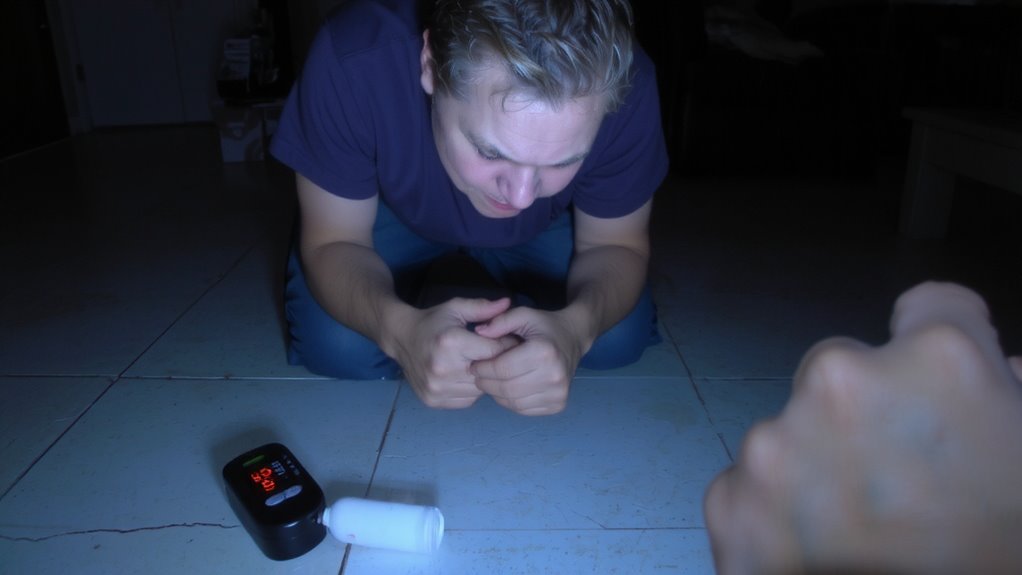
What if you could recognize the early warning signs before a respiratory issue turns critical? You can-by watching for measurable changes in breathing effort and appearance. If you’re struggling to speak in full phrases or your breaths are rapid and shallow, it’s a red flag. Perform a cyanosis check: look for bluish lips or nail beds, a sign of low oxygen. That’s not a minor setback-it means your body isn’t getting what it needs. Don’t dismiss sudden dizziness or extreme fatigue either; they can point to oxygen deprivation, not just a panic attack. While anxiety can mimic respiratory distress, true emergencies show physical markers that don’t resolve with calming alone. Chest retractions, nasal flaring, or using neck muscles to breathe are visible signs your system is overcompensating. Recognizing these early gives you time to act before the situation escalates.
Use Rescue Inhalers the Right Way
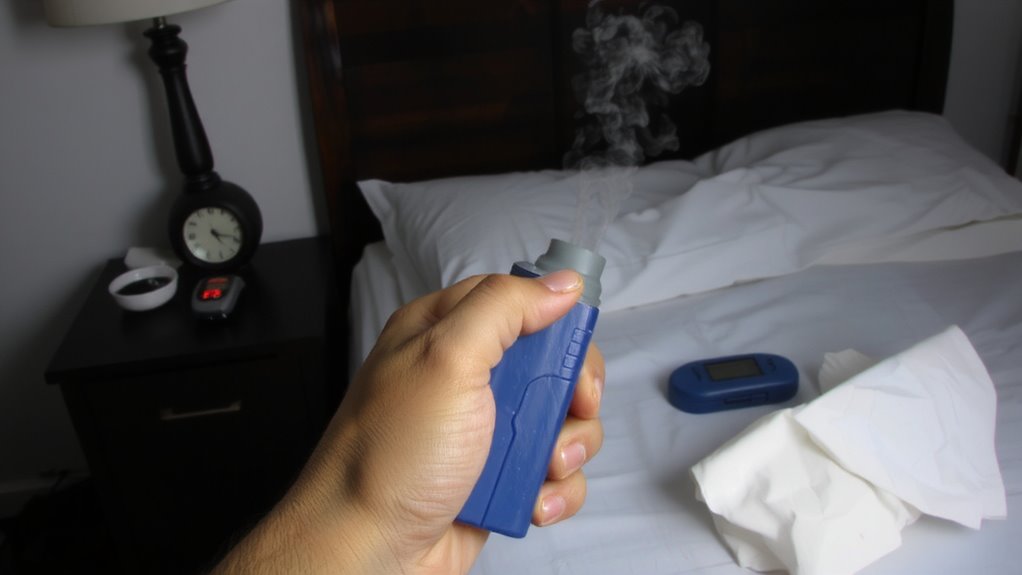
Even if you carry a rescue inhaler, it won’t help much unless you use it correctly-most people miss at least one step, reducing the medicine’s effectiveness by up to 50%. Proper inhaler technique and correct dosage timing are essential for reliable symptom relief. You must coordinate pressing the canister with slow, deep inhalation. Holding your breath for 10 seconds after guarantees full delivery. Below is a quick-reference table to guide consistent use:
| Step | Action | Purpose |
|---|---|---|
| 1 | Shake inhaler, exhale fully | Prepares dose, clears lungs |
| 2 | Press canister while inhaling slowly for 3–5 seconds | Guarantees proper inhaler technique |
| 3 | Hold breath 10 seconds | Maximizes correct dosage timing |
Skipping steps cuts drug delivery. Practice regularly-even without symptoms-to maintain accuracy and response speed during emergencies.
Watch for Subtle Signs of Oxygen Loss
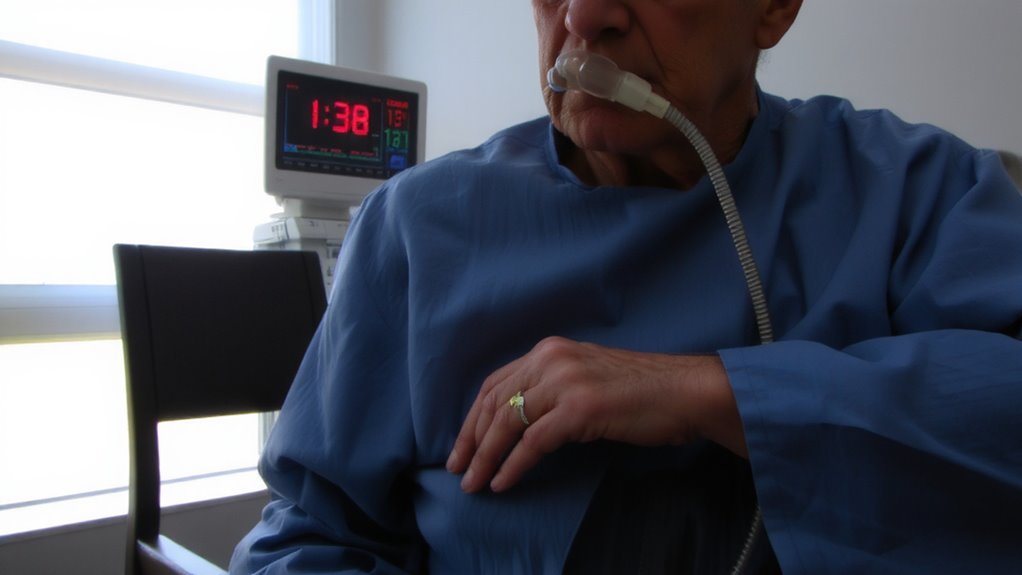
How quickly can you spot a drop in oxygen levels before it becomes critical? You need to monitor changes closely, especially if you have a respiratory condition. A subtle rise in fatigue levels can be one of the earliest warnings-feeling unusually tired even after light activity may signal low oxygen. Don’t ignore mental fog or difficulty concentrating; your brain isn’t getting enough O₂. Check for cyanosis symptoms: a bluish tint around the lips, fingertips, or face means oxygen saturation is dangerously low. These signs aren’t always dramatic, so routine pulse oximeter checks help track trends. Relying only on how you feel is risky-symptoms often appear only after oxygen has already dropped substantially. Catching declines early improves outcomes. Watching fatigue levels and recognizing early cyanosis symptoms gives you time to act before the situation worsens.
Call 911: When Breathing Trouble Turns Critical
A sudden inability to catch your breath, even at rest, means you’re out of time-call 911 immediately. If you’re gasping, speaking in broken phrases, or feel chest pain that radiates to your arm or jaw, these aren’t mild flare-ups-they’re danger signals. Chest pain during breathing trouble can indicate strain on your heart or a possible clot, so don’t wait. Perform a cyanosis check: look at your lips, fingertips, or nail beds. If they’re turning blue, your oxygen levels are critically low. That’s not a sign to “wait and see”-it’s a red line. You won’t recover by pushing through. Emergency responders can start treatment en route, which saves time and function. Using a home oxygen concentrator? It won’t fix this level of failure. Skip driving yourself or calling a relative to assess. Seconds count. Call 911 now.
Build Your Breathing Emergency Action Plan
You just called 911-good. Now, stay calm and start your Breathing emergency action plan. Sit upright, stay still, and begin slow breathing exercises: inhale for four counts, hold for four, exhale for six. These help reduce panic and improve airflow until help arrives. Keep a printed list of emergency contacts near your phone, including your doctor, a nearby family member, and your pharmacy. Everyone on that list should have your condition details and current medications. Test this plan monthly-update contacts, check medication expiration dates, and practice breathing exercises. A functional plan doesn’t rely on memory; it uses clear steps and accessible tools. Include backup power for medical devices and confirm your contacts are reachable at night. This plan won’t stop an attack, but it improves response speed and coordination when seconds count. Review it every six months or after a hospital visit.
On a final note
You know your breathing patterns, so act fast when they change. Use your rescue inhaler as directed-it works quickly but won’t fix worsening symptoms alone. Check for pale skin or confusion; these signal low oxygen. Don’t wait: call 911 if breathing becomes labored. Your action plan should list medications, contacts, and steps-test it regularly. Preparedness improves outcomes when seconds count.