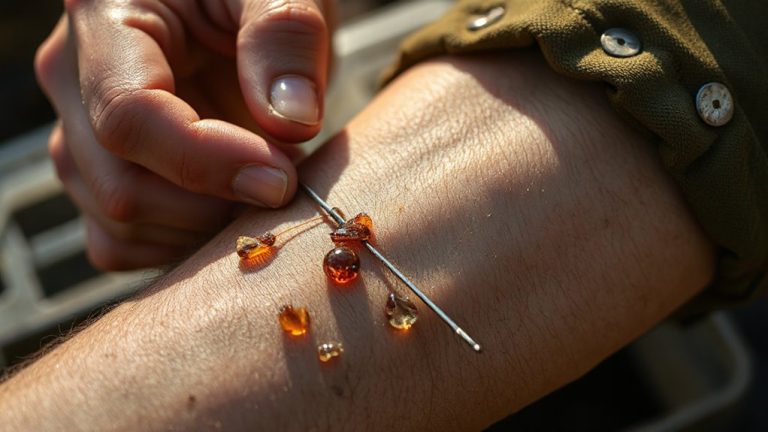
How to Sterilize Instruments Over a Campfire for Wound Care
Hold your metal tools in the campfire’s flame for 30 seconds per side using tongs, ensuring they glow faintly to kill pathogens. Use only solid stainless or carbon steel tools-no plastic or wood parts. Let the fire burn down to hot coals, hitting at least 1,200°F. Cool tools on clean foil or in sterile sand, never touching them by hand. Flame beats boiling or alcohol when possible, but know the limits. More details follow on safe handling and backups.
Notable Insights
- Use only metal instruments made of stainless or carbon steel with no plastic or wooden parts.
- Build a hot campfire with dry hardwood, letting it form glowing coals reaching at least 1,200°F.
- Hold each side of the tool in the flame for 30 seconds, rotating steadily until it glows faintly.
- Cool sterilized tools on a clean cloth or foil, using tongs to avoid contamination.
- If flame sterilization isn’t possible, boil tools for 20 minutes or use 70% isopropyl alcohol.
Sterilize Metal Tools Using Direct Flame
You can sterilize metal tools over a campfire by holding them in the direct flame for at least 30 seconds per side, which effectively kills most bacteria, viruses, and spores through sustained high heat. Flame duration matters-less than 30 seconds may not guarantee full sterilization, especially for thicker tools. You must maintain consistent exposure to achieve reliable results. Tool rotation is critical; turn each instrument steadily to guarantee even heat distribution and avoid cold spots. Use tongs or a wire loop to rotate safely and maintain control. The metal should glow faintly, indicating it has reached sufficient temperature. Don’t leave tools in too long, though-excessive heating can weaken temper or damage fine edges. This method works best on solid steel items without plastic or rubber parts. It’s a field-expedient solution, not sterile-room equivalent, but it reduces infection risk considerably when alternatives aren’t available.
Choose Campfire-Safe Instruments First
Metal tools that can withstand direct flame without degrading are the only ones suited for campfire sterilization. You need instruments made of high-quality stainless steel or carbon steel, as these materials resist warping and corrosion under intense heat-material selection directly impacts safety and effectiveness. Avoid tools with plastic, rubber, or wooden handles; they’ll melt or catch fire. Check manufacturer specs: solid metal construction guarantees even heat distribution and durability. Inspect each tool for cracks, rust, or pitting before exposure to flame-these compromise sterility and indicate poor tool maintenance. Smooth, seamless surfaces are easier to clean and less likely to harbor bacteria. Tongs, tweezers, and scalpels with all-metal builds perform best. Replace any instrument showing signs of wear. Choosing the right tools upfront reduces failure risk when sterilization is critical. Your selection determines whether the process works-or fails. A reliable EDC knives choice often features the durable all-metal build ideal for rugged, sterile conditions.
Build a Fire Hot Enough to Kill Germs
Heat is the non-negotiable factor when it comes to killing pathogens, and your fire needs to reach at least 1,200°F to reliably sterilize metal instruments. You won’t achieve that with damp wood or sparse flames. Use dry hardwoods like oak or hickory-they burn hotter and longer. Build a tight, compact fire and let it collapse into glowing coals; that’s where consistent heat control happens. Avoid propane or accelerants-they’re risky and compromise fire safety. Position the coals to create a concentrated zone of maximum heat. Test readiness by holding the instrument near the coals; if it glows faintly red after a minute, you’re close. Use metal tongs to manage placement, minimizing flare-ups. Keep a water source nearby for fire safety. Steady, sustained heat beats sudden bursts. This method won’t guarantee surgical sterility, but it markedly reduces pathogens in emergencies. Know the trade-offs.
Cool Tools Without Recontamination
Once the instruments have been exposed to sufficient heat, cooling them properly is just as critical as the sterilization step, since improper handling can reintroduce contaminants. Use clean cooling techniques and controlled transfer methods to maintain sterility. Let tools cool in a dust-free area, away from ground contact. Never use bare hands-even brief contact introduces bacteria. Below are reliable approaches:
| Cooling Technique | Transfer Method | Risk Level |
|---|---|---|
| Air-cool on sterile cloth | Tongs to sterile field | Low |
| Stand upright in clean sand | Gloves over cloth | Moderate |
| Place on foil | Sterile gauze wrap | Low |
| Hang with wire loop | Avoid direct touch | Moderate |
Each option balances practicality with contamination control. Air-cooling on foil or cloth paired with tongs offers the best reliability in the field.
When Not to Use Flame: Alternative Methods
While flame sterilization works for many tools, it’s not suitable for instruments with plastic components, rubber grips, or delicate tips that can warp or degrade under high heat. In those cases, you’ll need alternatives. Boiling water is a reliable option-submerge the tool fully in rolling water for at least 20 minutes to kill most pathogens. It’s effective for metal and glass but doesn’t sterilize as thoroughly as flame and may miss heat-resistant spores. For items that can’t withstand heat at all, chemical disinfection is your best bet. Use a solution like 70% isopropyl alcohol or bleach diluted to 0.5%, soaking the instrument for the recommended time. Chemical disinfection won’t guarantee sterility but reduces microbial load considerably. Neither method matches flame’s effectiveness, but both are practical when high heat isn’t an option. Choose based on tool material and available resources.
Why Fire Sterilization Beats No Sterilization
When lives are on the line, skipping sterilization isn’t an option-and fire gives you a fighting chance. You’re facing real risks if you use unsterilized tools on open wounds: infection, sepsis, even death. Fire may not offer lab-grade sterility, but it delivers critical benefits over doing nothing. Direct flame kills most bacteria, viruses, and fungi instantly. You can achieve this with a campfire, lighter, or stove-no special gear needed. While flame doesn’t remove debris, heating tools until red-hot reduces pathogen load markedly. The risks of incomplete sterilization remain, especially with uneven heating. But compared to zero protection, those risks are far smaller. You accept a trade-off: imperfect method versus near-certain danger. In remote settings, fire is reliable, immediate, and effective enough. Benefits outweigh risks every time when survival’s the goal. Use it.
On a final note
You should only sterilize metal tools this way if they’re fire-safe and you have no other option. Flame kills most germs quickly, but it can damage tools or leave residues. Cooling them in clean gauze or air prevents recontamination. It’s not perfect-autoclaving is better-but in the wild, flame beats nothing. Weigh the risks: unprotected wounds are far more dangerous than imperfect sterilization when supplies are limited.