Using Solar Dehydrators to Dry Wild Edibles in Off-Grid Conditions
You can dry wild edibles off-grid with a solar dehydrator that uses no electricity or fuel, relying only on sunlight to generate 95–140°F. Build one from scrap wood and recycled glass, add mesh trays and ventilation, then load it with thin-sliced mushrooms, berries, or roots. It works best in direct sun with low humidity. Performance drops on cloudy days, and high-moisture greens often spoil. For reliable results, harvest at peak dryness, prep uniformly, and rotate trays. Proper sealing and storage prevent spoilage. There’s more to getting consistent results in varying conditions.
Notable Insights
- Solar dehydrators use sunlight to generate heat, enabling off-grid food preservation without electricity or fuel.
- Construct units from recycled materials like wooden crates, glass, and mesh for low-cost, sustainable drying.
- Dry low-moisture wild edibles such as mushrooms, berries, and fibrous roots for efficient, spoilage-resistant results.
- Harvest wild foods at peak ripeness, clean thoroughly, and slice uniformly to ensure consistent dehydration.
- Store dried edibles in sealed, dark containers with oxygen absorbers to maximize shelf life and nutrient retention.
Why Solar Dehydrators Work Off the Grid
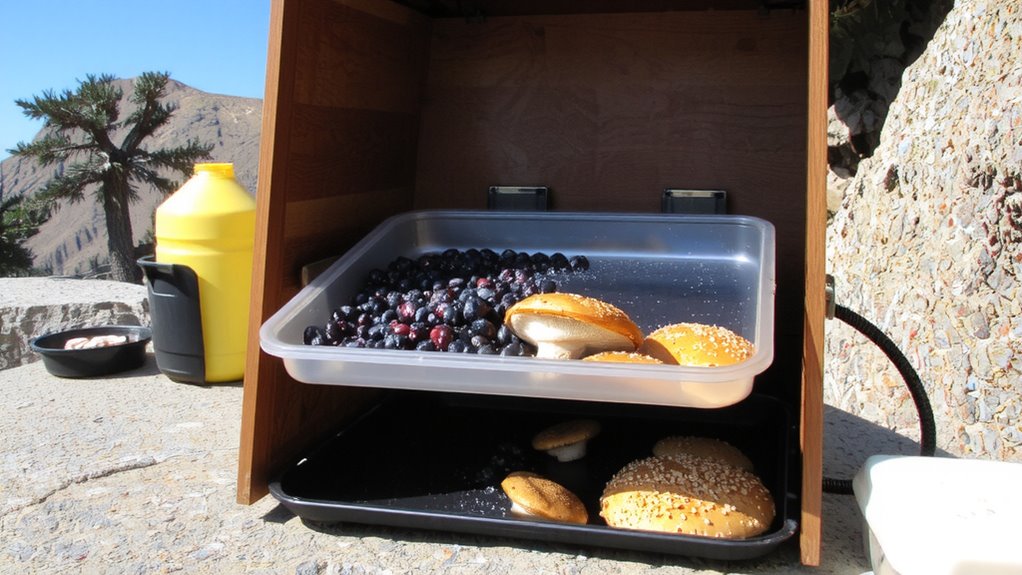
While you’re living off the grid, where power sources are limited or nonexistent, a solar dehydrator makes sense because it runs entirely on sunlight-no electricity, no fuel. It uses passive heating to trap and circulate warm air, drawing moisture from wild edibles like mushrooms, berries, and herbs without external power. This method offers reliable performance in sunny conditions, typically reaching 95–140°F, depending on design and insulation. You gain energy independence, reducing reliance on generators or firewood. Unlike electric models, it won’t fail during extended storms or fuel shortages. It works slowly but effectively, preserving nutrients and preventing spoilage over days. There’s no cost to operate, and maintenance is minimal-just keep the glazing clean and guarantee airflow isn’t blocked. In remote areas, where resupply is hard, a solar dehydrator isn’t a luxury-it’s a practical preservation tool that functions year after year. For those considering alternatives, the best food dehydrators for preppers include solar-powered options that align well with off-grid sustainability.
How to Build a Solar Dehydrator From Recycled Materials
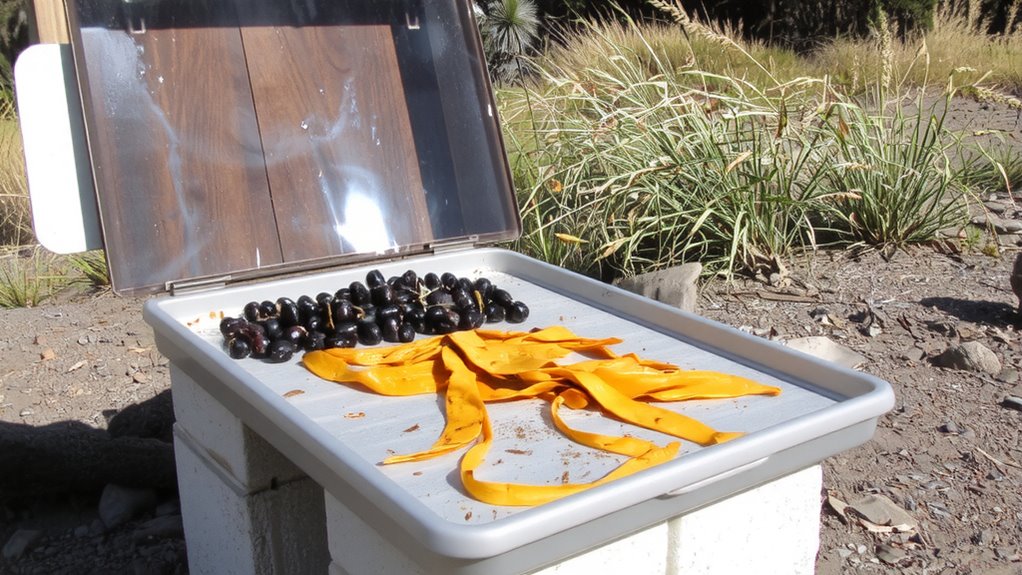
How do you build a solar dehydrator that actually works without spending much? Start with smart material selection-use an old wooden crate for the frame, recycled glass or clear plastic for the top, and aluminum foil to line the interior. These reflect heat efficiently and are often free. Elevate the base slightly to allow air movement. Use window screen or mesh to make trays that won’t warp or rust. Your airflow design is critical: place intake vents near the bottom and exhaust vents at the top so hot air rises and pulls moisture out. Position the unit in full sun with the lid angled toward the sun. This setup typically reaches 110–140°F, enough to dry food safely in 1–3 days, depending on climate. It’s simple, functional, and reliable when built with consistent airflow design and durable, repurposed materials. For those considering powered alternatives, commercial food dehydrators offer precise temperature control and consistent results.
Best Wild Edibles to Dry in a Solar Dehydrator
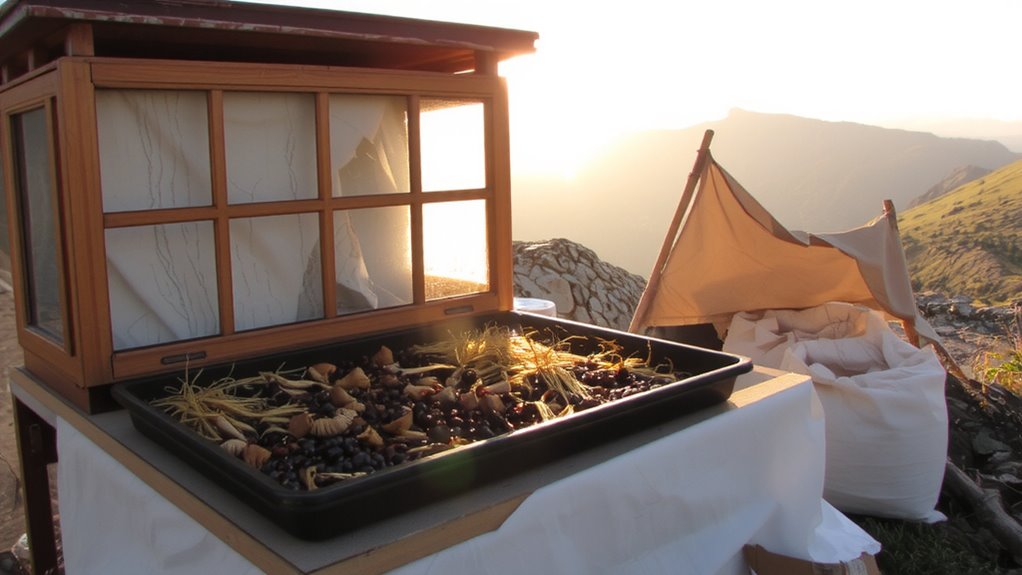
A solar dehydrator works best with wild edibles that have low moisture content and tough, fibrous, or thin-cut structures, making them ideal for safe, efficient drying. You’ll get reliable results with mushrooms like morels or chanterelles, commonly found during mushroom foraging-they dry evenly and retain flavor and texture well. Thinly sliced cattail stems and dandelion roots also dehydrate effectively due to their fibrous density. For fruit picking yields, opt for small wild berries such as elderberries, hawthorn, or serviceberries; their high sugar and low water content supports faster drying and better shelf stability. Avoid high-moisture plants like wild greens or lilies-they’re inefficient and prone to spoiling. Choose mature, firm specimens, as they tolerate prolonged sun exposure without degrading. With consistent airflow and direct sunlight, these foods typically dry in 12–24 hours, depending on thickness and humidity.
How to Harvest and Prep Wild Foods for Solar Drying
Timing and technique make all the difference when harvesting wild edibles for solar drying. Harvest timing affects nutrient levels and shelf life-pick greens at dawn after dew evaporates, berries when fully ripe, and roots after the plant dies back. Avoid wet or stressed plants; they dry poorly and mold easily. Use clean, sharp tools to limit damage and prevent contamination. For preparation methods, rinse items gently in cool water and spin or pat dry. Remove stems, seeds, or tough parts that hinder even drying. Slice uniformly-¼-inch thick works for most-so pieces dehydrate at the same rate. Delicate leaves like mint need no slicing; sturdier items like mushrooms or cattail roots benefit from thin, consistent cuts. Spread prep time efficiently by batch-processing one species at a time. Proper harvest timing and preparation methods directly impact drying speed, texture, and storage stability in off-grid conditions.
Drying in Cloudy or Windy Weather
Even if the sun’s not shining, you can still make progress drying wild edibles, though drying times will stretch-expect 2 to 3 times longer under overcast skies compared to full sun. Wind helps offset low sunlight by improving dehydrator ventilation, which reduces surface moisture and speeds evaporation. However, high humidity or steady rain increases moisture retention in both air and food, slowing results. Position your unit where wind flows freely through intake and exhaust vents, but avoid gusts that cool the chamber too much. Some solar models include insulated walls or dark interior surfaces to retain heat on cloudy days. If drying stalls, rotate trays more often to expose even air exposure. You won’t get full efficiency, but consistent airflow prevents spoilage. In prolonged clouds, consider supplemental heat sources, though they defeat full off-grid use. Monitor texture daily-leathery or crisp means you’re close.
Storing Dehydrated Wild Foods Long-Term
Your dehydrated wild foods won’t stay good forever unless you store them right. Moisture and oxygen are the main causes of spoilage, so removing both is critical. Vacuum sealing slows degradation by limiting air exposure, but it’s not enough on its own. Always pair it with oxygen absorbers-those small packets soak up residual oxygen inside the bag or container. Use absorbers rated for your storage volume; 100cc per quart works reliably. Glass jars, food-grade buckets, or Mylar bags work well when sealed properly. For maximum longevity, consider using best Mylar bags which provide an excellent moisture and oxygen barrier when heat-sealed. Store in a cool, dark place to prevent nutrient loss and rancidity. Light and heat speed up oxidation, even in vacuum-sealed packages. Vacuum sealing with oxygen absorbers extends shelf life to 1–2 years for most wild edibles. Without them, mold or spoilage can develop in months. This method doesn’t require power, making it practical off-grid. Test seals regularly and replace damaged containers.
Fixing Common Solar Drying Problems
Why do some solar dehydrators fail to dry food evenly or completely? You’re likely dealing with poor airflow or inconsistent sun exposure, leading to uneven drying. Rotate trays every few hours to promote uniform results, especially in single-chamber units. Position the unit due south and adjust the angle with the sun’s path to maximize heat. If moisture lingers after 24 hours, check the ambient humidity-above 60% slows drying. For pest intrusion, secure mesh screens tightly over vents; 1/8-inch hardware cloth keeps out insects and rodents without restricting airflow. Avoid gaps around doors or seals where critters can enter. Some models use flaps that close at night-effective but not foolproof. Pre-clean food thoroughly to avoid attracting pests. In testing, units with full mesh lining and locking latches showed zero pest intrusion over seven days. Simple modifications often fix flaws in basic designs.
On a final note
You can dry wild edibles reliably with a solar dehydrator, even off-grid. It works best in direct sun but still performs on hazy days. Drying times vary from 6 to 48 hours, depending on thickness and moisture. Proper airflow and temperature control prevent spoilage. Once dried, store in vacuum-sealed bags or jars with oxygen absorbers. Shelf life reaches 6–12 months. It’s low-cost, fuel-free, and effective if built and used correctly.