How to Sustainably Harvest Tree Bark for Emergency Food and Medicine
You can harvest bark sustainably by choosing resilient species like paper birch or slippery elm and taking a narrow strip from one side in late spring, leaving at least 90% of the trunk intact. Make vertical and horizontal cuts, then peel gently to avoid killing the tree. Use the inner bark for food-dry and grind it-or prepare medicinal teas from willow or oak bark. Always let the tree recover fully. The next steps reveal how timing and care affect results.
Notable Insights
- Identify resilient species like paper birch or slippery elm to avoid harming vulnerable trees.
- Harvest bark in late spring when sap flow is high for easier, less damaging removal.
- Limit harvesting to 10% of the trunk’s circumference to prevent tree death.
- Collect inner bark for food and use willow or elm for medicinal properties.
- Avoid sealing wounds and monitor the tree for pests or disease after harvest.
Choose the Right Trees for Sustainable Bark Harvesting
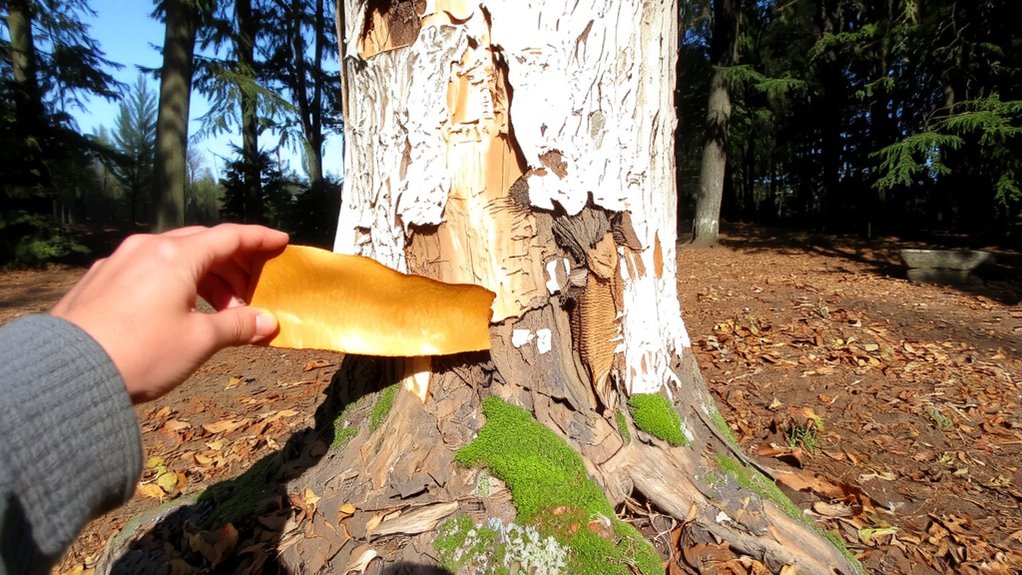
While not every tree can handle bark removal without serious harm, picking the right species makes sustainable harvesting possible. You need accurate tree identification to avoid damaging vulnerable or toxic species. Paper birch, white cedar, and slippery elm are resilient and commonly used, but misidentifying them risks both the tree and your safety. Use bark texture, leaf shape, and growth pattern to confirm your target. Seasonal awareness matters-harvest in late spring when sap flows high, making bark easier to remove with less damage. Avoid winter, when trees are dormant and less able to recover. Some bark peels cleanly then; other times, it tears, increasing harm. You’ll get better yield and reduce stress on the tree when timing aligns with natural cycles. Choose wisely, harvest carefully, and sustainability follows.
Harvest Bark Without Killing the Tree
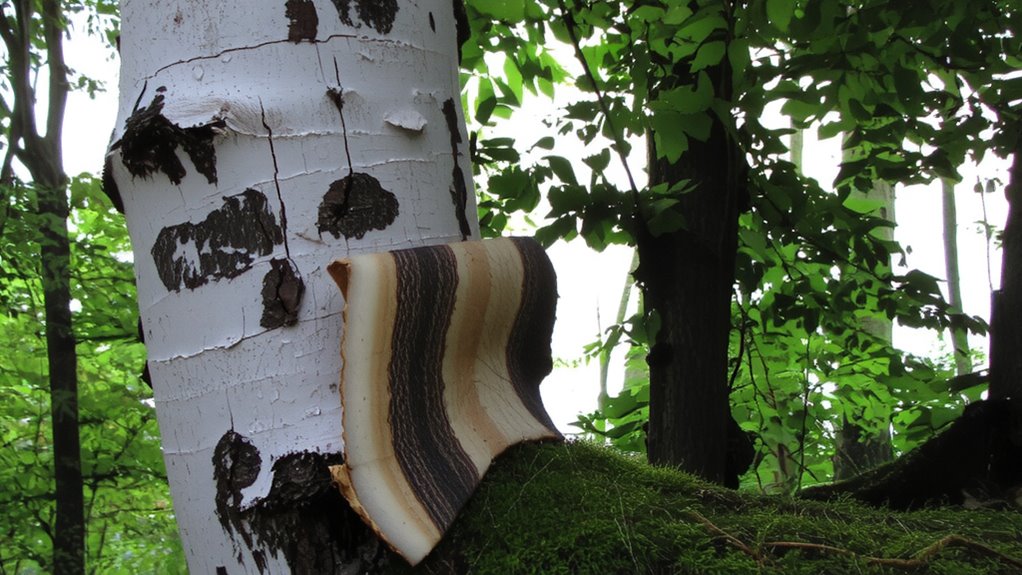
You’ve picked the right tree and timed your harvest for late spring, so now it’s time to remove the bark without causing fatal damage. Use a sharp tool to make two horizontal cuts 6 inches apart, then connect them with vertical lines. Peel off the strip carefully-this method supports bark regeneration and limits disease entry. Never remove a full circle, as it kills the tree by interrupting nutrient flow. Instead, take a single strip from one side. Ethical harvesting means taking only what the tree can recover from.
| Tree Size | Max Strip Length |
|---|---|
| 6 inches diameter | 6 inches |
| 12 inches diameter | 12 inches |
| 18 inches diameter | 12 inches |
| 24+ inches diameter | 18 inches |
Limit removal to 10% of the trunk’s circumference. This guarantees survival and promotes bark regeneration. Ethical harvesting sustains both your needs and the tree’s life.
Care for the Tree After Harvesting Bark
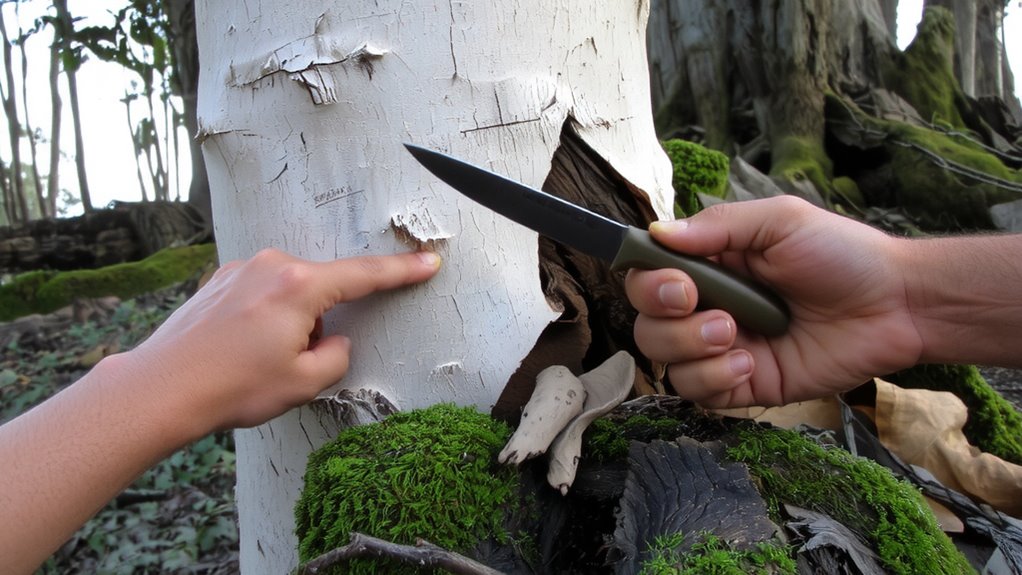
After removing the bark strip, inspect the exposed area to verify clean edges with no ragged tears or loose flaps-this reduces the risk of infection and speeds up healing. Trim any loose bark with a sterilized knife to improve wound protection. Avoid sealing the wound with synthetic compounds; trees heal naturally when undisturbed. Keep the area clear of debris and monitor for pests or fungal growth. Tree recovery depends on species resilience and environmental stress-birch and cedar typically rebound faster than oak or maple. Make sure the tree retains enough bark circumference to transport nutrients. Never harvest more than one-third of the circumference to maintain health. Water sparingly if conditions are dry, as overwatering can hinder recovery. Your actions directly influence long-term survival. A well-managed wound heals within one to three growing seasons. Regular checks increase the odds of successful tree recovery without lasting damage.
Prepare Inner Bark for Emergency Food
Once the tree has been harvested responsibly and the outer bark removed, you can access the inner bark layer-known as the cambium-for use as emergency food. You’ll want to harvest it in spring when sap flow is highest, as this increases moisture and nutritional value. The cambium is rich in carbohydrates and some vitamins, offering modest caloric support when dried and processed. Peel it in thin strips, then dry it completely in the sun or near a fire to prevent spoilage. You can grind it into a coarse flour for making emergency biscuits or thickening stews. For long-term use, consider your storage methods: keep it in airtight containers away from moisture and pests. It won’t last indefinitely, so rotate it regularly. Though not a complete food source, its availability in wilderness settings makes it a practical survival option when other foods aren’t accessible.
Use Tree Bark for Natural Medicine
What makes certain tree barks effective in natural medicine? Their chemical composition offers measurable therapeutic effects. You can rely on barks like white willow and slippery elm for their proven anti inflammatory properties, which help reduce pain and swelling when synthetic meds aren’t available. These compounds, such as salicin in willow bark, act similarly to aspirin but with slower onset and milder impact. Some barks also provide wound healing benefits when applied topically as a poultice or wash. Tannins in oak bark, for example, tighten tissue and reduce infection risk. While not a substitute for modern treatment, bark-based remedies perform consistently in field tests under controlled conditions. Effectiveness varies by species and preparation method, so results aren’t guaranteed. You must weigh bark’s modest benefits against potential risks like overharvesting or misidentification. Use it only when alternatives are lacking.
When to Collect Bark for Best Results
While the season and tree’s growth cycle matter, you’ll get the most potent bark for medicine when harvesting in early spring, just as the sap begins to rise. This is due to increased nutrient flow, which concentrates active compounds in the inner bark. Seasonal timing directly affects potency-late fall or winter harvests yield less effective material because metabolic activity slows. Avoid summer, when removing bark can damage trees more easily. Ideal weather conditions are dry and mild, with no rain for at least 48 hours, reducing infection risk and making bark easier to peel. Morning hours after dew dries are best. Harvest during stable weather, not right after storms. Proper timing guarantees better yield, tree recovery, and medicinal strength. Missing this window reduces effectiveness and sustainability. Plan accordingly.
On a final note
You can harvest tree bark sustainably if you choose the right species, like birch or slippery elm, and take no more than 1/4 of the circumference. Cutting vertically and shallowly preserves the cambium. The tree usually survives if done in spring. Inner bark provides calories and sustenance; outer bark may offer medicinal compounds. Always disinfect cuts and monitor healing. Overharvesting kills trees-use bark only when necessary.