How to Use a Pen as an Improvised Weapon in Hand-to-Hand Combat
Use a metal pen with a fixed tip, like stainless steel, for durability and impact. Grip it near the tip, aligned with your forearm, to maximize control and force. Target soft areas-eyes, throat, or groin-with fast, focused jabs to create pain and distraction. Avoid plastic pens; they bend under pressure. Striking speed matters more than perfect aim. After the attack, move away immediately. Training with a blunt replica builds effective muscle memory under realistic conditions. Further details reveal even more effective tactics.
Notable Insights
- Grip the pen firmly between thumb and index finger, extending the tip past the knuckles for maximum reach and control.
- Use a metal pen with a fixed, secure tip to ensure durability and effective impact during self-defense strikes.
- Aim for soft, sensitive targets like the eyes, throat, or groin to quickly incapacitate an attacker with minimal force.
- Strike with speed and aggression, using quick jabs to create openings for escape rather than relying on perfect accuracy.
- Practice techniques with a blunted training pen to build muscle memory and test effectiveness in realistic scenarios.
Use a Pen as a Self-Defense Weapon
While you’re not likely to stop a determined attacker with a pen, it can serve as a reliable improvised tool in close-quarters self-defense if used correctly. You need proper pen pressure-firm, focused force directly into soft targets like the eyes, throat, or side of the neck-to maximize effect. Striking speed matters just as much; a fast, unexpected jab increases your chance to create an opening to escape. Grip the pen near the tip for better control, using it like a small impact weapon. Target selection is critical-avoid bony areas. Realistic practice shows that hesitation reduces effectiveness. A pen won’t replace a dedicated weapon, but with correct technique, it improves your odds. Consistent striking speed and correct pen pressure make the difference between a failed defense and creating space to get away.
Choose the Best Pen for Self-Defense
If you’re counting on a pen for self-defense, pick one built to handle the job-lightweight plastic click-pens won’t cut it under pressure. You need serious pen durability and reliable material strength. Metal pens resist bending and deliver stronger impact. Avoid capped ends that detach easily; instead, choose models with secure, fixed tips. Check for heft-it helps with momentum-but don’t sacrifice carry convenience.
| Material | Durability (1-10) | Strength Notes |
|---|---|---|
| Aluminum | 7 | Lightweight but dents under force |
| Stainless Steel | 9 | High material strength, heavy |
| Titanium | 8 | Strong and light, expensive |
| Reinforced Plastic | 5 | Minimal pen durability, easily cracked |
Focus on solid construction. A well-built pen may not look tactical, but in a bind, its build quality makes the difference.
Grip Your Pen for Maximum Impact
A proper grip turns an ordinary pen into an effective striking tool. You need control and stability, so use pen grip techniques that lock the pen between your index finger and thumb, letting it extend past your knuckles. This delivers focused force without slipping. Gripping too loosely reduces impact; too tightly tenses your hand and slows movement. For pressure point targeting, the pen must stay aligned with your forearm, transferring energy efficiently. Test different grips under stress-you’ll find a firm, forward grip maximizes penetration. Retractable pens require modified holds to prevent collapsing on impact. Metal pens offer better structural integrity than plastic. A solid grip guarantees accuracy and power when it matters. Adjust based on pen shape and size, but keep the tip exposed and ready. Consistent practice improves speed and effectiveness. Your grip determines whether the strike stuns or fails.
Aim for the Eyes, Throat, and Groin
When you’re forced to defend yourself, aim for the eyes, throat, and groin-these are high-payoff targets because they’re vulnerable and require minimal strength to incapacitate an attacker. Proper target selection increases your odds of creating an opening, even under stress. The eyes are soft and sensitive; a jab with the pen disrupts vision and causes reflexive flinching. The throat contains pressure points like the trachea, and even light impact can trigger pain, coughing, or temporary paralysis. The groin houses nerve clusters that react strongly to pressure, and strikes there impair mobility and balance. You don’t need perfect aim-a fast, aggressive motion toward these areas often suffices. Using a pen as a tool, not a weapon per se, leverages its hard tip for focused impact. These pressure points amplify the effect of limited force, making them ideal in close-quarters defense. Target selection here is tactical, not cruel-it’s about survival.
Escape Immediately After Striking
Though your first strike with the pen might create an opening, you’ve only bought time-so move fast and get away. Your strike is an improvised distraction, not a guarantee of safety. It disrupts, not defeats. Immediately after impact, initiate a targeted retreat-angled, not straight back-to avoid predictable paths and potential grabs. Distance is your priority. Use the element of surprise to exit the confrontation, not to deliver follow-up strikes. A pen lacks stopping power, so staying close increases risk. Turn and run to a secure location, ideally toward populated or well-lit areas. Do not pause to assess the aggressor’s condition. Your goal isn’t to neutralize the threat but to escape unharmed. Success is measured by disengagement, not damage inflicted. A targeted retreat maximizes survival odds when using minimal tools under stress. Carrying effective self-defense products for women can further increase your safety options in high-risk situations.
Practice Safely With a Training Pen
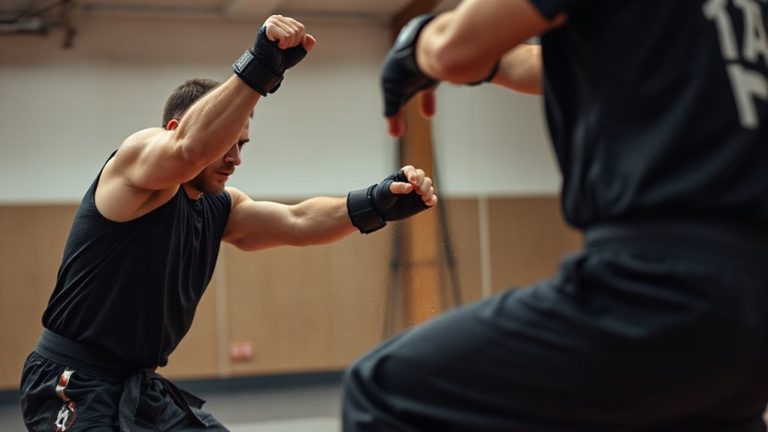
You won’t learn effective pen techniques under pressure without practice, so start by using a training pen-specifically one with a blunted tip and similar weight to a real pen, like the Cold Steel Training Stick or a capped dry marker. This lets you safely drill strikes, grips, and targeting without risk of injury. Real pens vary in pen durability; some snap under impact, while sturdier models withstand force. Test your chosen pen’s resilience by simulating strikes on padded surfaces. Use consistent training techniques-like repetition drills and muscle memory exercises-to build reliability. Practice at different angles and distances to mimic real scenarios. A training pen that closely matches the dimensions and heft of your carry pen improves technique transfer. Avoid overestimating effectiveness; focus on precision, not force. Training with realistic tools and methods guarantees you’re prepared without compromising safety or learning.
On a final note
You can use a sturdy pen in self-defense, but only if it’s strong enough to avoid breaking-plastic models often fail. Grip it firmly between fingers for better control and aim for vulnerable spots like eyes or throat. Striking with force matters, but so does timing. One good hit might create escape time, but don’t expect more. Practice with a dummy pen to build reflexes. It’s not a reliable weapon, just a last-resort option.