How to Use a Compact First Aid Kit for Immediate Trauma Response
Check for dangers like traffic or downed wires before approaching-your safety comes first. Use 3”x3” gauze with firm pressure to stop bleeding, adding clotting gauze if needed-it speeds clotting in 3–5 minutes. Clean wounds with sterile saline wipes to remove 90% of debris and lower infection risk by up to 60%. Cover with sterile gauze and secure with tape or a 2” bandage, avoiding tight wraps. If you see signs of shock or major injury, call for help immediately-your kit can’t fix everything. Practical next steps follow.
Notable Insights
- Ensure scene safety first by identifying hazards like traffic, power lines, or violence before approaching the injured person.
- Control bleeding by applying direct pressure with a 3”x3” gauze pad or using clotting gauze for faster hemostasis.
- Clean minor wounds with sterile saline and antiseptic wipes to reduce infection risk by up to 60%.
- Cover wounds with sterile gauze and secure with tape or a pressure bandage to protect from contamination.
- Recognize signs of shock or severe trauma and call emergency services immediately-compact kits support, but don’t replace, professional care.
Check for Danger Before Helping
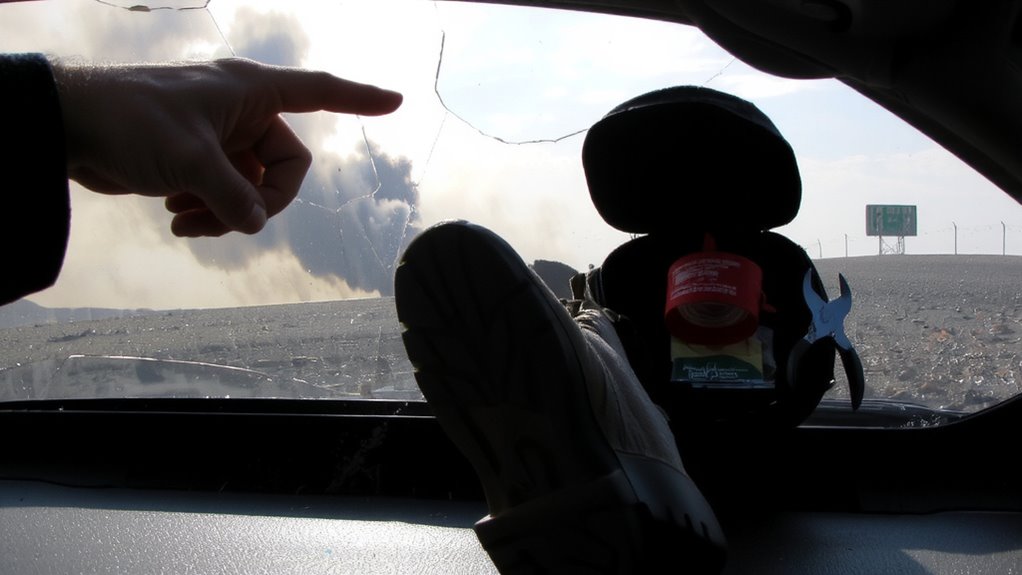
Before you rush to help, take a second to scan the scene-your safety comes first, and stepping into a dangerous situation could turn you into another victim. Scene safety isn’t just a step; it’s the foundation of any response. If the area’s unstable-downed power lines, traffic, or violence-you can’t help anyone if you’re injured. Look for hazards that compromise personal protection: broken glass, smoke, water, or aggressive bystanders. Don’t assume silence means safety. Wait for emergency services if risks outweigh immediate aid. A compact first aid kit won’t matter if you’re incapacitated. Prioritize distance, cover, and awareness. You’re no use to anyone as a second casualty. Maintain control of your environment before acting. Effective response starts with scene assessment-every time. Your judgment determines outcomes, not equipment. Stay alert, stay safe, and act only when threats are neutralized. A well-prepared military first aid kit can support rapid trauma care once the scene is secure.
Stop Bleeding With Your Compact First Aid Kit
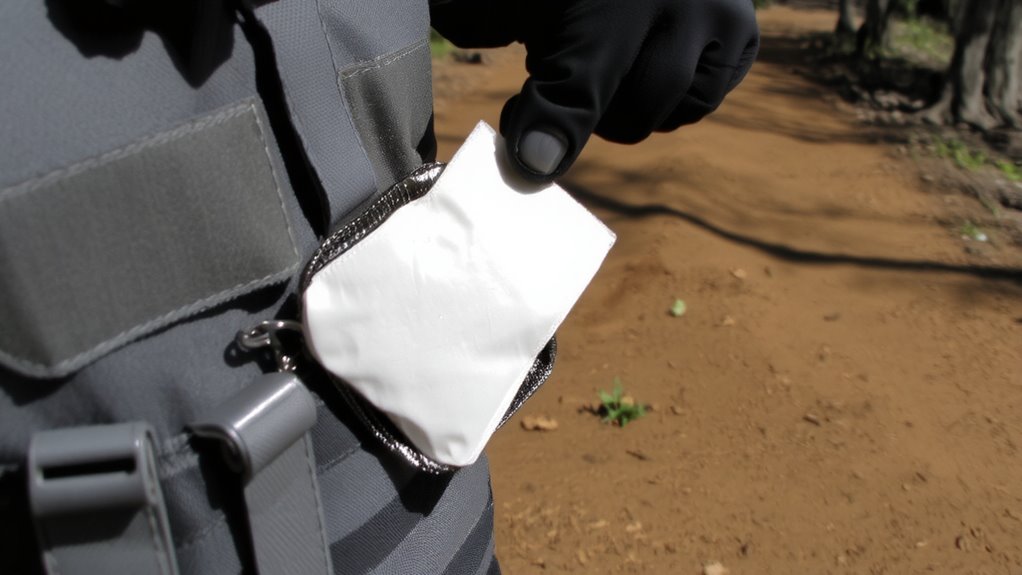
If the injury’s not life-threatening, you can usually manage bleeding with the supplies in your compact first aid kit, but don’t expect it to handle major hemorrhage. Apply direct pressure with a gauze pad-most kits include a small one, typically 3”x3”. If bleeding persists, press on the nearest pressure point to slow blood flow. Some kits contain clotting agents like kaolin-impregnated gauze, which can accelerate clot formation in 3–5 minutes under pressure. They’re effective but require correct placement and firm, sustained pressure. Replenishing used items promptly ensures your kit remains ready for future emergencies, so consider keeping an IFAK refill kit on hand for quick restocking.
| Item | Size/Spec | Use Case |
|---|---|---|
| Gauze Pad | 3”x3” | Direct wound coverage |
| Adhesive Bandage | 1”x3” | Minor cuts |
| Clotting Gauze | 4” strip | Faster clotting under pressure |
| Pressure Bandage | 2” elastic roller | Maintain pressure |
| Tweezers | 3.5” stainless | Debris removal |
Clotting agents help, but they can’t replace proper technique.
Clean Cuts and Stop Infection Fast
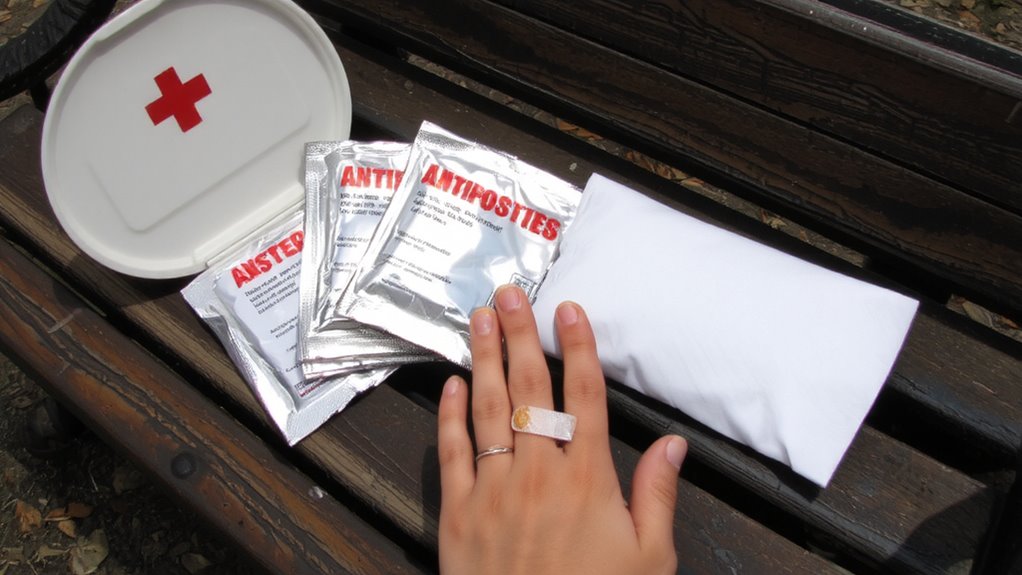
A clean wound is your best defense against infection, and your compact first aid kit has just enough to do the job right. Start with wound irrigation using sterile saline from a sealed wipe or small bottle-flushing removes up to 90% of contaminants when done thoroughly. Don’t skip this step; debris left behind increases infection risk. Next, apply antiseptic using a pre-moistened wipe or single-use antiseptic solution. These provide effective antiseptic application with minimal waste. Common agents like benzalkonium chloride work well without stinging as much as alcohol. Spread evenly, but don’t overuse-excess won’t improve results and may irritate tissue. Most kits include limited supplies, so use only what’s needed. Proper irrigation and antiseptic application reduce infection rates markedly-field studies show up to a 60% drop in complications. It’s basic, but done right, it’s effective.
Stabilize Injuries With Gauze and Wrap Supports
Once you’ve cleaned the wound, it’s time to protect and support it properly. Apply sterile gauze directly over the area to maintain a barrier against contamination and aid in clotting. Secure it with medical tape or a wrapped bandage to guarantee consistent pressure. For limb injuries, wrap supports like elastic bandages help with joint stabilization by limiting movement that could worsen damage. Don’t wrap too tightly-circulation must remain unobstructed. Use gauze padding around joints to prevent chafing and improve comfort. Proper wound immobilization reduces bleeding and tissue strain, especially before professional help arrives. In tests, layered gauze holds up better than cotton alone, absorbing exudate without sticking. Wrap supports with moderate elasticity provide stability without restricting blood flow. These materials are lightweight and fit in compact kits, making them reliable for trauma response. Their effectiveness depends on correct application, not brand.
Seek Help When Signs of Serious Injury Appear
What good is a first aid kit if you don’t know when to call for backup? You can patch a wound, but some injuries demand professional care. If the person’s skin is cool and clammy, breathing is shallow, or they seem confused, you should recognize shock-it’s a life-threatening response to injury. Don’t wait. Call ambulance services immediately. A compact kit helps with minor issues, but it won’t stabilize severe trauma. Major bleeding, broken bones that pierce skin, or head injuries need advanced medical tools and training. Your role is to manage what you can and get help fast. Delaying increases risk. Even with a well-stocked kit, your own judgment is the most critical tool. Use it. When signs of serious injury appear, calling emergency services isn’t optional-it’s necessary. You’re not expected to fix everything. Just keep the person stable until help arrives.
On a final note
You’ve used your compact first aid kit to stop bleeding, clean wounds, and stabilize injuries. It fits in a pocket but handles real trauma when every second counts. Supplies last for one moderate incident, not multiple casualties. You trade volume for portability, so you carry it daily. It won’t replace a full kit, but it works when help is minutes away. Test it monthly. Replace expired items. Keep it close.