How to Use a Flashlight as a Defensive Tool in Low-Light Self-Protection
Use a flashlight with at least 500 lumens and a beam distance of 150 meters to spot threats early and disorient attackers. Hold it firmly near the tail cap, thumb on the switch, and keep it ready in your non-dominant hand. Blast short bursts of bright, focused light into an attacker’s eyes to create confusion-strobe mode helps. Then move fast to escape. A durable, water-resistant light gives you reliability when it matters most-what you do next could make all the difference.
Notable Insights
- Choose a flashlight with at least 500 lumens and 150-meter beam distance for effective threat detection and disorientation.
- Hold the flashlight with a firm handshake grip, thumb on the switch, for immediate activation and control.
- Use short, intense bursts of light aimed at an attacker’s eyes to create visual disruption and confusion.
- Sweep dark areas with a focused beam before entering to detect threats and maintain situational awareness.
- Exploit disorientation by directing a bright or strobe beam at an attacker, then escape immediately to safety.
Choose the Right Self-Defense Flashlight
While not every flashlight works well for self-defense, picking one designed for the role makes a real difference-so look for models with at least 500 lumens, a strobe function, and durable construction. Brightness levels matter because higher output disorients attackers quickly, giving you time to react. Models with 800 to 1,000 lumens are effective without draining batteries too fast. Beam distance is also critical; aim for at least 150 meters to identify threats early and maintain situational awareness. Flashlights made from aerospace aluminum withstand impact better than plastic. A reliable switch mechanism guarantees the strobe mode activates instantly. Some lights overheat at max brightness, so check for thermal regulation. You’ll want water resistance (IPX8 rated) for reliability in rain. Size matters-compact enough to carry daily, but large enough to grip firmly. Don’t sacrifice performance for price, but avoid overpaying for excessive lumens you won’t use. Some self-defense flashlights also double as walking stick stun guns for added protection in low-light scenarios.
How to Hold Your Flashlight for Defense
Grip matters when your safety’s on the line, so hold the flashlight properly to maximize control and effectiveness. Use a firm handshake grip near the middle or slightly toward the tail cap, ensuring solid grip strength without over-tensing your hand. This position improves weapon retention and allows quick repositioning. Keep your thumb on the control switch for instant activation-practice this movement until it’s instinctive. Maintain a balanced, athletic stance; proper stance balance lets you react, pivot, or retreat without stumbling. Hold the flashlight in your non-dominant hand if you’re also using another defensive tool, or in your dominant hand if it’s your primary tool. Avoid wrapping fingers too tightly, which reduces blood flow and slows response. Test different holding positions during drills to find what supports both control and mobility under stress. For optimal performance, choose a flashlight with Top Flashlight Picks that combine durability, brightness, and reliable ergonomics.
Blind an Attacker With Light Bursts
If you need to disorient an attacker quickly, short bursts of bright light can disrupt their vision and buy you critical seconds. Use your flashlight’s high light intensity and tight beam focus to maximize glare. Aim for the eyes and flash on and off in quick succession-this startles more effectively than a steady beam. LED models with 500+ lumens perform reliably, but higher output may drain batteries faster. Consider trade-offs between brightness and runtime. Choosing a flashlight with a strobe mode can significantly improve your ability to create confusion during an encounter, as many top self-defense flashlights include this feature for rapid visual disruption.
| Feature | Effect on Disorientation |
|---|---|
| 300–500 lumens | Moderate, usable at close range |
| 500–1000 lumens | Strong, effective in most scenarios |
| Flood beam | Wider glare, less depth penetration |
| Spot beam | Narrow, longer reach, better focus |
| Strobe function | Increases confusion, enhances sensory overload |
Use light intensity and beam focus to your advantage-targeted bursts work best.
Spot Threats Before They Strike
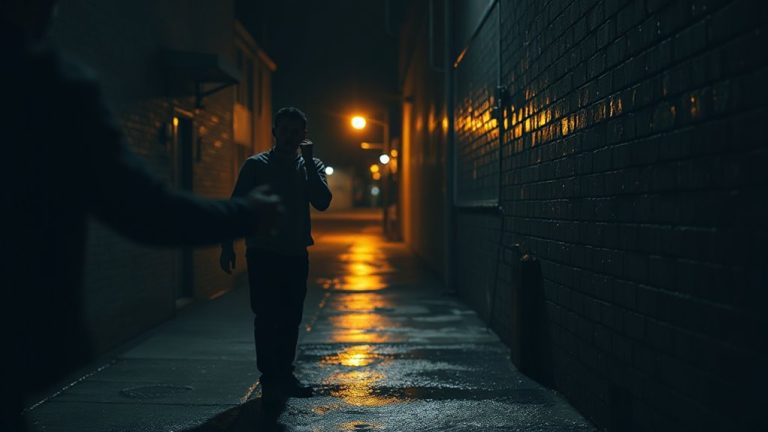
A bright flashlight doesn’t just help you escape-it can help you avoid confrontation altogether. Hold it high and sweep the area in front of you to identify shadows where someone could hide. Most attackers rely on darkness to approach unseen, but a 500-lumen beam or brighter disrupts that advantage. Use short, controlled sweeps to detect movement at the edges of your vision, especially near doorways, alleys, or parked cars. Peripheral motion is often the first warning sign. Fixed beams reveal static threats; moving beams uncover depth and hidden objects. A focused beam with a neutral white light offers better contrast than colored or diffused lights. You don’t need strobe or high mode yet-reserve those for later. Right now, your goal is awareness. The ability to identify shadows and detect movement gives you time to reposition, call for help, or prepare-before the situation escalates.
Escape Fast: Use Light to Create an Opening
When you need to get away quickly, a flashlight can temporarily disorient an attacker just long enough for you to create distance. Aim the beam directly at their eyes-especially in low light, a sudden 300+ lumen burst disrupts vision for several seconds. This brief window lets you exploit confusion and move. Don’t waste time; turn and run as soon as the light hits. A strobe mode, if available, enhances the effect by increasing visual disruption. Flashlights with tactical tail switches let you activate and aim quickly, one-handed. Models under 6 inches fit pockets and still deliver enough output for close-range disorientation. Durability matters-aluminum bodies survive impacts if struck. While light alone isn’t a weapon, it’s a force multiplier when used to create distance. Combine with awareness and escape planning. It won’t stop aggression permanently, but it disrupts timing. Use it to gain seconds, not fights.
On a final note
You can rely on a flashlight for self-defense if it’s bright enough-150+ lumens works. Hold it securely in a forward grip to shield your eyes and aim directly at threats. Short bursts disorient attackers long enough to escape. It won’t stop a determined aggressor, but it improves situational awareness and reaction time. Balance output, size, and battery life based on your needs. A good light won’t replace training, but it’s a practical tool when used right.