GPS Pace Tracking in Deep Snow: Settings & Gear Tips
Use a GPS with a cold-weather battery that keeps 70%+ capacity at -20°C and supports multiple satellite systems like GPS, GLONASS, and Galileo for reliable signal in deep snow. Set refresh rates to 1 Hz or higher and rely on real-time speed updates every 1–2 seconds to monitor true progress. Track pace, distance, and elevation to adjust for snow resistance, and expect 20%+ slowdowns versus packed trails. High-sensitivity receivers reduce drift under trees, while breadcrumb trails help verify your path. Elevation and route history confirm effort and accuracy over time-knowing how your gear performs reveals what comes next.
Notable Insights
- Use GPS with cold-weather battery retention and multi-GNSS support for reliable signal in deep snow and sub-zero temperatures.
- Set refresh rate to 1 Hz or higher to capture real-time speed updates and detect changes in travel rate.
- Monitor pace and distance data to assess terrain resistance and adjust effort based on GPS-indicated slowdowns.
- Enable breadcrumb trails and proximity alerts to maintain route accuracy and ensure safe navigation in low visibility.
- Correlate GPS-derived pace with perceived exertion to manage energy and adapt stride in unconsolidated snow conditions.
Choose the Right GPS for Deep Snow
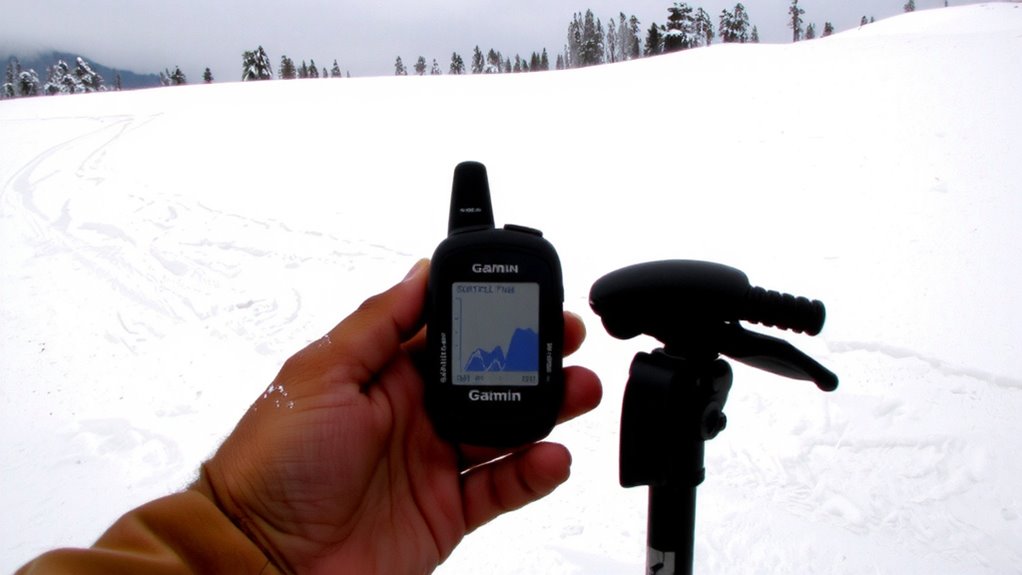
A few GPS units actually perform well in deep snow, and yours should handle extreme conditions without failing. Look for models with proven cold-weather battery life-some drop below 30% capacity at -20°C, but top units retain 70% or more. Lithium batteries outperform alkalines in freezing temps, so choose a device that supports them. Signal accuracy matters when tree cover and drifting snow obscure satellites; models with multi-GNSS support (GPS, GLONASS, Galileo) maintain lock longer and update position faster. Test units in snowy forests show accuracy differences of up to 8 meters between entry-level and high-end receivers. Don’t assume waterproofing equals snow resilience-sealed buttons and anti-fog screens are critical. Prioritize battery life over extra features, since screen brightness and wireless functions drain power quickly in whiteout conditions. Real-world use proves ruggedness and reliability matter most. For dependable navigation in harsh environments, consider one of the best hiking GPS devices recommended for outdoor adventures.
Set Up Your GPS for Snow Travel
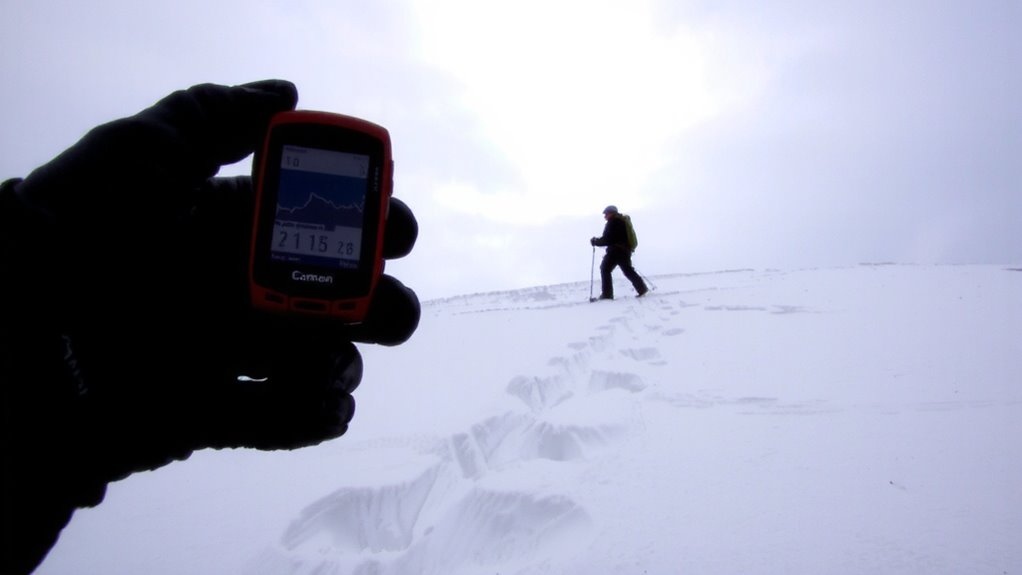
You’ll want to start by configuring your GPS with settings optimized for snow travel, since factory defaults often prioritize battery-saving modes that reduce update frequency and accuracy. Adjust the refresh rate to high (1 Hz or higher) for reliable tracking through deep snow, where terrain and visibility challenges demand precision. Enable all satellite systems (GPS, GLONASS, Galileo) to maintain lock under heavy tree cover or in valleys. Snow safety depends on knowing your exact position, so set up breadcrumb trails and proximity alerts.
| Setting | Recommendation |
|---|---|
| Update Rate | 1 Hz |
| Satellite System | Multi-constellation |
| Display Units | mph or km/h |
| Backlight | Medium (balance visibility/battery) |
| Alerts | Enable waypoint proximity |
Review your gear selection-cold reduces battery life, so carry spares. Use lockable buttons to prevent drift. These choices support navigation reliability, not convenience.
Track Your Speed in Real Time
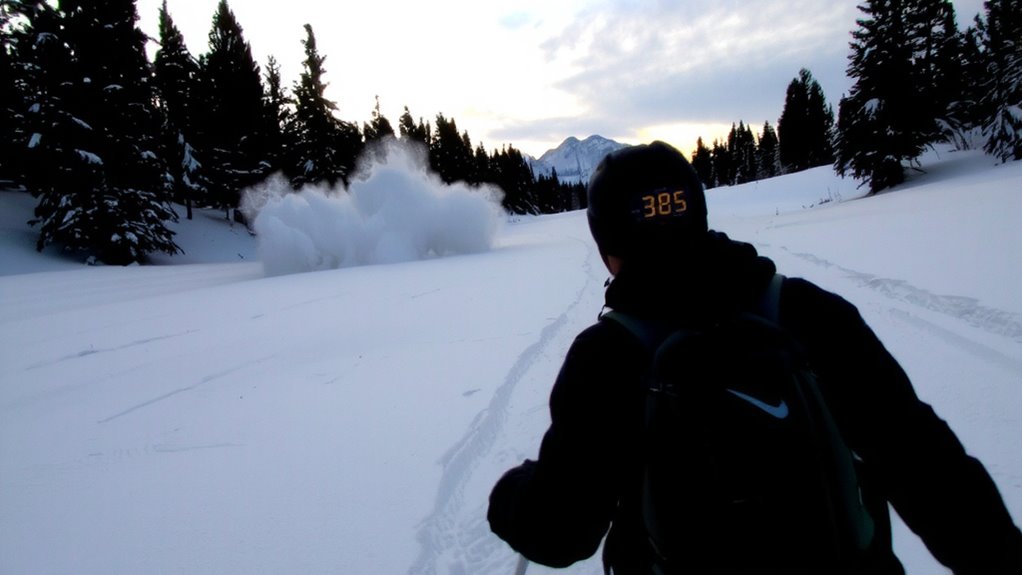
Now that your GPS is configured for snow conditions-satellites maximized, refresh rate set, and alerts active-monitoring your movement becomes the next priority. You can track your speed in real time using the GPS display, which updates every 1–2 seconds depending on refresh settings. This lets you see immediate changes in pace caused by deep snow or terrain shifts. Real time alerts notify you if your speed drops below a set threshold, signaling potential exhaustion or inefficient travel. Motion detection guarantees the device registers even slow progress, avoiding false stops. Some units struggle with lag in extreme cold, so choose models tested to -20°C. Accuracy depends on consistent satellite lock, which high-sensitivity receivers maintain better. Relying on real time alerts and motion detection helps you adjust technique without guesswork. These features work best when paired with a fully charged battery and clear device settings. A reliable option for these conditions is a top hiking GPS device that performs well in extreme environments.
Watch Pace, Distance, and Time in Snow
Typically, keeping an eye on pace, distance, and time in snow reveals how terrain and conditions directly impact your progress. Tracking these metrics helps maintain snow safety and adapt to shifting trail conditions. Deep snow slows movement, so GPS data gives real-time insight into actual performance, not just estimated effort. Monitoring guarantees you don’t overextend and conserve energy for unpredictable stretches.
| Metric | Why It Matters | Snow Impact |
|---|---|---|
| Pace | Indicates effort level | Slower due to resistance |
| Distance | Confirms route accuracy | GPS may drift in tree cover |
| Time | Helps estimate arrival | Extended by soft trail conditions |
| Elevation | Tracks ascent difficulty | Snow depth increases effort |
| Route History | Verifies path taken | Aids in backtracking safely |
Use this data to stay aware and make informed decisions.
Adjust Your Pace Based on GPS Feedback
When your GPS shows pace creeping above 20% slower than on packed trails, it’s not just the snow-it’s resistance sapping energy with every step. Snow conditions vary, and your GPS helps quantify that impact in real time. If the device reports a pace of 8 mph but you’re used to 10 mph on firm ground, terrain resistance is cutting efficiency. You’re working harder without gaining speed. Adjust by shortening stride and increasing cadence-this reduces sinking and conserves effort. Deep, unconsolidated snow increases drag, so maintaining aerobic control matters more than speed. Use GPS feedback to hold a steady output, not a fixed pace. When terrain resistance spikes, slow down deliberately to avoid burnout. Over time, you’ll correlate GPS data with perceived exertion, letting you adapt before fatigue sets in. Trust the device to reflect true cost, not just distance.
Fix GPS Signal Problems in Winter
Your GPS might keep pace with your effort in deep snow, but it can’t help you if it loses signal-something that happens more often in winter. Snow-covered terrain and dense tree canopies increase signal interference, causing dropouts or inaccurate tracking. To reduce this, keep a clear view of the sky when possible and avoid canyon-like zones between ridges. Cold reduces battery efficiency, so battery conservation is essential. Use power-saving modes, turn off unnecessary features, and carry spare, insulated batteries. Devices with GLONASS or Galileo support often acquire signals faster in tough conditions. Test your unit in cold temps before relying on it. Signal stability and battery life are trade-offs-prioritize models that balance both. A steady signal means accurate pace tracking. Without it, even the best GPS is just dead weight.
Use Elevation and History to Track Progress
Even if the trail vanishes under several feet of snow, you can still confirm your position by checking elevation gain against your route’s known profile-most GPS units log this data automatically. Your device tracks elevation gain over time, letting you compare your current ascent or descent with the expected terrain. If your GPS shows 800 feet of gain over two miles, but the trail should only rise 500 feet, you’re likely off course. Route history helps too-it shows your actual path, revealing drifts or detours caused by deep snow. Use both elevation gain and route history together to verify progress when landmarks are buried. Devices with barometric altimeters offer more accurate elevation gain readings than GPS-only models, especially under tree cover. Some units average your climb data to smooth errors, which helps when readings jump. Check your stats hourly to avoid cumulative mistakes. It’s not perfect, but it’s reliable in whiteout conditions.
On a final note
You’ll rely on GPS to monitor your speed and distance when traveling through deep snow, but signal loss can happen. A rugged, cold-rated device with long battery life performs best. Real-time tracking helps adjust pace, while elevation data confirms effort. Test it before trips-some models struggle in low temps. Accuracy matters more than features out here. Know your gear’s limits so you don’t get caught.