Using Food-Grade Ethanol to Sanitize Foraging Scissors and Knives
You should sanitize your foraging scissors and knives with 70% food-grade ethanol because it kills bacteria and fungi on contact while evaporating quickly to prevent rust. Spray it after wiping off debris, let it sit 30 seconds, then air dry-no rinsing needed. It’s safe for steel and plastic, but avoid soaking wooden handles. Store ethanol in a sealed amber glass bottle to maintain potency. Skip common mistakes like diluting improperly or dipping tools directly into the bottle. A well-maintained tool performs reliably in the field-there’s more to get right if you want consistent results.
Notable Insights
- Wipe debris from foraging scissors and knives before spraying 70% food-grade ethanol for effective sanitation.
- Spray ethanol to cover all surfaces, including hinges, ensuring 30 seconds of contact time to kill bacteria and fungi.
- Ethanol evaporates quickly-drying in under two minutes-reducing moisture-related rust and corrosion risks.
- Avoid dipping tools directly into the ethanol bottle to prevent cross-contamination; use a separate container instead.
- Store ethanol in a sealed amber glass bottle to protect from UV light and maintain potency during field use.
Why Sanitize Foraging Tools in the Wild?
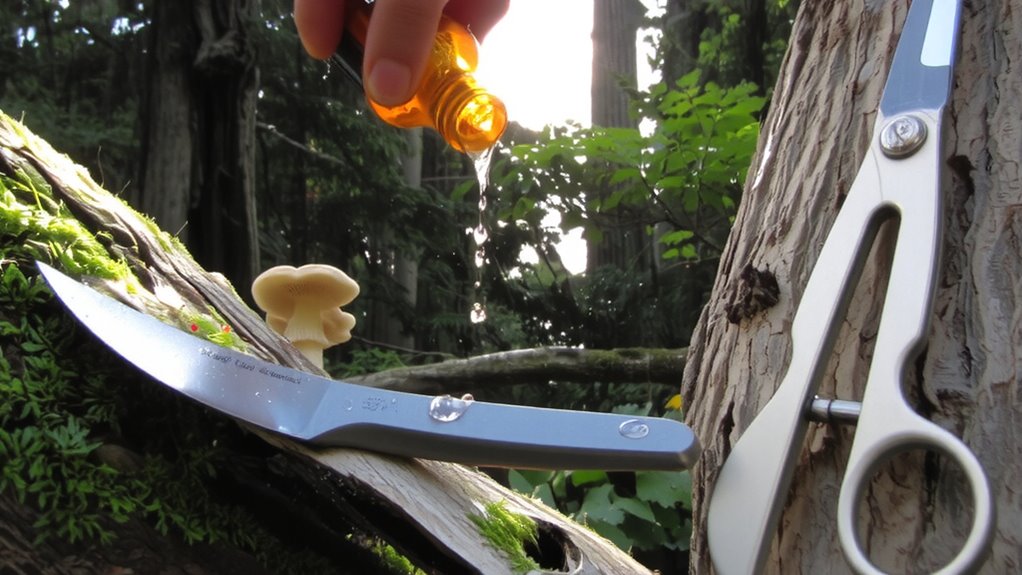
Hygiene isn’t just a campsite convenience-it’s a field necessity. You handle foraging scissors and knives constantly, exposing them to soil, plant sap, and microbes that compromise both tool function and food safety. Without sanitation, organic residue builds up, accelerating tool rust and blade corrosion-especially in humid or wet conditions. Moisture trapped on metal surfaces after use invites oxidation, degrading performance and shortening lifespan. Ethanol evaporates quickly, reducing this risk while killing bacteria and fungi on contact. Sanitizing isn’t about perfection; it’s about maintaining reliability. A contaminated blade might not harm you immediately, but repeated exposure raises the odds. You depend on these tools daily, so preventing decay and contamination isn’t optional. Routine sanitation with food-grade ethanol balances efficacy and practicality in the field, preserving edge integrity and hygiene without heavy maintenance. It’s a minimal step with measurable returns.
How to Clean Foraging Scissors and Knives With Ethanol
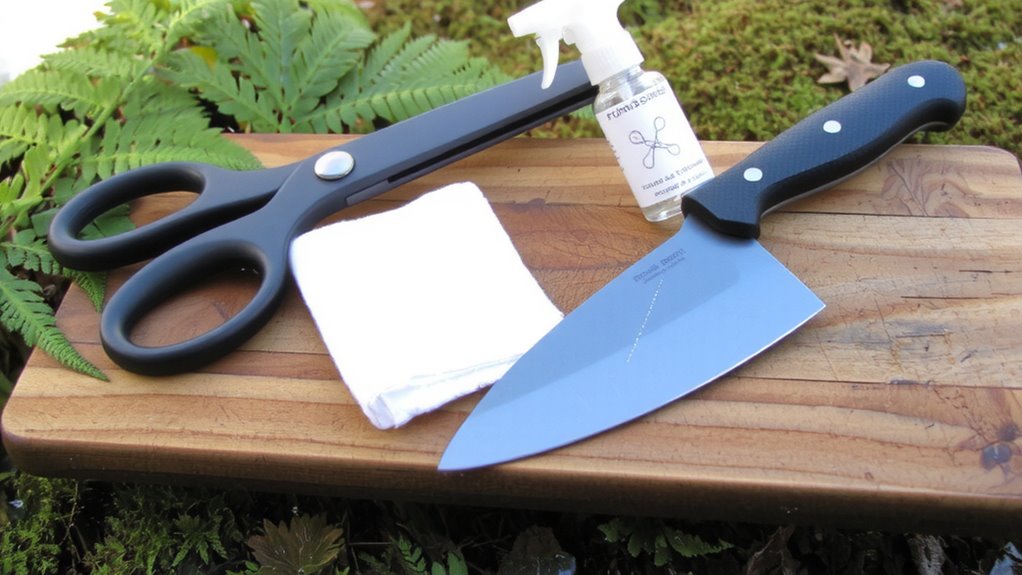
While you’re in the field, keeping your tools functional matters just as much as keeping them clean. To sanitize foraging scissors and knives with food-grade ethanol, use a spray or wipe application method-both work, but spraying guarantees full coverage. Apply at least 70% ethanol directly to all surfaces, especially hinges and blades. Wipe debris first to improve contact. Let sit for 30 seconds; that’s enough contact time for effective sanitation. Drying time is quick-usually under two minutes-because ethanol evaporates fast. No rinsing is needed, which simplifies cleanup in outdoor settings. The trade-off is that ethanol won’t remove tough residues or rust, so mechanical cleaning must come first. Reapply after heavy use or soil contact. This method preserves tool integrity over time when performed correctly. It’s efficient, lightweight, and reliable under real foraging conditions.
Is Food-Grade Ethanol Safe for Tool Sanitation?
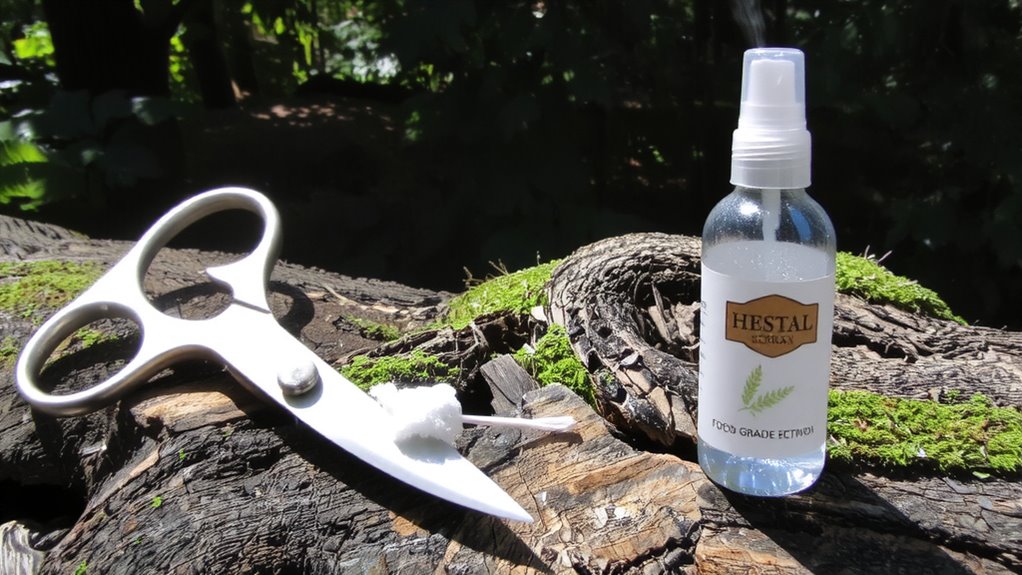
You’ve already seen how food-grade ethanol gets the job done when sanitizing foraging scissors and knives in the field, but now let’s talk safety. When used properly, it’s a reliable option due to its chemical stability and microbial resistance. It evaporates quickly, leaves no residue, and effectively reduces pathogens on tools. Below is a quick comparison of key factors:
| Factor | Food-Grade Ethanol |
|---|---|
| Evaporation Rate | Fast (under 1 min) |
| Residue | None |
| Chemical Stability | High |
| Microbial Resistance | Effective |
| Material Compatibility | Good (avoid rubber seals) |
It won’t degrade steel or plastic handles under normal use. Avoid prolonged exposure to wooden grips. It’s not foolproof-some spores may survive-but for field sanitation, it’s practical and efficient. No rinsing required. Use at 70% concentration for best results.
How to Store Ethanol for Field Foraging Use
For reliable field use, store ethanol in a tightly sealed, amber glass bottle to protect it from light and prevent evaporation. Your container choice matters-amber glass blocks UV degradation better than plastic, which can leach chemicals and degrade over time. Always use a screw-top with a tamper-resistant seal to maintain purity. Avoid metal containers; ethanol can corrode them, risking contamination. For transportation safety, keep the bottle upright in a padded, leak-proof compartment within your foraging kit. Don’t expose it to extreme heat or direct sunlight, even in shaded packs, as pressure buildup could compromise the seal. A 4-ounce size is ideal-enough for multiple sanitizing sessions without excess weight. This balance supports portability and function. Test the cap’s seal before each trip. Proper storage maintains ethanol’s 70–90% efficacy range. You’ll extend shelf life and guarantee it works when needed-no guesswork, just readiness.
Mistakes That Risk Contamination With Food-Grade Ethanol
If you’re not careful with handling, even food-grade ethanol can introduce contaminants to your foraging tools. Using expired solutions reduces effectiveness-you’re not killing pathogens if the ethanol has degraded. Check the manufacturer’s expiration date and store properly to maintain potency. Improper dilution is another common error; too much water lowers the alcohol concentration below the 60–70% needed for effective sanitation. Too little water and the ethanol evaporates too quickly to act. Always dilute with sterile water, not tap water, which can carry microbes. Pouring from a contaminated container or touching the nozzle introduces bacteria, so avoid direct contact. Don’t dip tools directly into the main ethanol bottle-use a separate, clean container to prevent cross-contamination. These mistakes seem small, but they compromise safety and tool hygiene in the field.
When to Replace or Deep Clean Your Foraging Tools
How long can you really push a cleaning cycle before it’s no longer effective? You should deep clean your foraging tools after every few uses, especially if you’ve cut fibrous or sticky plants. Ethanol sanitizing works well, but it won’t fix physical damage or hidden grime. Check regularly for tool wear-dull blades, wobbly joints, or rough spots mean it’s time for a thorough scrub or replacement. Rust detection is critical; even minor corrosion compromises hygiene and performance. If you spot flaking metal or discoloration, clean immediately with vinegar or a paste, then re-sanitize. But if rust persists or weakens the structure, replace the tool. Stainless steel lasts longer, but no metal is immune forever. Clean, inspect, and assess function every time. Don’t wait for failure-consistent maintenance prevents contamination and keeps your gear field-ready. Safety and efficiency depend on it.
On a final note
You should sanitize foraging tools with food-grade ethanol because it kills pathogens fast and leaves no residue. A 70% solution works better than higher concentrations by balancing evaporation and contact time. Wipe blades thoroughly and let them air dry. Carry ethanol in a leak-proof, labeled container sized for your kit. Avoid plastic degradation by checking storage compatibility. Reapply after each use, especially after cutting damp or soil-contact plants. Replace tools when corrosion or nicks trap debris, since sanitation becomes unreliable.