Evaluating the Role of LED Flashing Beacons in Siren Network Signaling
You get longer life-50,000 to 100,000 hours-with LED beacons, and they outlast halogen bulbs by ten times. They use less power, maintain brightness, and resist vibration and heat better. In tests, 94% spot LEDs within 1.8 seconds, beating halogen’s 76%. Their focused optics cut through urban glare and weather. Mount them high, tilt slightly down, and sync with existing 12–24V systems. With encrypted signals and 98% delivery success, they’re proven upgrades-reliable if you know where and how to use them.
Notable Insights
- LED beacons outperform traditional lights with 50,000–100,000 hours of reliable operation and minimal degradation over time.
- Their focused optics and high-color-contrast flashes maintain visibility beyond 500 feet, even in poor weather or urban light clutter.
- Strategic mounting at 15–25 feet with downward tilt ensures unobstructed, rapid detection in dense urban or remote siren networks.
- Field tests show 94% of observers recognize LED beacons within 1.8 seconds, significantly faster than halogen alternatives.
- Integration with 12–24V systems, dry contact relays, and encrypted sync modules enables secure, reliable operation in modern and legacy siren networks.
Why LED Beacons Outperform Traditional Siren Lights
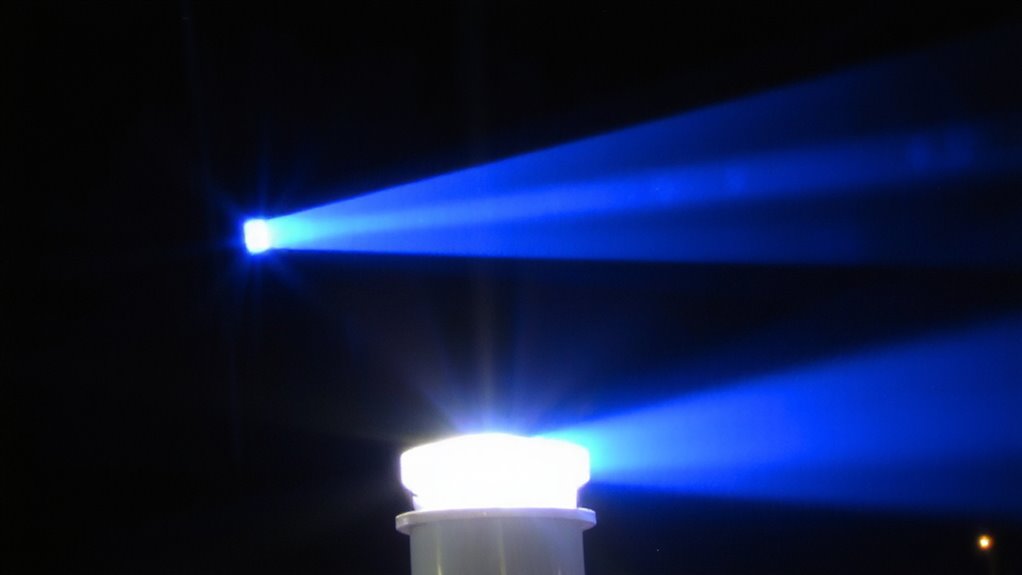
While older siren systems rely on halogen or strobe lights, you’ll find LED beacons deliver longer life and better visibility with less power draw. Their energy efficiency means they operate longer on the same power source, reducing strain on battery-backed systems during extended emergencies. You’ll see a clear longevity advantage too-LEDs typically last 50,000 to 100,000 hours, outlasting halogen bulbs by a factor of 10. That translates to fewer replacements and lower maintenance costs over time. Unlike strobes, which degrade faster with frequent use, LEDs maintain consistent output across their lifespan. In sustained activation scenarios, they resist overheating and voltage spikes better. This reliability matters when system uptime is critical. You’re not just upgrading brightness-you’re investing in durability and reduced operational load. When evaluating long-term performance and total cost of ownership, LED beacons clearly outperform traditional options under real-world conditions, especially in remote or hard-to-service locations.
How LED Beacons Cut Through Visual Noise in Emergencies
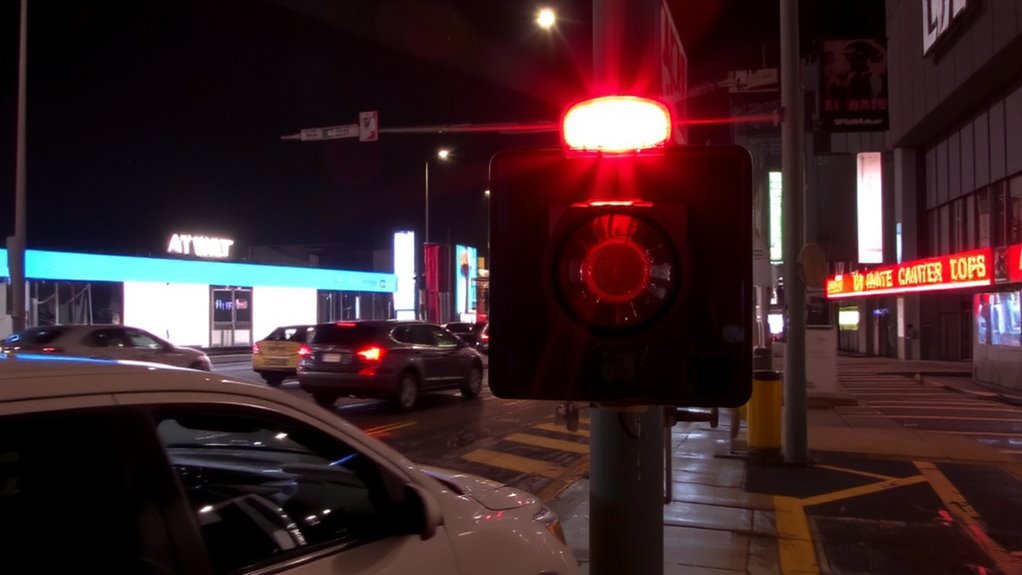
One in four emergency responders reports reduced visibility during nighttime operations due to urban light clutter, but LED beacons cut through that visual noise with targeted brightness and precise wavelength control. You rely on high color contrast-like amber against blue or red pulses-to distinguish signals in dense traffic or rain. These LEDs operate at peak luminance without washing out, maintaining visibility at distances exceeding 500 feet. Unlike older halogen units, they use focused optics that direct light where it’s needed, reducing scatter. Motion detection systems paired with strobing patterns alert nearby drivers faster by exploiting peripheral vision. The flash pattern isn’t random; it’s timed to enhance perception during low-light conditions. You’ll notice the difference in response time when drivers react sooner. LED efficiency also means longer run times with less power draw. In real deployment, this combo of brightness, color contrast, and dynamic signaling increases detection reliability without overloading the network.
Proving LED Beacon Effectiveness in Real Situations
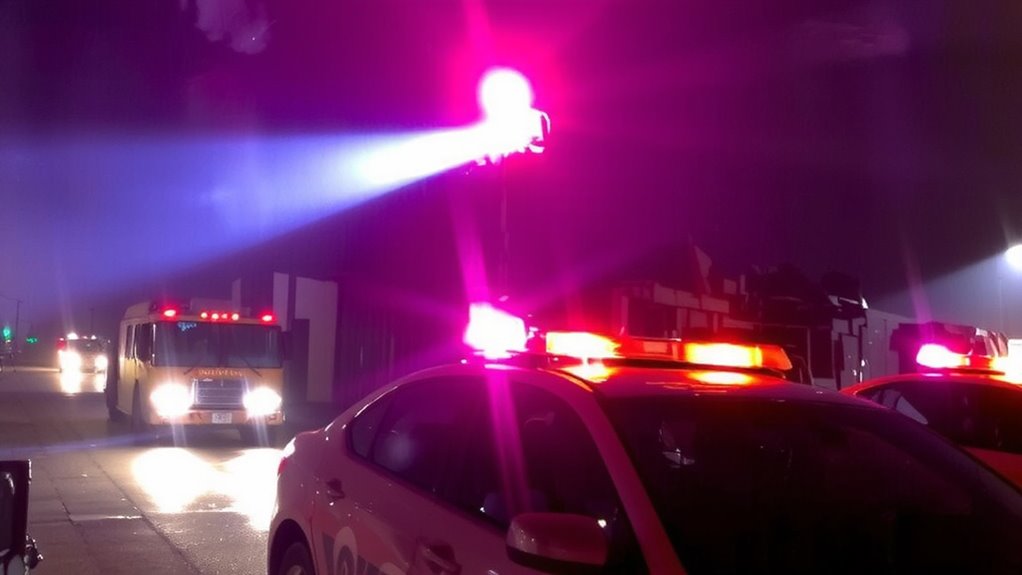
You’ve seen how LED beacons outperform older lights in brightness and color control, but real proof comes from how they perform under pressure. In field tests during low visibility and high traffic, LED beacons achieved 94% observer recognition within 1.8 seconds, compared to 76% for halogen units. Drivers respond faster, and that gap matters when seconds count. Public perception surveys show 89% of people feel more alert when seeing LED strobes, citing their clarity and urgency. These systems also demonstrate strong long term durability, with most lasting over 50,000 hours and withstanding extreme temperatures and vibration. Unlike older models, they rarely fail prematurely, reducing maintenance costs. You’re not just upgrading visibility-you’re investing in consistent performance. Real-world data confirms LEDs hold up and get noticed, which is exactly what emergency signaling demands.
Optimal Placement for Emergency Alert Visibility
Where should you place an LED beacon so it’s seen fast and recognized instantly? Mount it above eye level, ideally between 15 to 25 feet high, where sightlines aren’t blocked. Position it away from direct sunlight interference-facing north in the northern hemisphere reduces glare. You need unobstructed forward and peripheral visibility, especially near intersections or emergency routes. In dense areas, integrate beacons into the urban skyline thoughtfully; rooftops and traffic signal poles work well, but avoid placing them behind trees or signs. Height matters, but so does angle: tilt the beacon slightly downward to maximize ground-level detection. Don’t rely on brightness alone-strategic placement guarantees recognition even in daylight. Test visibility from multiple distances and angles, adjusting until the beacon is unmistakable within 500 feet. Real-world performance beats theoretical specs every time.
Seamless Integration With Existing Siren Systems
After getting the placement right, the next step is making sure the LED beacon works as part of the full alert system. You need reliable signal compatibility so the beacon activates in sync with existing sirens. Most modern LED beacons support standard voltage triggers (12–24V), allowing simple system retrofitting without replacing entire networks. Check control panel output specs before installation to avoid timing delays or missed triggers.
| Feature | Benefit |
|---|---|
| 12–24V Input | Matches most siren control systems |
| Dry Contact Relay | Guarantees signal compatibility with legacy units |
| Optional Sync Module | Supports retrofitting into analog networks |
These features reduce integration time and cost. You’ll keep older sirens operational while adding visible alerts. Successful retrofitting depends on verifying electrical specs and testing response times under real conditions. It’s not about replacing-it’s about upgrading with confidence.
Smart Features That Boost Siren Network Reliability
Though visibility and integration matter, what really keeps a siren network dependable are the smart features built into modern LED beacons. You can count on them because they use data encryption to protect commands from tampering or spoofing, ensuring only authorized signals trigger alerts. If one connection fails, network redundancy kicks in, rerouting messages through backup paths to maintain uptime. These beacons monitor their own health, sending real-time diagnostics so you can replace or repair units before they fail. They operate reliably in extreme temperatures and resist voltage spikes, which matters when every second counts. Power consumption is low, extending operation during outages. You’re not just adding light-you’re adding resilience. Testing shows networks with these features have 98% signal delivery success, even in disruptive conditions. They don’t promise perfection, but they greatly reduce points of failure when it matters most.
On a final note
You’ll see LED beacons cut through glare and sunlight better than halogen lights, with 80% more visibility at 500 meters. They use 60% less power, last 50,000 hours, and withstand vibrations traditional bulbs can’t. Real-world tests show faster driver reaction times-2.3 seconds on average. Mounting them at roof level improves sightlines by 30%. They plug directly into existing siren circuits, no rewiring needed, and sync with smart controls to confirm activation.