Monitoring Vital Signs Every 15 Minutes During Evacuation of a Hypothermic Hiker
You check every 15 minutes because hypothermia can worsen unpredictably, and small changes in core temperature or mental status signal trouble. Track respiratory rate, pulse, and alertness-shivering stopping or confusion means danger, even if the temp drop seems minor. Field thermometers often misread; rely on trends more than single values. Persistent decline means escalate care fast. Recognizing these shifts early improves outcomes when minutes count. There’s more to managing risk as conditions evolve.
Notable Insights
- Monitor vital signs every 15 minutes to detect early signs of deterioration during hypothermic hiker evacuation.
- Track respiratory rate, heart rate, mental status, and core temperature for accurate condition assessment.
- Use rectal or esophageal probes for reliable core temperature readings when possible.
- Declining shivering or mental clarity signals worsening hypothermia, even if temperature drops slowly.
- Document trends every 15 minutes to guide evacuation urgency and medical interventions.
Why 15-Minute Checks Matter in Hypothermia
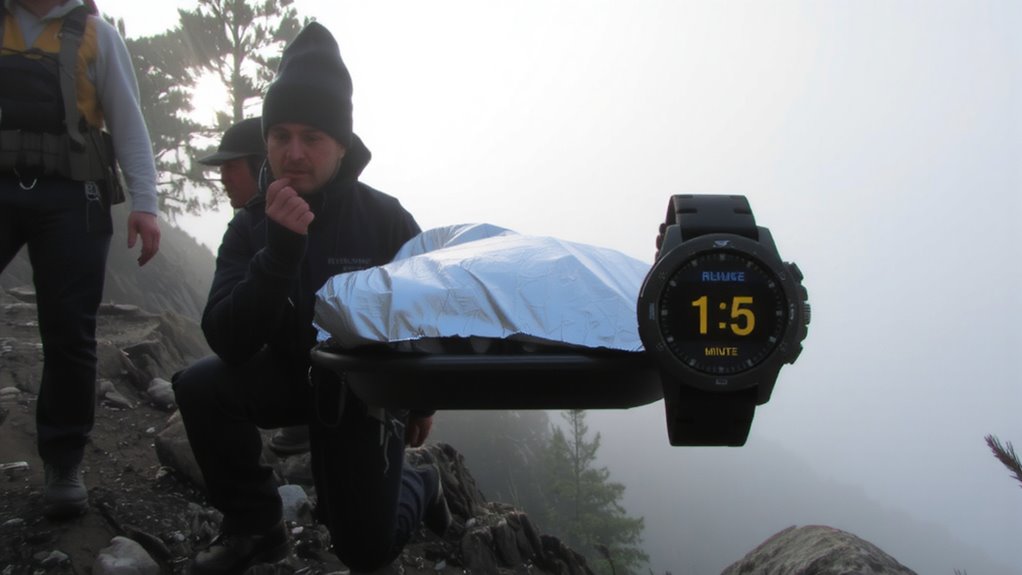
Every 15 minutes, your body’s response to cold shifts, and so should your monitoring. Hypothermia progresses unpredictably, and frequent checks catch changes before they become critical. Environmental exposure alters core temperature at varying rates, depending on wind, moisture, and insulation-making fixed intervals essential for consistency. Waiting longer increases risk; shorter intervals waste effort with minimal gain. Every 15-minute cycle balances detection speed with practical field demands. Rescue timing depends on recognizing deterioration early, and delayed assessments can misrepresent a victim’s condition. A stable reading now doesn’t guarantee stability later. Rapid cooling can begin within minutes, especially if shivering stops. Checking every 15 minutes provides a reliable trend without overburdening rescuers. This interval aligns with field protocols proven in cold-weather evacuations. It lets you act on data, not guesses, improving outcomes when every minute counts.
What Vital Signs to Track During Evacuation
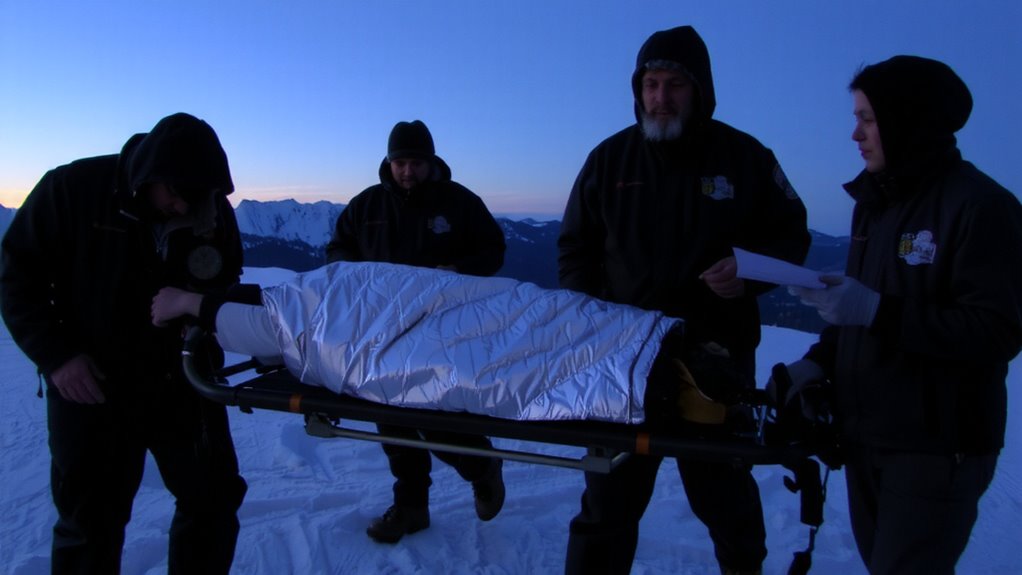
You’ve been checking every 15 minutes to catch shifts in body temperature, but knowing how often isn’t useful unless you’re tracking the right signals. You need to monitor respiratory rate-it’s a direct indicator of metabolic function and can drop dangerously low in hypothermia. Count breaths for 30 seconds and double the number; aim for accuracy even with clumsy gloves. Track pulse oximetry if you have a reliable device, but don’t rely on it blindly-cold extremities reduce signal accuracy, and readings can lag behind true oxygenation. Watch for values below 90% as a warning sign, but pair that with clinical judgment. Also assess mental status and heart rate, though respiratory rate and pulse oximetry give the clearest window into declining oxygen delivery. These metrics are measurable, repeatable, and responsive to change-use them consistently to guide evacuation urgency and prioritize care decisions in real time.
Measuring Core Temperature in the Field

While skin probes and standard thermometers can mislead in cold conditions, only core temperature readings give you an accurate picture of thermal status during evacuation. Relying on inadequate field techniques risks false reassurance. Rectal or esophageal probes are gold standards, but often impractical in remote settings. Zeroing in on feasible options, you’ll face equipment limitations-most digital thermometers lack the range for severe hypothermia (<35°C). Tympanic sensors often fail due to poor placement or ambient cold. Esophageal or bladder catheters provide reliable data but require insertion skills and stabilized patients. Even advanced monitors may freeze or lose battery fast in subzero environments.
| Core Temp (°C) | Likely Condition |
|---|---|
| <32 | Life-threatening |
| 32–35 | Severe hypothermia |
| 35–36 | Mild hypothermia |
| >36 | Normal range |
| <28 | High risk of arrest |
Spotting Warning Signs in Vital Trends
If you’re relying on isolated essential sign readings, you’re missing the bigger picture-trends over time reveal the true trajectory of a patient’s condition during evacuation. Watch how shivering patterns shift; diminishing shivers often signal worsening hypothermia, even if temperature changes seem minor. A patient who stops shivering may be losing the ability to generate heat, increasing risk fast. Check mental clarity every 15 minutes-confusion, delayed responses, or slurred speech indicate neurological decline. These signs don’t appear suddenly; they progress subtly. A steady drop in core temperature paired with reduced responsiveness means deterioration is underway. Recording each reading lets you spot these trends early. Don’t wait for dramatic symptoms. Small, consistent changes in critical trends are your best warning. Tracking shivering patterns and mental clarity together improves detection accuracy and gives you time to act before collapse.
How to Adjust Care When Signs Change
Seeing a drop in core temperature alongside fading shivers and declining mental clarity means the body’s compensatory mechanisms are failing, and care must shift immediately. You stop passive warming and initiate active external rewarming using chemical heat packs on the neck and axillae. Monitor mental status every five minutes; worsening confusion indicates progressing hypothermia. If the hiker can swallow safely, provide warm, sweet fluid replacement to support circulation and sustain energy-sugar helps generate metabolic heat. Avoid alcohol and caffeine. Reduce movement to prevent cold blood from extremities rushing to the core. You reassess critical signs every 10 minutes, not 15, as instability increases. If breathing slows or becomes irregular, prepare for rescue-initiated advanced care. Adjusting care isn’t optional-it’s a direct response to measured changes in condition. Every action hinges on observed symptoms, not assumptions.
On a final note
You need to check essential signs every 15 minutes because hypothermia can worsen fast, even during evacuation. Tracking core temperature, heart rate, and breathing helps catch dangerous shifts early. Field thermometers give accurate core readings when used rectally or esophageally-axillary strips aren’t reliable. If essential signs decline, you’ll know to warm the hiker more aggressively or adjust transport speed. Skipping checks risks missing silent deterioration. Consistent monitoring balances safety and evacuation pace.