Night Foraging Techniques: Finding Wild Food in Low-Light Conditions
You need a headlamp with at least 300 lumens, red-light mode, and 8+ hours runtime to maintain night vision and stay safe. Choose fixed-blade knives between 3.5–5 inches with full tangs for reliable use. Move slowly, use sound and smell to identify plants like cattails or puffballs, and stick to humid riverbanks where fungi thrive. A secure fit and thermal awareness boost effectiveness-there’s more to night foraging than light alone.
Notable Insights
- Use a headlamp with red-light mode to preserve night vision while scanning for edible plants and fungi.
- Rely on sound cues like rustling leaves or snapping stems to locate ripe berries and other foragables in darkness.
- Identify plants by scent, such as the anise-like aroma of wild anise or the strong odor of crushed wild onions.
- Focus on night-blooming species like evening primrose and moonflower, which are only accessible after sunset.
- Move slowly and use touch to distinguish textures, such as the smooth surface of puffballs or spongy wood ears.
Start With the Essentials: Gear for Night Foraging
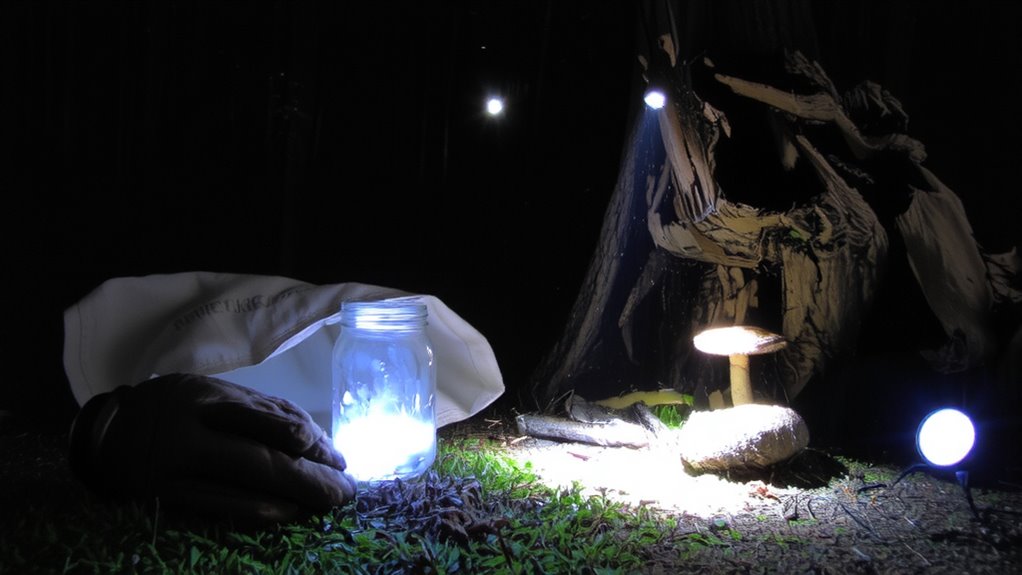
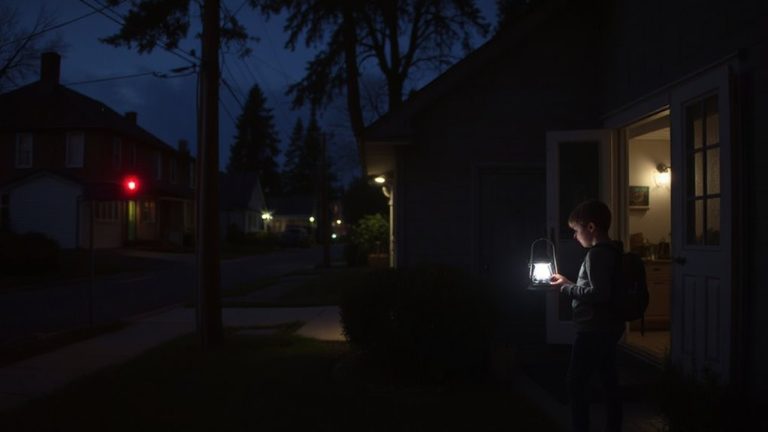
A reliable headlamp is your first necessity, and you’ll want one with at least 300 lumens, a red-light mode, and a battery life of 8+ hours. Headlamp choices should prioritize beam distance and runtime over weight-brightness fades fast in humid air, so higher lumens guarantee visibility. Models with adjustable focus let you scan terrain or inspect close details without changing lights. A secure fit matters; a slipping band wastes time and attention. For knife selection, choose a fixed blade between 3.5 and 5 inches with a full tang and grippy handle. It must cut cleanly through roots and stems without flexing. Stainless or scandium steel holds an edge longer in damp conditions. Avoid folding knives-they’re less reliable under pressure. Your gear must work in the dark, often blindly, so intuitive design and durability outweigh features. Test both headlamp and knife in wet, low-light trials before relying on them. Top picks include models with long beam distance for better trail visibility in dense forests.
Preserve Your Night Vision While Foraging
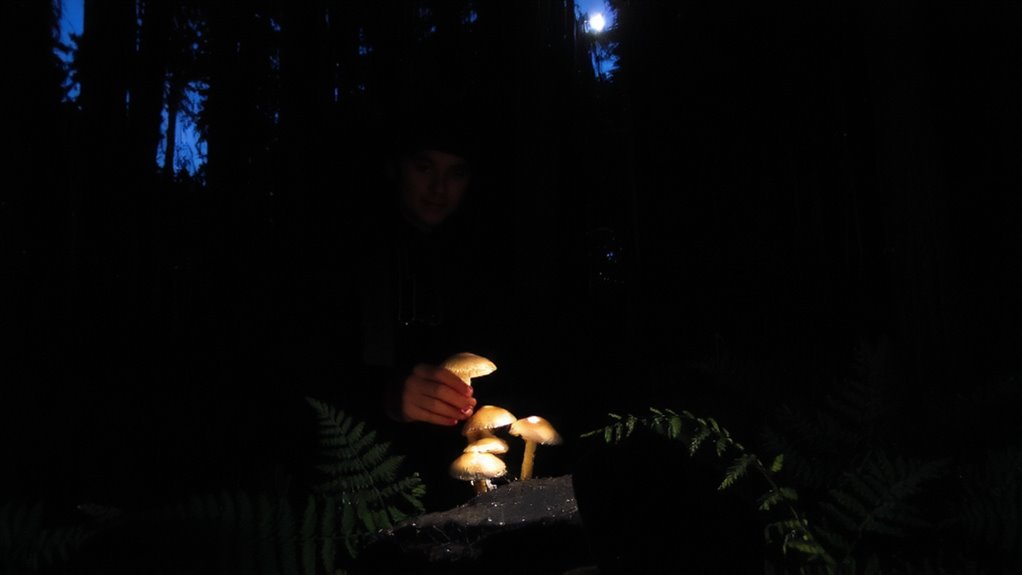
Why squander hard-earned night vision with white light when red does the job without cost? Your eye adaptation to darkness takes up to 30 minutes, and white light resets it fast. Use red light to maintain sensitivity while moving or checking gear. Even moon glow offers usable illumination-work with it, not against it. Avoid bright sources that ruin your natural low-light vision.
| Light Type | Effect on Night Vision |
|---|---|
| White | Resets eye adaptation within seconds |
| Red | Preserves adaptation; minimal disruption |
| Moon glow | Supports natural vision; no equipment needed |
Red filters on headlamps are reliable and cheap. They let you scan for edible plants or terrain features without losing ambient awareness. In practice, low-intensity red light outperforms bright white in total darkness. Rely on dark-adapted eyes whenever possible-they’re more effective than any powered light in subtle conditions.
Stay Safe When Gathering Wild Food After Dark
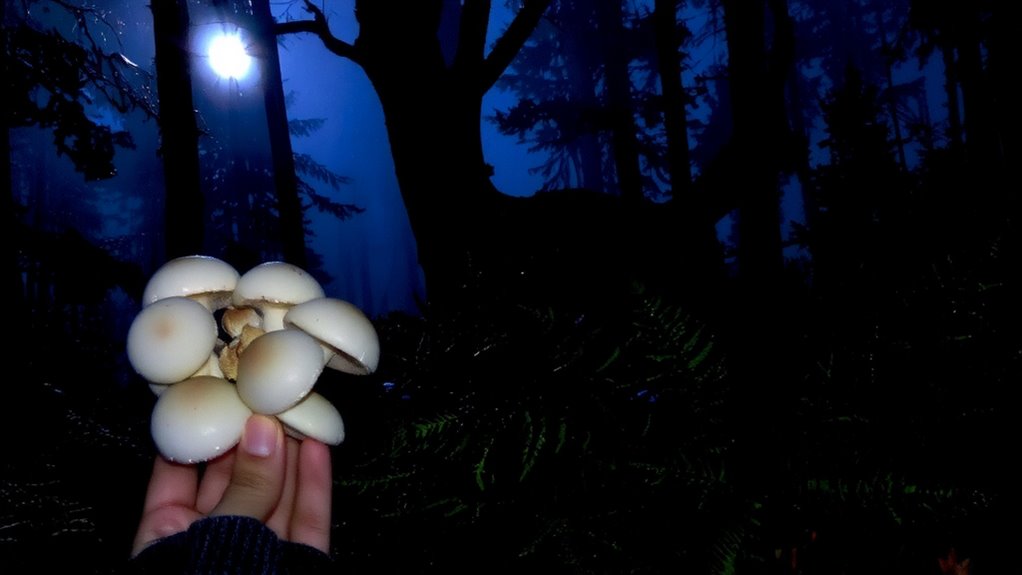
While your eyes adjust to the dark, keep movements slow and deliberate-sudden steps increase the risk of missteps or disturbing wildlife near foraging spots. Stay aware of animal encounters; nocturnal creatures are more active and less predictable at night. Carry a whistle or noise-making tool to deter curious animals without provoking them. Wear sturdy boots and long pants to protect against bites or scratches. Check weather risks before heading out-temperature drops, sudden rain, or fog can reduce visibility and increase hypothermia risk. A lightweight emergency bivvy or space blanket in your pack adds safety with minimal bulk. Avoid foraging alone; a partner improves response time in emergencies. Use a headlamp with a red-light mode to maintain night vision while scanning the ground. Signal devices and a fully charged phone in a waterproof case are non-negotiable. Preparedness reduces danger more than any single tool ever will. Consider packing a best emergency sleeping bag to retain body heat in unexpected overnight situations.
Use Sound, Touch, and Smell to Find Edibles at Night
How else will you locate food when visibility drops below usable levels? You rely on sound, touch, and smell-senses that remain effective in darkness. Locating berries by sound works when foraging near shrubs; slight rustling underfoot or brushing against branches can signal ripe fruit within reach. Listen closely-dry seeds popping or stems snapping help pinpoint plant locations. Touch guides you through leaf texture, stem thickness, and ground disturbances, but move carefully to avoid hazardous plants. Identifying mushrooms by scent is reliable when visual cues fail; distinct earthy, anise-like, or almond notes help differentiate edible species from toxic ones. Smell interacts directly with memory, making trained recognition more accurate than guesswork. These senses don’t replace sight but compensate for its absence. Each adds a layer of confirmation, reducing error. Combine them systematically to improve accuracy and efficiency in low-light foraging.
Top Edible Plants and Fungi to Hunt at Night
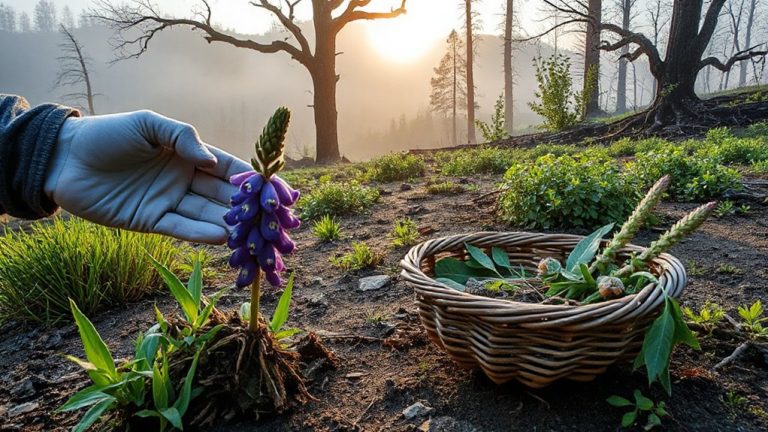
Nighttime foraging favors species that stand out when sight fails, and a few edibles deliver reliable results under those conditions. You’ll find some mushrooms, like puffballs and wood ears, easier to detect by touch and smell after dark. Chanterelles retain warmth longer than surroundings, helping you spot them by subtle thermal cues. Certain nocturnal blooms, such as evening primrose and moonflower, open only at night, timing harvests perfectly under moonlight. Lunar effects may boost visibility during full phases, improving your success with light-sensitive plants. Cattails emit a faint vanilla scent at night, guiding you by smell. Wild onions and garlic also release strong odors when crushed, making identification easy without sight. Stick to known species with distinct textures or aromas-avoid anything ambiguous. Rely on consistent traits like shape, resilience, and scent, not color. These practical markers reduce risk and increase yield when light’s gone.
Best Spots to Forage in the Dark
Some of the best spots to forage in the dark are damp forest clearings, riverbanks, and edges of meadows where moisture and cover combine to boost fungal and plant activity after sunset. You’ll find more success at riverbanks at night, as the humidity supports mushrooms like morels and hen-of-the-woods. Urban edges also offer opportunity-abandoned lots or overgrown fences often host edible weeds and resprouting perennials. Stick to quiet zones with minimal light pollution for better visibility with headlamps or night vision.
| Location | Common Finds | Light Needed |
|---|---|---|
| Riverbanks at night | Mushrooms, cattails | Low (moonlight OK) |
| Damp clearings | Oyster mushrooms, moss | Moderate |
| Urban edges | Dandelion, plantain | Low to none |
| Meadow edges | Night-blooming herbs | Minimal |
| Wooded slopes | Chanterelle relatives | Moderate |
What Makes Night Foraging Worth It?
You’ll find more than just quiet and cooler temperatures when you head out after dark-night foraging opens access to species that only emerge or become visible once the sun sets. Mushrooms like puffballs and certain chanterelles release spores at night, making them easier to locate. Insects such as crickets and moths become active, offering protein-rich snacks. Night-active plants often have higher moisture content, preserving freshness longer. The real advantage lies in the nocturnal abundance-fewer foragers mean less competition and better yield. Many of these foods deliver unique flavors not present in their daytime counterparts, such as the earthier taste of night-harvested greens. Dew reduces dust on leaves, improving edibility. Flashlights with red filters help preserve night vision and avoid disturbing wildlife. Success requires patience and familiarity with terrain, but the payoff is measurable in calories and nutrients. Night foraging isn’t romantic-it’s practical, productive, and efficient.
On a final note
You’ll need a reliable headlamp with a red-light mode to preserve night vision, sturdy gloves for protection, and a well-marked foraging bag. Night foraging works best in familiar areas you’ve scouted by day. Use sound and smell to locate frogs or mushrooms when visibility drops. Some edibles, like hen-of-the-woods, are easier to spot at night due to insect activity. Just mind the terrain and double-check IDs by flashlight-it’s slower, but doable.