The Role of Ethical Foraging in Preserving Native Plant Populations After Disasters
You help preserve native plants after disasters by waiting 6–18 months before foraging, depending on the event. Stick to harvesting no more than 5–10% of regrowing populations, and skip it entirely if you see stress, scarcity, or no seedlings. Avoid rare species and damaged areas to protect fragile recoveries. Clean tools and stay on trails to prevent spreading invasives. Every responsible choice you make supports long-term resilience-there’s a smarter way to gather that also rebuilds.
Notable Insights
- Wait at least 6–18 months post-disaster before foraging, depending on crisis type, to allow native plants to recover.
- Harvest no more than 5–10% of plant populations to protect regeneration and maintain ecosystem resilience.
- Avoid foraging when plants show stress, scarcity, or lack of seedlings to prevent further population decline.
- Prioritize safety by confirming soil and water quality before foraging in post-disaster environments.
- Support ecosystem restoration through seed scattering, invasive species removal, and minimal-impact foraging practices.
How Disasters Put Plants at Risk
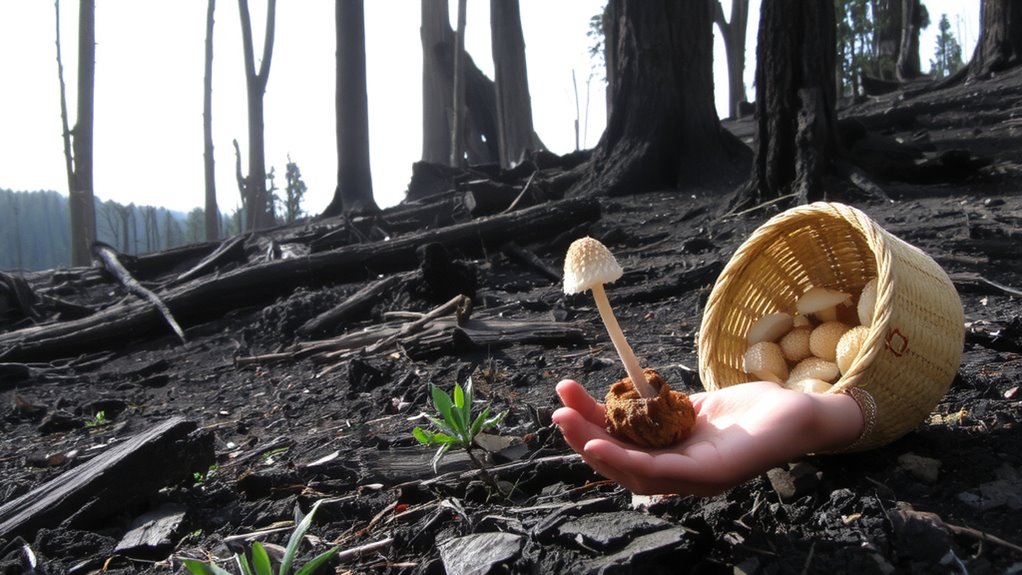
Even when you’re careful, disasters like wildfires, floods, and droughts can quickly destroy native plant populations you rely on for ethical foraging. These events expose plant vulnerability, especially in species with limited ranges or slow reproduction rates. When intense heat or prolonged dry spells kill off mature plants, regeneration isn’t guaranteed. Floods wash away seed banks and alter soil composition, making recovery harder. Each disturbance increases ecosystem disruption, weakening interdependent relationships between plants, pollinators, and soil organisms. Invasive species often exploit these gaps, outcompeting natives. You can observe this in fire-affected areas where non-native grasses dominate. Drought-stressed plants also produce fewer seeds, reducing future abundance. Monitoring post-disaster plant survival gives you realistic expectations about foraging availability. Recognizing these risks helps you adjust harvesting practices proactively. Plant vulnerability isn’t just about immediate loss-it’s about long-term instability within the ecosystem you depend on.
5 Rules for Ethical Foraging After Crises
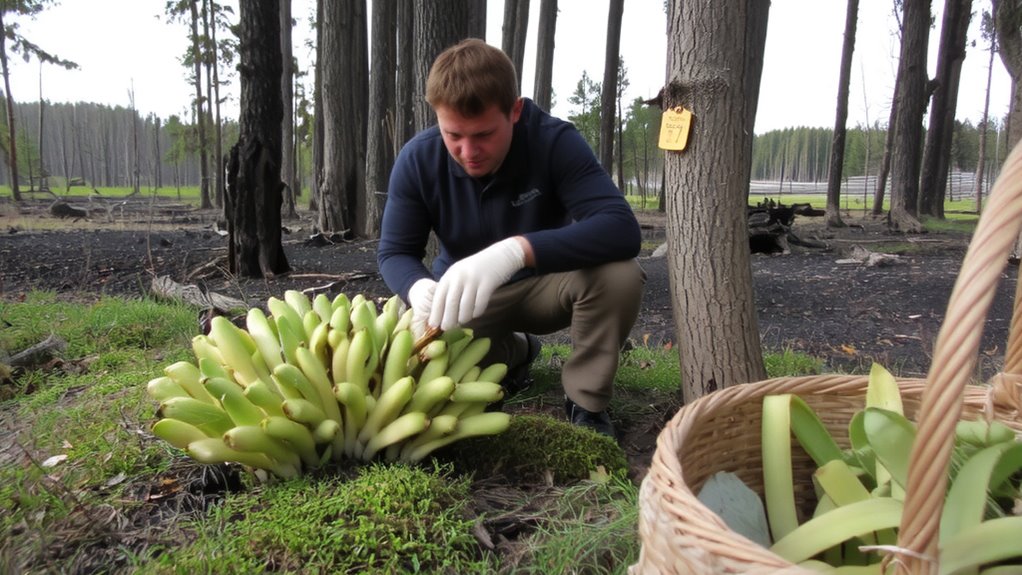
How do you know when it’s safe to forage after a wildfire, flood, or drought? Wait until authorities confirm soil and water safety, and native species show signs of regrowth. Follow foraging etiquette: take only what’s needed, avoid rare plants, and leave no trace. Stick to harvest limits-never remove more than 10% of any population to guarantee survival and seed dispersal. Tread lightly on recovering ecosystems.
| Crisis Type | Wait Time (min) | Max Harvest |
|---|---|---|
| Wildfire | 12 months | 5% |
| Flood | 6 months | 10% |
| Drought | 18 months | 5% |
These harvest limits protect regrowth. Harvesting too soon or too much reduces resilience. Using clear rules guarantees native plants recover. Foraging etiquette isn’t optional-it’s essential for ecosystem stability.
When to Skip the Harvest
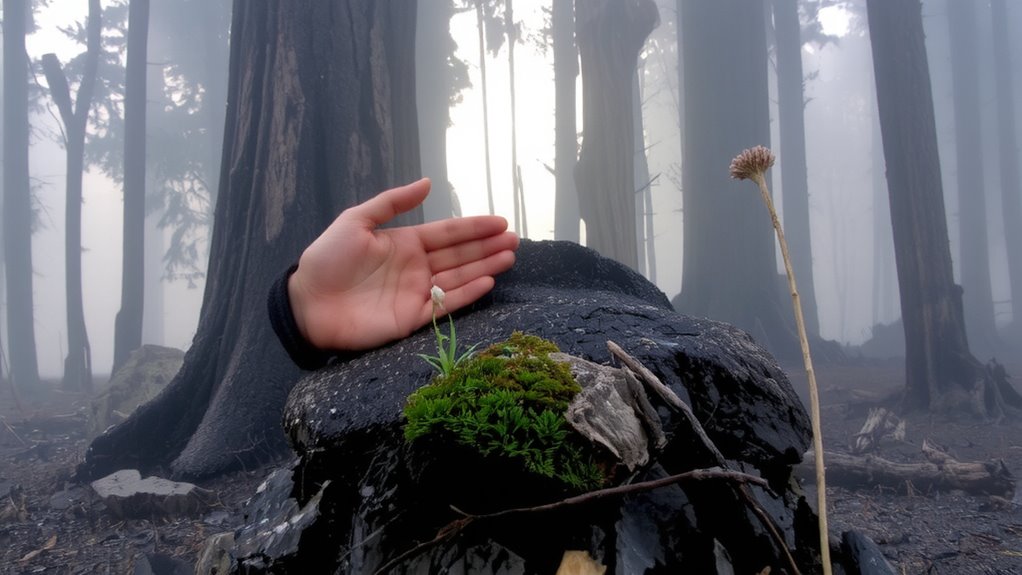
Why risk damaging a fragile ecosystem when the signs are clearly telling you to back off? If you see plant stress-wilting, discoloration, stunted growth-skip the harvest. These aren’t minor issues; they’re indicators the population is struggling. When species scarcity is evident-few individuals, limited patches, no seedlings-taking any plant could tip the balance toward local extinction. You don’t need exact numbers to recognize scarcity; just note if what you see is sparse compared to historical presence. Disturbed areas often host one or two surviving clusters; those are seed sources, not snacks. Harvesting there slows recovery. Leave at least 90% of a population intact when yields are low. Your restraint now guarantees regeneration later. No foraging patch is worth eliminating a native species. Skip the harvest when the ecosystem can’t afford the loss.
How Foraging Can Help Ecosystems Heal
When done with precision and care, foraging can actually support ecosystem recovery instead of hindering it-you’re not just harvesting plants, you’re helping shape a healthier plant community. Selective harvesting encourages plant regeneration by promoting genetic diversity and reducing overcrowding, which improves growth conditions for remaining individuals. You’re also removing invasive or weakened specimens, giving resilient native species more room to thrive. Trampling is minimized when foragers follow ethical pathways, reducing soil compaction and aiding soil stabilization. Light disturbance can stimulate seed release in some native species, triggering natural reseeding cycles. Your actions, when guided by ecological awareness, align with natural processes rather than disrupt them. Overharvesting damages root systems and exposes soil to erosion, but measured removal maintains ground cover and root integrity. You’re not restoring ecosystems single-handedly, but your choices directly influence whether foraging slows or supports recovery. Proper technique turns harvest into a low-impact intervention that benefits both people and ecosystems.
Turn Gathering Into Restoration Action
You can turn every foraging trip into a restoration action by integrating simple, intentional practices that benefit the land. When you harvest, take only 10–20% of any plant population to guarantee regeneration. Carry native seeds in breathable pouches and scatter them in disturbed areas as you move. Use GPS markers to track depleted zones and later organize community planting events to restore them. Your ethical foraging supports cultural preservation by maintaining traditional knowledge and plant use practices that rely on native species. Record which plants thrive post-disaster and share data with local land managers. This creates measurable recovery benchmarks. Avoid overharvesting culturally significant plants; instead, propagate them in shared plots. Your role isn’t just gathering-it’s stewardship. Restoration doesn’t require grand gestures. Consistent, small actions like seed dispersal and participation in community planting lead to tangible recovery. You’re not just taking-you’re rebuilding.
On a final note
You can forage after disasters, but only if you follow strict rules. Check plant populations-harvest no more than 10% of any species. Avoid rare, slow-growing, or endangered plants. Use gloves and clean tools to prevent spreading disease. Collect seeds to replant elsewhere. Skip foraging if regrowth looks weak. Your actions either help recovery or slow it-track results over time to know which.