Safe Methods for Canning Wild Morel Mushroom Soup With Pressure Control
You must use a pressure canner for wild morel mushroom soup because boiling water baths can’t reach the 240°F needed to kill botulism spores in low-acid foods. Choose a dial or weighted-gauge canner that holds 10–11 psi, adjust for altitude, and vent steam 10 minutes before processing. Can pints for 75 minutes, quarts for 90. Avoid thickeners, pack loosely, and use proper headspace. Clean jars and new lids prevent seal failure. A single mistake risks safety-getting every step right is non-negotiable if you want safe, shelf-stable results.
Notable Insights
- Use only a pressure canner that reaches 240°F to safely destroy botulism spores in low-acid morel mushroom soup.
- Process pints for 75 minutes and quarts for 90 minutes at 10–11 psi, adjusting pressure for altitude.
- Vent steam for 10 minutes before pressurizing to ensure accurate temperature and prevent underprocessing.
- Avoid thickeners like flour or cream to maintain safe heat penetration during canning.
- Use new lids, proper headspace, and clean jars to ensure secure seals and prevent contamination.
Why You Must Pressure Can Morel Mushroom Soup
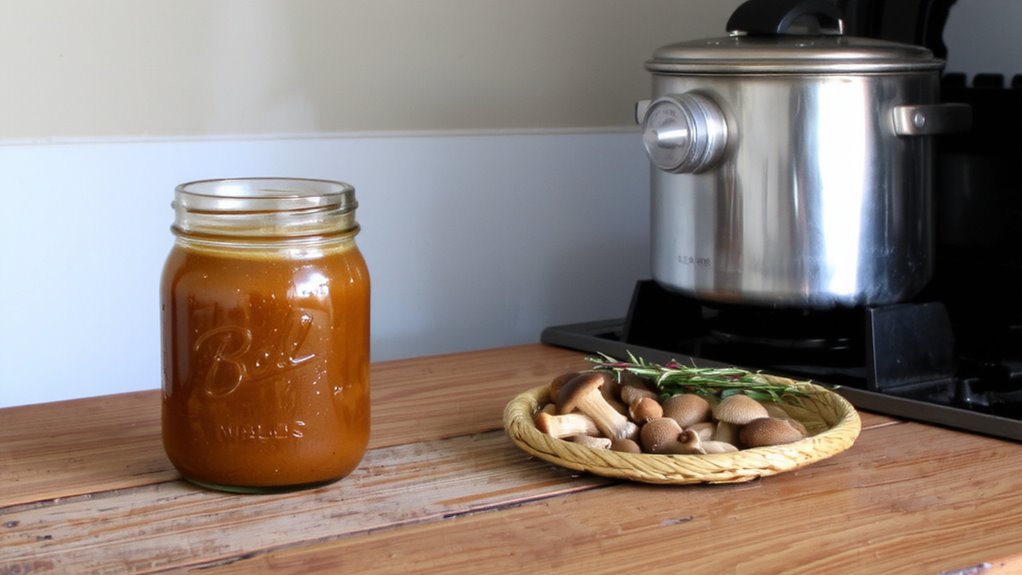
While you might be tempted to use a boiling water bath, you can’t safely can morel mushroom soup without a pressure canner because low-acid foods like mushroom-based soups create a perfect environment for botulism if not processed at the right temperature. The botulism risk is real and potentially fatal, so proper processing isn’t optional. A pressure canner reaches 240°F, the minimum needed to destroy spores, while a boiling water bath only hits 212°F. Without this heat, you can’t guarantee safety. Heat penetration is critical-thick soup slows temperature rise in the jar’s center. Only pressure canning delivers consistent, deep heat throughout each jar. Your method must guarantee that every part of the soup reaches a lethal temperature for spores. Skipping pressure canning saves time but increases risk. You’re not just preserving food-you’re preventing illness. Pressure canning isn’t optional; it’s essential.
Pick the Right Pressure Canner for Low-Acid Soup
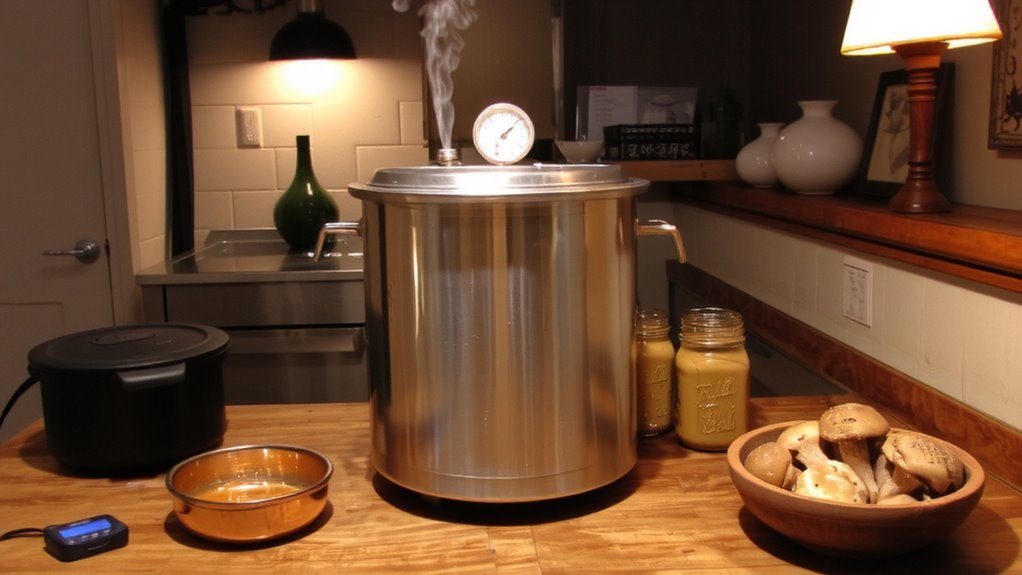
A reliable pressure canner keeps your low-acid soups like morel mushroom soup safe by delivering the consistent 240°F needed to kill botulism spores, and your best bet is one that maintains accurate pressure without wide swings. Look for models with a dial gauge or weighted gauge that’s been tested for stability-dial gauges need annual calibration, but offer precise readings. Canner materials matter: heavy-gauge aluminum or stainless steel heats evenly and resists warping. Avoid thin pots that struggle to maintain pressure. Make sure your model allows for altitude adjustments, since pressure requirements increase above 1,000 feet. At higher elevations, you’ll need to raise the pressure setting by 1–2 psi, depending on your location. A canner that handles these adjustments easily guarantees safety no matter where you are. Choose one with a tight-sealing lid and sturdy vent system for reliable performance.
Prepare Morel Mushroom Soup for Safe Canning
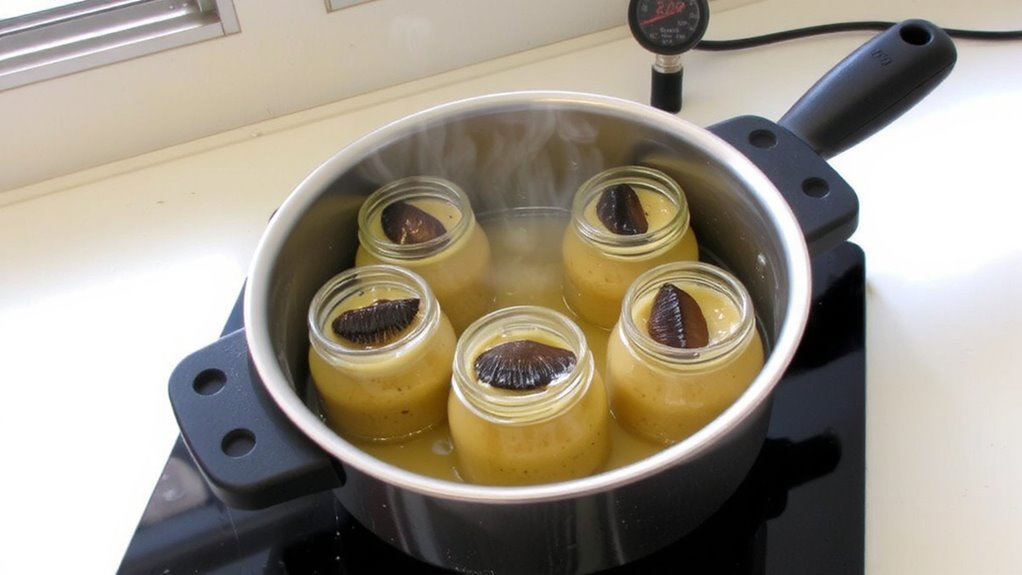
Safety starts with the soup. You must prioritize clean, reliable ingredient sourcing to avoid contaminants. Use only fresh, verified morels-never forage without absolute identification. Combine ingredients promptly and maintain hygiene throughout prep. For flavor enhancement, add onions, garlic, and herbs, but avoid thickeners like flour or cream; they interfere with heat penetration and raise safety risks. Stick to low-acid ingredients compatible with pressure canning.
| Step | Purpose | Detail |
|---|---|---|
| Inspect morels | Remove debris | Rinse quickly, dry thoroughly |
| Prepare broth | Guarantee safe base | Use clear, low-sodium stock |
| Combine ingredients | Enable even processing | Cut solids uniformly, pack loosely |
Label batches immediately after filling jars. Keep records of sourcing and prep times for traceability. Your process directly affects shelf stability and safety.
Set Proper Pressure and Processing Time
Since proper pressure and processing time determine whether your canned morel mushroom soup stays safe over time, you’ll need to follow verified guidelines without deviation. Use a dial-gauge pressure canner set to 11 pounds of pressure or a weighted-gauge model at 10 pounds, adjusting for your altitude. If you’re above 1,000 feet, increase pressure by 1 pound per additional 2,000 feet-this altitude adjustment guarantees lethal temperatures reach the center of each jar. Before starting, confirm your equipment calibration; an uncalibrated dial gauge can deliver false readings, risking underprocessing. Test the gauge annually or use a trusted reference canner. Processing time is 75 minutes for pints, 90 minutes for quarts, measured once the correct pressure stabilizes. Start timing only after the vent has released steam for 10 minutes. Maintaining accurate pressure matters more than speed. Deviations compromise safety. Stick to the numbers.
Avoid These 7 Canning Mistakes for Soup
Getting the pressure and time right means nothing if common errors slip in during the process-mistakes that turn shelf-stable into risky. Avoid these seven key mistakes when canning soup. Improper lid usage, like reusing flats or skipping the correct fingertip-tight seal, leads to spoilage. Incorrect storage conditions, such as warm, humid, or light-exposed areas, shorten shelf life. Don’t ignore headspace, ignore jar defects, skip venting, or overpack ingredients.
| Mistake | Consequence |
|---|---|
| Improper lid usage | Failed seals, contamination |
| Incorrect storage conditions | Mold, nutrient loss |
| Inadequate headspace | Spills, seal interference |
| Unclean jars | Debris, compromised safety |
| Skipping venting | Uneven pressure, underprocessing |
Test Jar Seals and Store for Long-Term Freshness
Once the jars are out of the canner and cooled, you’ll want to check each seal within 12 to 24 hours. Press the center of each lid; if it doesn’t flex up or down, the seal is good. If it pops, refrigerate and use that jar first. Perform the jar lifting test-grip the jar by the lid only. If the lid stays secured, the seal held. If it detaches, the vacuum failed. Don’t store jars with loose lids. Remove rings before storage to prevent rust and moisture buildup. Label each jar with contents and date using waterproof ink-clear storage labeling helps track freshness. Store in a cool, dark, dry place below 70°F. Proper sealing and labeling guarantee quality for up to 12 to 18 months. Discard unsealed or damaged jars. Safe storage depends on reliable sealing, not guesswork.
On a final note
You’ll pressure can morel mushroom soup because boiling water canners won’t reach the temperatures needed to kill botulism spores in low-acid foods. Use a dial-gauge or weighted-gauge canner, follow altitude-adjusted pressures, and process pints for 75 minutes, quarts for 90. Check seals with a fingertip test-no flexing lids. Store jars in a cool, dark place; use within 12–18 months for best quality. Skip shortcuts-they risk safety.