Assessing Scene Safety in a Lightning-Prone Area After a Storm
Wait at least 30 minutes after the last thunder before entering a lightning-prone area, since strikes can happen over 10 miles from the storm. Use the 30-30 rule: if thunder follows lightning within 30 seconds, the storm is within 6 miles and still dangerous. Avoid open fields, tall trees, and conductive objects like fences. Safe shelters include enclosed buildings or hard-topped vehicles. Weather radios and lightning detectors improve situational awareness-knowing when it’s truly safe could save your life.
Notable Insights
- Wait at least 30 minutes after the last thunder before approaching the scene.
- Use the flash-to-bang count to confirm the storm is beyond 6 miles away.
- Avoid open fields, tall trees, and conductive objects like fences or power lines.
- Seek shelter in enclosed buildings or low-lying areas to reduce strike risk.
- Confirm scene safety before helping victims, as lightning can strike multiple times.
Don’t Be Fooled: Lightning Can Strike After the Rain Stops
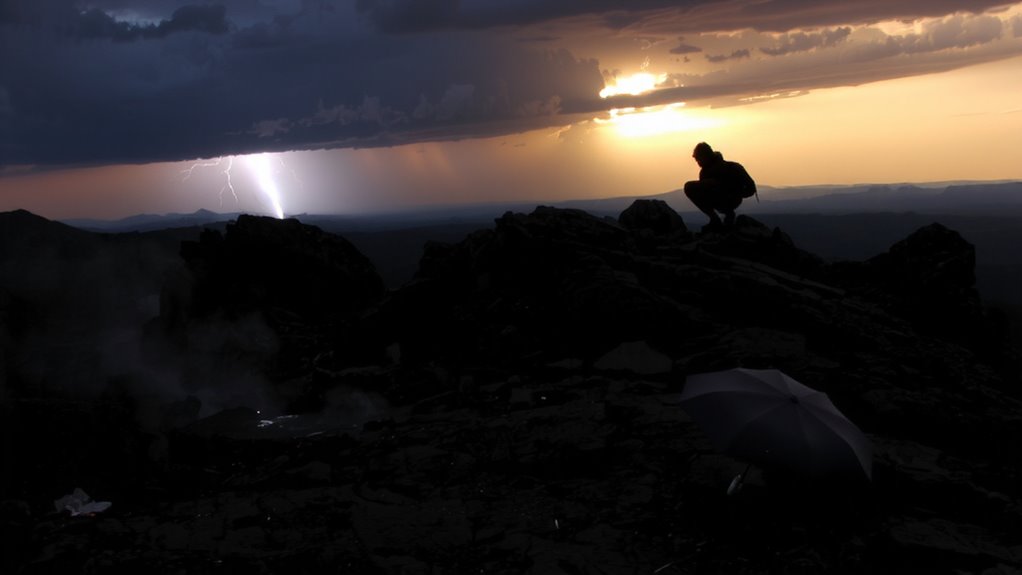
Even if the rain has stopped and skies appear to be clearing, don’t assume you’re safe-lightning can strike up to 10 miles away from the parent storm, often under blue skies. You’re at risk even when the storm seems distant. The false security of dry conditions can get you caught off guard. That’s when the danger feels low, but it’s still real. A lingering threat remains long after precipitation ends. Most lightning casualties occur outside the core storm area, where people mistakenly believe they’re safe. This delay between rain and risk means waiting is essential. Wait at least 30 minutes after the last thunder before resuming outdoor activities. No gear or shelter makes you safe if you return too soon. Your judgment matters more than equipment here. Don’t trade caution for convenience-conditions change fast, and your margin for error is thin.
Use the 30-30 Rule to Gauge Lightning Danger

When you see lightning, start counting-you can estimate how far away the storm is by using the 30-30 rule, a reliable method that combines time and distance to assess real-time risk. Count the seconds between the flash and the thunder. Every five seconds equals about one mile of lightning distance. If it’s 30 seconds or less, the storm is within six miles-you’re in danger. Wait 30 minutes after the last thunder timing before resuming outdoor activities.
| Lightning Distance | Thunder Timing | Risk Level | Action Needed |
|---|---|---|---|
| 6+ miles | >30 seconds | Low | Monitor conditions |
| 3–6 miles | 15–30 seconds | Moderate | Seek shelter now |
| <3 miles | <15 seconds | High | Stay in shelter |
| Any flash | Any sound | Immediate threat | Evacuate immediately |
Avoid These High-Risk Spots After a Thunderstorm

A lightning strike can leave behind lingering hazards, so you shouldn’t assume it’s safe just because the storm has passed. Avoid open fields, where you may be the tallest object and at greater risk of a follow-up strike. Lightning often hits the highest point in an area, making tall trees dangerous-even if the rain has stopped, residual electrical activity can make nearby spots unsafe. Standing under tall trees gives you a false sense of protection but increases danger due to side flashes. Don’t shelter near isolated trees or clearings. Stay away from conductive materials like fences or power lines often found around open fields. Move to lower ground and seek enclosed, substantial buildings when possible. Temporary shelters and picnic structures offer little real protection. You reduce risk by avoiding elevated and exposed locations. Safety depends on location-not luck.
When It’s Safe to Help a Lightning Strike Victim
If you’re near someone struck by lightning, you can act quickly-unlike with electrocution from power sources, lightning victims don’t retain an electrical charge, so touching them won’t shock you. Your immediate response should focus on scene safety and victim assessment. Check for responsiveness and breathing. If the person isn’t breathing, start CPR immediately-survival rates improve notably with prompt action.
| Action Step | Purpose | Timing |
|---|---|---|
| Confirm scene safe | Prevent further injury | Before approach |
| Check responsiveness | Begin victim assessment | 0–10 seconds |
| Assess breathing | Identify respiratory arrest | 10–20 seconds |
| Call for help | Initiate medical response | Within 30 sec |
| Start CPR if needed | Support circulation | Immediately |
Delay reduces survival odds. Speed and accuracy in victim assessment define your impact.
Bring the Right Gear to Monitor Lightning Threats
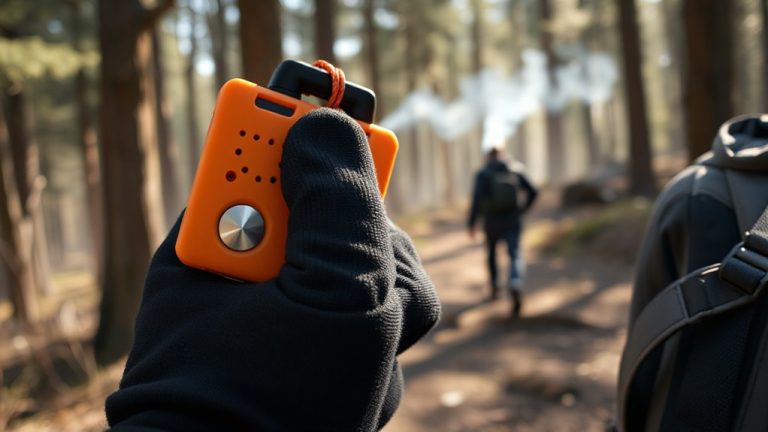
Pack a weather radio that receives NOAA broadcasts-these devices deliver real-time alerts on thunderstorms and lightning activity, often giving you 15 to 20 minutes of lead time before danger arrives. This is essential lightning detection you can rely on, even when cell service fails. Pair it with a portable lightning detector, which senses electrical discharges up to 25 miles away; models like the SkyScan use GPS and radio frequency tracking to pinpoint storm movements. Though less precise than professional networks, they offer field-level awareness. Treat both as critical safety equipment-no app substitutes for dedicated hardware with long battery life and rugged build. A weather radio with hand-crank power outperforms smartphones in remote areas. Together, they form a low-cost, high-reliability system. You won’t get fancy displays, but you’ll get warnings fast enough to act. For reliable options, consider one of the best emergency weather radios based on expert testing and field performance.
Make a Real-Time Storm Safety Plan
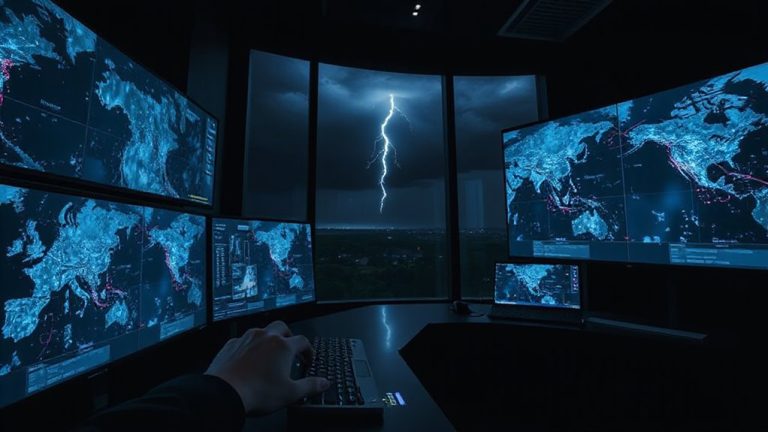
When lightning’s within 25 miles, you’ve got minutes, not hours, to act-so knowing where to go and what to do beats waiting to see the strike. You need a real-time storm safety plan built on current storm patterns and clear emergency protocols. Monitor radar for storm speed and direction; if a cell moves faster than 30 mph, your window shrinks fast. Identify safe zones-enclosed buildings or hard-topped vehicles-and mark multiple routes to reach them in under 90 seconds. Avoid trees, open fields, and metal objects. Assign roles: one person tracks lightning, another alerts the team. Test the plan weekly. A 30-minute all-clear rule after the last strike balances safety and practicality. Relying on sight or sound alone increases risk-use real-time data. Your plan only works if it’s practiced, simple, and based on measurable conditions, not guesses.
On a final note
You’re not safe just because the rain stops-lightning can strike miles from a storm’s edge. Use the 30-30 rule: if thunder follows lightning within 30 seconds, stay sheltered. Wait 30 minutes after the last thunder before moving out. Avoid open fields, tall objects, and wet gear. Most strike victims survive with prompt CPR. Carry a weather radio or lightning app for real-time alerts. Your safety depends on timing, location, and preparation-no gear overrides caution.