Assessing Risk of Generator Carbon Monoxide in Attached Garages
You should never run a generator in an attached garage, even with the door open-it’s not safe. Carbon monoxide can enter your home in minutes through wall gaps, doors, and HVAC systems. Open doors don’t prevent buildup; dangerous CO levels form in under 10 minutes. Keep generators at least 20 feet from all structures to avoid deadly exposure. Early symptoms include headache and dizziness; CO is odorless and strikes fast. There’s more to know about staying safe when the power’s out.
Notable Insights
- Never operate a generator in an attached garage, even with the door open-carbon monoxide can rapidly enter living spaces.
- Carbon monoxide infiltrates homes through small gaps in shared walls, doors, and utility penetrations from attached garages.
- Open garage doors do not prevent CO buildup, as natural airflow can draw exhaust back indoors within minutes.
- Generators must be placed at least 20 feet from all structures to avoid dangerous CO accumulation near vents and windows.
- Early CO poisoning symptoms include headache, dizziness, and nausea-immediate evacuation and medical help are critical.
Never Run a Generator in an Attached Garage
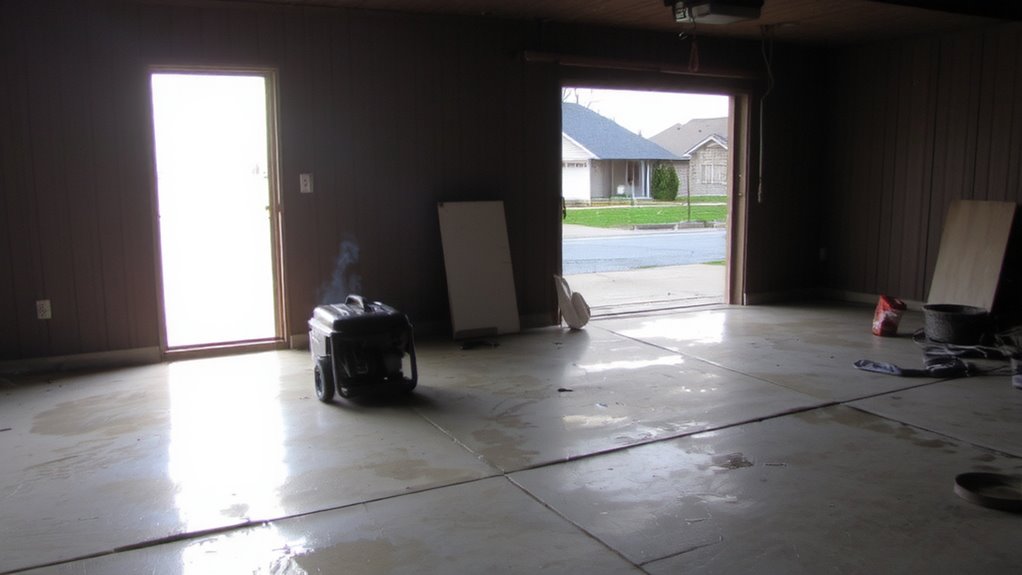
Even if the garage door is wide open, running a generator in an attached garage puts you at serious risk because carbon monoxide can quickly seep into your home through small gaps and shared air spaces. You can’t rely on garage ventilation alone-it’s never enough to disperse generator fumes effectively. Most attached garages connect directly to living areas, and even minimal air leakage allows toxic gases to migrate inside. The risk isn’t theoretical; CO detectors often alarm within minutes under these conditions. Portable generators emit high levels of carbon monoxide, and without real-time monitoring, you won’t detect dangerous buildup until symptoms begin. You might think fresh air from the open door is sufficient, but tests show CO accumulates faster than expected. No generator, regardless of size or efficiency, is safe to run indoors. Keep it at least 20 feet from windows, doors, and vents. Your safety depends on correct placement, not guesswork.
How Carbon Monoxide Invades Your Home From the Garage
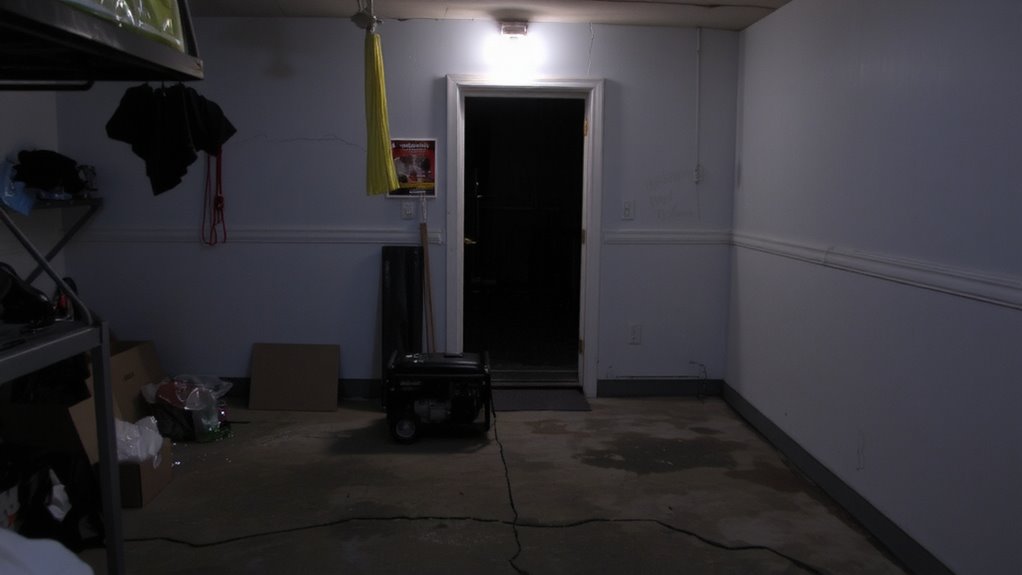
You know keeping the generator out of the attached garage is non-negotiable, but understanding how carbon monoxide still reaches you matters just as much. Even outside the garage, exhaust buildup can seep indoors through shared walls, doors, or vents. Fuel leakage near ignition sources increases risk, but odorless CO is the silent threat. It moves easily through small openings, especially under pressure from poor ventilation.
| Entry Point | CO Infiltration Risk |
|---|---|
| Shared wall gaps | High |
| Door undercuts | Moderate |
| HVAC intakes | High |
| Utility penetrations | Low to moderate |
Exhaust buildup near the garage increases indoor concentration within minutes. Fuel leakage won’t always alert you, but CO detectors might. Sealing gaps helps, but proper generator placement-far from openings-is what actually works. You’re not safe just because the unit isn’t inside.
The Truth About Leaving the Garage Door Open
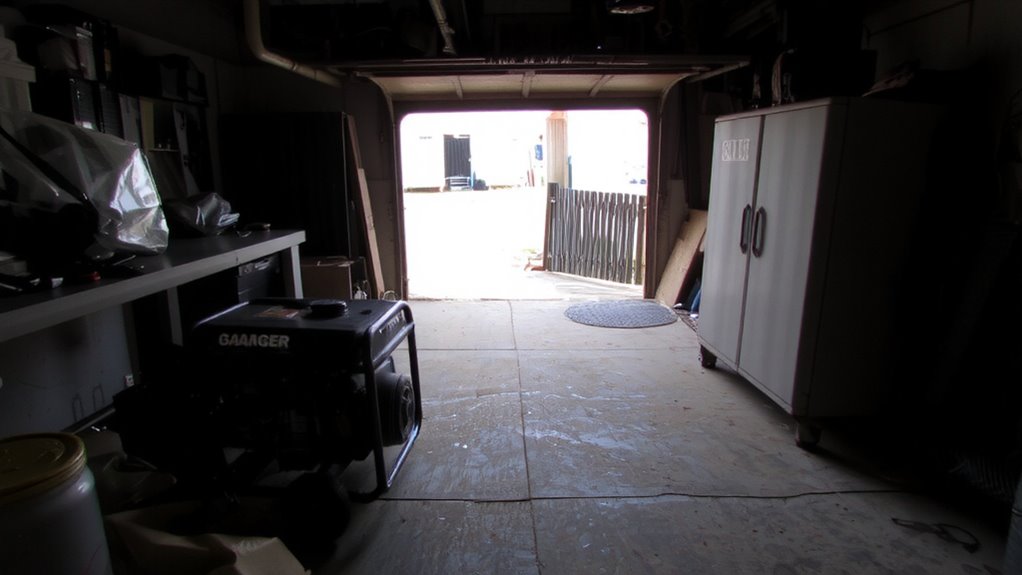
Could leaving the garage door open really protect you from carbon monoxide exposure? It might seem logical, but it’s not reliable. Garage ventilation through an open door doesn’t guarantee safe air exchange, especially in enclosed or partially enclosed spaces. Carbon monoxide is odorless and can linger or re-enter your home regardless of door positioning. Even with the door fully raised, airflow patterns may pull exhaust back inside, particularly in windy or low-wind conditions. Tests show dangerous CO levels can build up in under 10 minutes. You can’t depend on natural drafts to keep you safe. Proper protection means never running a generator in or near the garage, no matter how you’ve positioned the door. Effective safety isn’t about airflow guesswork-it’s about keeping the source outside, away from all entry points. Relying on open doors creates a false sense of security.
Place Your Generator at Least 20 Feet Away
A minimum 20-foot distance between your generator and any structure is critical for preventing carbon monoxide from entering living spaces. Generator placement matters because even small amounts of exhaust can accumulate quickly near doors, windows, or vents. The safety distance isn’t arbitrary-it’s based on airflow dispersion and CO concentration tests under real-world conditions. Placing your unit closer than 20 feet increases the risk of gas infiltration, especially in enclosed or semi-enclosed areas like attached garages. Wind direction can affect this, but relying on airflow patterns alone isn’t enough. Units emit CO consistently during operation, and structures can create dead zones where gas lingers. Stick to the 20-foot rule regardless of perceived draft or terrain. This measured safety distance gives you a reliable buffer. It’s a simple step that markedly reduces exposure risk. Follow it every time.
Spot the Signs of Carbon Monoxide Poisoning
Keeping a safe distance with your generator is just one part of avoiding carbon monoxide hazards-knowing the symptoms of exposure is equally important. If you start feeling a headache, nausea, dizziness, or confusion, carbon monoxide could be building up. These signs often appear quickly and worsen with continued exposure. You might feel off without realizing why. The gas is odorless and invisible, so your body’s reaction is often the first real clue. Nausea can mimic the flu, but if multiple people or pets in the same space feel sick at once, carbon monoxide is a likely cause. Dizziness confusion impairs judgment, making it harder to act. Immediate fresh air and medical attention are critical. Don’t wait. Acting fast can prevent serious harm or death. Watch for these symptoms every time you run a generator, even if it’s outside.
Protect Your Family During a Power Outage
When the power goes out, your generator becomes critical-but how you use it determines whether it keeps your family safe or puts them at risk. Proper generator placement is non-negotiable: always run it outdoors, at least 20 feet from doors, windows, and vents, even if the garage is attached. CO can seep into living spaces in minutes. Never operate a generator indoors or in partially enclosed areas. Conduct regular safety drills with your household so everyone knows the shutdown procedure and evacuation route if CO is suspected. Test smoke and CO detectors monthly. Use battery-powered alarms near sleeping areas. A generator without proper placement and practiced response doubles the danger. Safety isn’t just equipment-it’s action. Plan ahead. Drills take five minutes but could prevent tragedy. Your family’s survival depends on execution, not luck.
On a final note
You can’t run a generator in an attached garage safely, even with the door open-CO builds up too quickly. Keep it at least 20 feet from doors, windows, and vents. Test your CO alarms monthly; they’re your best defense. Symptoms like headache or dizziness mean get outside immediately. During outages, protect your family by placing the generator correctly-no exceptions. It’s not worth the risk.