Safe Procedures for Foraging Wild Greens Near Roadways and Industrial Zones
Stay at least 50 feet from rural roads and 100 feet from urban streets, more near highways or industry. Test soil yearly-lead and cadmium don’t show but build up in your body. Avoid discolored soil or chemical smells, even if plants look healthy. Wash greens with a vinegar rinse and cold soak; it removes more residue than water alone. Dandelion, chickweed, and plantain absorb fewer toxins. Pick upwind and uphill when possible-your next step reveals how to spot hidden contamination others miss.
Notable Insights
- Maintain at least 100 feet distance from urban roads and 150 feet from highways to reduce exposure to vehicle pollutants.
- Test soil annually for heavy metals, especially near industrial sites or busy roadways, before foraging edibles.
- Avoid areas with discolored soil, oily patches, or chemical odors, as these indicate potential contamination.
- Harvest dandelion, chickweed, or plantain-species with lower bioaccumulation of toxins-preferably before maturity.
- Clean greens using a vinegar rinse followed by a cold water soak to effectively remove surface contaminants.
Why Foraging Near Roads and Industry Poses Real Risks
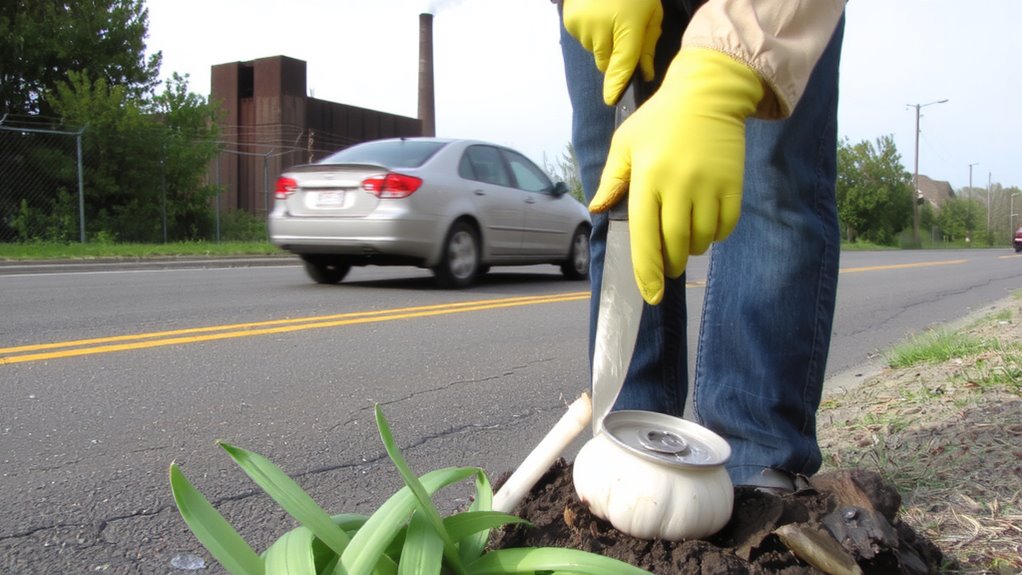
Heavy metals, chemicals, and vehicle emissions are the silent contaminants you’re likely to encounter when foraging near roads and industrial sites. Soil contamination builds up over time from runoff and waste, trapping toxins like lead and cadmium in the ground where plants absorb them. You can’t see or taste these poisons, but they accumulate in your body with repeated exposure. Air deposition spreads pollutants from smokestacks and exhaust directly onto leafy surfaces, coating edible plants with fine particulate matter. Rain doesn’t wash it all off, and cooking won’t neutralize heavy metals. Even small harvests from impacted zones can exceed safe intake levels over time. Industrial areas often have higher concentrations due to long-term emissions. These risks aren’t theoretical-they’re measurable in plant tissue tests. Foraging close to these sources increases your exposure without warning signs. The trade-off between convenience and safety isn’t worth it when cleaner alternatives exist.
How Far to Stay From Roadways for Safer Foraging
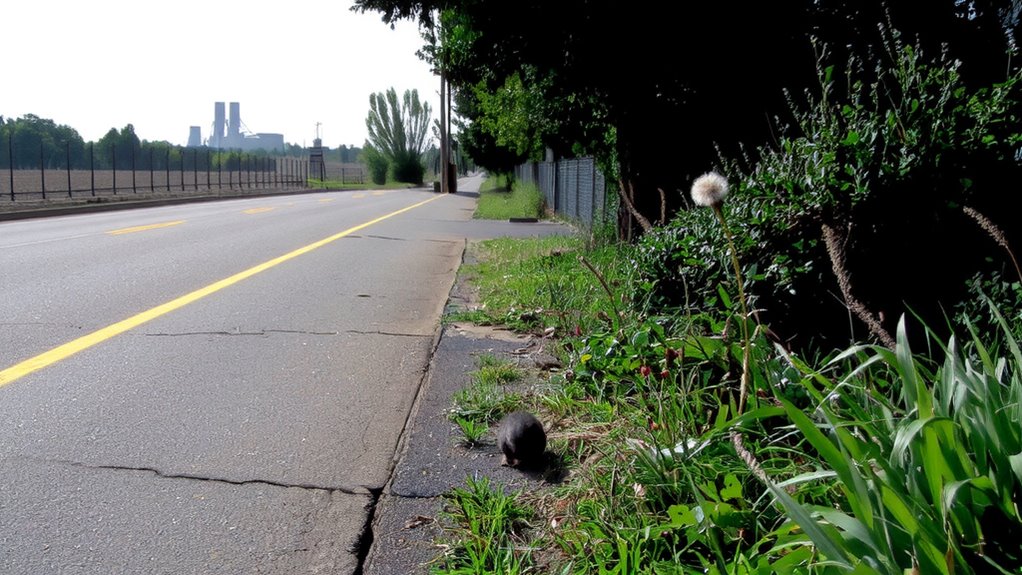
How far should you really stay from roadways to forage safely? Experts recommend at least 50 feet, but 100 feet is better for reducing exposure to heavy metals and pollutants. This distance creates effective buffer zones that help limit contamination from vehicle emissions. If you’re near industrial roads or high-traffic highways, staying 150 feet or more away is wise. Buffer zones aren’t foolproof-wind and water can carry contaminants-so always consider soil testing to confirm safety. Here’s a quick guide:
| Traffic Level | Minimum Distance | Soil Testing Advice |
|---|---|---|
| Rural road | 50 feet | Recommended every 2 years |
| Urban street | 100 feet | Test annually |
| Highway | 150 feet | Test before first use |
| Industrial access | 200 feet | Test annually + after spills |
| Busy city center | 300 feet | Not advised; avoid |
Soil testing and buffer zones are your best tools for informed foraging.
Spotting Pollution Clues in Wild Green Environments
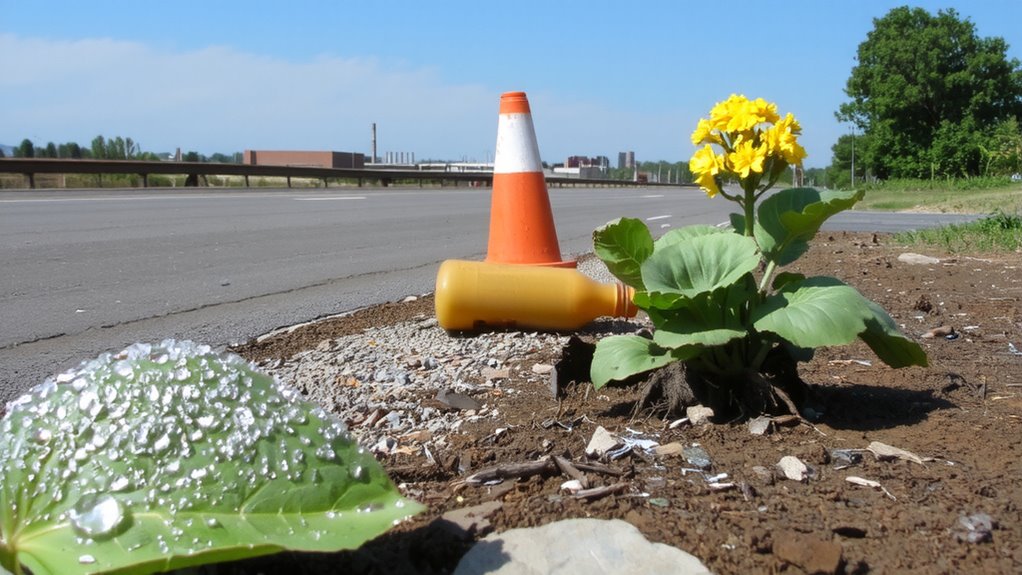
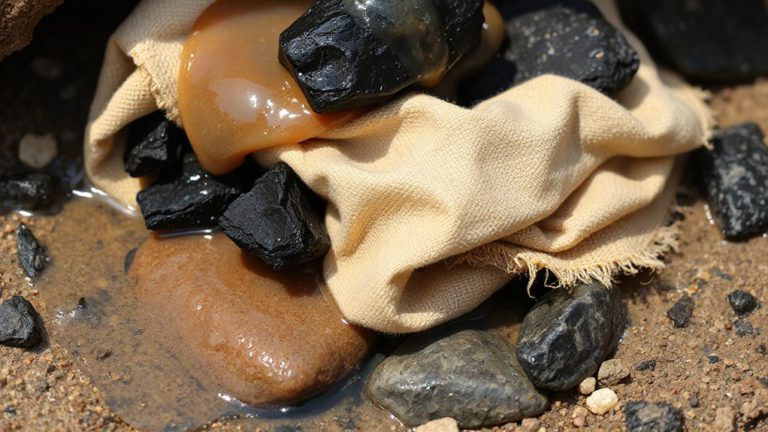
You’ve likely already considered how far to stay from roadways when foraging, but distance alone won’t guarantee clean harvests. Watch for soil discoloration-gray, black, or oily patches often signal heavy metal or petroleum contamination. Such changes suggest runoff has altered the ground’s composition, making nearby plants unsafe. Trust your nose too; chemical odors, especially near industrial zones or ditches, indicate pollutants you can’t see. A sharp, acrid, or fuel-like smell means the area’s compromised. Plants growing where runoff collects or where soil looks unnatural should be avoided. These cues matter more than how “healthy” greens appear. Pollution doesn’t always kill plants, but it makes them hazardous to eat. You’re better off skipping questionable spots entirely. Reliable foraging means recognizing warning signs, not just picking what looks edible. Soil discoloration and chemical odors are clear red flags.
Best Washing and Preparation Methods for Contaminated Areas
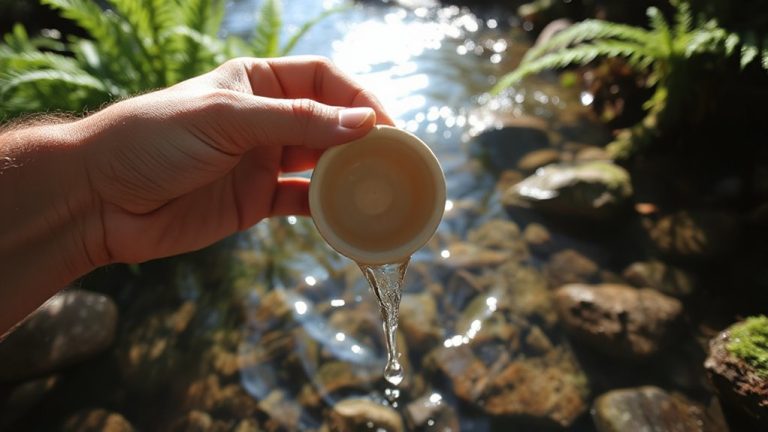
A significant portion of contaminants absorbed by wild edibles come from soil and airborne pollutants, so thorough cleaning is essential even if the plants look pristine. You’ll need to use multiple cleaning stages to reduce risk effectively. Start with a vinegar rinse-1 part white vinegar to 3 parts water-to help remove surface residues. Follow with a cold soak in clean water for 10–15 minutes to loosen embedded particles. Swish greens gently, then repeat if needed.
| Method | Time | Effectiveness (Scale 1–5) |
|---|---|---|
| Vinegar rinsing | 5–10 min | 4 |
| Cold soaking | 10–15 min | 3 |
| Running water | 2–3 min | 2 |
| Double vinegar + cold soak | 20 min | 5 |
Double rinsing with vinegar and cold soaking offers the best results. Always wash before cooking.
Top Wild Greens That Absorb Fewer Toxins
Washing helps cut down on surface contaminants, but choosing the right plants makes a bigger difference when foraging near roads or industrial sites. You’re better off with wild greens like dandelion, chickweed, and plantain, which tend to absorb fewer heavy metals. These plants show stronger edible safety in contaminated areas due to lower bioaccumulation rates. Dandelion roots may store toxins, but young leaves harvested early in the season maintain better nutrient retention and lower risk. Chickweed grows quickly but doesn’t concentrate pollutants like lead or cadmium as much as other species. Plantain, especially broadleaf, resists uptake of harmful compounds while holding its nutritional value. Still, location matters-always pick upwind and uphill from pollution sources. You won’t eliminate risk, but you can reduce it markedly. Prioritize young plants and avoid those with visible residue. Your safety and health depend on smart selection, not just cleaning.
When to Avoid Foraging Near Industrial Zones Completely
While some wild greens tolerate moderate roadside pollution, you shouldn’t forage near active industrial zones when heavy metal emissions or chemical runoff are known to occur-these areas often exceed safe contamination thresholds. You’re at high risk of encountering soil contamination from lead, cadmium, or arsenic, which plants absorb and retain. Chemical runoff from factories or storage sites can seep into groundwater and nearby vegetation, making even brief exposure dangerous. These pollutants aren’t removable by washing or cooking. If you see warning signs, distressed vegetation, or pooled water with oily films, leave. Older industrial sites may still harbor toxins long after closure. When in doubt, test the soil before harvesting. Otherwise, skip the area completely. There’s no reliable way to detoxify heavily contaminated greens, so your safest bet is avoiding such zones altogether. No meal is worth long-term health risks.
On a final note
You can forage near roads and industry if you stay at least 50 feet from roadways and 300 feet from industrial sites. Look for plants with undamaged leaves and avoid areas with visible dust or chemical smells. Wash greens thoroughly in cold water, even if they look clean. Some, like dandelions, absorb fewer toxins. Still, when in doubt, skip it-your safety isn’t worth the risk.