Sealing Gaps Under Doors and Windows to Block Floodwater Intrusion
Floodwater gets through gaps under doors and around windows as small as ¼ inch, using pressure to bypass weak seals. Use closed-cell foam tape or butyl rope putty to seal cracks up to ½ inch-duct tape fails fast, so go with waterproof PVC or butyl rubber tape instead. Pair a rigid door sweep with taped edges to block water under 6 inches. For better protection, you’ll want to know which barriers last through sustained floods.
Notable Insights
- Use heavy-duty butyl or waterproof poly tape to seal gaps around doors and windows before floodwaters arrive.
- Install door sweeps with rubber or silicone blades to block water entering under exterior doors.
- Apply closed-cell foam tape or self-adhering butyl rope to seal cracks up to ½ inch wide around frames.
- Prioritize ground-level windows and use removable film kits to reduce water seepage from splashes or pressure.
- Combine layered defenses like taped perimeters, sweeps, and reusable draft blockers for better flood resistance.
How Floodwater Sneaks Under Doors and Windows
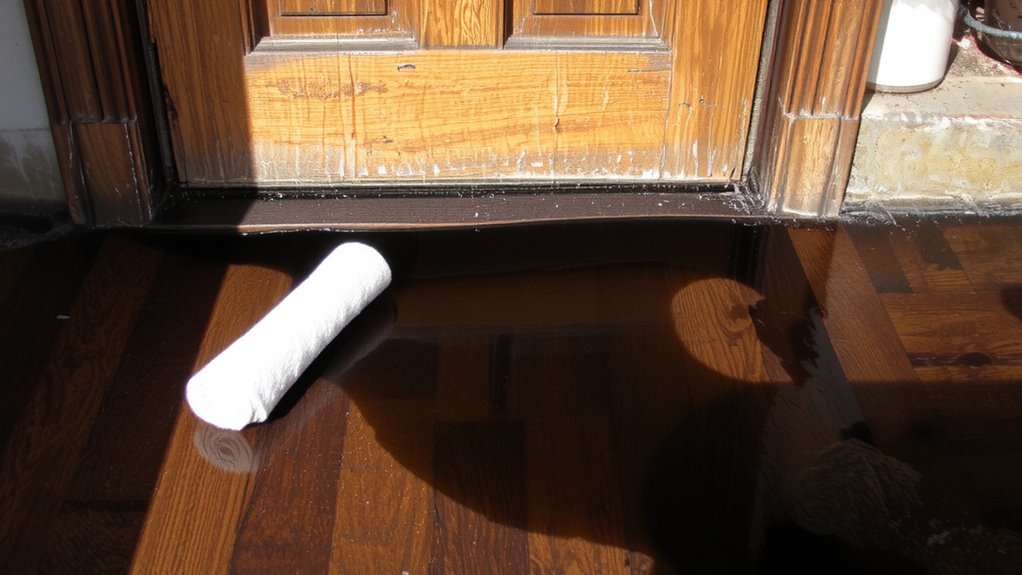
Even if you’ve reinforced your doors and windows, floodwater can still find its way in-usually through gaps you might not even notice until it’s too late. Water pressure builds rapidly during floods, forcing water through even the smallest structural gaps under doors and around window frames. These openings, often less than a quarter-inch, become entry points when water accumulates outside. Standard weatherstripping won’t hold against sustained pressure; it compresses and fails. Floodwater exploits elevation differences, seeping under thresholds where seals degrade over time. Concrete slabs may settle, creating unseen gaps. Metal or wooden frames warp, worsening the risk. Testing shows that unsealed thresholds allow liters of water per minute under moderate pressure. Effective barriers must seal continuously, resist hydrostatic force, and accommodate minor movement without breaking contact. Temporary sandbags slow flow but don’t stop infiltration through underlying gaps. Permanent solutions require durable, compressible seals rated for flood conditions, installed at all potential breach points.
Quick Ways to Seal Windows Against Floodwater
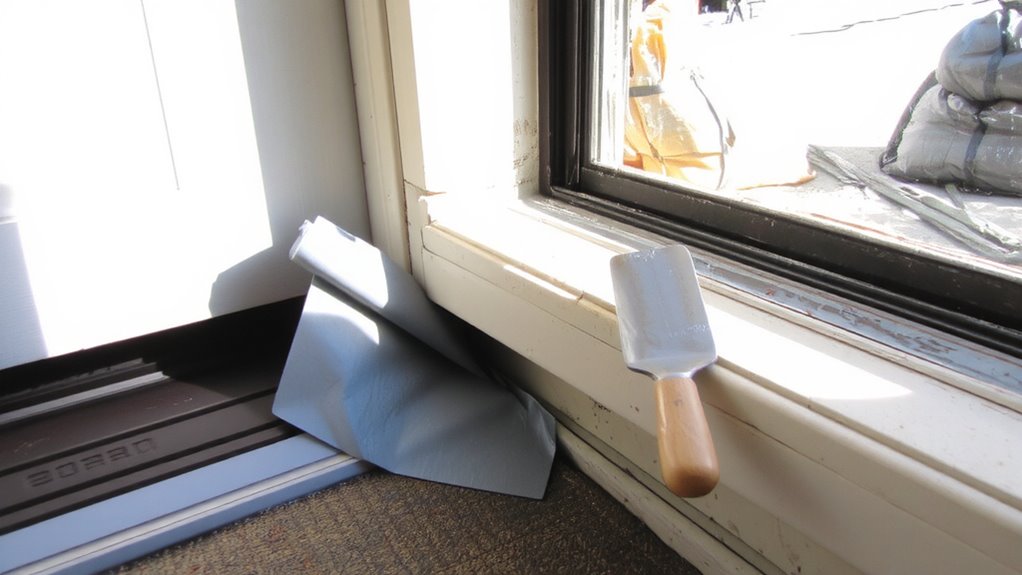
When floodwaters rise, sealing windows quickly matters more than perfect solutions-because even a temporary barrier can buy critical time. Start by inspecting gaps around window frames where water can enter. Apply removable window film kits tightly over glass and edges; they’re not waterproof but reduce seepage from minor splashes or rain-driven mist. For better protection, add extra weather stripping to the sash and frame-closed-cell foam tape lasts longer and resists water better than felt. Don’t rely on tape alone unless it’s heavy-duty butyl or waterproof poly tape. Sealant putty like self-adhering butyl rope gives a stronger temporary seal but needs firm pressure to adhere. These fixes won’t stop full submersion, but in rising water under 6 inches, they slow intrusion. Prioritize ground-level windows first. Every sealed gap reduces flood volume inside. Test seals by spraying water-any leak means reapplication. For more comprehensive protection, consider installing permanent flood barrier systems designed to withstand higher water levels.
Seal Your Exterior Doors in 4 Simple Steps
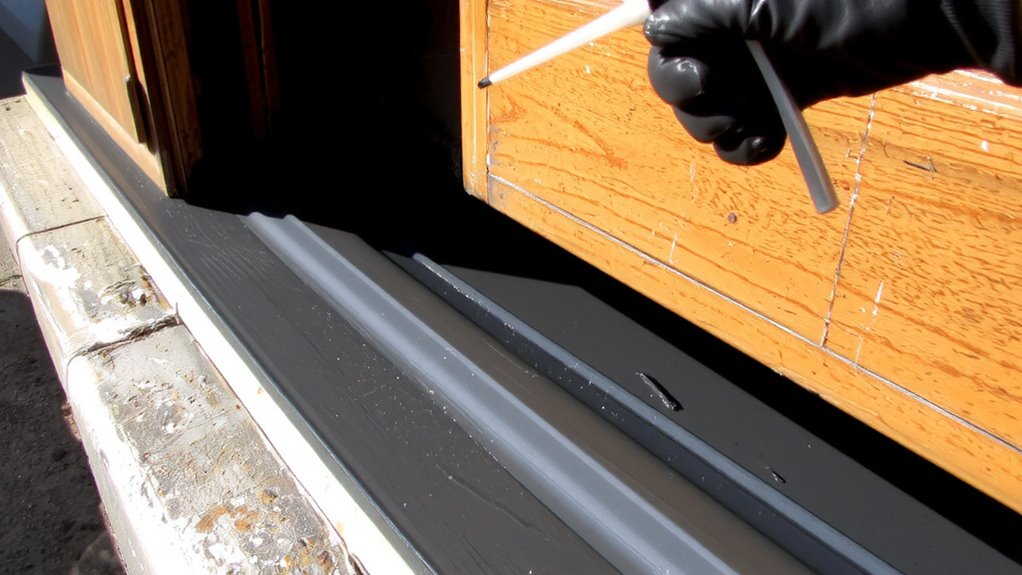
You’ve addressed the windows, but don’t stop there-water exploits every weak point, and exterior doors are just as vulnerable. Start by inspecting the door’s perimeter for gaps. Apply self-adhesive weather stripping along the sides and top to seal cracks up to ½ inch wide; it’s effective and lasts 3–5 years under normal conditions. For the bottom gap, install a door sweep or flexible rubber seal-adjust it to sit flush with the threshold without dragging. Weather stripping reduces seepage but won’t stop flowing water alone. Pair it with reusable draft blockers-these fabric tubes filled with sand or polymer beads block slow-moving water when placed along the interior base. They deploy quickly and withstand up to 6 inches of water if properly sealed. Replace worn seals annually or after major events. These steps won’t make your door floodproof, but they markedly slow intrusion and buy time during emergencies. A reliable best flashlights under $100 can help you inspect and maintain these seals in low-light conditions.
Best Materials to Block Floodwater From Entering
Floodwater resistance starts with choosing the right barrier materials-those that balance durability, ease of deployment, and real-world effectiveness. You’ll want door sweeps that seal tightly against concrete or asphalt; look for ones with rubber or silicone blades, not brush strips-they resist hydrostatic pressure better. Test models show a 6–8 mm gap reduction, which slows minor flooding. For temporary edge sealing, waterproof tape applied to door thresholds and window frames helps, but only if it bonds to clean, dry surfaces. PVC or butyl rubber tapes perform best, lasting 48+ hours under damp conditions. Don’t rely on standard duct tape-it fails within hours. Pair door sweeps with taped perimeters for layered defense. Materials matter: rigid vinyl barriers outperform foam, and metal-backed sweeps hold up longer. You’re not stopping deep surges, but these materials reduce seepage when every minute counts. Use them correctly, and you gain measurable protection. Among top-rated options, best flood barriers offer integrated sealing systems designed for rapid deployment and enhanced water resistance.
Temporary vs. Permanent Flood Barriers: Which to Use?
How do you decide between setting up a barrier now or investing in one that lasts? Temporary solutions work fast when flood warnings hit, but permanent installations offer long-term defense with less upkeep. Your choice depends on flood risk, budget, and how often water threatens your property.
| Type | Setup Time | Lifespan |
|---|---|---|
| Sandbags | 1–2 hours | Single use |
| Inflatable barriers | 15–30 min | 3–5 years |
| Flood panels | 20–40 min | 10+ years |
| Retractable dams | 1–3 hours | 20+ years |
| Concrete walls | Days to install | Permanent |
Temporary solutions suit infrequent threats and low budgets. They’re practical but labor-intensive. Permanent installations cost more upfront but save time and effort over years. They’re ideal in high-risk zones. Evaluate your flood history and response capacity. Quick deployment matters, but repeated use favors permanence. Choose based on real need, not just price.
On a final note
You can stop floodwater from creeping under doors and windows with the right seal. Sandbags work in a pinch but hold only up to 6 inches reliably. Silicone caulk or flood shields with rubber gaskets offer better long-term protection. In tests, inflatable door barriers blocked 95% of water up to 18 inches. Permanent barriers cost more but seal tighter. Choose based on flood risk, ease of deployment, and how much water your home has faced.