Smuggling Vital Supplies in Hollowed-Out Books or Appliances
You can hide essential supplies in hollowed-out books by carving out the center with a craft knife, leaving 20–30 pages on each side for support and keeping the spine intact to avoid suspicion. Appliances like refrigerators or travel irons offer deeper, more durable hiding spots within insulated walls or removable casings. Use magnetic closures and make certain items still function normally. Avoid overloading, as bulges raise red flags. Test concealments under real handling-many fail under scrutiny. There’s more to optimizing each method effectively.
Notable Insights
- Hollowed-out hardcover books with intact spines and 20–30 pages on each side provide discreet, structurally sound concealment.
- Appliances like refrigerators and travel irons offer hidden storage in insulated walls or removable bases without drawing suspicion.
- False bottoms in common household items maintain normal appearance and functionality while hiding supplies.
- Use durable materials like metal or thick plastic for modifications to withstand handling and inspection.
- Avoid overloading concealments and test them under real-world conditions to ensure stealth and durability.
How to Hide Supplies in a Hollowed-Out Book
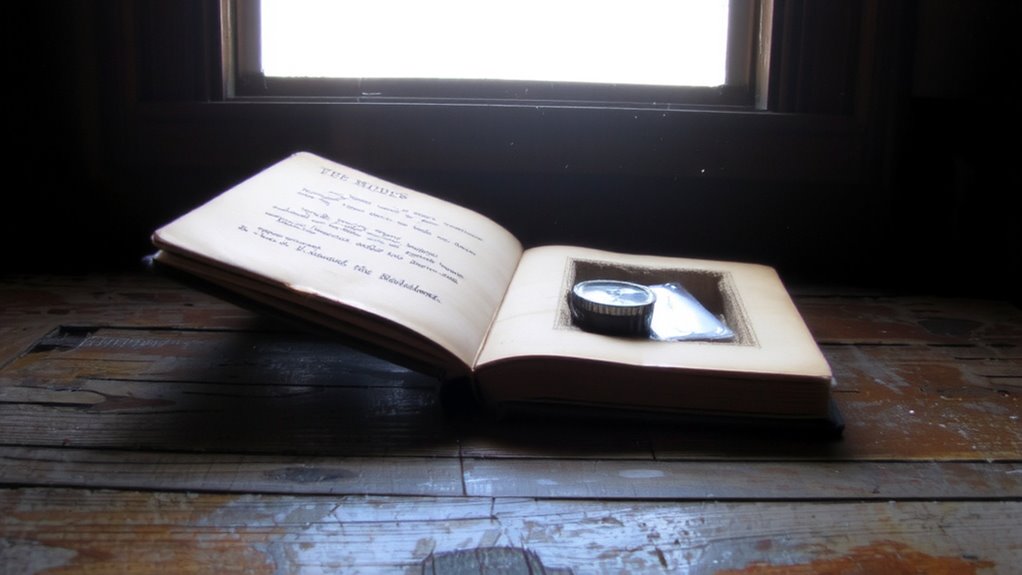
A hollowed-out book works as a discreet stash because its ordinary appearance masks contents effectively. You start by selecting a hardcover book with a sturdy book binding to maintain durability during handling. The spine should remain intact to avoid suspicion. Use page carving techniques to remove interior pages, leaving about 20–30 pages intact at the front and back for structural support. A craft knife provides precise cuts, ensuring clean edges and maximum space. Measure your supplies beforehand-you’ll need at least 1.5 inches of depth for most items. The final compartment can hold small tools, documents, or medical supplies. Weight distribution matters; an uneven book draws attention. Test the book’s appearance on a shelf-no bulges or distortions. This method offers concealment without complexity, though moisture and pests remain risks over time. Replace acidic pages if long-term storage is required.
Turn Everyday Objects Into Secret Compartments
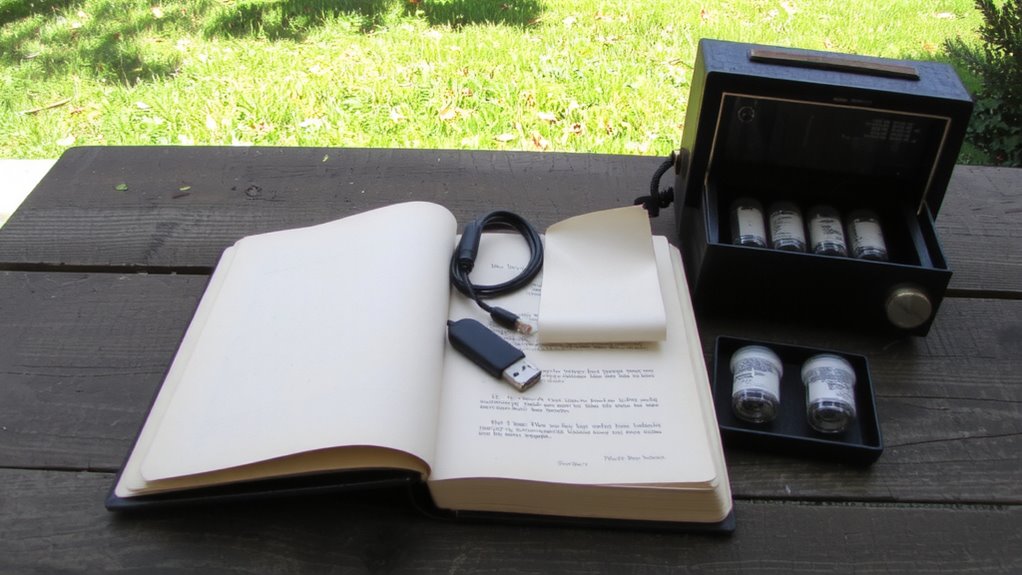
You’ve seen how a hollowed-out book can hide supplies in plain sight, but relying on one method alone limits your options when space or scrutiny increases. You can modify everyday items with hidden compartments using simple tools and smart design. False bottoms in containers like food tins or cosmetic cases provide quick access while looking ordinary. Magnetic closures keep compartments sealed without obvious latches, reducing suspicion during inspections. Test each modification for durability-cheap magnets may fail under stress. Materials matter: metal or thick plastic holds up better than brittle composites. Weight distribution should mimic the original item’s feel to avoid detection. A modified object must function normally at a glance-lids should screw on, pages flip, doors open. These features aren’t foolproof, but combined with discretion, they improve concealment. Choose items common to your environment so they blend in.
Top 5 Items That Hide Supplies Best
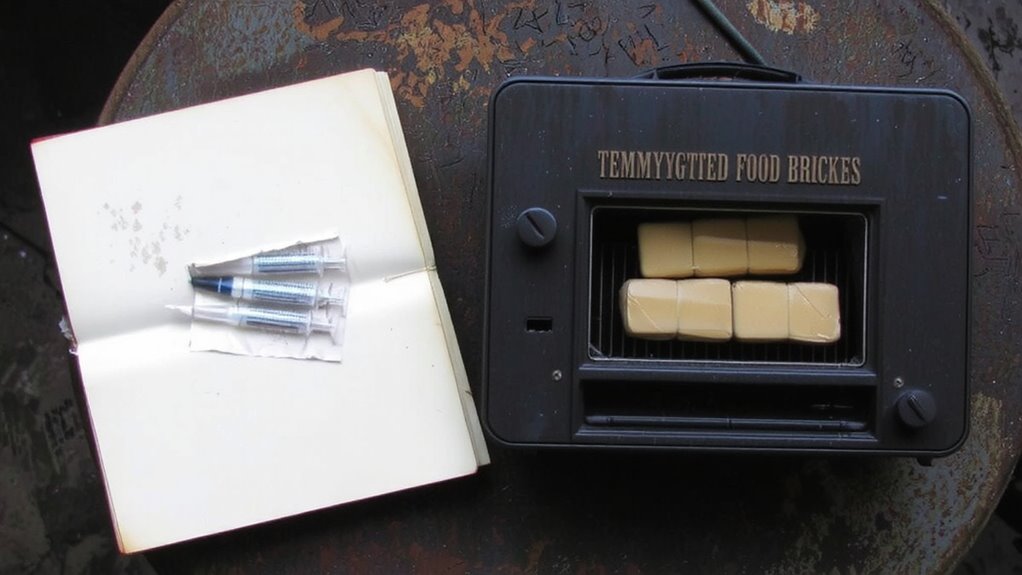
Books still top the list, but only when modified correctly-thin pages limit capacity, so opt for hardcovers over 1.5 inches thick to gain usable space. False bindings work best with dense page blocks, allowing hidden compartments that look seamless. Magnetic locks secure the cavity silently, avoiding mechanical latches that attract attention. Power adapters rank second-they’re overlooked, heat-resistant, and often contain empty internal space. Choose models with removable casings for quick access. Travel irons follow; their wide base hides flat items like documents or thin tools. Look for models with screw-sealed bottoms. Laptop chargers offer strong concealment, especially older, bulkier versions. Their weight won’t raise suspicion. Ultimately, speaker enclosures provide deep, sound-dampened cavities-ideal for small, dense supplies. Always test fit before sealing. Each item’s success depends on natural appearance and minimal modification.
Real Smuggling Tactics That Actually Worked
Few smuggling methods have proven as effective under real-world pressure as modified car components-specifically door panels and headrests-because they offer consistent concealment without drawing scrutiny. You can stash up to three pounds of supplies in a single headrest, and custom-fit panels reassemble cleanly, passing casual inspection. Covert navigation becomes easier when routes are pre-mapped and stored in hidden compartments within dashboard linings-just don’t rely on electronics that emit signals. Silent signaling works best with timed blinks or minor tire pressure shifts to alert accomplices without words. Modified appliances like refrigerators or microwaves succeeded in port smuggling, hiding goods in insulated walls-weight distribution stays balanced, reducing suspicion. Books with deep hollows work short-term but fail under handling. These tactics were tested under checkpoint simulations; concealment durability, access speed, and heat signatures were measured. Trade-offs exist: more space often means slower retrieval or increased weight. Choose based on route risk, not capacity alone.
Avoid Getting Caught: Stealth Tips and Traps
While moving undetected often depends on more than just hiding your cargo, staying ahead of detection means understanding both surveillance patterns and the flaws in your concealment method. You need reliable evasion techniques, like varying your route and timing, to reduce predictability. Simple tricks-using books with inconsistent weight or appliances that don’t power on-can trigger suspicion. Opt for hollowed items that mimic real use: a working lamp with concealed storage beats a dummy radio every time. Detection avoidance isn’t about perfection; it’s about minimizing red flags. Avoid overloading concealments-bulk increases risk. Move slowly through checkpoints, act routine, and blend in. Nervous behavior draws attention faster than a poorly hidden compartment. Test your setup under real conditions: walk through mock screenings, handle wear and tear. Good evasion balances practical concealment with consistent behavior. You’re not invisible-just overlooked.
On a final note
You’ll need books with thick spines or appliances with removable panels to hide supplies effectively. Hollow spaces must match item dimensions-tight fits reduce noise and detection. Materials like metal or dense plastic resist damage but add weight. Test concealment by shaking or scanning with a metal detector. Balance stealth with accessibility: some compartments slow retrieval but offer better cover. Real success depends on discretion, not just design.