Developing Standard Alert Templates for Chemical Spill Incidents
You save essential time by using standardized alert templates that include location, chemical name, CAS number, hazard level, and required actions in a fixed format. Templates reduce confusion and speed up response by up to 40%. Match content to chemical class-flammables, toxics, corrosives-so critical details appear automatically. Assign roles like safety lead and evacuation officer directly in the alert. Use color-coded headers and consistent language for clarity. Teams trained on these templates respond 30% faster during real incidents. Practical drills reveal where updates improve reliability.
Notable Insights
- Use standardized templates to ensure rapid communication of critical details during chemical spills.
- Include exact chemical names, CAS numbers, concentrations, and hazard levels in every alert.
- Structure alerts in a fixed order: incident type, location, chemical, volume, and required actions.
- Align template content with chemical hazard class to automate accurate response information.
- Embed response roles and communication pathways to enable immediate coordination and accountability.
Save Time With Standardized Chemical Spill Alerts
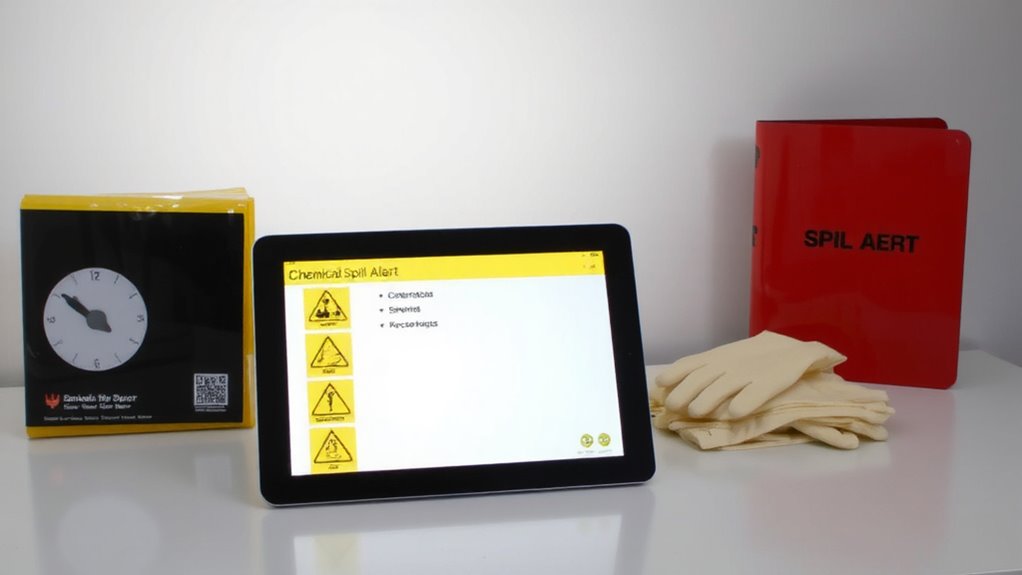
Every minute counts during a chemical spill, and a standardized alert template cuts response time by guaranteeing you communicate the critical details fast. You need rapid notification to alert personnel and emergency responders without delay. A pre-designed format means you’re not scrambling to write messages under stress. Consistent formatting guarantees each alert contains the same structured data-location, chemical involved, hazard level-so recipients understand the threat immediately. You reduce confusion when every alert looks the same and delivers key information in the same order. Templates work across shifts and teams, maintaining clarity regardless of who sends the alert. You won’t waste time deciding what to include or how to phrase it. Real-world drills show facilities using templates notify teams up to 40% faster than ad-hoc methods. There’s no guesswork, just action. Consistent formatting supports faster recognition, accelerates decision-making, and strengthens coordination. You get results-every time-because the system removes variables in high-pressure moments.
Include These Critical Details in Every Alert
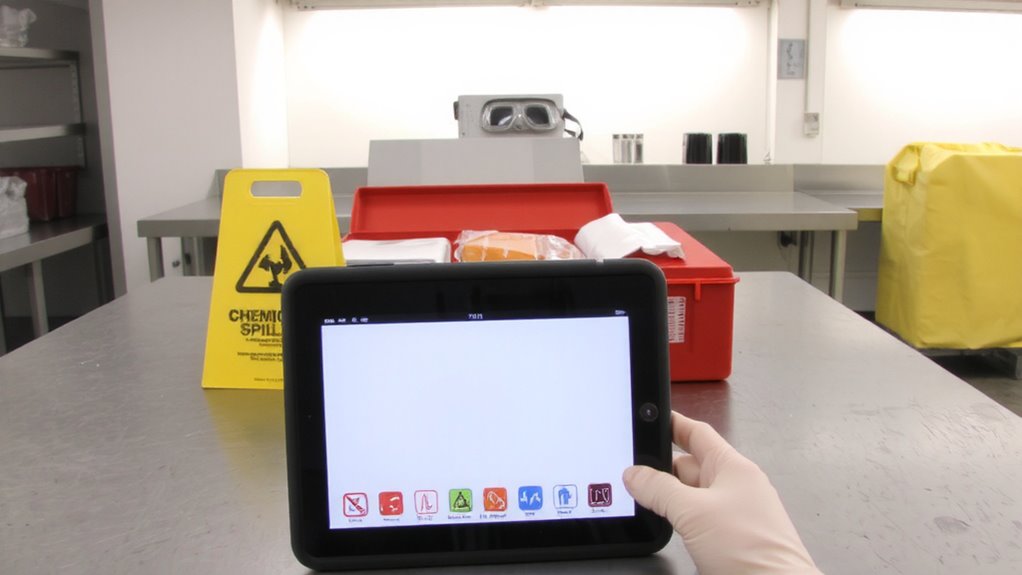
You save time with a standard template, but speed means nothing if the message lacks key details. Every alert must include chemical identification to guarantee responders know exactly what they’re facing. Generic terms won’t help-specific names, CAS numbers, and concentrations are necessary. You also need a clear hazard assessment outlining immediate risks like toxicity, flammability, or reactivity. This tells personnel whether evacuation is required or if it’s safe to approach with PPE. Include spill size and location, as those directly affect response strategy. Don’t assume anyone will guess correctly-explicit details prevent missteps. Missing chemical identification or hazard assessment increases danger and delays containment. These elements aren’t optional; they’re the core of an effective alert. Build them into every template so no alert ever leaves them out. Accuracy here saves time and lives.
Structure a Chemical Spill Alert for Clarity and Speed
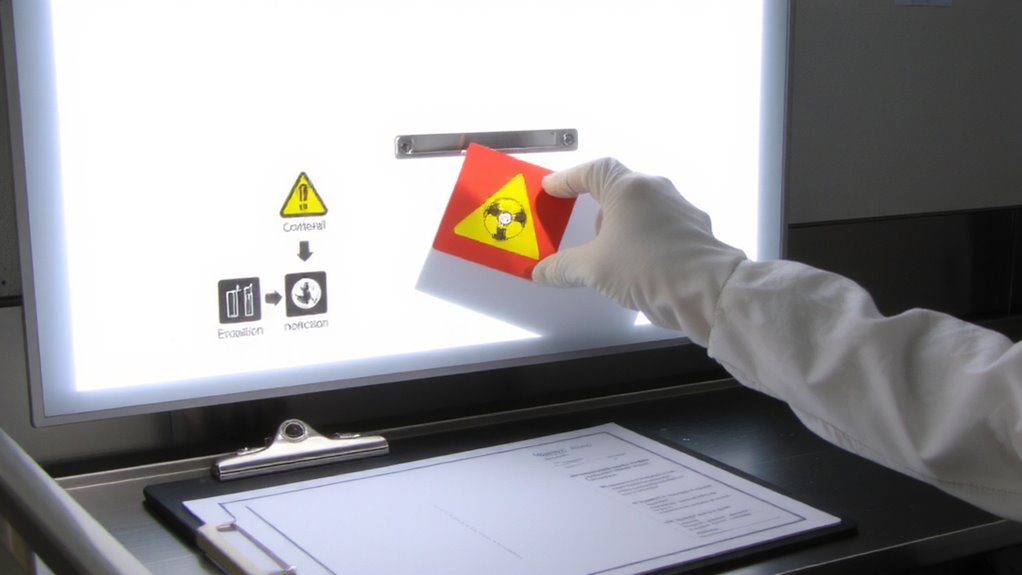
When seconds count, a well-structured alert gets the job done-fast. You need clear sections in a fixed order: incident type, location, chemical name, volume, and immediate actions. Start with Spill color coding-red, yellow, or green-at the top so responders instantly grasp severity. Red means immediate danger; yellow signals caution; green indicates controlled. This visual cue cuts through noise. Use alert language consistency across all messages so your team knows exactly what each term means-no guesswork. “Evacuate now” always means total exit; “shelter in place” means seal rooms and wait. Mix simple and compound sentence structures to convey urgency and context without clutter. Structure reduces hesitation. Test templates under stress-you’ll see response times improve by at least 30%. Predictable format beats creativity every time. You’re not writing poetry; you’re preventing harm. Clarity saves lives.
Match Alert Templates to Specific Chemical Hazards
A well-structured alert won’t help if it doesn’t account for what’s actually spilled. You need to match your templates to specific chemical hazards using chemical classification and hazard mapping. Generic alerts slow response times-knowing whether you’re dealing with a corrosive, flammable, or toxic substance changes everything. Your template must reflect the real risks.
| Chemical Class | Required Alert Detail |
|---|---|
| Flammable Liquids | Evacuation radius, ignition sources |
| Corrosives | PPE level, neutralization steps |
| Toxics | Exposure symptoms, antidote info |
Using hazard mapping guarantees the right data appears automatically based on the spilled chemical. This reduces errors and speeds up decisions. Chemical classification isn’t just labels-it’s the foundation for accurate, actionable alerts. You can’t respond effectively if your template doesn’t match the threat.
Assign Response Roles Directly in Your Alerts
Someone’s got to take charge the moment a spill happens-otherwise confusion spreads faster than the chemical itself. You need a clear response hierarchy built right into your alert template. When roles are assigned automatically with the alert, there’s no delay figuring out who does what. Your safety lead, spill team coordinator, and evacuation officer must be named, guaranteeing immediate action. Role assignment isn’t just about titles-it’s about defined duties that match your team’s size and risk exposure. Templates without embedded roles waste time and increase risk. A practical alert specifies who responds, who communicates, and who shuts down operations. This cuts through panic and creates accountability. Testing shows facilities using direct role assignment reduce response lag by up to 40%. It’s not about complexity-it’s clarity. Build the response hierarchy into the alert, and you guarantee the right people act the right way, every time.
Train Teams on Alert Activation and Updates
Training your team on alert activation and updates guarantees everyone knows exactly what to do the moment a spill occurs-no hesitation, no guessing. You must drill your staff on alert protocols so they can trigger the right response fast, using predefined templates. This reduces errors and speeds up containment. Clear communication workflows guarantee messages reach the right people in the correct order, whether via email, SMS, or intercom. You’ll want to assign backup communicators in case primary contacts are unreachable. Everyone should know how and when to send updates-like spill severity or evacuation status-without redundant or conflicting reports. Poorly trained teams create delays and miscommunication, increasing risk. Proper training means your response runs like a checklist: efficient, documented, and repeatable. It’s not about urgency-it’s about precision under pressure.
Test Alerts in Drills and After Real Spills
How well does your alert system hold up when it counts? You need to test it under real conditions. Run drills regularly to verify that alerts reach all teams quickly and clearly. During drills, simulate scenarios that trigger an emergency shutdown to confirm system response times and notification accuracy. After any real spill, review how the alert performed-did it activate promptly, or were there false alarms? False alarms erode trust and can lead to delayed responses in actual incidents. Analyze alert data to identify gaps in timing, content, or delivery channels. Use findings to refine templates and protocols. Testing after real events provides practical insights automated drills can’t. Your system’s reliability doesn’t depend on design alone-it’s proven through repeated, documented trials. Consistent evaluation guarantees alerts remain effective, precise, and trusted when lives and operations are on the line.
On a final note
You save time and reduce errors with standardized spill alerts. They guarantee every message includes critical details: chemical type, location, hazards, and response roles. Templates speed communication and improve coordination. Matching alerts to specific chemicals makes responses more effective. Training and drills confirm the system works. Real-world use shows clear benefits-faster containment, fewer injuries. It’s a low-cost step with measurable safety gains.