How to Evaluate Your Family’s Ability to Maintain Nutrition in Crises
You can check your family’s crisis nutrition readiness by auditing your pantry for nutrient-dense, shelf-stable foods like beans, oats, and canned fish while avoiding low-nutrient options high in sodium or sugar. Guarantee you have cooking alternatives like solar cookers or rocket stoves, plan 7-day meals at 2,000 calories per day, and use FIFO to keep stock fresh. Special diets need verified gluten-free or no-sugar-added options. Rotating supplies every six months helps maintain quality and coverage over time-knowing what works now prepares you for what’s ahead.
Notable Insights
- Audit your pantry for nutrient-dense, shelf-stable foods like beans, lentils, quinoa, and canned fish to ensure dietary variety.
- Check for special dietary needs by verifying gluten-free, low-sugar, and dairy-free options with appropriate certifications and labels.
- Assess cooking alternatives during power outages by evaluating access to solar cookers, rocket stoves, and compatible cookware.
- Create a 7-day emergency meal plan using no-cook, familiar foods, providing 2,000 calories daily with balanced nutrition and portion control.
- Apply FIFO (First In, First Out) organization and monthly expiration checks to maintain food freshness and reduce waste over time.
Audit Your Pantry for Crisis Nutrition Gaps
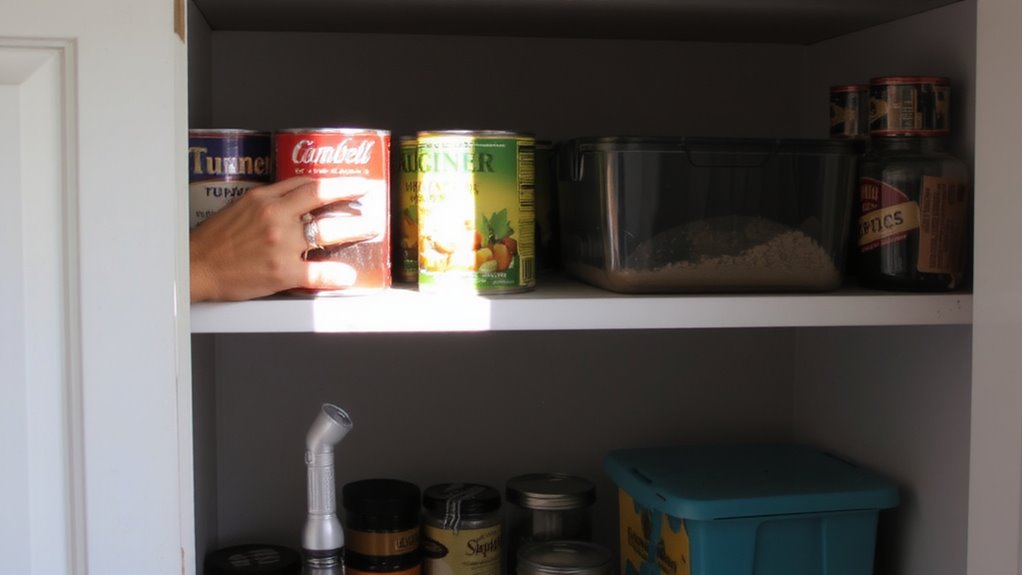
Why wait for a crisis to find out your pantry won’t keep your family nourished? You need to audit what you’ve got-now. Start by inventorying every item, checking for food variety and nutrient density. Relying only on canned pasta or boxed starches means poor nutrient density and limited vitamins. You’ll want a mix of protein sources like beans, canned fish, and lentils, plus shelf-stable vegetables and whole grains. Look at nutrition labels: aim for low sodium, minimal added sugars, and high fiber. Dry goods like quinoa or oats offer better nutrient density than refined grains. Rotate items to avoid expiration. A pantry with solid food variety supports energy, immunity, and long-term health. Without it, you’re stocked but unprepared. Fill gaps with nutrient-dense staples that last-your long-term resilience depends on what’s already on the shelf.
Support Special Diets During Emergencies
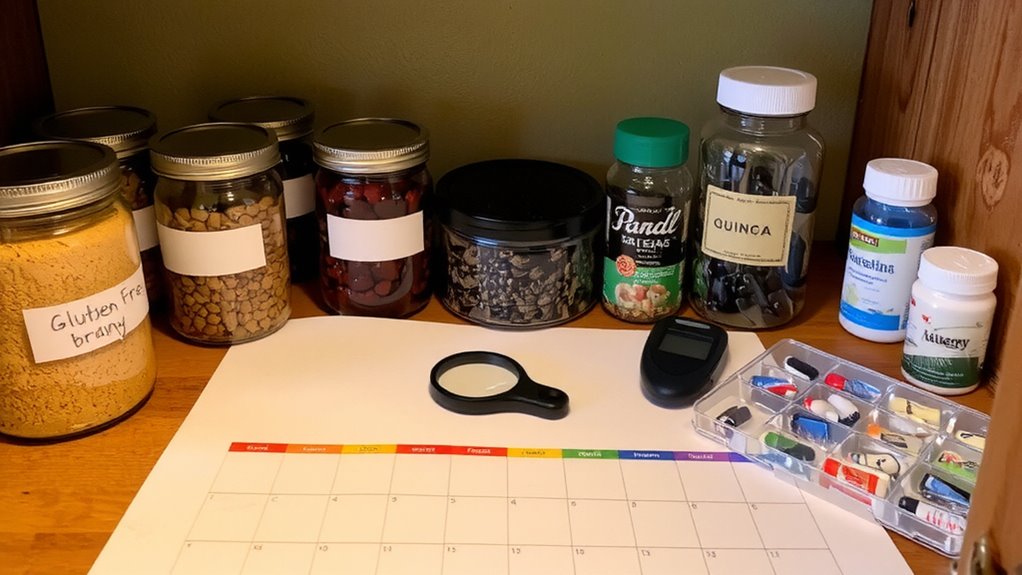
How do you guarantee your child’s gluten-free needs or your spouse’s diabetes-friendly diet stay met when the power’s out and stores are closed? You plan ahead with shelf-stable, labeled Gluten free options like canned beans, rice, quinoa, and packaged gluten-free pasta. These hold up well in storage and cook with minimal resources. For diabetes management, choose no-sugar-added canned fruits and low-glycemic dried foods. Stock dairy alternatives such as shelf-stable almond or oat milk in cartons, which last unrefrigerated for months. Always check ingredient lists-some “non-dairy” products contain hidden gluten or added sugars. Rotate items every six months to maintain freshness. Relying on generics is fine, but verify certifications for gluten-free claims. There’s no room for error when substitutes aren’t available. Your family’s health depends on accurate labels, nutrient balance, and reliable access-so build your emergency stockpile with specificity, not guesswork. Consider trusted options such as best gluten-free emergency food picks to ensure safety and variety during prolonged disruptions.
Cook Without Power: Realistic Methods That Work
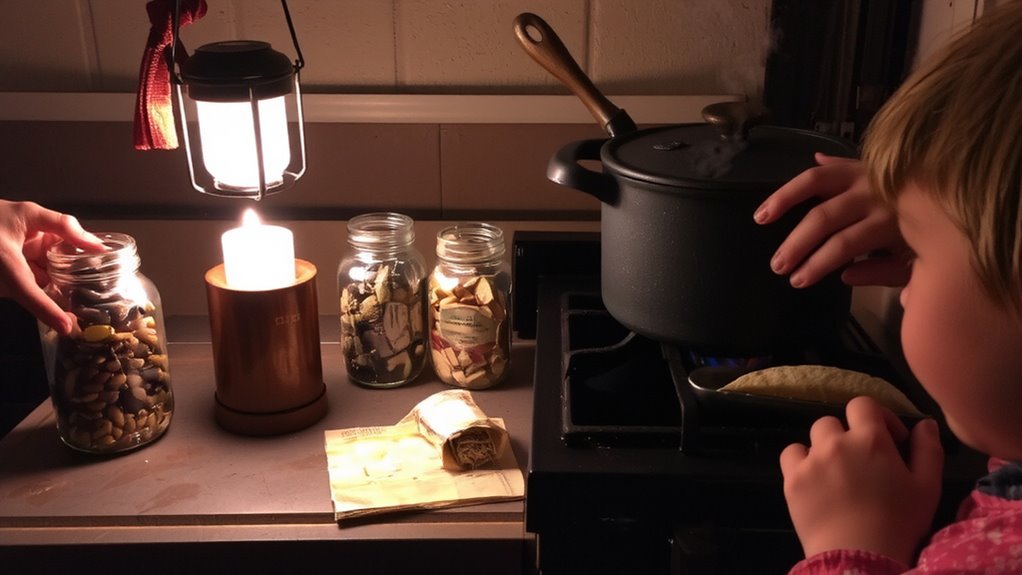
Even when the grid fails, you can still prepare safe, hot meals using methods that don’t rely on electricity. Solar cooking works when sunlight is available, typically heating food to safe temperatures in 2–4 hours, depending on conditions. It’s fuel-free but limited to clear days and requires longer cooking times. Rocket stoves use small amounts of biomass-twigs, scrap wood-and reach high temperatures quickly, boiling water in about 5 minutes with efficient models. They work in most weather but need a steady fuel supply and ventilation. Both options are portable and tested in real-world outages. Solar cookers cost $30–$100, while rocket stoves range from $15 for DIY kits to $70 for commercial units. You’ll need pots that conduct heat well, like cast iron or dark metal. Neither method replaces your stove completely, but together, they cover sunlit and overcast days. Choose based on your fuel access, climate, and cooking load. For reliable performance during extended outages, consider a top-rated emergency stove that balances efficiency, durability, and ease of use.
Build a Doable 7-Day Emergency Meal Plan
A realistic 7-day emergency meal plan starts with foods you already eat and can store safely without power. Choose shelf-stable items like canned beans, ready-to-eat meals, peanut butter, and whole-grain crackers that require no cooking or refrigeration. Include at least two serving options per meal to guarantee meal variety and maintain morale without relying on fresh ingredients. Practice portion control by pre-packing servings in zip-top bags or containers-this prevents overuse and extends your supply. A typical adult needs about 2,000 calories daily, so track calorie counts on labels to meet basic energy needs. Rotate in dehydrated vegetables and powdered milk for nutrition balance. Include comfort items like granola bars or cocoa, but limit them to 10% of total volume. This approach keeps meals predictable, efficient, and sustainable under stress. Consider including best emergency food kits for long-term preparedness and variety.
Keep Emergency Stock Fresh With FIFO
When stored properly, shelf-stable foods can last months or even years, but without a system to manage turnover, you’ll end up using the wrong items at the wrong time. That’s where FIFO-First In, First Out-comes in. You place newer items behind older ones so the oldest get used first. This method supports consistent food rotation and reduces waste. Shelf monitoring is key: check expiration dates monthly and log what’s running low. Label each item with its purchase date to simplify tracking. Canned goods, dried pasta, and powdered milk all benefit from this approach. Without active rotation, even well-stocked supplies can deteriorate or expire unnoticed. It’s not about buying more-it’s about managing what you have. A disciplined FIFO system guarantees your emergency stock stays fresh, usable, and nutritionally reliable when you need it most.
On a final note
You now know how to assess your pantry, adapt for dietary needs, cook without power, and plan seven days of meals. Using FIFO keeps food fresh and reduces waste. These steps aren’t perfect, but they’re proven under pressure. You’ll face trade-offs-weight vs. shelf life, cost vs. nutrition-but each choice improves readiness. Real preparedness means making informed, practical decisions now, not guessing later. Do the work, stay consistent, and your family eats when systems fail.