Traversing Icy Surfaces With Cleated Footwear Adapted From Climbing Gear
You need cleated footwear with hardened steel studs-if it’s under 3/8 inch, it won’t bite into glare ice. Rubber soles compress and slip; these dig in, borrowing from climbing tech that works on frozen terrain. Flexible chains grip without damaging pavement, while deeper studs handle trails. Look for welded joints and durable straps. They wear hard, so check for bent spikes weekly. Right design balances city ease with real grip-your next move depends on what’s underfoot.
Notable Insights
- Cleated footwear adapted from climbing gear uses hardened steel studs to penetrate ice, providing reliable traction where rubber soles fail.
- Short, closely spaced steel coils offer flexibility and grip on urban ice without damaging pavement or steps.
- Aggressive, 3/8-inch or longer studs are essential for secure footing on packed snow and glare ice in trail environments.
- Welded steel components and durable carrier straps ensure long-term performance under repeated stress on icy terrain.
- Regular cleaning, drying, and inspection prevent ice buildup, rust, and structural damage to maintain optimal function.
Why Regular Traction Fails on Ice
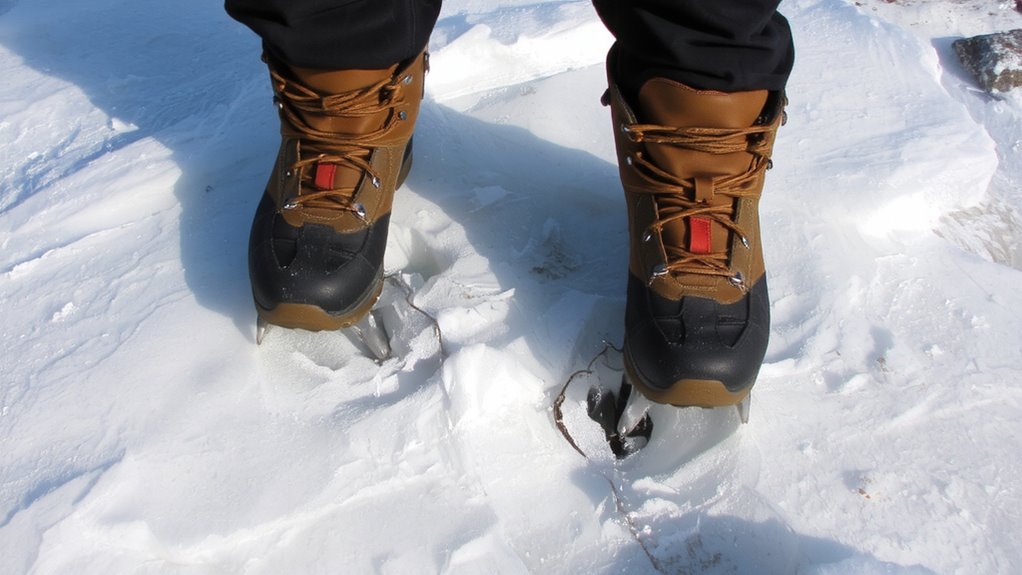
A standard rubber sole won’t cut it on ice-it lacks the hardness and grip needed to bite into frozen surfaces. You’re relying on friction dynamics that collapse when the surface composition shifts from asphalt to ice. Rubber compresses too easily, spreading contact thinly instead of focusing it, so you slip. On packed snow or black ice, micro-textures don’t engage the sole effectively, reducing traction even in dry conditions. Surface composition matters: ice is slick, often uneven, and changes underfoot with temperature or pressure. Regular outsoles can’t adapt. The friction dynamics required demand sharper, harder contact points that penetrate the top layer. Without them, your footing depends too much on balance, not grip. That’s not reliable in real-world conditions. You need a sole engineered for ice, not general terrain. What works on pavement fails here-no exceptions.
How Climbing Tech Powers Better Ice Cleats
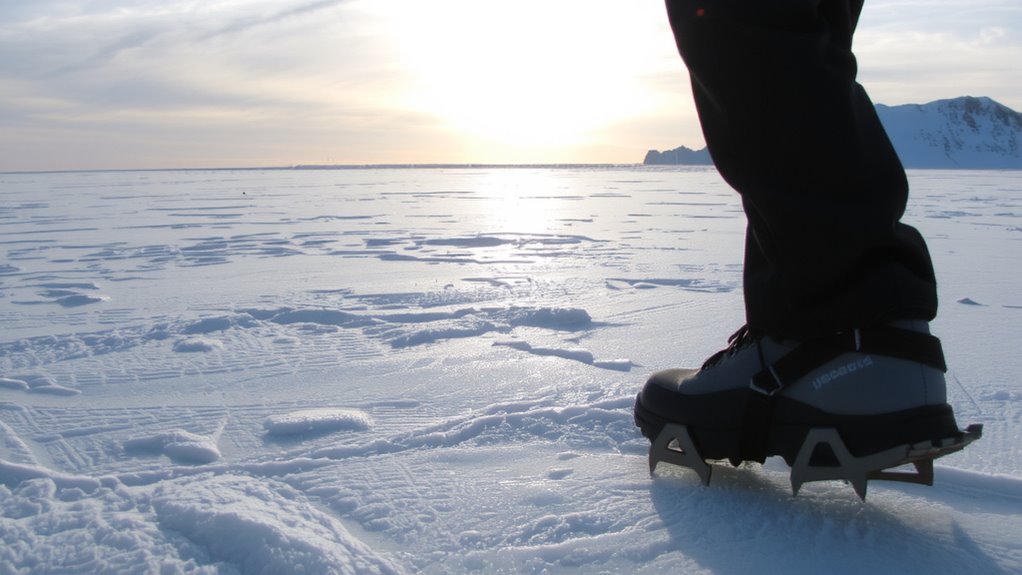
When traction is critical on ice, climbing-inspired cleats deliver because they use hardened steel points that actually penetrate the surface instead of just scraping it. This mechanical grip is rooted in material science, where alloy composition and heat treatment increase durability and biting performance. Unlike rubber lugs, these cleats don’t rely on surface friction alone-they dig in, offering secure footing even on glare ice. The design transfers directly from crampons, scaled down for everyday use without sacrificing function.
| Feature | Benefit |
|---|---|
| Hardened steel | Resists deformation on impact |
| Penetrating points | Guarantees mechanical grip on ice |
| Flexible linking | Maintains ground contact on uneven surfaces |
| Lightweight build | Reduces fatigue during extended use |
Trade-offs exist-these cleats wear on pavement-but their ice performance is unmatched. You gain control where it matters most.
Where Ice Cleats Work Best: City to Trail
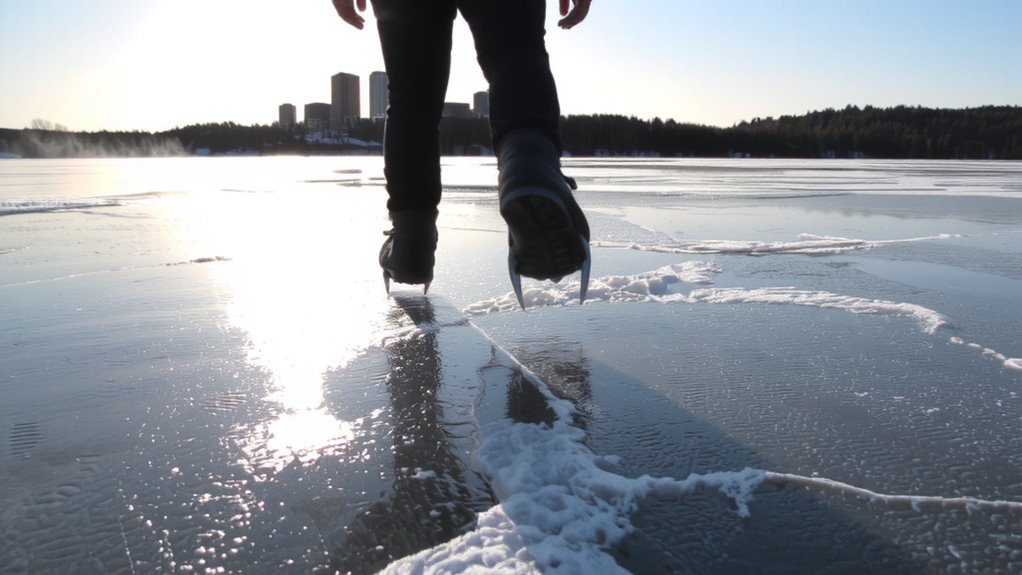
Though conditions vary from sidewalk to trailhead, your cleats need to match the terrain to deliver reliable grip without compromising safety or comfort. For urban navigation, low-profile steel coils or flexible traction bands work well on pavement and icy steps, providing grip without damaging surfaces or slowing your stride. They’re light enough for daily commutes but offer limited bite on loose snow. When you hit the trail, you’ll want deeper, more aggressive studs-typically 3/8 inch or longer-for true trail stability on packed snow and steep, uneven ice. These models often use rigid frames that transfer force efficiently but can feel stiff on concrete. Hybrid designs exist, but they usually sacrifice some performance in one environment to serve both. Choose based on where you spend most of your winter travel-city sidewalks or backcountry paths-since no single cleat optimizes for all conditions equally.
Must-Have Features of High-Performance Cleats
If you’re relying on cleats in extreme winter conditions, you’ll want hardened steel studs at least 3/8 inch long-they deliver the penetration needed for secure footing on glare ice and dense packed snow. These studs resist deformation, ensuring grip consistency across repeated use. Look for a chain-link pattern with snug spacing; it balances flexibility and traction without snagging. The carrier strap must offer high material durability-tested polyurethane or reinforced elastomers hold up to freeze-thaw cycles and abrasion. Welded joints on the metal components prevent breakage under stress. For all-terrain reliability, symmetrical stud placement maintains predictable grip on slopes and uneven surfaces. Some models sacrifice comfort for security, so choose based on exposure time and movement demands. Avoid zinc or aluminum studs-they wear faster and reduce grip consistency. Real-world testing shows steel-to-plastic integration fails at subzero temps unless materials are cold-rated. Don’t overlook flex zones; they help distribute load and maintain contact on shifting surfaces.
Choose the Right Ice Cleats for You
You’ve seen what high-performance cleats deliver in extreme conditions-hardened steel studs, durable carrier straps, and thoughtful design that stands up to ice and cold. Now, pick the right pair for your needs. If you’re into ice fishing, go for aggressive traction with 10–12 spikes; you’ll stay stable on flat, slick surfaces. Models with flexible straps adapt better to varying boot sizes and provide secure fit during long sits. For snowboarding side trips or hiking to backcountry zones, choose low-profile cleats that won’t snag your board or bindings. They’re lighter and easier to carry. Consider walkability-some designs dig in while walking on packed snow. Test flexibility and weight: heavier cleats offer durability but slow you down. Match the design to your dominant terrain. There’s no one-size-fits-all-balance grip, comfort, and utility based on real use.
How to Care for Your Ice Cleats
After each use on icy terrain, remove your cleats and check for packed snow or ice clogging the spikes and straps-frozen debris reduces traction and strains materials over time. Use a stiff brush and lukewarm water as part of basic cleaning techniques; avoid harsh chemicals that degrade rubber or metal. Let them air-dry completely before storing, since moisture promotes rust and weakens fasteners. For storage solutions, keep cleats in a cool, dry place away from direct sunlight-UV exposure warps polymers. A ventilated mesh bag prevents mold and allows airflow while keeping pairs together. Inspect weekly for bent spikes or frayed straps; minor damage worsens under load. Replace cleats if traction drops noticeably, even after cleaning. Proper care extends service life by months and maintains grip efficiency. You rely on these for stability-don’t skip maintenance that preserves real-world performance.
On a final note
You need reliable traction on ice, and cleats adapted from climbing gear deliver. They outperform basic models with sharper, more durable spikes and secure fits. On city sidewalks or icy trails, they provide consistent grip, but expect added weight and shorter tread life on pavement. Proper storage prevents rust, and checking straps regularly guarantees safety. These cleats aren’t perfect everywhere, but for serious winter travel, they offer proven, measurable improvement where it matters most.