Using Food-Grade Diatomaceous Earth to Protect Stored Foraged Grains From Pests
You can stop grain pests by mixing food-grade diatomaceous earth (DE) into your foraged grains at 1 cup per 25 pounds. It kills weevils and beetles on contact by dehydrating them, with no chemical residue. Only use food-grade DE-other types are unsafe. Make sure grain moisture is below 12% to prevent clumping and spoilage. Store treated grain in airtight, thick-walled containers to block reinfestation. Proper application and storage keep your supply protected long-term-there’s more to get right for lasting results.
Notable Insights
- Apply food-grade diatomaceous earth at 1–2% by weight to kill insects through physical contact, not chemical action.
- Mix thoroughly into dry grain (below 12% moisture) to ensure even distribution and prevent clumping.
- Use only food-grade DE, as pool or industrial grades contain harmful crystalline silica or contaminants.
- Store treated grain in airtight, thick containers to block pests and control humidity.
- Combine DE with moisture absorbers and cool, dry conditions to enhance long-term pest protection.
Why Your Foraged Grains Get Infested (And How to Stop It)?
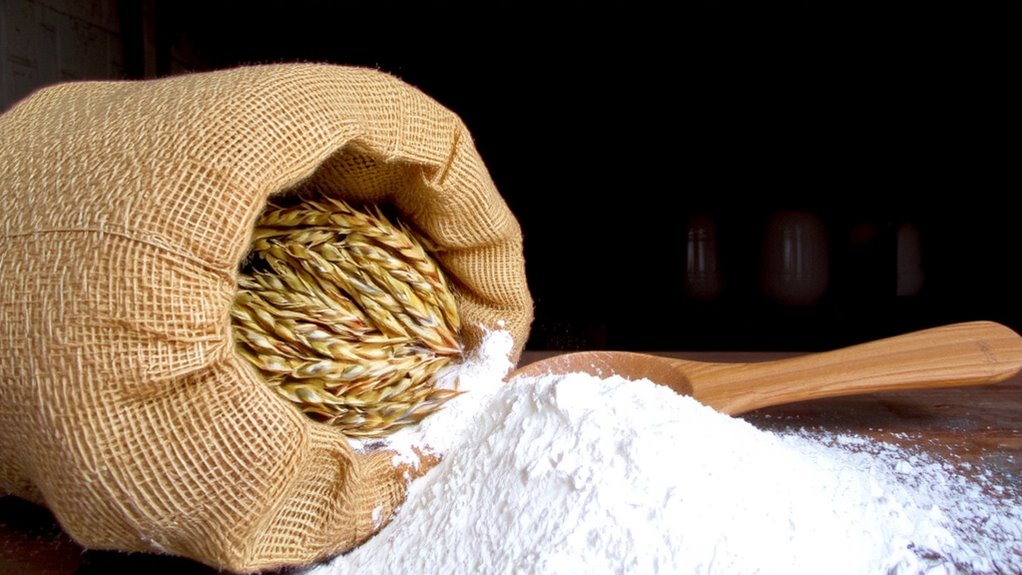
While you might not think about it at harvest time, foraged grains often carry insect eggs or larvae that go unnoticed until they hatch in storage. High grain moisture creates ideal conditions for pests to thrive, accelerating infestations. If you don’t dry your grains thoroughly before storing, you’re fundamentally feeding future bugs. Your choice of storage containers matters just as much-thin plastic bins or paper bags offer no real barrier. Insects chew through or slip through tiny seams. Airtight, thick food-grade buckets or metal bins reduce access and limit humidity shifts. Even then, moisture trapped inside can condense, encouraging mold and further spoil gefes. You need both low grain moisture-below 10% is safe-and containers that seal completely. These aren’t optional steps; they’re basic requirements for keeping grain edible over time. Proper prep now prevents total loss later.
Use Food-Grade Diatomaceous Earth to Kill Grain Pests
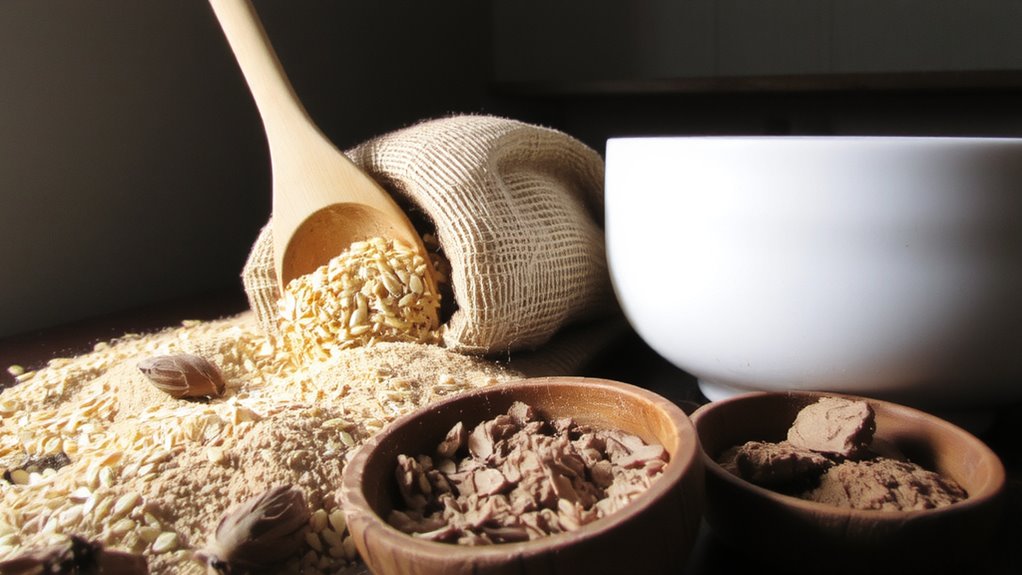
Food-grade diatomaceous earth (DE) is an effective, low-cost way to kill grain pests without chemicals. You can apply it directly to foraged grains at a rate of 1–2% by weight, mixing thoroughly to guarantee even distribution. The microscopic silica shards in DE scratch the exoskeletons of insects like weevils and moths, causing them to dehydrate and die within days. It works quickly and leaves no chemical residues, making it safe for human consumption when used as directed. Unlike chemical pesticides, DE doesn’t contribute to moisture buildup if applied correctly-use only the minimal effective amount. Over-application increases dust and hygroscopic risk, potentially raising grain moisture levels. It’s non-toxic, inexpensive, and stable in storage. You’ll still need to monitor for live pests and reapply if new infestations appear. DE isn’t a fumigant, so it only kills pests on contact.
Why Only Food-Grade DE Is Safe for Stored Grains?
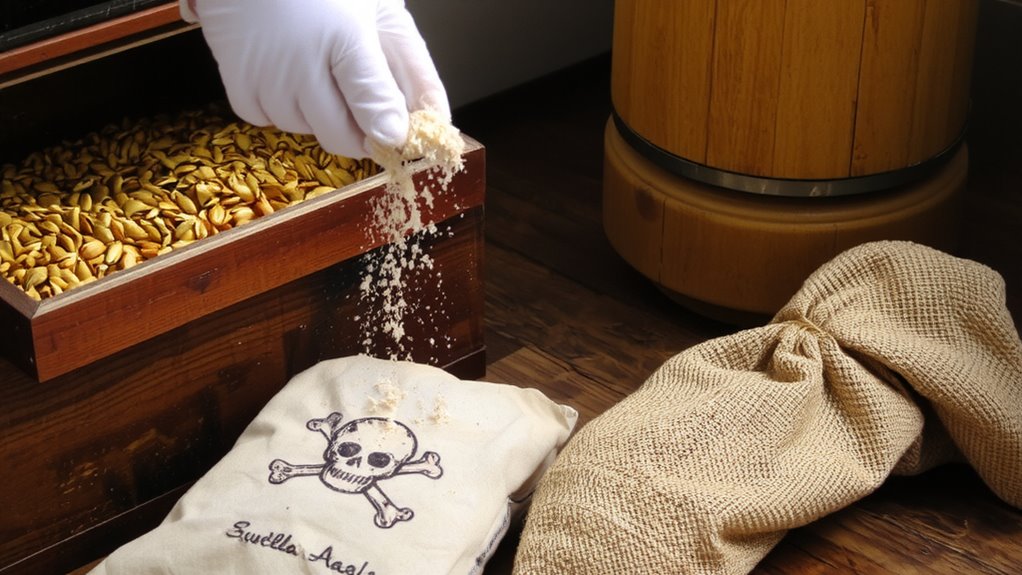
Only food-grade diatomaceous earth is safe for use with stored grains because it meets strict purity standards for human and animal consumption. You can’t assume all DE is safe-industrial grades contain crystalline silica and harmful contaminants. Food-grade DE has a controlled chemical composition, primarily amorphous silica, and undergoes safety certification to guarantee it’s free from toxins. Breathing in non-food-grade DE or ingesting it can cause health risks, so always verify the label.
| Type | Chemical Composition | Safety Certification |
|---|---|---|
| Food-Grade DE | >98% amorphous silica, low crystalline silica | FDA and EPA approved for food use |
| Pool-Grade DE | High crystalline silica, heat-treated | Not approved for ingestion or inhalation |
| Industrial DE | Variable, often high in heavy metals | Intended for non-consumer applications |
How Much DE to Use Per Batch of Grains?
Aim for 1 cup of food-grade diatomaceous earth per 25 pounds of grain to guarantee even coverage without affecting texture or flow. You’ll need enough DE to coat each kernel lightly but thoroughly-too little won’t stop pests, too much can clump, especially if grain moisture is high. Keep your grain as dry as possible before treatment; moisture above 12% increases spoilage risk and reduces DE effectiveness. Mix the DE into the grain in batches, using a clean container or tarp for even distribution. Once treated, transfer the grain to airtight storage containers like heavy-duty buckets or metal bins with gasket seals. These containers prevent reinfestation and protect against humidity. The right DE-to-grain ratio secures long-term protection without altering usability. This method works reliably across wheat, rice, corn, and other stored grains when applied consistently.
Store Treated Grains Safely for Months Without Reinfestation
If you want your treated grains to stay pest-free for months, storing them in airtight containers is non-negotiable-oxygen exposure invites insects and moisture, undermining the protection DE provides. Proper ventilation isn’t needed once sealed, but initial storage prep requires attention to moisture control. Keep containers away from damp floors or walls to prevent condensation. Use moisture absorbers like silica packs to maintain dry conditions. Rotate stock using first-in, first-out to monitor integrity. Airtight metal, thick plastic, or glass bins with gasket seals perform best in real-world testing. For long-term protection, consider using top waterproof containers that are specifically designed to block moisture and pests.
| Container Type | Moisture Control Effectiveness |
|---|---|
| Metal bin | High |
| Plastic tub | Moderate |
| Glass jar | High |
| Cloth sack | Low (not recommended) |
Check seals every few weeks. Any breach risks reinfestation. With consistent moisture control and sealed storage, your grains remain protected long-term.
Apply DE Correctly: Avoid These Costly Mistakes
When applying diatomaceous earth to stored grains, skipping the proper mixing technique means you’ll likely end up with uneven coverage, leaving pockets of grain vulnerable to infestation. Improper mixing reduces effectiveness-clumps form, and pests escape contact with DE particles. You should blend DE gradually, using 1–2% of total grain weight; exceeding this increases overuse risks without added protection. Excess DE dries grain unnecessarily and complicates handling during cooking or milling. Always apply in a well-ventilated space, wearing a mask to avoid inhalation. Use a clean, dry container to guarantee consistent dispersion. Toss grains thoroughly until DE is uniformly visible but not clumped. Even distribution guarantees every grain kernel has a protective coating. Avoid dumping DE on top and calling it done-surface application fails when pests emerge from deeper layers. Proper mixing takes effort, but it prevents reinfestation and waste.
Keep Weevils and Beetles Gone for Good With Natural Protection
Three key steps keep weevils and beetles from taking hold in your stored grains, and skipping any one of them cuts the effectiveness of diatomaceous earth in half. First, thoroughly clean and dry containers before adding grain-moisture reduces DE’s abrasiveness, weakening its physical kill rate. Second, maintain consistent climate control; temperatures above 75°F and humidity over 60% encourage pest reproduction and reduce DE’s long-term efficacy. Third, pair DE with natural predators like *Atheta coriaria* beetles in non-food storage areas to disrupt pest lifecycles. While DE kills on contact, it doesn’t prevent reinfestation from nearby sources. Natural predators help bridge that gap, but they won’t survive inside sealed grain bins. Use DE at 2% by weight mixed into grain, as higher rates create dust without added protection. This combination-clean storage, stable climate control, DE, and outdoor predator use-delivers sustained, chemical-free prevention with measurable, repeatable results across six-month storage trials. For long-term protection, store grains in certified rodent-proof storage containers to prevent both insect and rodent contamination.
On a final note
You can store foraged grains safely with food-grade diatomaceous earth. Use 1 cup per 5 gallons of grain and mix thoroughly. It kills weevils and beetles by damaging their exoskeletons, not through toxins. Reinfestation stays low if you seal containers airtight. Avoid clumping by applying DE in dry conditions. It’s cheap, stable long-term, and won’t degrade grain quality when used correctly.