Candle + Aerosol Deodorant Fire Trick: Windy-Day Ignition Guide
You can start a fire in the wind using a candle and aerosol deodorant. The candle’s steady flame resists gusts better than a lighter, while sprays with butane or propane ignite reliably when aimed near the flame at a 45-degree angle. This method works best in winds under 20 mph and with dry, loose tinder. Success drops as wind increases, and eco-friendly or non-flammable formulas fail. Stick to basic, propellant-rich deodorants for best results-your next attempt might depend on these details.
Notable Insights
- Use a candle as a stable, wind-resistant flame source in gusty conditions for reliable ignition attempts.
- Choose flammable aerosol deodorants with butane or propane propellants to ensure effective mid-air ignition.
- Position the spray nozzle at a 45-degree angle near the candle flame for optimal ignition of propellant vapor.
- Release short bursts of spray to create a directed jet of fire that reaches and ignites distant tinder.
- Avoid use in winds over 20 mph, as effectiveness drops and fire control becomes unsafe.
Why Wind Makes Fire Starting Difficult
When you’re trying to start a fire in windy conditions, the breeze doesn’t just blow out your match-it robs the fuel of the heat it needs to reach ignition temperature. Wind increases fuel dispersion, scattering fine tinder and embers before sustained combustion occurs. This makes it harder to maintain a concentrated burn zone. At the same time, oxygen dilution near the ignition point disrupts the ideal fuel-to-oxygen ratio, slowing the chemical reaction necessary for flame establishment. While oxygen supports fire, too much airflow cools the reaction more than it helps. You’ll notice this when matches flicker and die even with abundant tinder. Wind doesn’t just threaten the flame-it undermines the foundational conditions for ignition. Reliable fire-starting in these conditions demands methods that protect heat, manage airflow, and compensate for both fuel dispersion and oxygen dilution. Simplicity and control matter most. One effective solution is using homemade DIY fire starters that combine flammable materials with wind-resistant designs.
How a Candle Helps in Windy Conditions
A candle’s steady flame gives you a heat source that resists gusts better than a match or lighter. Its enclosed wick and contained wax pool improve candle stability, helping it stay lit even in persistent wind. Unlike open flames from lighters, which flare and die, a candle offers consistent flame protection through its sheltered burn. You can position it behind rocks or into the ground to further reduce exposure. This setup maintains ignition capability while you prepare tinder or spray. The slow burn rate-typically 6 to 8 hours for a standard votive-gives you time to work without rushing. While not windproof, its performance in breezy conditions is reliable when shielded slightly. You’ll find it especially useful when repeated lighting attempts fail with other tools. The candle’s simplicity and durability make it a practical backup when weather compromises your primary methods. It’s not flashy, just functional.
Which Aerosol Sprays Work Best for Fire Starting?
You’ve got a candle burning steadily despite the wind, and now you need a spray that pairs well to ignite tinder quickly. Aerosol deodorants with high flammable propellants like butane or propane work best because they ignite easily and spray fine, consistent streams. The chemical composition matters-products listing alcohol or hydrocarbons near the top of the ingredients tend to catch faster and burn hotter. Hairsprays are often effective too, though some modern formulas use less flammable propellants, reducing reliability. Cheap, older-style deodorants typically perform better than “natural” or “eco-friendly” versions, which often dilute the flammable content. Test a small burst first to gauge flame spread and burn duration. Avoid anything labeled non-flammable. In survival situations, consistency and predictability beat novelty-stick to sprays with proven combustion performance under real wind-exposed conditions.
How to Light a Fire Using a Candle and Spray
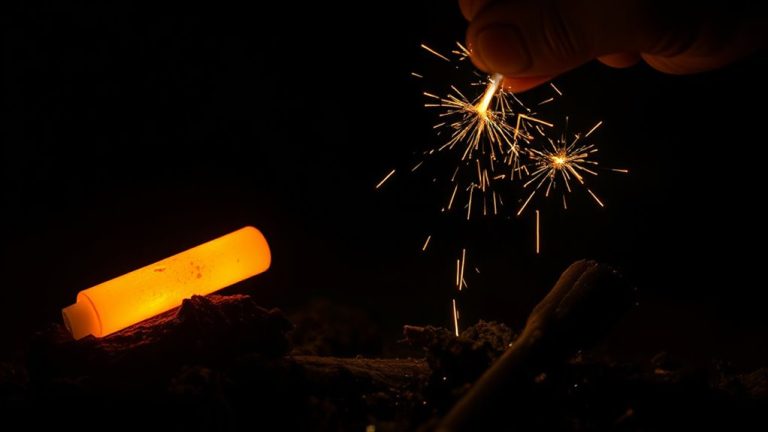
Fire in windy conditions demands a reliable ignition method, and the combo of a candle and aerosol spray meets that need with minimal fuss. You light the candle first-it burns steadily in most wind, offering a consistent ignition source. Then, with the spray nozzle pointed near the flame, you press and release a short burst. The propellant and fuel vaporize quickly, catching fire mid-air. This immediate fuel vaporization supports fast flame propagation to your tinder or kindling. You get a directed jet of fire that reaches further than a match, even in gusts. Hold the spray at a 45-degree angle to balance spray distance and ignition success. Most aerosol deodorants or hairsprays work, but those with higher alcohol or hydrocarbon content ignite faster. This method’s efficiency comes down to rapid vaporization and controlled flame propagation, not luck. Practice improves consistency. For a more durable backup option, consider carrying a fire piston rated for extreme conditions.
Staying Safe When Using Spray in Wind
Don’t let the wind dictate your success-controlling the risks matters just as much as getting the flame to catch. Fire safety starts with managing spray distance and knowing your environment. Hold the can too close, and you risk flare-ups; too far, and ignition fails. Always aim downwind, use short bursts, and keep the nozzle steady.
| Wind Speed (mph) | Spray Distance (inches) | Ignition Success |
|---|---|---|
| 0–5 | 6–8 | High |
| 5–10 | 8–10 | Moderate |
| 10–15 | 10–12 | Low |
| 15–20 | 12–14 | Poor |
| 20+ | Not recommended | Unreliable |
Adjust spray distance based on real-time conditions. Fire safety isn’t just about gear-it’s about smart choices in the moment.
When This Fire-Starting Trick Works (and When It Won’t)
While it might seem convenient, relying on a candle and aerosol deodorant to start a fire only works under specific conditions. This method works best when the surrounding fuel has low fire dampness-think dry tinder or kindling-and the air isn’t excessively humid. Aerosol deodorant sprays release flammable propellants that ignite easily from a candle flame, creating a short burst of intense heat. That burst helps overcome low fuel density in wispy tinder, giving the fire a chance to grow. But if the fuel is damp or tightly packed with high fuel density, the flame won’t spread. Wind can also blow out the candle or disperse the spray, reducing effectiveness. In wet conditions, fire dampness prevents ignition even with accelerants. The trick fails when materials are marginal. Use it only when fuel is dry, loosely arranged, and sheltered enough for the flame to catch and build. For more reliable performance in harsh conditions, consider a survival stove designed to function efficiently in windy environments.
On a final note
You can rely on this method in moderate wind if done carefully. The candle shields the flame long enough to ignite kindling, and aerosol deodorant sprays (with high flammable propellant content) work faster than most alternatives. But fuel-heavy sprays waste propellant, and butane-based ones fail in cold. It’s not foolproof-weak flames or strong gusts still put it at risk. Test it in controlled conditions first.