Using Air-Tight Glass Jars to Prevent Moisture in Dried Wild Herbs
You need airtight glass jars to keep dried wild herbs safe from moisture, since even slight humidity causes mold and degrades essential oils. Choose tempered or clear glass with a two-part metal lid and rubber gasket for a reliable seal. Glass blocks water vapor better than plastic and slows oxidation. Amber or cobalt jars cut UV exposure by up to 90%, preserving potency. Check seals weekly, store in dark, cool places, and label with dates. Stick to these practices, and your herbs stay fresh far longer. There’s more to get right-details that make or break long-term quality.
Notable Insights
- Airtight glass jars with rubber gaskets prevent humid air from reaching dried herbs.
- Glass is non-porous and blocks moisture transmission better than plastic or cloth.
- Use amber or cobalt glass jars to reduce UV damage and preserve essential oils.
- Seal jars only when herbs are cool to avoid trapping condensation inside.
- Label jars with dates and check seals weekly to maintain long-term freshness.
Why Moisture Ruins Dried Herbs
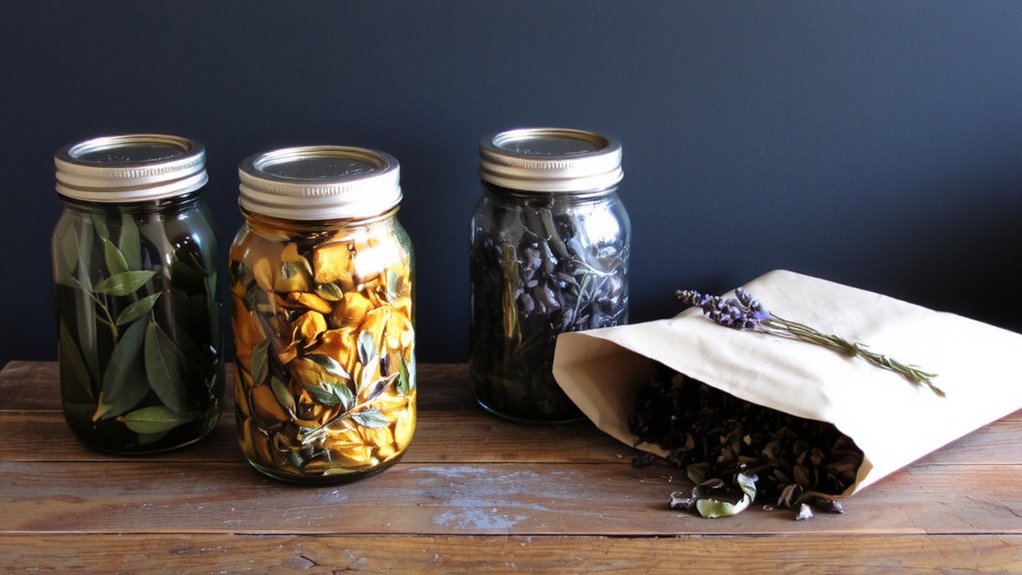
Moisture is the enemy when it comes to storing dried herbs, and for good reason. It creates the perfect environment for mold growth, which ruins herbs fast and makes them unsafe to use. Even small amounts of humidity you can’t see can trigger this decay. Moisture also breaks down essential oils in herbs, leading to aroma loss and weakening their potency. Once the scent fades, so does their effectiveness. You’re not just losing flavor-you’re losing therapeutic value. Herbs stored in damp conditions degrade within weeks, not months. That means wasted time, effort, and resources, especially if you’ve foraged or grown them yourself. Humidity fluctuates daily, so leaving herbs exposed, even briefly, invites damage. You need consistent protection. Without a moisture barrier, long-term storage fails. Preventing moisture isn’t optional-it’s the core requirement for preserving quality, safety, and shelf life.
Choose the Best Glass Jar for Herb Storage
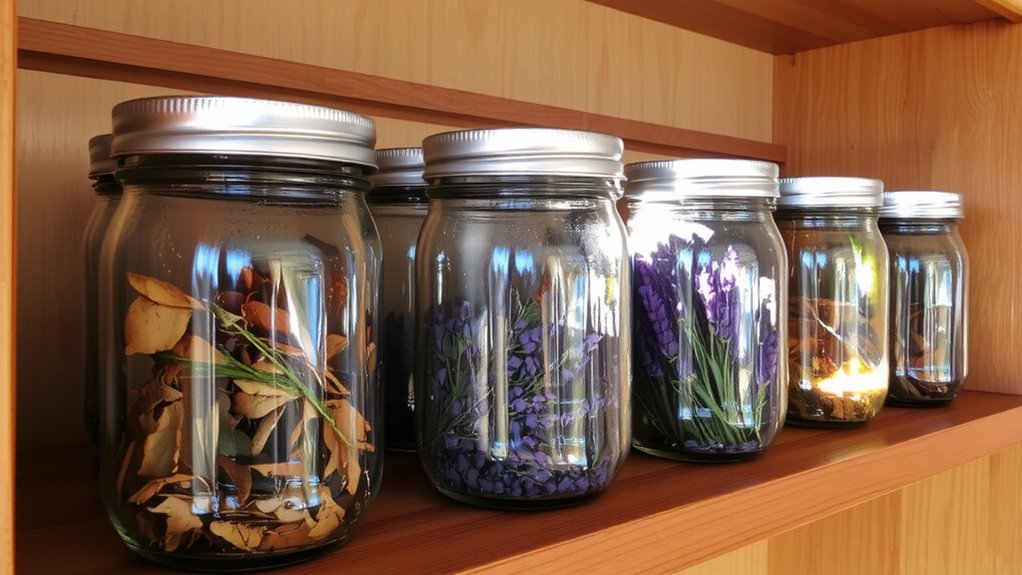
While not all glass jars seal equally, choosing one with a true airtight design makes a clear difference in protecting dried herbs over time. The jar material should be clear, high-quality glass-thick enough to resist chipping but not so heavy it’s cumbersome. Tempered glass offers slight advantages in durability, though standard soda-lime glass works if handled carefully. Focus on lid type: a two-part metal lid with a rubber gasket creates a reliable seal, while plastic lids vary in effectiveness and may degrade. Swing-top jars with wire closures often deliver consistent airtight performance, tested over months with minimal moisture infiltration. Avoid lids with thin seals or loose threading, as they compromise integrity. Screw-top lids with a vacuum seal outperform snap-on types. Each lid type has trade-offs in reusability and ease of opening. Test the seal by pressing the lid center-you shouldn’t hear a pop after initial use.
How Glass Jars Keep Dried Herbs Dry
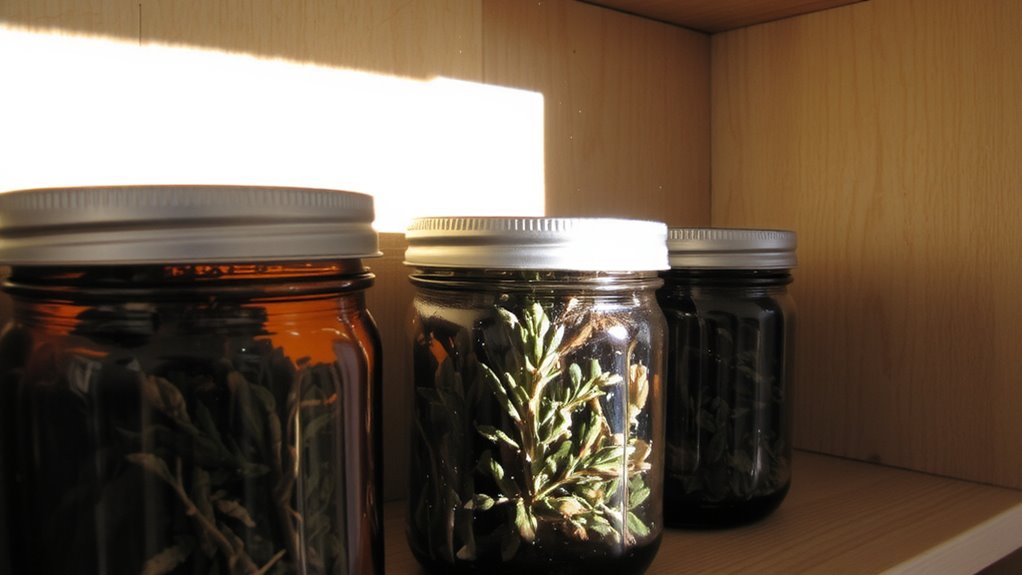
You picked a jar with a solid seal-now let’s talk about what it actually does. It blocks moisture by stopping humid air from entering, which is essential for keeping your dried herbs crisp and free from mold. Glass itself doesn’t breathe, so unlike plastic or cloth, it won’t let water vapor through. That tight barrier also slows herb oxidation, preserving flavor and potency over time. Clear glass offers visibility but risks light exposure, which degrades essential oils-amber or cobalt jars cut UV transmission by up to 90%, making them better for long-term storage. You’ll notice less fading and aroma loss when you use tinted glass. Oxygen and light are the main triggers for quality decline, and since glass doesn’t degrade or react, it stays inert. You’re not just storing herbs-you’re limiting chemical breakdown. For shelf life beyond a few months, blocking both moisture and light with glass isn’t optional-it’s necessary.
Seal Your Herbs Properly in Glass Jars
A good seal starts with the right lid-use jars with airtight rubber gaskets or two-part metal lids that clamp down securely. These create a vacuum when cooled, blocking moisture and oxygen effectively. Hand-tighten lids after filling while herbs are cool to avoid condensation. Don’t overtighten; it can warp the seal. Test the vacuum by pressing the lid center-it should resist and remain concave. Recheck seals weekly, especially in humid environments. For label consistency, use waterproof tags with ink that won’t smear, noting herb type and source. Include batch dating so you rotate stock properly-older batches get used first. Batch dating also helps track potency over time. UV-protective jars help, but the seal matters most. Plastic containers flex and leak air; glass with a proper closure doesn’t. Consistent sealing and clear labeling reduce waste and preserve quality through seasons.
Don’t Make These Dried Herb Storage Mistakes
Ever wonder why your herbs lose potency or mold despite careful drying? It’s often due to common storage mistakes. You might be overlooking how light exposure degrades volatile oils, reducing flavor and medicinal value over time-amber glass jars help, but clear ones don’t. Storing jars on sunny shelves speeds deterioration, so keep them in dark, cool places. Improper labeling is another issue: without clear dates and herb names, you can’t track freshness or avoid mix-ups. Generic tags like “herb” or no labels at all make rotation impossible and increase error risk. Air-tight glass works only if you minimize oxygen and moisture, but opening jars frequently in humid areas compromises integrity. Use small jars to limit air exchange. Avoid plastic-it’s porous and can leach chemicals. Stick to clean, dry glass, proper labeling, and dark storage to preserve quality.
On a final note
You get better shelf life using air-tight glass jars for dried herbs. They block moisture better than plastic or cloth, and they don’t degrade over time. A tight seal matters-check the lid’s gasket for wear. Jars with straight sides stack well and save space. Avoid clear jars if storing in light, since UV degrades potency. Amber glass helps. You’ll keep flavor and potency longer if you exclude air and moisture. It’s simple: seal it right, store it dark, and check it monthly.