Using Double-Layered Mesh Bags to Protect Drying Wild Herbs From Insects
You can protect drying wild herbs with double-layered mesh bags that block insects while allowing airflow. The inner layer uses 1mm–2mm mesh to stop gnats and mites; the outer layer filters larger pests like moths. Made from food-safe polyester, these bags resist mold and handle repeated use. They outperform single-layer and paper options in both pest control and moisture management. Hang them in dry, ventilated spaces for best results-your next step shows where.
Notable Insights
- Double-layered mesh bags use an inner fine mesh to block small pests and an outer layer for larger insects.
- The dual mesh design maintains consistent airflow to prevent mold and ensure even herb drying.
- Made from food-safe, washable polyester, these bags are reusable and require no chemical repellents.
- Mesh size between 1mm–2mm optimally balances insect protection with adequate ventilation.
- Reinforced stitching and UV-resistant materials increase durability, especially in sunlight-exposed areas.
Keep Bugs Off Your Drying Wild Herbs Naturally
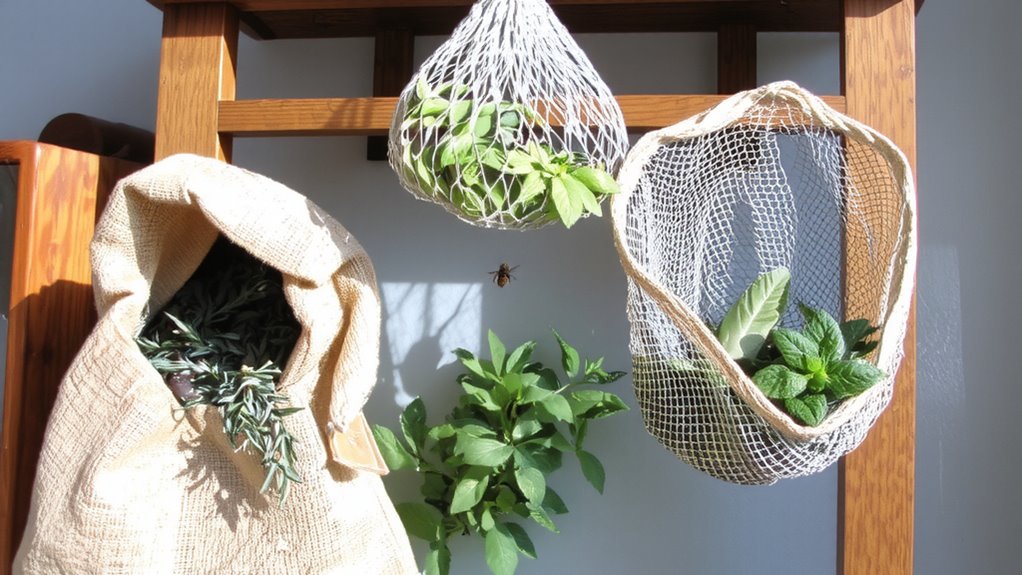
While drying wild herbs outdoors can preserve their potency, you’ll likely face insect contamination without proper protection. Using natural methods like companion drying helps deter pests without chemicals. Pairing herbs with strong-scented plants such as basil or lavender disrupts insect attraction, reducing infestation risk. Some gatherers apply a light dab of essential oils-like peppermint or eucalyptus-onto nearby surfaces, not the herbs, to repel insects without affecting plant material. This method works under low-pest-pressure conditions but offers limited defense in humid or bug-dense environments. Airflow remains critical; poor circulation invites mold, countering preservation goals. These approaches are low-cost and simple but inconsistent compared to physical barriers. For reliable results, especially with high-value harvests, they’re best seen as supplemental. Alone, they don’t fully prevent contamination.
How Double-Layered Mesh Bags Protect Your Harvest
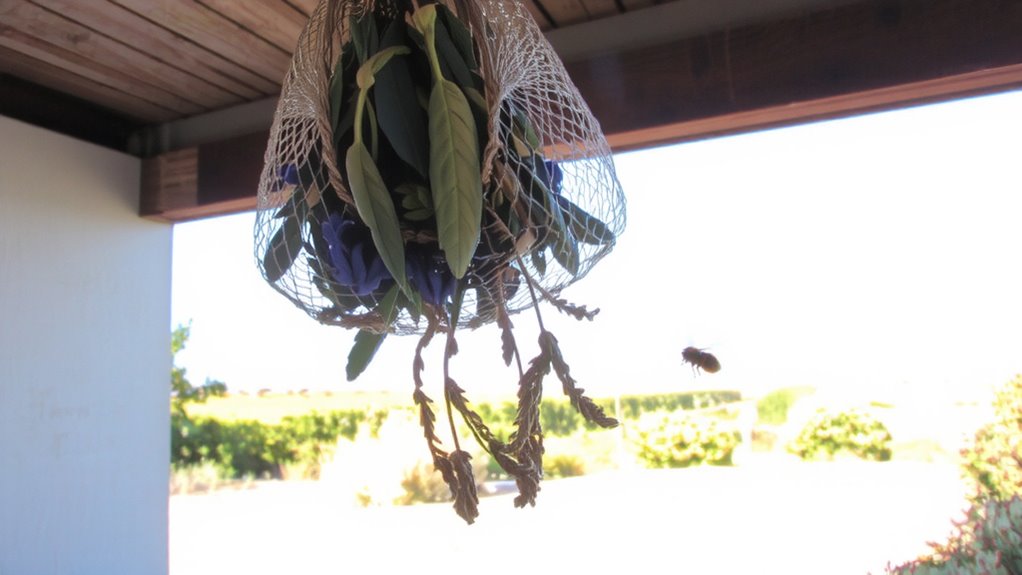
If you’re serious about keeping your wild herbs clean and dry, a double-layered mesh bag offers reliable protection without sacrificing airflow. The inner layer blocks tiny pests while the outer layer filters larger insects, delivering effective insect prevention without trapping moisture. You maintain consistent air circulation, which is critical for proper herb preservation. Unlike single-layer bags, the dual mesh design reduces the risk of contamination while still drying herbs evenly over time. The tightly woven fabric stops bugs from entering, yet remains breathable enough to prevent mold. Most models use food-safe, washable polyester that holds up after repeated use. You won’t need chemical repellents, since the physical barrier does the work. In field tests, double-layered bags outperformed single mesh and paper options in both insect resistance and moisture control. It’s a simple upgrade that directly improves harvest quality. Your herbs stay intact, clean, and ready for long-term storage.
Step-by-Step: Dry Wild Herbs in Mesh Bags
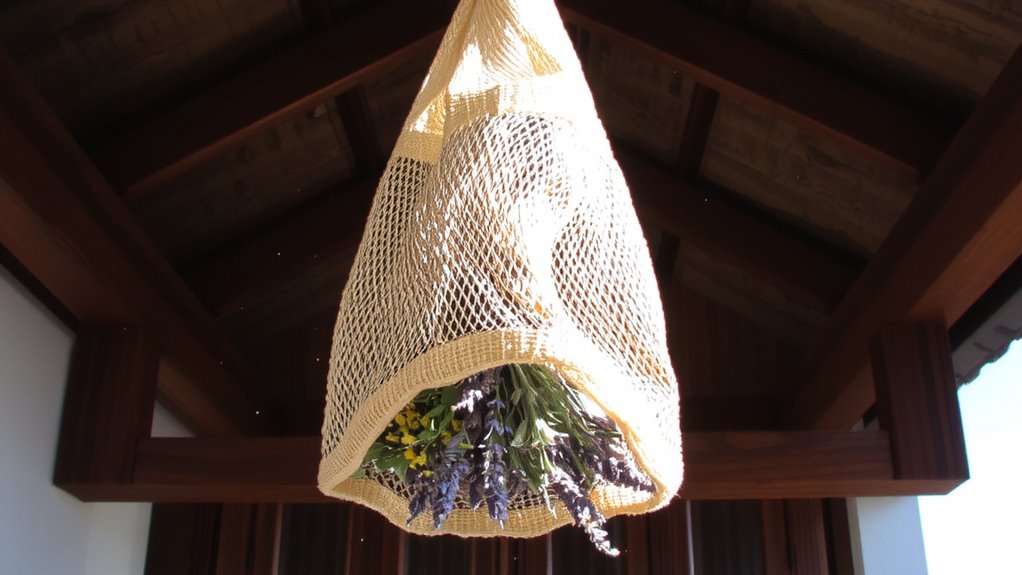
Once you’ve gathered your wild herbs, bundle them loosely and place them inside a double-layered mesh bag, making sure not to overcrowd-this allows air to move freely around each stem, which speeds up drying and reduces the chance of mold. Hang the bag in a dry, dark, well-ventilated space, away from direct sunlight to preserve essential oils. Proper herb identification is critical before drying to avoid mistaking toxic plants for edible ones. You’ll want to harvest based on seasonal timing, typically just before flowering when oils are most concentrated. Most herbs dry fully in 5 to 7 days under consistent airflow. Check daily for brittleness in leaves and stems. Over-drying makes herbs crumble; under-drying risks spoilage. Mesh bags support even airflow on all sides, improving drying efficiency compared to bunched stems. You’ll get reliable, mold-free results if you follow basic field practices from harvest to storage.
Pick the Best Mesh Bag for Drying Herbs
You’ve got your herbs bundled and ready to hang, so now it’s time to make sure your mesh bag supports efficient, reliable drying. Choose a bag with strong polyester or nylon mesh-it handles weight without stretching, ensuring long-term material strength. Weak bags tear under heavy, freshly-cut herbs, risking spoilage. Look for UV resistance, especially if drying near a window or outdoors; without it, sunlight degrades fibers within weeks. Double-layered bags add insect protection, but only if both layers maintain structural integrity. Bags with reinforced stitching last longer, especially when reused. Mesh size matters too-smaller weaves (1mm–2mm) keep out pests but still allow airflow. Avoid loosely woven produce bags-they sag and don’t provide consistent UV resistance. Test the bag by filling it with damp herbs; if it sags or pulls apart, it won’t survive prolonged drying cycles. A good bag stays firm, dries evenly, and resists environmental wear.
Best Places to Hang Herb Bags for Airflow & Safety
While airflow and protection from contaminants are critical, where you hang your herb bags makes or breaks the drying outcome. Choose spots with steady air movement and minimal light to preserve potency. Avoid damp or dusty areas. Both closet storage and garage drying can work if conditions are controlled.
| Location | Airflow | Insect Risk | Best For |
|---|---|---|---|
| Closet | Low | Moderate | Small batches, privacy |
| Garage (upper) | High | High | Large-scale drying |
| Pantry | Medium | Low | Short-term drying |
| Attic | High | Moderate | Hot, dry climates |
| Dedicated drying room | Very High | Low | Ideal results |
Closet storage limits exposure but needs a fan. Garage drying offers space but requires sealing against pests. Pick based on batch size and environmental control.
How to Clean and Reuse Mesh Bags for Next Season
If you plan to reuse your mesh bags next season, a thorough cleaning guarantees they remain effective and contaminant-free. Start by rinsing bags under warm water to remove plant debris. Use a mild soap and soft brush to scrub both layers gently-this preserves mesh integrity while eliminating residue. Rinse completely and air-dry them fully before handling. Dampness encourages mold, which compromises both bag maintenance and herb safety. Once dry, inspect for tears or weakened seams; small holes reduce insect protection and mean it’s time to replace them. For seasonal storage, keep clean, dry bags in a sealed container away from dust and pests. Avoid plastic bins that trap moisture unless desiccants are used. Proper storage extends usability across multiple harvests. Reusing bags cuts costs and waste, provided they’re cleaned and stored correctly. Performance depends on consistent care, not durability alone.
On a final note
You save time and avoid contamination by using double-layered mesh bags. Two layers block most insects while letting air flow through, reducing mold risk. Bags work best in dry, shaded areas with consistent airflow. Mesh size under 2mm stops small pests but still allows drying. Hang them in attics or garages-out of direct sun. After, wash with mild soap and air dry. Reuse for years if stored dry.