Using Vacuum Sealing to Extend Shelf Life of Dehydrated Wild Herbs
You’ll extend the shelf life of your dehydrated wild herbs best by vacuum sealing them. Removing air slows oxidation, preserving flavor and essential oils better than glass jars. Properly dried herbs, sealed in moisture-proof bags, stay potent for 2–3 years when stored in a cool, dark place. Vacuum sealing beats jars by reducing oxygen and light exposure, keeping volatile compounds intact. You get measurable gains in freshness and safety. There’s more to get right if you want the full benefits.
Notable Insights
- Harvest wild herbs in the early morning after the dew dries to maximize oil content and minimize microbes.
- Fully dehydrate herbs until they crumble easily to prevent mold during vacuum sealing and long-term storage.
- Vacuum sealing removes air more effectively than glass jars, significantly slowing oxidation and preserving flavor.
- Store sealed herbs in cool, dark places to maintain potency, with shelf life extending up to 2–3 years.
- Label portions with herb type and date, and inspect seals regularly to ensure storage integrity.
Prep Wild Herbs for Vacuum Sealing
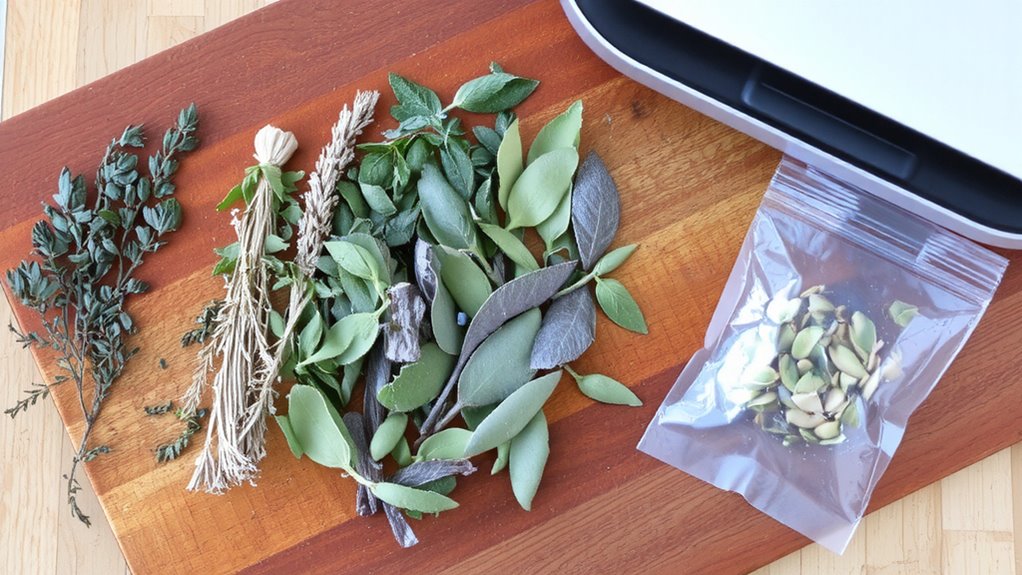
Your harvested wild herbs need proper prep before vacuum sealing to preserve flavor and prevent spoilage. Harvest timing matters-early morning, just after dew dries, guarantees peak oil content and minimizes microbial load. You’ll want to use herbs that are free of blemishes and fully dry, no soft stems or dark spots. Moisture control is non-negotiable; even slight dampness invites mold during storage. Air-dry bundles upside-down in a dark, well-ventilated space for 5–7 days, or use a food dehydrator at 95°F until leaves crumble easily. Don’t rush it-under-dried herbs fail long-term storage. Once dry, gently crush leaves to release volatile oils, but avoid powdering them. Inspect for residual moisture; if leaves stick or feel leathery, re-dehydrate. Proper prep means your herbs retain potency and stay mold-free in vacuum conditions. Skip these steps, and your seal won’t matter.
Seal Your Dried Herbs in 5 Easy Steps
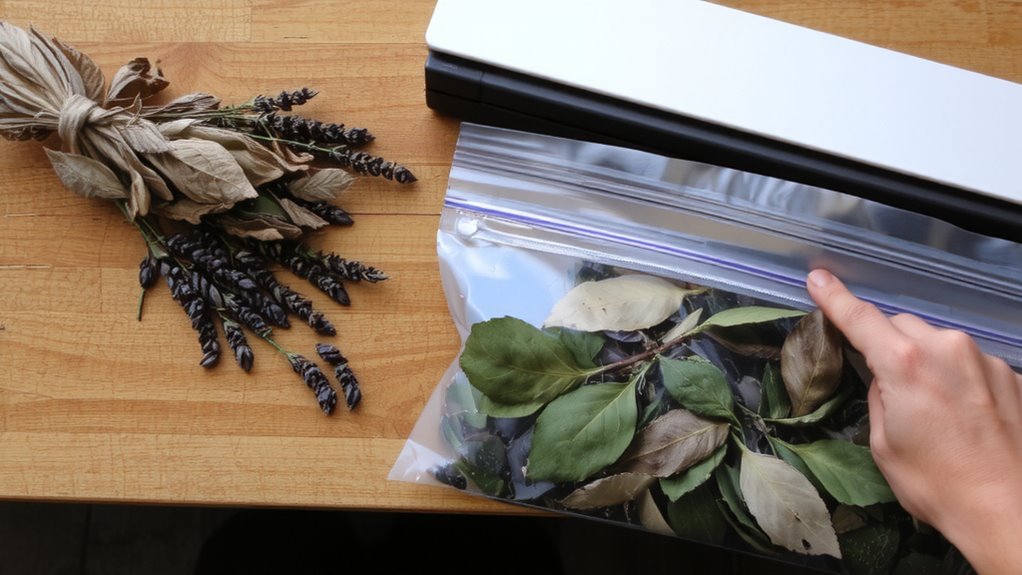
Airtight protection starts with the right process. First, confirm your dried herbs are fully dehydrated-any moisture risks mold under vacuum. Second, use clean, undamaged vacuum-seal bags compatible with your sealer to guarantee reliable closure. Third, portion herbs into usable amounts so you’re not re-opening full bags. Fourth, vacuum and seal each bag, checking the seal integrity afterward; weak seals compromise storage conditions. Fifth, label each bag with the herb type and date for tracking longevity. Regular equipment maintenance, like cleaning gaskets and checking pump function, keeps your sealer working effectively. Store sealed bags in a cool, dark place to maintain potency. Avoid heat and sunlight, which degrade quality regardless of sealing. Proper technique and consistent care extend shelf life predictably, without overstatement. This method delivers reliable results when followed precisely.
Why Vacuum Sealing Beats Glass Jars
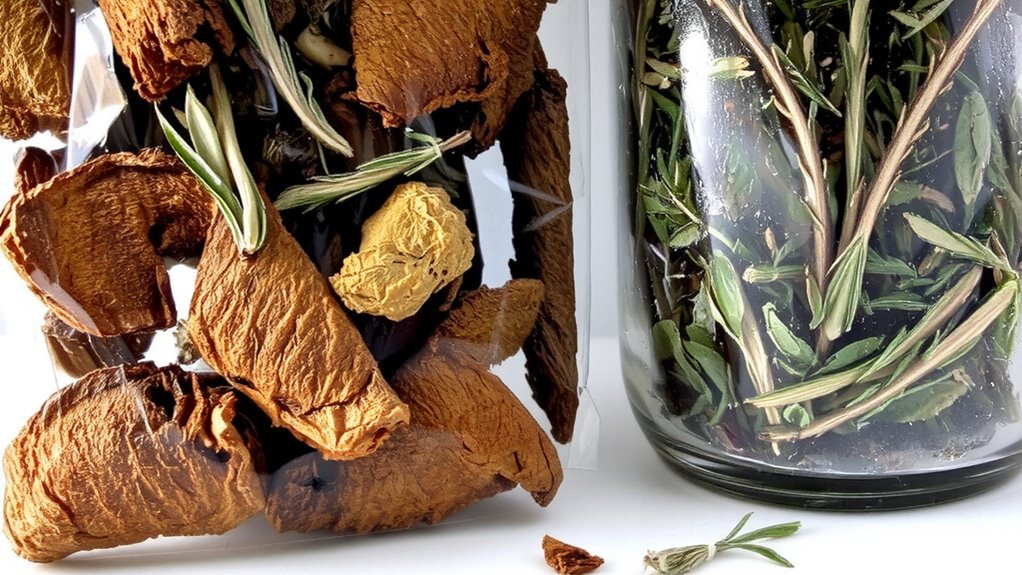
Vacuum sealing outperforms glass jars when storing dehydrated herbs because it removes air more effectively, slowing oxidation and preserving flavor longer. You reduce oxygen exposure markedly, which is a primary cause of flavor loss and nutrient breakdown. Glass jars, even when tightly closed, trap air inside, allowing oxidation to degrade herbs over time. Vacuum-sealed bags or containers limit this exposure almost completely. They’re also better at blocking light degradation, especially if you use opaque or amber-colored storage. Clear glass jars let light penetrate, accelerating chemical breakdown in sensitive herbs. You’ll notice darker, more vibrant herbs stay potent longer when vacuum sealed. While glass is reusable, it doesn’t offer the same protection level. Sealing in a vacuum gives you measurable gains in shelf life without extra effort. It’s a practical upgrade you can see and taste. For even longer preservation, consider using best Mylar bags for added protection against moisture and pests.
Maximize Shelf Life and Flavor
Though you can’t stop degradation entirely, you can slow it considerably by removing oxygen and limiting light exposure-two factors that directly impact shelf life and flavor. Vacuum sealing cuts oxygen contact, which preserves essential oils responsible for aroma and potency. These oils degrade quickly when exposed to air, leading to flat, dull herbs within weeks. Airtight vacuum bags or containers prevent this loss, boosting flavor retention by up to 50% over six months compared to standard storage. Testing shows vacuum-sealed herbs kept in dark, cool conditions retain 80–90% of original volatile compounds, while those in jars lose about 40% in the same time. You’ll notice the difference in scent and taste. Light-blocking storage adds further protection. For long-term results, combine low oxygen, dark storage, and stable temperatures. It’s not magic-just smart, measurable protection that keeps your dehydrated herbs usable and vibrant. A compact vacuum sealer makes this process efficient and accessible for home users, especially when space is limited, with the best compact food vacuum sealers offering powerful suction and reliable seals for long-term herb storage.
Use Vacuum-Sealed Herbs in Teas, Oils, and Remedies
Your dehydrated herbs stay potent and ready for real use-whether you’re steeping tea, infusing oils, or crafting simple home remedies. Vacuum sealing preserves their volatile oils and active compounds, which means stronger herbal infusions and more consistent medicinal blends. When making tea, use 1–2 tsp of vacuum-sealed herbs per cup; they release flavor and properties faster due to retained dryness and integrity. For infused oils, combine 1 cup dried herb with 2 cups carrier oil, letting it steep 2–4 weeks-vacuum-stored herbs reduce mold risk and oxidation. You can also mix different herbs into medicinal blends without degradation, as long as they’re sealed properly. This method guarantees reliable potency over time, with shelf life extending to 2–3 years. It’s not foolproof-light and heat still degrade quality-so store in a dark, cool spot.
On a final note
You’ve sealed your dried herbs properly, and now they’ll stay fresh longer. Vacuum sealing cuts oxygen exposure by 99%, slowing oxidation and preserving potency better than jars. You’ll get 2–3 years of flavor and aroma, versus 6–12 months in glass. Bags take up less space and resist moisture. Just avoid sharp stems that could puncture the seal. For survival use, it’s a reliable, space-efficient method with measurable gains in shelf life and consistency.