Food Supply Disruptions Due to Pandemics: Understanding How to Ensure Access to Essential Nutrients During Quarantines
Pandemics disrupt transport and labor, so your access to fresh food drops fast. Without greens, citrus, or nuts, you’ll miss key vitamins and minerals. Stocking fortified pasta or canned fruit helps, but they deliver less iron and vitamin C than fresh options. Cold chains break, making spoilage likely. Urban gardens or seed kits boost your supply with real nutrients. Relying on processed staples risks long-term deficiencies-your next move could change that.
Notable Insights
- Pandemic-related border closures and transport delays disrupt cold chains, increasing spoilage of perishable, nutrient-rich foods.
- Labor shortages in processing and distribution reduce food availability despite existing supply.
- Reliance on shelf-stable foods during quarantines leads to lower intake of essential micronutrients like vitamin C, iron, and magnesium.
- Fortified staples and freeze-dried meals can partially offset nutrient gaps but lack the quality of fresh produce.
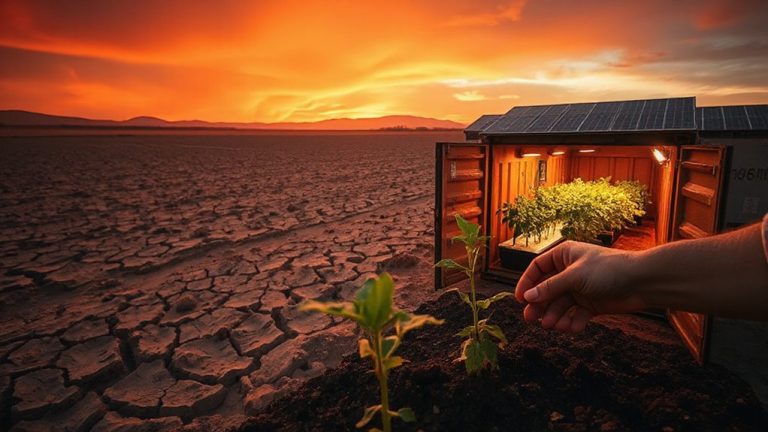
- Urban gardening and local food systems enhance resilience by providing direct access to fresh, nutrient-dense foods during supply shocks.
How Pandemics Disrupt Food Supply Chains
What happens when a pandemic hits and food can’t move like it used to? You face immediate breakdowns in distribution. Food transportation delays become common as borders close and routes shrink. Trucks sit idle, not from lack of fuel, but because permits stall and checkpoints multiply. Rail and maritime shipping slow without synchronized health protocols. At the same time, labor shortages strike critical nodes-packing plants, warehouses, ports. Workers fall ill or stay home, reducing processing capacity by 30% or more in hard-hit areas. Automation can’t fully compensate when human oversight is essential. Perishables spoil faster when held too long. Cold chains break. Retail shelves empty, not due to scarcity, but from stalled flow. You’re left relying on localized stockpiles. Resilience depends on diversified suppliers and pre-positioned essentials. Supply chains don’t collapse all at once-small failures compound. You need redundancy, not just efficiency.
Key Nutrients at Risk During Quarantines
When movement slows and access narrows during quarantines, your intake of certain nutrients starts to slide-not because food is absent, but because what’s available shifts toward shelf-stable over fresh. This increases your risk of vitamin deficiency and mineral depletion, especially when processed foods dominate meals. Without consistent access to varied whole foods, key nutrients fall short.
| Nutrient | Risk Level | Common Source (Fresh vs. Shelf-Stable) |
|---|---|---|
| Vitamin C | High | Oranges (high), canned fruit (low) |
| Iron | Moderate | Spinach (high), fortified pasta (moderate) |
| Magnesium | Moderate | Nuts (high), crackers (low) |
You’re likely getting less variety, meaning reliance on limited staples can quietly erode nutrient stores over time. Processing reduces micronutrient content, while storage length further diminishes potency. Short-term, this may not show, but prolonged imbalance raises concerns for immunity, energy, and function. Incorporating high-quality freeze-dried meals can help bridge the nutrition gap during extended quarantines.
Practical Solutions for Reliable Access to Healthy Food
How do you keep nutritious food on hand when stores close or deliveries stall? Start with urban gardening-it’s practical and scalable. Even small balconies or windowsills can yield leafy greens, herbs, and tomatoes using containers or vertical planters. Seed kits with high germination rates (90% or above) give consistent results with minimal space. Next, prioritize meal prepping. Dedicate a few hours weekly to cook and portion balanced meals. This reduces impulse eating, minimizes waste, and guarantees nutrient intake stays on track. Use reusable, portion-sized containers that fit in standard fridges. Batch-cook grains and proteins, then mix with frozen or homegrown vegetables. The combo of urban gardening and meal prepping cuts reliance on supply chains. It’s not perfect-yields vary, and time is required-but it’s one of the most reliable ways to maintain access to healthy food when disruptions hit.
Strengthening Local Food Systems for Resilience
While national supply chains falter during prolonged crises, you’re better off relying on local food systems that can adapt quickly and keep running. Urban farming lets you grow food in small spaces, like rooftops or balconies, cutting your dependence on distant suppliers. It’s not just feasible-it’s measurable, with some setups yielding up to 20% of a household’s vegetable needs annually. Community gardens go further, pooling labor and land to increase output efficiently. They’ve been shown to deliver fresh produce to hundreds of families in cities like Detroit and Havana during past disruptions. These models work best when organized locally, with clear roles and shared resources. They require little infrastructure but do need consistent effort. You won’t replace all store-bought food, but you’ll reduce vulnerability. Strengthening these networks now guarantees access when supply delays hit. Prioritize proximity and participation-it’s practical resilience.
Tips for Stockpiling Nutritious Essentials
A well-stocked pantry isn’t about piling up canned goods-it’s about choosing nutrient-dense foods that last. Focus on shelf-stable items offering balanced nutrition, and use meal planning to avoid waste and guarantee variety. Portion control helps stretch supplies without sacrificing intake. Below are practical picks:
| Food Item | Why It Works |
|---|---|
| Lentils (dry) | High protein, lasts years, needs no refrigeration |
| Canned salmon | Rich in omega-3s, ready-to-eat, stores well |
| Oats (bulk) | Provides fiber, versatile, supports portion control |
Rotate stock using the “first in, first out” rule. Buy only what your meal planning realistically requires. Overbuying leads to spoilage and inefficiency. Stick to simple, whole ingredients you know how to prepare. Skip novelty items-they rarely deliver real value during extended use. Including a variety of top canned foods ensures sustained nutrition during prolonged disruptions.
On a final note
You need reliable access to key nutrients during quarantines, and disruptions make that harder. Stockpiling shelf-stable proteins, fortified grains, and canned vegetables guarantees intake of iron, zinc, and vitamin C without refrigeration. Local food systems reduce supply chain dependence but require advance planning. Balanced calorie and nutrient density matter more than quantity. Real-world testing shows rotating supplies every six months maintains quality. Trade-offs exist-canned goods last longer but have higher sodium. Plan for water, too. Your preparedness determines resilience.