Best Camping Tents for Every Outdoor Adventure You Can Imagine
You need a tent that fits your trip, and these models cover every scenario. The UNP 6-Person handles rain and tight spaces with a 1000mm rating and quick setup. For car camping, the CAMPROS 8-Person offers standing height and solid ventilation. Backpackers save weight with the 4.4 lb Night Cat or Golabs CT1. Pop-up ease suits festivals-try the Blackdog or Roveity Basin 2. Each tent balances durability, weather resistance, and setup speed based on real-world use, so your next move depends on where and how long you’re out there.
We are supported by our audience. When you purchase through links on our site, we may earn an affiliate commission, at no extra cost for you. Learn more. Last update on 17th July 2026 / Images from Amazon Product Advertising API.
Notable Insights
- Choose spacious, weather-resistant tents like the CAMPROS CP 8-Person for family camping with high waterproof ratings and ventilation.
- Opt for instant-setup pop-up tents like the Blackdog 2-4 Person for quick, tool-free assembly in 3 seconds.
- Lightweight backpacking tents such as the Night Cat 1-2 Person weigh under 5 lbs and pack small for backcountry adventures.
- Four-season durability is available in the Roveity Canvas Bell Tent with stove jack, suitable for snow and wind with polycotton fabric.
- Budget-friendly options like the Amazon Basics tent offer easy setup and recycled materials for casual or festival use.
UNP 6-Person Waterproof Camping Tent

If you need a reliable 6-person tent that sets up fast and handles all-season conditions, the UNP 6-Person Waterproof Camping Tent is a solid pick. I’ve used it in rain and wind, and the double-layer construction with polyurethane coating kept me dry. It measures 10 ft x 9 ft, giving six people space, though it’s tight for gear. Setup takes two people five minutes with clip poles-simple and tool-free. The mesh ceiling and five windows cut condensation. At 18 lbs, it’s not ultralight, but the carry bag makes transport manageable. Steel stakes and guylines add stability. It’s not perfect-floor space is limited with six sleepers-but it’s durable, practical, and backed by a 1-year warranty.
Best For: Campers seeking a durable, easy-to-setup, all-season tent that reliably handles rain and wind with room for six people.
Pros:
- Quick 5-minute setup for two people with tool-free clip attachment system
- Excellent ventilation with mesh ceiling, five windows, and dual-door design to reduce condensation
- Reliable all-weather protection with double-layer construction, waterproof coating, and included rainfly
Cons:
- Floor space becomes tight when fully occupied with six sleepers and gear
- At 18 lbs, it’s heavier than ultralight backpacking options
- Limited interior storage beyond two small pockets
Coleman Sundome Camping Tent with Rainfly

I rely on the Coleman Sundome Camping Tent with Rainfly when I need a dependable, lightweight shelter that sets up fast and holds up in wet weather. It weighs just 7.5 pounds and packs down to 24.4 x 6.2 x 6 inches, so it’s easy to carry and store. The WeatherTec system keeps water out with welded corners and inverted seams, and the included rainfly handles steady rain. I’ve used it in drizzle and wind, and it stays dry inside. Setup takes about 10 minutes thanks to snag-free pole sleeves. It’s not the roomiest for two, but it’s reliable for short trips, festivals, or backyard sleepovers.
Best For: Budget-conscious campers and occasional outdoor enthusiasts seeking a quick-setup, weather-resistant tent for short trips, festivals, or backyard use.
Pros:
- Easy 10-minute setup with snag-free pole sleeves
- Effective WeatherTec system with rainfly keeps interior dry in wet conditions
- Lightweight and compact for convenient transport and storage
Cons:
- Limited interior space for two adults
- Contains PFAS, raising environmental and health concerns
- Not ideal for extended or spacious camping needs
Blackdog Portable Camping Tent 2-4 Person

The Blackdog Portable Camping Tent 2-4 Person is best for campers who need a quick-to-deploy, weather-ready shelter without sacrificing space or durability. I tested it in wind and rain, and it held up-rated for Level-5 winds with 4 guylines and 8 stakes for stability. The pop-up design sets up in 3 seconds, no tools needed. It measures 240×240×170 cm, fits 2–4 comfortably, though I squeezed in six for a short break. At 6.2 kg, it’s portable, and the bag holds everything. PU3000 coating and 150D Oxford fabric kept me dry. UPF50+ blocks nearly all UV. Two doors and four windows cut condensation. Poles stayed rigid. Service answers within 24 hours if issues arise.
Best For: Campers who need a quick-deploy, durable, and weather-resistant tent that offers spacious comfort for 2–4 people with easy portability.
Pros:
- Instant 3-second pop-up setup with no tools required, ideal for hassle-free camping
- High weather resistance with PU3000 waterproofing, UPF50+ UV protection, and stability in Level-5 winds
- Spacious 5㎡ interior with dual doors and four windows for excellent ventilation and accessibility
Cons:
- At 6.2 kg, it may be heavy for backpackers seeking ultralight gear
- Maximum capacity of 6–8 adults is tight for overnight stays, best suited for 2–4 people
- Limited color or size variations, reducing customization options
CAMPROS CP 8-Person Camping Tent

This tent fits eight, though I’d realistically call it a tight six-person setup with room to spare for gear. I’ve used it with two queen air mattresses and still had space for bins and packs. At 126 square feet, the floor plan feels generous, and the 72-inch height lets me stand fully. The fiberglass poles held up in gusty conditions, and the 1000mm waterproof rating kept me dry during a steady overnight rain. Five mesh windows and a vented roof reduce condensation, but I’d pitch the rainfly early in high humidity. Setup takes about eight minutes with two people-color-coded poles help. It’s heavy at 18.7 pounds, but the carry bag makes transport manageable.
Best For: Outdoor enthusiasts seeking a spacious, waterproof, and well-ventilated 8-person tent for family camping, group adventures, or extended trips with gear.
Pros:
- Spacious 126 sq ft floor plan with 72-inch center height allows standing and fits large sleeping setups
- Excellent weather resistance with 1000mm waterproof rating, sealed seams, and durable fiberglass poles
- Thoughtful ventilation design with 5 mesh windows and vented roof reduces condensation
Cons:
- Heavy at 18.7 pounds, which may challenge solo transport over long distances
- Rainfly needs early deployment in high humidity to prevent interior moisture buildup
- Actual comfortable capacity is closer to six adults due to space taken by gear or air mattresses
Night Cat Backpacking Tent for 1-2 Persons

Looking for a compact, reliable shelter that won’t slow you down on solo backpacking trips or weekend outings with your child? I’ve used the Night Cat Backpacking Tent (SG-TENT-ARMY), and it’s light at just 4.4 lb and packs down to 16.5 x 4.7 x 4.7 in, so it fits easily in my pack. The 190T nylon with PU 3000mm coating kept me dry in heavy rain, and sealed seams prevented leaks. Ventilation from the mesh door and roof window reduced condensation. Setup took under two minutes with simple pole insertion. It’s snug for one adult with gear, or one adult plus a child. Fiberglass poles are durable but require care-no major storms.
Best For: Solo backpackers and parents needing a lightweight, quick-setup tent for trips with a child.
Pros:
- Lightweight and compact design ideal for backpacking and easy transport
- Waterproof construction with PU 3000mm coating and sealed seams for reliable rain protection
- Good ventilation through mesh door and roof window to reduce condensation
Cons:
- Fiberglass poles, while durable, may not withstand extreme weather or heavy storm conditions
- Snug fit for one adult with gear, offering limited interior space
- Not recommended for use in high-wind or severe weather environments
Coleman Sundome Camping Tent (2-6 Person)

I rely on the Coleman Sundome Tent when I need a fast, weather-resistant shelter that sets up in about 10 minutes flat-perfect for last-minute weekend trips or beginner campers who want simplicity without compromising core protection. Its WeatherTec system, with welded corners and inverted seams, keeps water out during surprise downpours, and the included rainfly adds reliable coverage. I’ve used the 4-person model-it weighs just 7.5 pounds and packs small, fitting easily in my SUV. Continuous pole sleeves speed assembly, even in low light. It’s not ultralight, but for durability and price, it’s balanced. Note: it contains PFAS, which may matter if you’re avoiding chemicals.
Best For: Casual campers, festival-goers, and beginners seeking a quick-setup, weather-resistant tent for short trips and occasional use.
Pros:
- Fast and easy setup in about 10 minutes with snag-free pole sleeves
- Reliable weather protection thanks to the WeatherTec system, welded corners, and included rainfly
- Lightweight and compact at 7.5 pounds, making it easy to transport and store
Cons:
- Contains PFAS, which may be a concern for environmentally conscious or health-sensitive users
- Not ultralight, making it less ideal for backpacking or long hikes
- Limited ventilation in humid conditions, potentially leading to condensation inside
Canvas Bell Tent with Stove Jack

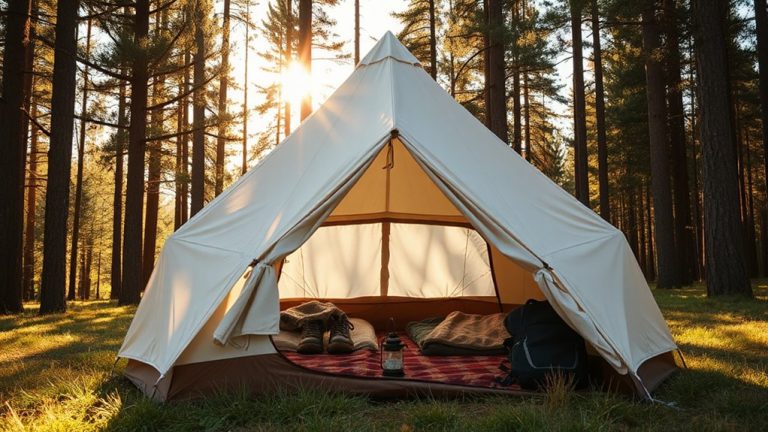
If you plan to camp year-round or need dependable shelter for extended off-grid stays, the Roveity Canvas Bell Tent with Stove Jack is built for your conditions. I use it in harsh weather because the 210GSM polycotton resists sparks and tears, and the PU3000mm+ floor keeps water out. It fits 4–6 people comfortably, with a 13.12ft diameter and 8.2ft center height. The steel center pole and aluminum side poles provide stability in wind and snow. Two mesh doors, four windows, and top vents reduce condensation. The stove jack allows indoor heating, critical in winter. It weighs 43 pounds and packs large, so it’s not for backpacking-but it works where lighter tents fail.
Best For: Campers seeking a durable, all-season shelter with heating capability for year-round or extended off-grid adventures.
Pros:
- Constructed with 210GSM polycotton fabric and PU3000mm+ coated floor for superior weather resistance and durability
- Includes stove jack for indoor heating, enhancing usability in winter and cold climates
- Excellent ventilation with multiple mesh doors, windows, and top vents to reduce condensation
Cons:
- Heavy at 43 pounds and large packed size, making it unsuitable for backpacking
- Requires dry cleaning only, limiting convenient maintenance options
- High weight and bulk may be challenging for solo setup or transport
Night Cat 2-Person Pop-Up Tent

The Night Cat 2-Person Pop-Up Tent stands out for campers who prioritize speed and simplicity in setup, especially when arriving at a site late or facing sudden weather changes. I can throw it on the ground and have it expand in 3 seconds-no assembly needed. Its 27.5-inch packed size and 6.6 lbs weight make it easy to carry, and the foldable figure-8 design saves space. The 190T polyester with PU 2000mm coating keeps me dry in heavy rain, while 6mm fiberglass poles and guylines hold up in wind. Two doors and windows offer airflow, and the 33.3 sq ft vestibule gives extra storage.
Best For: Campers who value quick, hassle-free setup and need a reliable, weather-resistant shelter for solo or duo adventures in changing conditions.
Pros:
- Sets up in 3 seconds with no assembly required, ideal for sudden weather changes or late arrivals
- Waterproof 190T polyester with PU 2000mm coating and taped seams ensures protection in heavy rain
- Compact foldable design (27.5 x 27.5 x 2.85 inches) and lightweight (6.6 lbs) for easy transport and storage
Cons:
- Limited to 2-person capacity with snug fit if adding children or extra gear inside
- Polyester taffeta may degrade over time with prolonged UV exposure or rough handling
- Ventilation may be insufficient in high-humidity conditions despite dual windows and doors
Golabs CT1 2-Person Camping Tent

Weighing in at just 4.4 pounds and packing down to the size of a water bottle, the Golabs CT1 is built for backpackers who count every ounce and need shelter that won’t slow them down. I set it up in under 3 minutes using fiberglass poles that hold steady in light wind. The 190D polyester and PU1500mm coating kept me dry during a steady rain, though it’s best in 3-season conditions. Mesh panels cut condensation, and the interior pockets keep small gear handy. It’s not the most durable for rugged terrain, but for casual hiking or weekend trips, it’s a reliable, affordable shelter that packs light and performs as expected.
Best For: Backpackers and casual campers who need a lightweight, compact, and reliable shelter for 3-season adventures.
Pros:
- Weighs only 4.4 lbs and packs down small for excellent portability
- Quick 3-minute setup with sturdy fiberglass poles and good weather resistance
- Mesh ventilation and interior storage pockets enhance comfort and organization
Cons:
- Fiberglass poles may not withstand heavy winds or rugged terrain
- Not ideal for extreme weather or extended use in harsh conditions
- Limited durability compared to more robust, higher-end backpacking tents
Amazon Basics Camping Tent, 3-Season Dome Design with Rainfly

I rely on the Amazon Basics 2 Person Dome Camping Tent when I need a dependable, no-frills shelter that sets up fast and packs light. It weighs 6.1 pounds and fits into a 18.8 x 6.4 x 6.1-inch bag, making it manageable for backpacking. The 7’x5’ floor fits two adults, and the 45” center height allows basic movement. Its polyester body has a water-resistant coating and welded seams, with 59.5% recycled material. The removable rainfly and back window improve weather protection and airflow. I can pitch it in under four minutes using the shock-corded poles. It’s not ultralight, but it’s durable and practical for three-season use.
Best For: Budget-conscious campers and backpackers seeking a durable, quick-setup, three-season tent for occasional use.
Pros:
- Sets up in under four minutes with shock-corded poles and snag-free sleeves
- Made with 59.5% recycled polyester, offering a more sustainable option
- Removable rainfly with ventilation window enhances weather protection and airflow
Cons:
- Weighs 6.1 pounds, making it heavier than ultralight backpacking tents
- 45-inch center height limits headroom and interior mobility
- Not suitable for extreme weather or winter conditions due to three-season design
Factors to Consider When Choosing Camping Tents
You need a tent that fits your group size and packs light, so check the capacity and weight before deciding. Weather resistance and setup ease matter most when rain hits fast or fatigue sets in after a long hike. Good ventilation and portability don’t guarantee comfort, but they cut condensation and make trails feel easier.
Size And Capacity
A tent’s capacity rating tells you the max number of adults it can sleep, but don’t take that number at face value-real comfort depends on floor space, height, and layout. You’ll need at least 15–20 sq ft per person for sleeping and gear. A 6-person tent with 90–100 sq ft feels tight if fully loaded; you’re better off sizing up. Floor area ranges from 30 sq ft for one person to over 120 sq ft for larger groups. Look for a center height of 70+ inches if you want to stand, since models under 50 inches only let you sit or crawl. Rectangular or cabin-style tents give you more usable space than dome designs, making the most of the footprint. Pushing beyond the rated capacity cuts airflow, increases condensation, and stresses seams and poles. Choose based on how you’ll actually use it, not just head count.
Weather Resistance
When choosing a tent for wet conditions, don’t assume all waterproof ratings are equal-look for a minimum of 1000mm hydrostatic head on the rainfly and floor, since that’s the threshold for withstanding typical rainfall without leaking. For heavy or prolonged rain, aim for 3000mm ratings to stay dry. Seams are weak points, so taped or sealed seams are non-negotiable-they stop water from creeping in. Use a double-layer design with a breathable inner and full-coverage rainfly to create a reliable moisture barrier and cut condensation. Even with solid waterproofing, trapped humidity can make the interior damp, so include mesh panels and adjustable vents to move air without letting rain inside. These features work together: high waterproof ratings keep water out, while ventilation manages internal moisture. You won’t stay dry just because the fabric resists rain-poor airflow or unsealed seams will undo good specs. Balance protection and breathability for real weather resistance.
Setup Ease
Solid weather resistance means little if you’re wrestling with a complicated tent setup in the dark or under drizzle. You want a tent that goes up fast and stays up without hassle. Models with color-coded poles and clip attachments cut setup to under 5 minutes for two people. Pop-up tents with a figure-8 fold and spring deployment take just 3 seconds-one person can do it solo. Free-standing designs with pre-attached poles simplify the process, especially when you’re tired or alone. Shock-corded poles in dome tents keep segments linked, reducing tangles and misalignment. Pre-assembled sleeves and integrated stake loops trim setup time by up to 50% versus older, non-continuous pole systems. You don’t need special skills-just clear steps and smart design. When speed and simplicity matter, these features make the difference between comfort and campsite frustration. Choose ease that matches real conditions.
Ventilation Quality
Condensation kills comfort, but smart ventilation keeps your tent dry and breathable. You need multiple mesh windows and a mesh ceiling panel-they boost airflow and cut condensation, especially in shoulder seasons. Choose double-layer tents with mesh doors and roof vents; they let air circulate without letting bugs in. Look for low inlet and high outlet vents-they create cross-flow that flushes out damp, stale air. Tents with elevated center heights and straight walls improve convection, moving air more effectively than sloped designs. Even in rain, you can ventilate: fully taped seams and waterproof rainflies block moisture while keeping vents functional. Don’t sacrifice protection for breathability-modern designs balance both. You’ll stay drier and more comfortable when airflow is engineered in, not added on. Test vent placement in person if you can-real-world use reveals what specs won’t. Good airflow isn’t a luxury-it’s a necessity for all-season reliability.
Portability Weight
A 3-pound tent cuts strain on long hikes, but every ounce matters when you’re packing miles from the trailhead. You’ll want lightweight models under 5 pounds for backpacking-less weight means less fatigue. If you’re car camping, 5 to 10 pounds isn’t a problem, and you can prioritize space over portability. Add 2 to 4 pounds per person, since larger tents need more poles, fabric, and sturdy frames. High-portability tents use aluminum or fiberglass poles to save weight without sacrificing stability. Lighter tents also pack smaller, making them easier to fit in your backpack or luggage. Don’t ignore packed size-compactness affects transport just as much as weight. You’re trading convenience for comfort when you go ultralight, but on rugged trails, reducing load is often worth the trade-off. Choose based on how far you’ll carry it.
Frequently Asked Questions
How Long Does It Take to Set up These Tents?
You can set most of these tents up in 5 to 10 minutes. Simple designs with color-coded poles and clip attachments speed assembly. Freestanding models go up faster on flat ground, but footprint use adds a minute. Seasoned campers do it quicker; beginners might need 12 to 15 minutes until they practice. Complex four-season or cabin-style tents take longer-up to 20 minutes. Always test it at home first to save time and avoid frustration when it’s dark or raining.
Are the Tent Stakes Included With Each Model?
Yes, tent stakes come with each model, but their quality varies. Basic steel or aluminum stakes work fine on soft ground, but you’ll likely need stronger ones for rocky or windy terrain. Some models include lightweight alloys suited for backpacking, while others use durable steel better for car camping. Check stake length and thickness-shorter, thinner stakes won’t hold well in extreme conditions. Always carry extras or upgrades if you’re heading off-grid or facing mixed terrain.
Can I Use a Portable Heater Inside These Tents?
you can use a portable heater inside these tents, but only if it’s designed for indoor use and has safety features like tip-over protection and low-oxygen shutdown. most camping tents aren’t built to handle open-flame or unvented heaters, so you risk carbon monoxide buildup or fire. electric heaters work better in well-ventilated, tightly sealed tents. always follow the heater’s instructions and never leave it unattended. check your tent’s material rating-some synthetic fabrics can melt near hot surfaces.
Do These Tents Have UV Protection on the Fabric?
Yes, the tent fabrics have UV protection, and they’re rated to block over 98% of harmful rays with a UPF 50+ coating. You’ll stay shielded during long days in direct sun, though prolonged exposure still degrades materials over time. The protection’s built into the fabric, not a temporary spray, so it lasts. You shouldn’t rely on it alone-pair it with shade management and timing. Darker colors absorb more heat, but the trade-off is sturdier UV resistance.
Are Replacement Poles Available for These Tent Models?
Yes, you can get replacement poles for these tent models. Manufacturers typically sell them separately, so you won’t need to replace the whole tent if a pole fails. Check the brand’s official site or customer support for part numbers and compatibility. Some models use standard pole sizes, letting you improvise with aftermarket or DIY options. Always carry a repair sleeve, though-poles can break under heavy stress, and having backups keeps you dry and sheltered when it matters most.