Emergency Water Filtration Methods Using Common Household Items
You can filter dirty water fast using a plastic bottle, sand, gravel, and a coffee filter. Layer coarse gravel, fine gravel, and sand inside the inverted bottle to trap debris-add crushed activated charcoal to reduce odors and some chemicals. Cloth or coffee filters catch silt, but won’t stop bacteria. Always boil water for one minute or use solar disinfection afterward. DIY filters help in a pinch, but they’re not foolproof. There’s more to get right for safer results.
Notable Insights
- Layer coffee filters, cloth, or cotton balls in a bottle to remove debris and improve water clarity.
- Construct a sand and gravel filter using coarse and fine layers to trap particles effectively.
- Pre-rinse filter materials and layer them properly to prevent clogging and maintain flow rate.
- Use crushed activated charcoal to reduce chemicals, odors, and some heavy metals in water.
- Always disinfect filtered water by boiling or solar exposure, as household filters don’t kill pathogens.
Filter Water Fast With Household Items
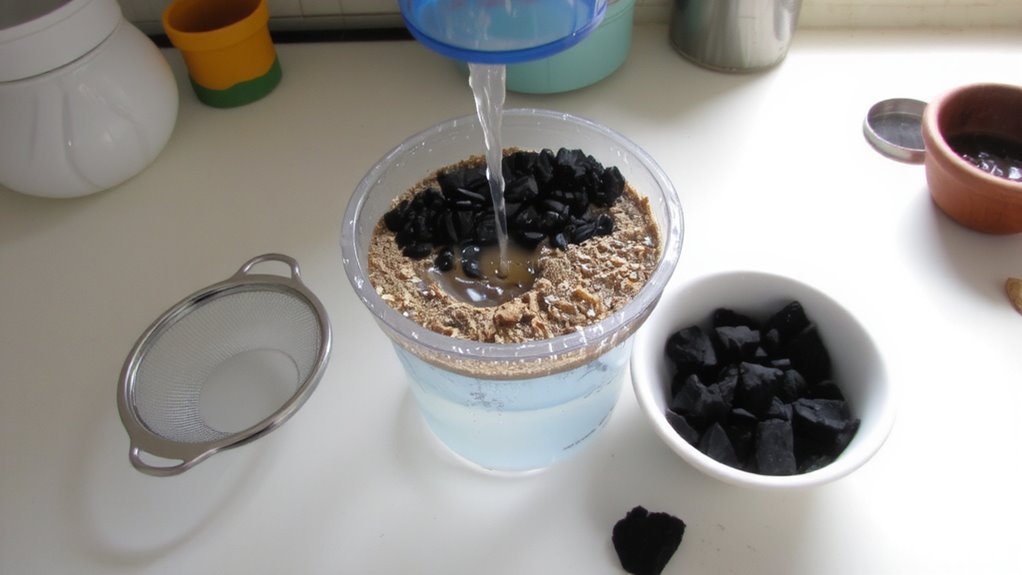
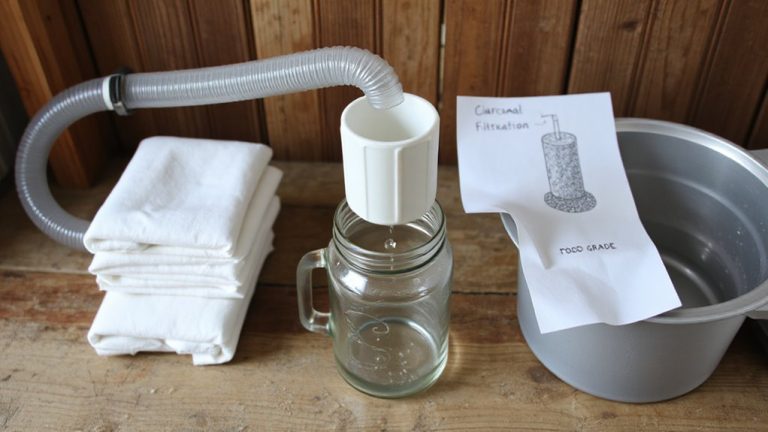
While you might not have a commercial filter on hand, you can still make water safer using items already in your home-though effectiveness depends on the method. You can improvise materials like coffee filters, cloth, paper towels, or cotton balls layered in a bottle or cup to remove debris. These won’t eliminate bacteria or viruses but do clarify visibly dirty water. Flow stops quickly if pores clog, so you must test flow rate to balance speed and filtration. Fast flow usually means poor particle removal; slow flow may indicate effective trapping but impractical for large volumes. Charcoal from a fire can help reduce odors and some contaminants, but it’s not consistent. This method is short-term and situational. Boiling or chemical disinfection should follow to address microbes. Improvising works in emergencies but has limits. Know them before relying on it. For more reliable portable filtration, consider a water purification straw.
Build a Sand and Gravel Filter at Home
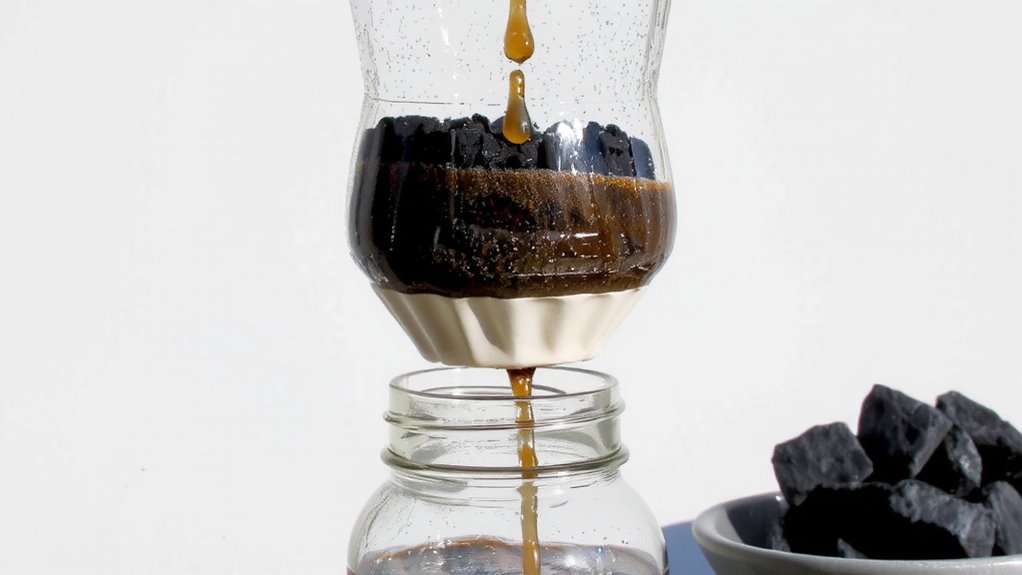
You can improve on basic household filtration by building a sand and gravel filter, which offers better particle removal than cloth or paper alone. Start with a clean plastic bottle, cut the bottom, and invert it into a container. Layer coarse gravel at the base, followed by finer gravel, then sand-these sediment layers trap particles more effectively. Aim for about two inches of each layer to balance flow rate and filtration efficiency. Sand acts as the primary filter, capturing smaller debris that gravel misses. While it doesn’t purify water, it improves clarity and reduces turbidity markedly. Flow is slow-expect a few drops per second-so plan ahead. This method is low-cost and uses common materials, but it requires steady assembly to avoid channeling. Poor layering cuts filtration efficiency. Pre-rinse all materials to avoid adding dirt. Combined with later disinfection, it’s a reliable field solution. For even better results, consider pairing this method with one of the top water filters recommended for emergency use.
Remove Dirt With Coffee Filters and Cloth
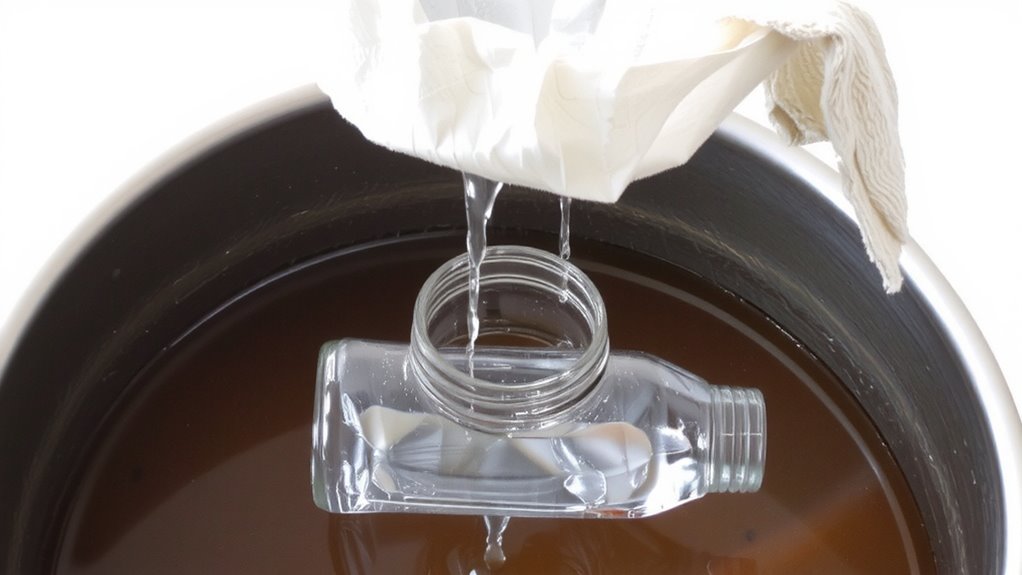
If you need to filter out visible debris quickly, a coffee filter or clean cloth works right away with minimal setup. Your success depends on pore size-the smaller it is, the better the sediment retention. Standard coffee filters have a pore size around 20–30 microns, trapping most visible particles like silt and sand. A tightly woven cloth, such as a cotton T-shirt or bandana, offers slightly larger pores-about 50–100 microns-but still removes coarse dirt. Both methods won’t purify water or remove pathogens, but they improve clarity. Coffee filters clog faster than cloth, slowing flow, while cloth allows quicker filtration but with less fine particle capture. For best results, pre-fold the cloth or use multiple filter layers. Always let gravity pull water through-don’t force it. This step prepares water for further treatment by reducing load on downstream filters. In survival scenarios, pairing this method with a commercial water filter can significantly enhance safety and efficiency.
Use Activated Charcoal to Trap Contaminants
Once you’ve removed visible debris with a coffee filter or cloth, take the next step by targeting dissolved impurities using activated charcoal. You can crush charcoal from a grill or use loose aquarium filter charcoal-just make sure it’s activated. As water passes through, chemical adsorption binds contaminants like chlorine, pesticides, and some heavy metals to the charcoal’s surface. Ion exchange also helps remove charged impurities, improving water safety. Crush the charcoal into small, consistent pieces to increase surface area without creating dust. Use about one inch of activated charcoal in your filter layer for every two inches of water you plan to treat. It won’t kill bacteria, so pairing this method with boiling or disinfection is essential. Charcoal loses effectiveness after 24–48 hours of use, so replace it frequently. Results vary by source water, but testing shows 70–90% reduction in select chemicals under ideal conditions.
Make a Bottle Filter in 5 Easy Steps
A plastic bottle becomes the base of a reliable field filter when cut in half and reversed to form a layered filtration system. Bottle size matters-use a standard 500ml to 2-liter bottle for balance between capacity and manageability. Start by removing the cap and cutting the bottle midsection. Invert the top half into the bottom like a funnel. Begin your filter layers with coarse materials: place cotton balls or cloth at the bottom to trap large debris. Then add a layer of activated charcoal about 1–2 inches thick to remove impurities. Follow with sand to catch finer particles, and finish with small gravel on top to pre-filter sediment. Gravity pulls water through each layer. The filter layers work together to improve clarity, though they don’t kill pathogens. Water output is slow-about 1 liter per hour-so plan accordingly. It’s effective, but not a complete purification solution.
Kill Germs: Boil or Solar-Purify Filtered Water
You’ve filtered the water, but it’s still not safe to drink-germs like bacteria and viruses could still be present. You need to use either heat treatment or UV exposure to kill pathogens. Boiling is reliable: bring water to a rolling boil for at least one minute (three minutes at high altitudes). This heat treatment destroys nearly all harmful microbes. If you don’t have fuel or a heat source, use the sun. Fill clear plastic bottles and lay them on a reflective surface in direct sunlight for at least six hours (or twelve if it’s cloudy). The UV exposure and heat from the sun work together to disinfect the water. This method, called solar water disinfection (SODIS), only works with clear water in small volumes. Both methods have limits, but when done correctly, they make filtered water safe to drink.
Know the Limits of DIY Water Filters
While DIY water filters can remove debris and improve clarity, they won’t guarantee safe drinking water on their own-most can’t eliminate viruses or dissolved chemicals, and their effectiveness depends heavily on design and materials. You’re facing serious pathogen risks if you rely solely on a homemade filter, especially in contaminated sources. These setups often lack the precision to remove bacteria or parasites consistently. Chemical limitations mean pollutants like pesticides, heavy metals, or industrial runoff likely remain in the water. Even layered filters with sand, cloth, or charcoal don’t match commercial standards. You might see cleaner water, but it’s not necessarily safer. Always follow filtration with boiling or disinfection to reduce health risks. Understand that DIY methods are stopgap solutions-not replacements for tested systems. Your safety hinges on recognizing these boundaries and acting accordingly when clean water isn’t available.
On a final note
You’ve got options when clean water’s not available, but know what each method delivers. Sand and cloth filters remove debris, not germs. Charcoal helps with chemicals, but not viruses. Boiling kills pathogens; solar works if it’s sunny. Bottle filters are fast but need prep. These methods work in a pinch, just understand their limits. For real safety, combine filtration with disinfection. Your health depends on it.