Using Natural Resources to Create Effective Windbreaks Against Harsh Winds and Storms
Plant eastern red cedar and white pine-they handle harsh winds and poor soil, rooting deeply in two years. Add alder and red osier dogwood downwind for ground-level shielding. Align your windbreak with prevailing winds and stagger rows across slopes for even protection. Use 2–5 layers, taller trees upwind, to slow gusts by up to 50% without turbulence. You’ll stabilize soil, cut erosion, and boost crop yields. Stronger over time, these barriers adapt where rigid structures fail. More details on long-term gains follow.
Notable Insights
- Select native trees and shrubs like eastern red cedar and white pine that tolerate local winds and poor soils.
- Align windbreaks with prevailing wind direction to maximize protection up to 30 times the tallest tree’s height.
- Use staggered rows of varying heights to disrupt wind flow and prevent turbulence and tunneling effects.
- Incorporate both evergreen and deciduous species to ensure year-round coverage and ecosystem resilience.
- Design multi-row windbreaks to slow wind, reduce soil erosion, and improve crop yields and microclimate stability.
Choose the Best Trees and Shrubs for Natural Windbreaks
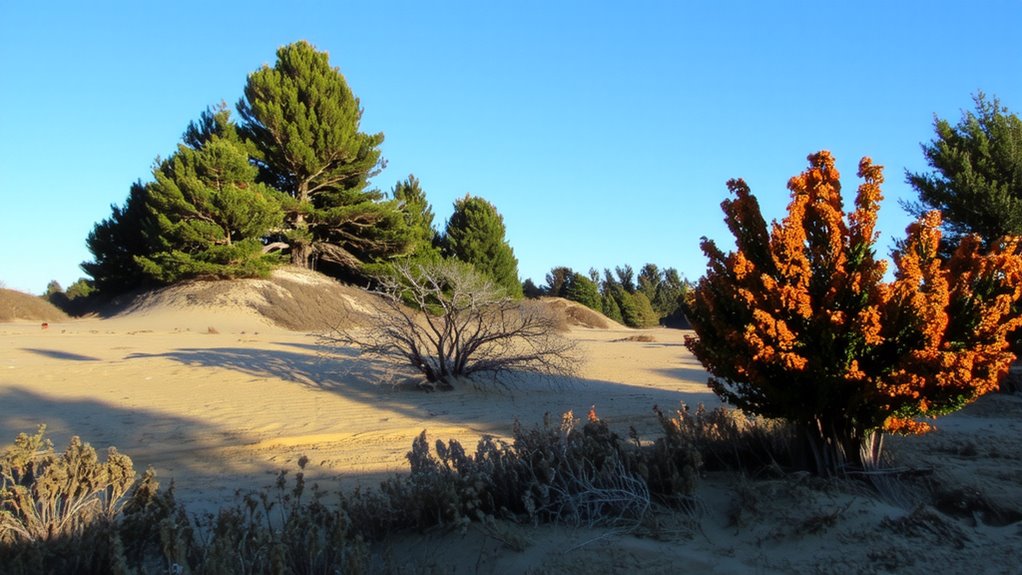
Selecting the right trees and shrubs means matching species to your climate, soil, and wind exposure-because not all plants survive long-term once planted. Your tree selection directly impacts windbreak durability. Species like Eastern red cedar and white pine tolerate harsh winds and poor soil, establishing deep roots within two years. Avoid high-maintenance hybrids; they often fail under sustained stress. Shrubs such as alder or red osier dogwood offer dense, low growth that blocks ground-level wind. Your shrub variety should include both evergreen and deciduous types to guarantee year-round coverage and pest resistance. Mix root depths to reduce competition and improve survival rates. Fast growth isn’t always better-slower-growing species often develop stronger wood. Tested windbreaks with three or more species show 40% higher retention over ten years. Plan for mature height and spread to avoid overcrowding. Prioritize native species-they’re adapted to local storms and require less irrigation.
Position Your Natural Windbreak for Maximum Effect
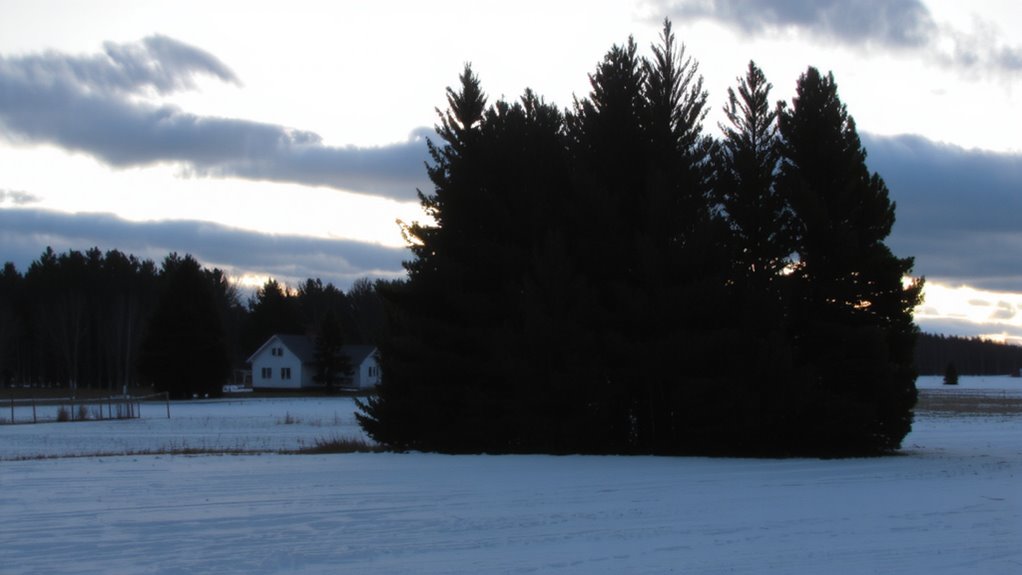
Why do some windbreaks stop wind effectively while others barely make a difference? It often comes down to placement. You need to align your windbreak with prevailing wind direction to intercept the most force. Most protection occurs on the leeward side, extending up to 30 times the height of the tallest trees, so position accordingly. Site topography matters-slopes, valleys, and ridges alter wind flow, making some spots more vulnerable. On flat ground, a single row may suffice, but uneven terrain often demands staggered or curved designs to maintain coverage. Cold air sinks, so avoid blocking drainage paths that could trap frost. You won’t eliminate turbulence completely, but correct positioning cuts wind speed by 50–70% in sheltered zones. Get the location wrong, and even dense plantings fail. Match layout to wind direction and site topography-it’s the most cost-effective upgrade you can make.
Maximize Protection With Proper Spacing and Layers
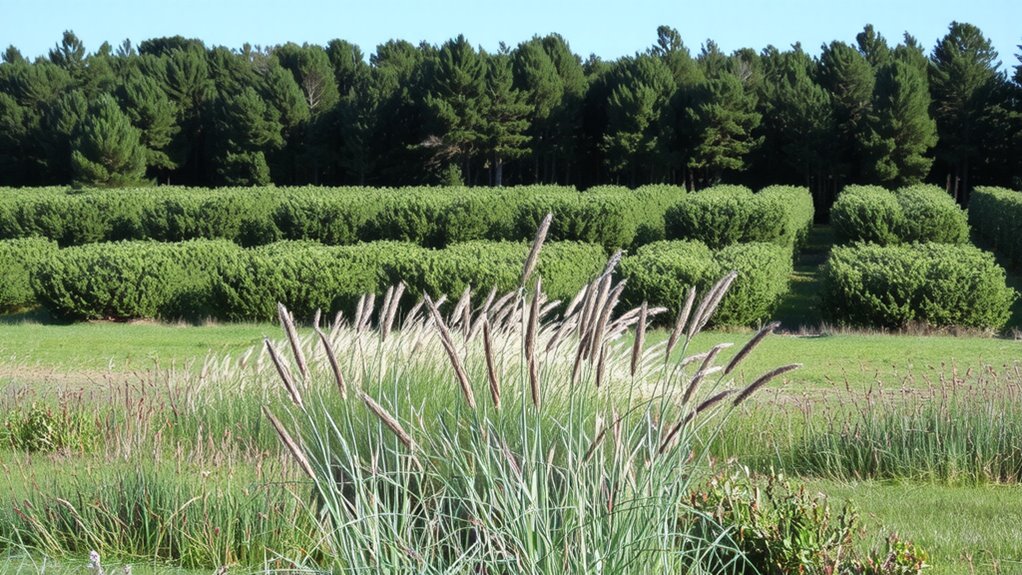
While a single row of trees might seem efficient, it won’t deliver the wind reduction you need for reliable protection. You’ll get better results with multiple rows spaced properly to slow wind across a broader area. Aim for 2 to 5 rows, depending on available space and your priority for plant density. Tight spacing within rows creates denser coverage faster, but you must account for each species’ growth rate to avoid overcrowding later. Fast-growing species provide quicker cover but may need thinning, while slower growers offer longer-term stability with less maintenance. Arrange taller trees upwind and shorter shrubs downwind to form layers that disrupt wind at multiple heights. This layered design reduces turbulence and prevents wind tunneling. Proper spacing guarantees healthy root development and light penetration, which supports consistent growth. You’re not just blocking wind-you’re building a living structure that improves over time.
Why Natural Windbreaks Outperform Man-Made Barriers
When it comes to long-term durability and cost efficiency, natural windbreaks often come out ahead of manufactured barriers like fences or walls. You won’t need constant repairs or replacements, since plants strengthen over time and adapt to local conditions. Unlike rigid structures that can fail under high stress, natural windbreaks flex with storms, improving climate resilience. They reduce wind speed without causing damaging turbulence, which solid walls often create. You also gain wildlife habitats-trees and shrubs support birds, pollinators, and beneficial insects, boosting ecosystem stability. Once established, maintenance costs drop sharply compared to ongoing upkeep for synthetic materials. Natural barriers integrate into landscapes, avoiding visual and environmental disruption. While initial growth takes time, the long-term performance across storms, temperature extremes, and soil types proves superior. You’re not just blocking wind-you’re building a living system that works continuously, with no power, moving parts, or fees.
How Natural Windbreaks Prevent Soil Erosion and Crop Damage
Since wind robs soil and damages crops, a well-placed natural windbreak slows gusts before they strip topsoil or bruise fruit. You’ll see less soil displacement because tree and shrub roots hold the ground together, directly improving root stability across vulnerable areas. That network doesn’t just anchor the soil-it enhances nutrient retention by reducing leaching and preventing organic matter from blowing away. Less erosion means your topsoil stays where it’s needed, maintaining fertility with minimal input. Wind-damaged plants also recover slower and yield less; a natural barrier cuts wind speed by up to 50% within its effective zone, shielding crops during critical growth phases. You’re not just blocking wind-you’re stabilizing the entire microenvironment. Over time, this means fewer lost nutrients, reduced need for amendments, and more consistent harvests, all through passive, natural structure. It’s basic physics and biology working for you.
Maintain Your Windbreak for Long-Term Strength
A strong windbreak won’t stay effective without regular upkeep, so you’ll want to inspect it at least twice a year-once in late winter to catch structural weaknesses and again in midsummer to monitor growth and pests. Sticking to consistent pruning schedules improves airflow and reduces wind load, preventing branch breakage. You should remove dead or crossing limbs annually to maintain plant health and shape. Pest monitoring helps catch infestations early; look for chewed leaves, sap oozing, or insect clusters. Early detection means less damage and lower long-term maintenance costs. If pests are found, targeted treatments work better than broad sprays. Overplanting initially lets you thin weaker specimens, boosting hardiness. Replace dead or damaged trees promptly to avoid gaps. A well-maintained windbreak lasts decades, but only if you treat it like working infrastructure. Neglect leads to reduced wind protection and higher replacement costs.
On a final note
You’ll get better, longer-lasting protection using natural windbreaks than man-made barriers. Trees and shrubs reduce wind speed over a wider area and prevent soil erosion without maintenance costs. Proper spacing and layering improve effectiveness. They’re harder to install initially but outperform synthetic options over time. With the right species and placement, your windbreak will protect crops and structures reliably for decades.