How to Create an Efficiently Organized Pantry System for Long-Term Food Storage
Empty your pantry and sort items by type-grains, canned goods, snacks, baking supplies-checking expiry dates and tossing anything expired or damaged. Use airtight, opaque containers made of BPA-free plastic or tempered glass to block light, moisture, and oxygen, extending shelf life. Label each container with contents, quantity, and date using waterproof tags. Rotate stock with the FIFO method, placing new items behind older ones. Inspect monthly for pests, spoilage, or leaks, and update your inventory; this system keeps food safe and usable long-term-keep going to refine each step.
Notable Insights
- Empty and sort pantry items by type and expiry date to identify duplicates, gaps, and expired products.
- Store food in airtight, opaque containers to block light, moisture, and oxygen for extended shelf life.
- Label all containers with contents, quantity, and expiration date using waterproof, smudge-resistant markers.
- Rotate stock using the FIFO (first in, first out) method to ensure older items are used before newer ones.
- Perform monthly inspections for spoilage, pests, and damaged packaging while cleaning shelves and updating inventory.
Empty and Sort Your Pantry by Type and Expiry
Start with a clean slate-removing everything from your pantry gives you full visibility into what you’ve got, so you can sort items by category and spot anything past its prime. You’ll immediately see duplicates, gaps, or expired goods. Group like items: grains, canned goods, snacks, baking supplies. This method supports effective shelf organization, making each section predictable and accessible. Check every label for expiry dates; discard anything questionable. Then update your inventory tracking system-note what you have, how much, and when it needs using. A simple list, digital or paper, prevents overbuying and waste. Accurate tracking also guarantees older items get used first. Proper sorting reduces clutter and improves efficiency. Over time, this baseline makes restocking easier and more precise. You’re not just organizing-you’re building a functional system that sustains long-term storage goals with minimal maintenance and maximum reliability.
Pick Airtight, Opaque Containers for Long-Term Storage
Since oxygen, light, and moisture are the main enemies of long-term food storage, choosing containers that block all three is critical for preserving shelf life. You should use airtight, opaque containers to limit light exposure and prevent degradation of nutrients and flavor. Clear bins might look tidy, but they allow light to penetrate, speeding up spoilage. Opaque options like thick polyethylene or glass block light effectively. When evaluating container materials, prioritize durability and seal quality-look for FDA-approved, BPA-free plastics or tempered glass with gasketed lids. These create a reliable moisture and oxygen barrier. While glass is heavier and more fragile, it doesn’t leach chemicals and lasts longer. Plastic is lighter and less prone to breakage but can absorb odors over time. Choose based on your space, handling needs, and storage duration. A solid seal matters more than appearance. Long-term storage solutions should also consider protection from physical damage, much like how the best gun storage bags offer durable, protective enclosures for firearms.
Label and Date Every Item Clearly
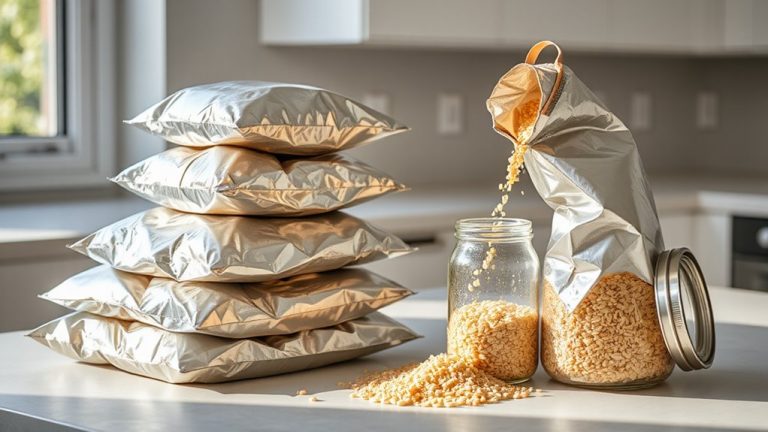
When you’re dealing with long-term food storage, knowing what’s inside each container and how long it’s been there makes all the difference-you can’t rely on memory or guesswork over months or years. Label clarity guarantees you identify contents at a glance, avoiding confusion between similar-looking items like rice and barley. Use waterproof, smudge-resistant labels with bold, legible text. Write the food type, quantity, and any prep notes-plain language works best. Date accuracy is just as critical; mark the exact packing or expiration date you can track shelf life and prioritize use. A permanent marker or dated sticker resists fading over time. Mistakes in either label clarity or date accuracy increase waste and risk spoilage. You’re organizing for function, not convenience, so assume worst-case recall. Clear, correct labels reduce errors and support consistent rotation, even if months pass before you reopen the pantry. For maximum shelf life, store foods in Mylar bags with oxygen absorbers to prevent degradation from light, moisture, and air exposure.
Use the FIFO Method to Rotate Stock
If you want your long-term pantry to stay functional and waste-free, rotate your stock using the FIFO method-first in, first out. Stock rotation prevents spoilage by ensuring older items get used before newer ones. When you add new groceries, move existing items forward and place fresh stock behind them. This simple shelf organization technique reduces waste and maintains food quality over time. It works best with clearly labeled, dated containers so you can quickly identify what needs using. Dry goods like rice, beans, and pasta benefit most, as they degrade slowly but still expire. Without consistent stock rotation, even well-organized shelves lead to forgotten items and wasted resources. The system doesn’t require special tools-just discipline and routine placement. Proper shelf organization supports FIFO by making expiration dates visible and access predictable. Over time, this method improves inventory control and extends the usable life of your stored food.
Check and Refresh Your Pantry Monthly
You should check your pantry every month to catch early signs of spoilage, pests, or moisture damage before they become serious problems. A consistent monthly checklist guarantees all items are accounted for and stored properly. Start by removing expired goods-relying on clear expiration tracking helps avoid waste and guarantees food safety. Inspect packaging for tears, swelling, or insect activity, especially in grains and dried goods. Wipe shelves to eliminate dust and residue that attract pests. Rearrange items using FIFO, moving older stock forward. Verify storage conditions-temperature and humidity should remain stable to preserve shelf life. Rotate seasonal items and update your inventory list. This routine takes under 30 minutes but prevents long-term losses. Effective monthly maintenance isn’t about deep cleaning-it’s about consistency, accuracy, and minimizing risk through routine inspection and smart tracking.
On a final note
You’ve set up a system that keeps food safe and usable. Airtight, opaque containers block light and moisture, extending shelf life. Labels and dates let you track inventory quickly. FIFO rotation prevents waste. Monthly checks catch issues early. This method isn’t flashy, but it works-tested by time and practical need. It cuts loss, saves money, and guarantees reliability when you depend on stored food. Simple, consistent effort beats complex solutions.