How to Make Fire Using a Parabolic Solar Reflector in High-Altitude Survival
You can start a fire with a parabolic solar reflector at high altitude when matches fail. Thin air above 8,000 feet boosts sunlight intensity by up to 10% per mile, letting your reflector reach 400°F in 15–35 seconds. Use dark, dry tinder like char cloth or arctic grass from sun-exposed slopes. Shield the focal point from wind with rocks or your body, and keep the beam steady-tiny alignment shifts cut heat fast. Success depends on precision, not luck, and knowing how elevation changes the game.
Notable Insights
- Use a parabolic solar reflector to focus sunlight into a small, bright spot on dark, fine tinder like char cloth or birch bark.
- Position the reflector securely to maintain alignment, as even a 2° tilt can drop temperatures below ignition point.
- Above tree line, prioritize south-facing slopes or rock shelters to find dry tinder such as arctic grass or wind-blown fibers.
- Shield the tinder from wind using your body or rocks without blocking the sun to stabilize heat buildup at the focal point.
- Ignition takes 15–45 seconds in direct light; recheck alignment every 10–15 seconds under shifting clouds or glare.
Use a Solar Reflector When Matches Fail at Altitude
Why risk fumbling with damp matches in thin air when the sun’s already blazing overhead? A parabolic solar reflector works when traditional ignition fails at altitude. You just need clear sky and decent sunlight-conditions common above the tree line. Proper mirror alignment is critical; even a few degrees off and you won’t achieve a usable focal point. Aim the reflector so sunlight converges into the smallest, brightest spot possible on your tinder. That focal point can exceed 400°F in seconds, igniting fine, dry materials like char cloth or birch bark. It’s slower than a lighter but more reliable than matches in cold, dry air where fuel dampness isn’t the issue-user error is. No moving parts, no fuel, but it depends entirely on your setup precision. Test it at home first. Alignment mistakes are the top reason it fails in the field.
How High Altitude Affects Solar Reflector Fire Starting
At higher elevations, the thinner atmosphere lets in more direct sunlight, which actually improves the efficiency of a parabolic solar reflector-unlike at sea level, where haze and humidity scatter rays. Atmospheric thinning means less interference, so solar intensity increases noticeably. You’ll notice faster heating, especially above 8,000 feet, where UV transmission rises 8–10% per mile. However, wind and shifting clouds can disrupt focus, so stability matters.
| Elevation (ft) | Solar Intensity (% increase) | Focus Time (sec, avg.) |
|---|---|---|
| 0 | 0% | 90 |
| 5,000 | +5% | 65 |
| 10,000 | +10% | 45 |
| 15,000 | +15% | 35 |
You benefit from stronger solar intensity, but rely on clear skies and precise aiming. Atmospheric thinning helps, but doesn’t guarantee ignition if reflector quality or technique is poor.
Ignite Tinder With a Solar Reflector
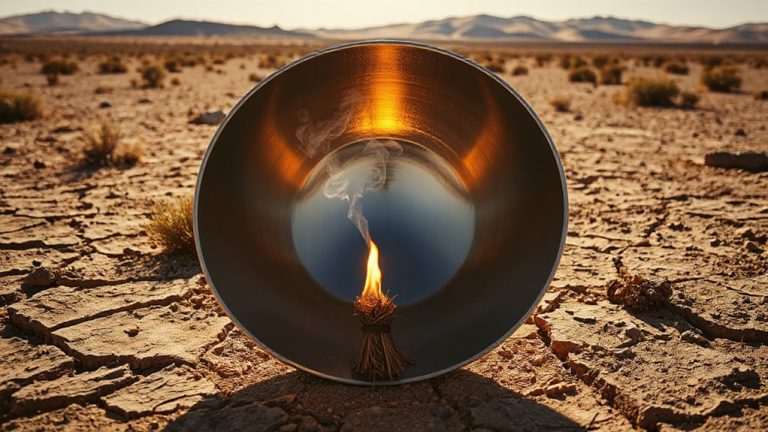
A parabolic solar reflector can ignite tinder quickly if you use the right materials and technique. You need to position the reflector so it’s steadily focusing sunlight onto the tinder’s center. Even slight movement can break the beam, so secure the device or hold it firmly. Adjust the reflector angle precisely-too shallow or too steep, and the focal point weakens. At high altitudes, sunlight is more intense, which helps, but wind and terrain can still disrupt alignment. Use dark, fine tinder that absorbs heat efficiently and place it at the focal point where light converges. Ignition usually occurs within 15 to 45 seconds under consistent, direct sun. Success depends more on stability and correct reflector angle than reflector size. Test different angles in real conditions to confirm the shortest ignition time. Don’t assume all positions work equally-small adjustments make the difference between smoke and flame.
Find Tinder for Solar Reflector Fires Above Tree Line
You’ll need to rely on what’s available above the tree line, where traditional tinder sources like dry leaves or bark are scarce. Arctic grass, though sparse, can work if gathered in clumps and fluffed to increase surface area. It ignites faster when dead and fully dry, which happens on south-facing slopes with prolonged sun exposure. Check crevices and rock shelters where wind-blown fibers accumulate-these microsites often trap dry material even after light snow. Volcanic ash isn’t flammable, but it insulates: layer it beneath your tinder to block ground moisture and improve ignition success. Don’t expect flame from damp inputs-any tinder must be bone dry. Steel wool or char cloth brought from lower elevations performs better, but when resupply’s impossible, arctic grass is your most accessible natural option. Test ignition readiness by snapping a stalk; if it breaks crisply, it’s likely dry enough. A reliable backup ignition method in extreme conditions is a fire piston, which can ignite char cloth even in high winds when properly seated.
Fix Solar Reflector Ignition in Wind or Shade
How do you keep a parabolic solar reflector working when the wind won’t let the tinder catch or shadows keep moving across your setup? Use wind shielding to block gusts without blocking sunlight. Position your body, a rock, or a survival blanket to block the breeze while leaving the reflector’s path clear. Even light wind shielding improves ignition chances by stabilizing the tinder and preventing heat loss. Shadows from shifting clouds or terrain require constant monitoring. You must maintain precise reflective alignment to keep the focal point steady on the tinder. Small misalignments drastically reduce heat intensity. Recheck every 10–15 seconds, especially in changing light. A 2° tilt can drop temperatures from 400°F to under 200°F, preventing ignition. In high-altitude survival, where conditions shift rapidly, consistent alignment and basic wind shielding make the difference between fire and failure.
Use the Right Solar Reflector in Survival Situations
Wind shielding and alignment matter, but they can’t compensate for a poorly designed reflector. You need one built for real survival conditions. Material durability guarantees it withstands drops, UV exposure, and temperature swings-flimsy mylar tears fast, while reinforced aluminum holds up. Cheaper models degrade within weeks; tested units last six months or more under daily use. Reflector portability is just as critical-compact folding designs fit in your pack without adding bulk. Models under 12 ounces with collapse diameters under 8 inches save space without sacrificing focus. Parabolic shape must maintain curvature after repeated setup; warped surfaces won’t concentrate sunlight enough to ignite tinder. A 6-inch aperture is the minimum effective size at high altitudes. Choose a balance: rugged materials won’t help if it’s too heavy to carry, and ultralight frames fail if they crack on first impact. Pick smart-your fire depends on it. Reliable energy capture also depends on reflector efficiency, similar to how best solar chargers convert sunlight effectively even in low-light alpine environments.
On a final note
You’ll need direct sun and patience-shadows or clouds cut efficiency fast. A 12-inch parabolic reflector focuses light in 30–60 seconds under ideal conditions, but wind scatters heat unless you shield the tinder. Test your model at altitude; some struggle in thin air where UV drops. Match it with fine, dry tinder like cotton balls or birch bark. It’s lighter than a lighter and never runs out of fuel, but it works only midday. No magic-just physics and prep.