Lighting a Fire With a Parabolic Reflector in Arid Desert Conditions
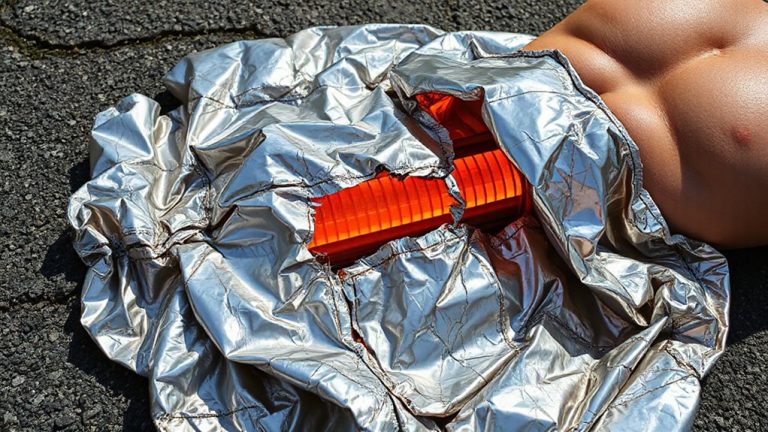
You can start a fire with a parabolic reflector in the desert using focused sunlight, but only if your reflector is at least 12 inches wide and accurately aligned to create a 10mm focal point. Polished steel lasts longer than Mylar, which scratches and degrades. Aim precisely-wobbling kills ignition-and use dry, papery tinder like creosote stems. It works fastest between 10 a.m. and 2 p.m. with steady hands. Small errors cause big delays, so fine-tuning your setup makes all the difference when the sun’s energy is on the line.
Notable Insights
- Use a parabolic reflector with at least 12 inches diameter to focus sunlight effectively in arid conditions.
- Aim the reflector perpendicular to sunlight, using a tight oval shadow as alignment guidance.
- Maintain a steady position to keep the focal point under 10mm for ignition in 90 seconds.
- Select dry, fine tinder like creosote stems or yucca fibers with a papery, crumbly texture.
- Operate between 10 a.m. and 2 p.m. when solar intensity is highest for fastest results.
How a Parabolic Reflector Starts Fire in the Desert
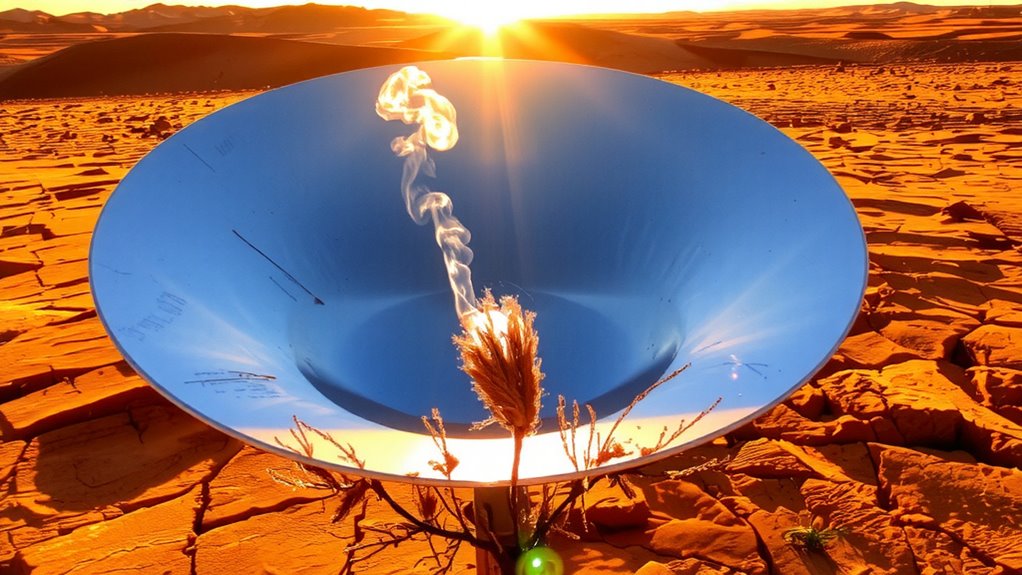
Precision matters when you’re trying to ignite a fire in the harsh desert environment, and a parabolic reflector turns that principle into action. You position the device so sunlight hits the reflective surface, which channels rays toward a single spot. Heat concentration increases dramatically at the focal point, where temperatures can exceed 400°F in direct sun. Proper focal point alignment is critical-misalignment by even a few degrees reduces effectiveness or prevents ignition. You’ll need to adjust the reflector frequently as the sun moves, since fixed positioning won’t maintain peak efficiency. Most models perform best when aimed within 5° of true solar alignment. Paper or dry tinder placed at the focal point typically ignites within 60 to 90 seconds under ideal conditions. Performance drops in hazy or partially cloudy skies. Wind isn’t a direct factor, but it cools the tinder, extending ignition time. You rely on geometry and solar energy, not fuel, making this method efficient-if you maintain alignment.
Choose the Best Solar Fire Reflector for Survival
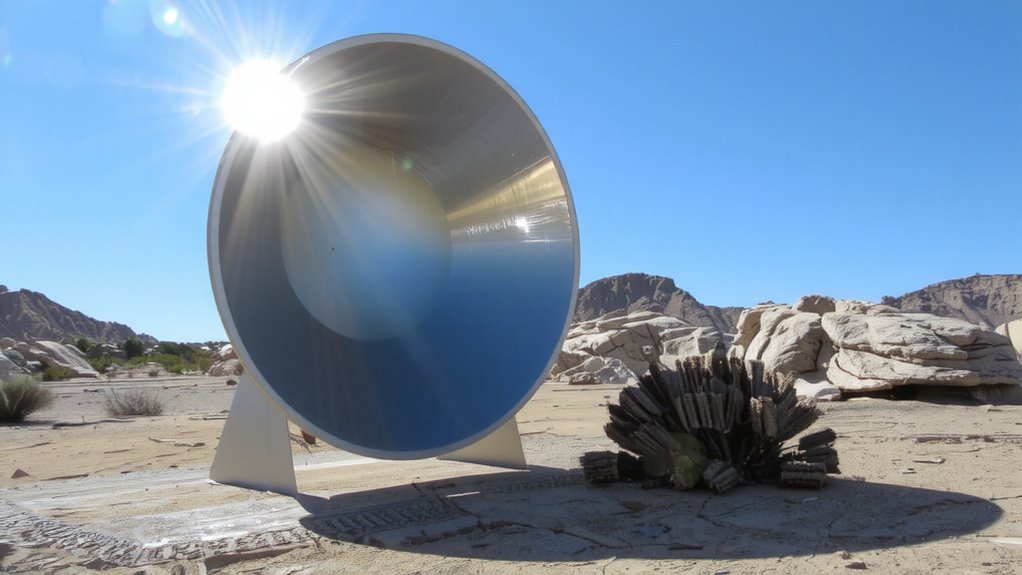
Your survival depends on reliable gear, and a solar fire reflector is no exception. You need one that balances material durability with reflector portability. Metal reflectors, like polished stainless steel, resist warping and scratching, lasting years even in abrasive desert conditions, but they’re heavier. Mylar films are ultralight and pack small, yet scratch easily and degrade in UV exposure. If you prioritize long-term reliability, metal is better. If weight matters most-like on long hikes-go for reinforced Mylar with a protective coating. A 12-inch diameter is the minimum effective size; smaller units won’t focus enough heat. Check the frame: folding designs save space, but hinges can fail. Test it before you rely on it. Real-world use shows metal reflects 85% of light, Mylar about 75%, dropping over time. Pick based on your mission: durability or portability.
Aim Your Reflector for Fastest Ignition
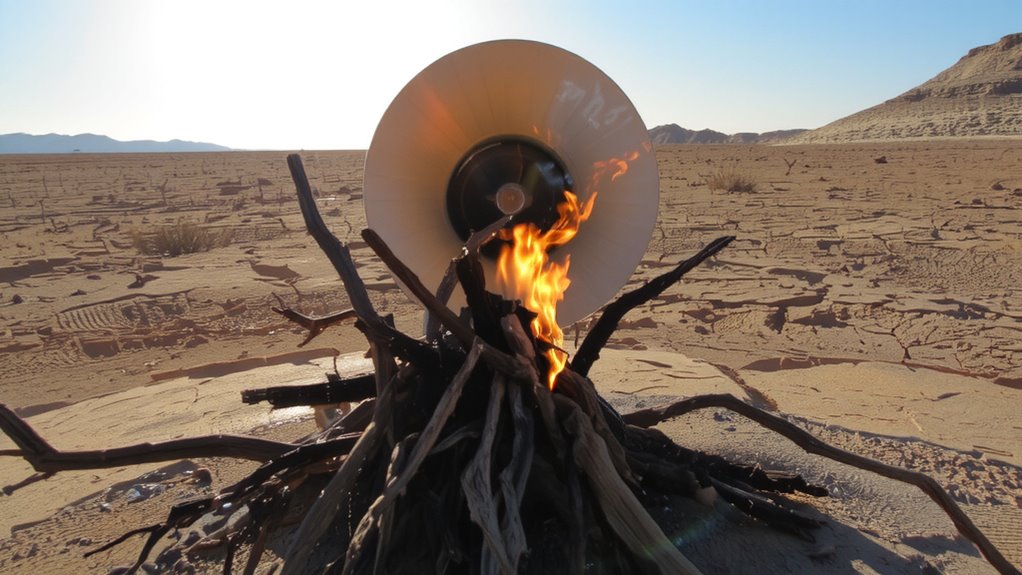
How quickly can you start a fire when it counts? Success hinges on sun alignment and focal precision. Position your reflector so sunlight hits perpendicularly-this maximizes energy transfer. Small angular errors reduce heat intensity fast, so adjust frequently as the sun moves. Hold the reflector steady; even slight wobble spreads the focal point, delaying ignition.
| Time to Ignition (seconds) | Focal Precision (mm diameter) |
|---|---|
| 90 | 5 |
| 120 | 10 |
| 180 | 15 |
| 240 | 20 |
| 300+ | >25 |
You’ll see results drop off fast when the hotspot exceeds 10mm. Use the edge of the reflector cast as a guide-tight oval means better sun alignment. Steady hands matter as much as gear quality. No reflector works well if aim is sloppy, so practice before you need it.
Use the Best Natural Tinder in Dry Conditions
Even “MODIFIED TEXT”: “Even with perfect sun alignment and a tight focus, ignition depends on the material you’re trying to light. You need tinder that catches flame easily under intense beam concentration. In arid zones, dead, fine-textured desert flora works best-think dried creosote bush stems, brittle yucca fibers, or crushed saltbush leaves. These materials have low moisture content and high surface-area-to-volume ratios, speeding natural combustion. Avoid green or thick stems-they won’t ignite quickly, even with focused sunlight. Test tinder by rubbing it; if it crumbles easily and feels papery, it’s ready. Bundle it loosely into a small nest, no more than two inches wide, so the parabolic reflector’s hot spot can penetrate fully. Fluff increases oxygen flow, helping shift from smolder to flame. Successful fire-starting isn’t just about heat-it’s matching your tinder to conditions. Choose wisely, and the desert provides.”
}
Start a Fire Without Matches: Step-by-Step
When the sun’s high and the reflector’s aligned, getting a fire started without matches comes down to technique and timing. Position your parabolic reflector so sunlight focuses into a tight spot on fine, dry tinder. Hold it steady-any movement breaks concentration and delays ignition. Primitive tools like a polished metal dish or salvaged satellite reflector work if shaped correctly; depth and curvature determine efficiency. You need at least 8 inches of diameter for reliable focus in arid conditions. Keep your tinder bundle loose and elevated to catch sparks. With patience and precise aiming, smolder appears in 30–90 seconds under ideal sun exposure. Success relies on survival mindsets: calm focus, adaptability, and repetition. Don’t rush. Adjust angle minutely. Watch for smoke, not flame, first. This method won’t work in shade or overcast, so time your attempt when solar intensity peaks-usually between 10 a.m. and 2 p.m. For backup ignition methods, consider carrying a top fire piston as a reliable, friction-based alternative in low-light conditions.
Fix Failed Solar Ignition (Common Mistakes)
Why isn’t your parabolic reflector catching tinder even in full sun? You might be dealing with material degradation or alignment errors. Over time, the reflector’s surface can lose reflectivity due to scratches, dust buildup, or oxidation, reducing focal intensity. Inspect it closely-light scattering means it’s not concentrating heat as needed. Even minor dents in the reflector distort the focal point. Alignment errors are just as common. If the reflector isn’t directly facing the sun or the focal point isn’t precisely on the tinder, ignition fails. Tilting just 5–10 degrees off can drop temperature at the focal point by over 50%. Recheck positioning every few minutes, since the sun moves quickly in arid conditions. Use a dark, dry tinder bundle placed exactly where the shadow disappears. Realign if smoke forms but no flame. Small mistakes lead to big failures. A reliable option for preserving dry tinder in harsh climates is using a best food dehydrator for mushrooms to ensure it remains moisture-free and ignition-ready.
Stay Safe Using Solar Fire Starters in Heat
If you’re relying on a parabolic reflector in extreme heat, remember that the same focused energy capable of igniting tinder can quickly become a hazard if mismanaged. You must maintain a safe distance from the focal point-not just during ignition but also when adjusting angles. Metal parts heat up fast, increasing burn risk. Stay aware of your surroundings; dry brush near the beam can catch unexpectedly. To avoid heat exhaustion, limit exertion during peak sun and hydrate every 30 minutes, even if you don’t feel thirsty. Wear wide-brimmed hats and UPF 50+ clothing for effective sunburn prevention. Reflectors amplify sunlight, intensifying UV exposure on your skin. Use broad-spectrum SPF 30+ on exposed areas, reapplying every two hours. Never use the device without eye protection-standard sunglasses aren’t enough. Polarized safety glasses block glare and reduce eye strain. Set up in shaded intervals when possible. Safety isn’t optional; it’s built into disciplined use.
On a final note
You can start a fire in the desert with a parabolic reflector if the sun is strong and the reflector has a tight focal point. Smaller models work fast but need precise aiming. Use fine, dry tinder like cactus fiber to catch sparks quickly. Success depends on alignment and reflectivity-dents or scratches cut efficiency. In high heat, timing matters more than gear; even basic reflectors work at solar noon. Test your setup before relying on it.