Assessing Risk of Food Spoilage During Extended Blackouts
Your fridge keeps food safe for about 4 hours during a blackout if you keep the door closed. Once it hits 40°F, bacteria grow quickly, especially in meat, dairy, and cooked dishes. Opening the door speeds up warming-each peek can cut safe time in half. A full freezer stays cold up to 48 hours. Use ice blocks on top and insulate the unit to extend safety by up to 50%. Even when power returns, check temps-don’t trust smell or appearance. Some risks aren’t obvious, but knowing what to do next makes all the difference.
Notable Insights
- Keep fridge doors closed to maintain cold temperatures, as openings can halve safe food storage time during blackouts.
- Perishable food becomes unsafe after 4 hours without power if the internal temperature rises above 40°F.
- A full freezer keeps food safe up to 48 hours; colder food stored together slows thawing and reduces spoilage risk.
- Use block ice or frozen water bottles placed on top to extend cooling, as cold air sinks and delays warming.
- After power returns, inspect food individually-discard items above 40°F for over 2 hours, even if they look or smell fine.
How Long Is Food Safe in the Fridge During a Blackout?
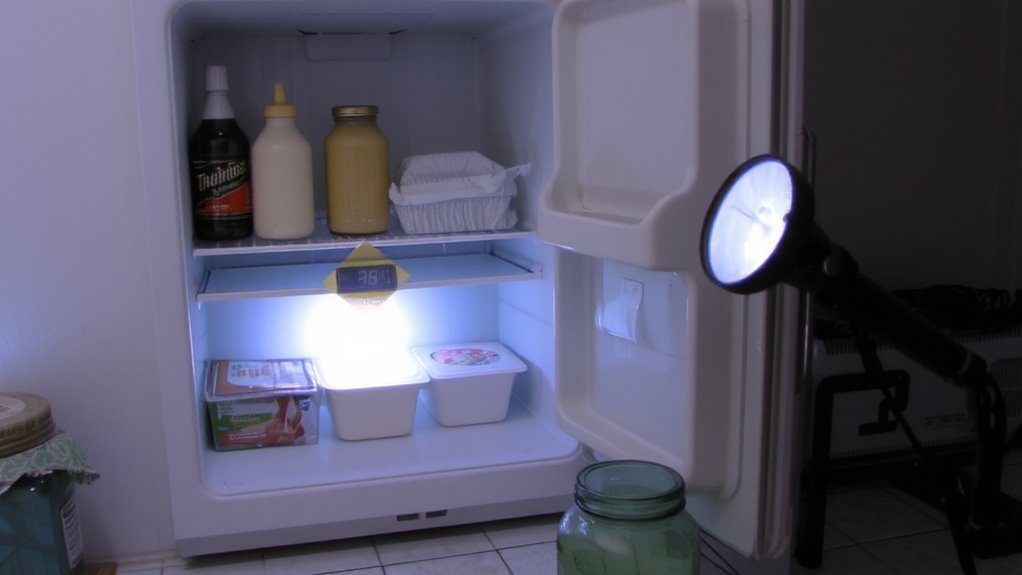
If you’re without power, your fridge won’t keep food cold forever-most perishables stay safe for about 4 hours if the door stays closed. Full freezers last up to 48 hours, but fridges struggle without consistent cooling. Cold retention depends heavily on how well your unit maintains internal temperature once off-grid. Units with better door insulation slow heat transfer, preserving cold air longer. Each time you open the door, cold escapes and warm air enters, cutting safe storage time nearly in half. Models with tight seals and thick insulation perform best. Storing food close together helps maintain cold retention by reducing air movement. Block ice or frozen water bottles can extend safe cooling if placed strategically. Don’t rely on appearance or smell-temperature and time determine safety. Prioritize foods that spoil fastest. Keep the door shut as much as possible.
What Temperature Makes Food Unsafe Without Power?
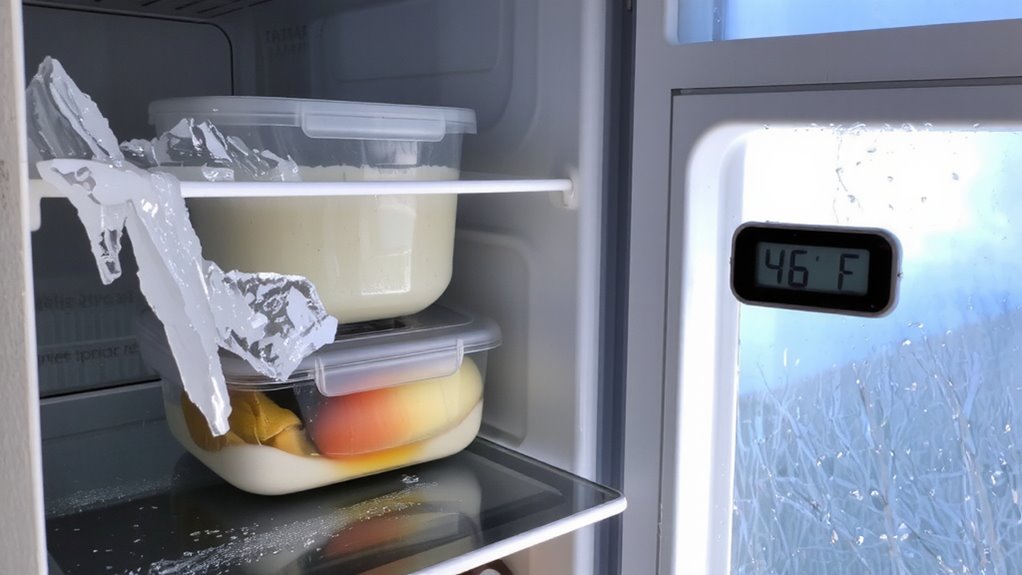
The danger zone starts at 40°F-the temperature where bacteria multiply rapidly, making food unsafe. Once your fridge rises above this point, bacterial growth accelerates, especially in perishables like meat, dairy, and cooked dishes. Most pathogens don’t change how food looks or smells, so you can’t rely on senses alone. Bacterial growth isn’t the only concern; chemical changes also degrade quality, causing rancidity or nutrient loss. These changes begin slowly but speed up as temps climb. After two hours above 40°F, food is risky to eat. You can’t reverse these effects by re-cooling. A fridge may stay cold for four to six hours if unopened, but that depends on insulation and ambient heat. Use a thermometer to monitor, not guess. Relying on time alone isn’t enough-temperature is the deciding factor. Track it closely to avoid illness.
Does Opening the Fridge Speed Up Spoilage?
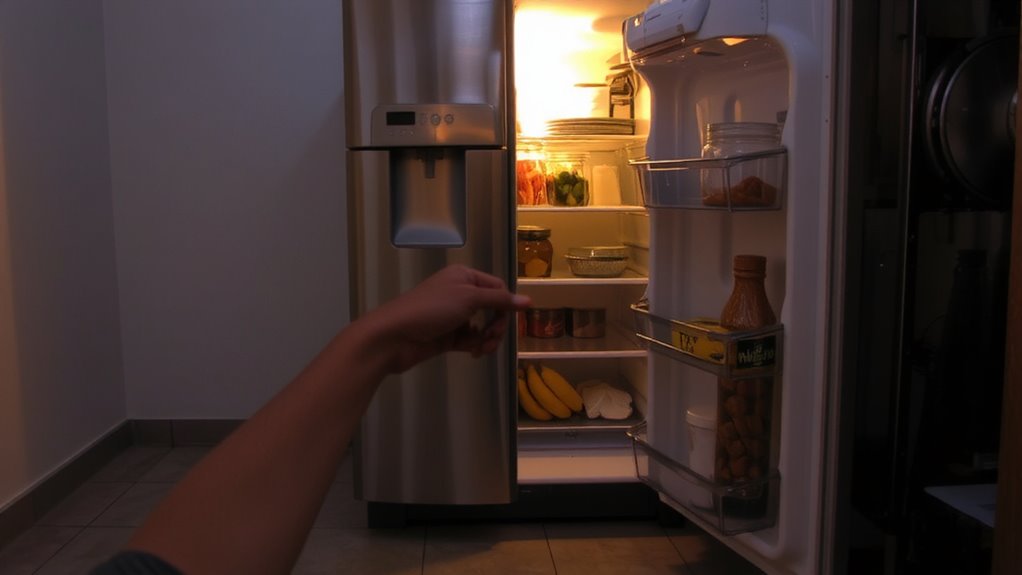
Every time you open the fridge during a blackout, cold air spills out and warm air rushes in, pushing the internal temperature higher-sometimes within minutes. Each opening raises the risk of spoilage by disrupting cold retention, especially if the door frequency is high. A fridge loses significant cooling within seconds, and recovery isn’t possible without power. Keeping the door shut maintains safe temperatures longer-often 4 hours or more in well-insulated units. Frequent checks, no matter how brief, cut that time sharply. Cold retention depends on minimizing air exchange, not just ambient conditions. If you open it every 10 minutes, the interior warms twice as fast as if you check just once per hour. Your habits directly affect food safety. Door frequency isn’t just a minor detail-it’s a measurable factor in how quickly perishables enter the danger zone. Plan access in advance and limit openings to keep temperatures stable as long as possible.
How to Keep Food Safe Longer Without Electricity
What’s the best way to stretch your fridge’s cold life when the power’s out? Keep the door shut and use ice blocks. Each block can keep a full fridge cold for up to 12 hours, longer if undisturbed. Group food tightly to maintain cold mass, and place ice on top-cold sinks. For longer outages, consider insulation upgrades. Adding foam board to fridge walls or packing the unit in blankets reduces heat exchange. Make certain the fridge isn’t airtight to avoid moisture buildup. Insulation upgrades typically extend safe cooling by 25–50%, depending on ambient temperature. You don’t need expensive gear-simple ice blocks and basic materials work reliably. Real-world tests show that sealed, unopened fridges with added ice and insulation hold safe temps over 24 hours. These steps delay spoilage without electricity, giving you time while maintaining food safety.
When Is Perishable Food Still Safe to Eat After a Power Outage?
How long can your meat, dairy, and leftovers really last when the power’s down? Perishable food stays safe about four hours in a closed fridge during a blackout, assuming the cold chain wasn’t already broken. After that, risk rises fast. A full freezer keeps food safe for 48 hours (24 if half-full), but only if you keep the door shut. Don’t rely on smell or appearance-some harmful bacteria don’t change how food looks. Check for consistent cold storage, not just time. Moisture buildup on packaging can signal temperature swings, meaning the cold chain may have failed. That condensation creates an environment where pathogens grow faster. When in doubt, throw it out. Partial thawing and refreezing weaken food safety, especially for meats and dairy. You can’t undo time or temperature abuse. Prioritize eating fresh perishables early. Track temps with a fridge thermometer if possible-it’s more reliable than guesswork.
Is Your Food Still Safe When the Power Comes Back?
Once the power’s back, don’t assume your food made it through unscathed. Temperature fluctuations during outages can compromise safety, even if items look or smell fine. Check each item individually-relying on sight or odor alone feeds common spoilage myths. Some bacteria don’t change the way food looks or smells but can still make you sick. Use food labeling to your advantage: expiration dates, storage instructions, and “keep refrigerated” warnings help assess risk. If a perishable was above 40°F for more than two hours, it’s safer to discard it. Re-freezing is possible if ice crystals remain, but quality degrades. Evaluate dairy, meat, and cooked dishes first-they’re highest risk. Power returns don’t reset the clock; they reveal what’s already happened. When in doubt, throw it out. Safety isn’t worth gambling over.
On a final note
You can keep food safe for about 4 hours in a closed fridge during a blackout. After that, risk rises fast-especially if temps hit 40°F or higher. Opening the door cuts that time in half. Use a thermometer to check; when in doubt, toss it. A full freezer lasts 48 hours, less if half-full. Power back on? Reassess each item. No shortcuts-safety hinges on time and temp, not guesses.