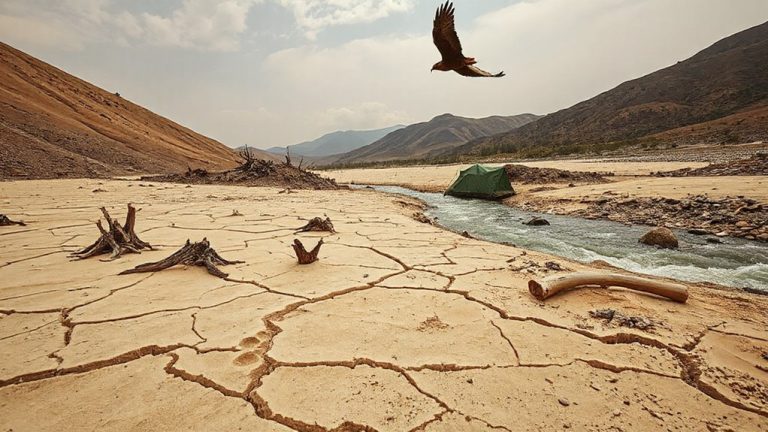
Understanding Priorities in Survival Scenarios: A Comprehensive Guide to Decision Making Under Pressure
You check yourself first for injuries because staying alive means stopping bleeding or immobilizing fractures before they get worse. Then you scan for immediate dangers like wildlife or unstable terrain. Secure shelter to protect body temperature, find clean water, and build a fire for warmth and purification. Signal only when safe-use mirrors or smoke wisely. Your moves must balance risk, energy, and need. Next steps reveal how to prioritize each action without guesswork.
Notable Insights
- Assess personal health immediately to treat injuries and prevent further deterioration in survival situations.
- Prioritize shelter before water or food to maintain body temperature and avoid hypothermia or heat stress.
- Secure clean water early, as dehydration severely impairs decision-making and physical function within hours.
- Evaluate environmental dangers like wildlife, terrain, and weather before committing to movement or camp location.
- Signal for rescue only after meeting basic needs, using efficient methods like mirrors or smoke during optimal conditions.
What to Do First in a Survival Situation
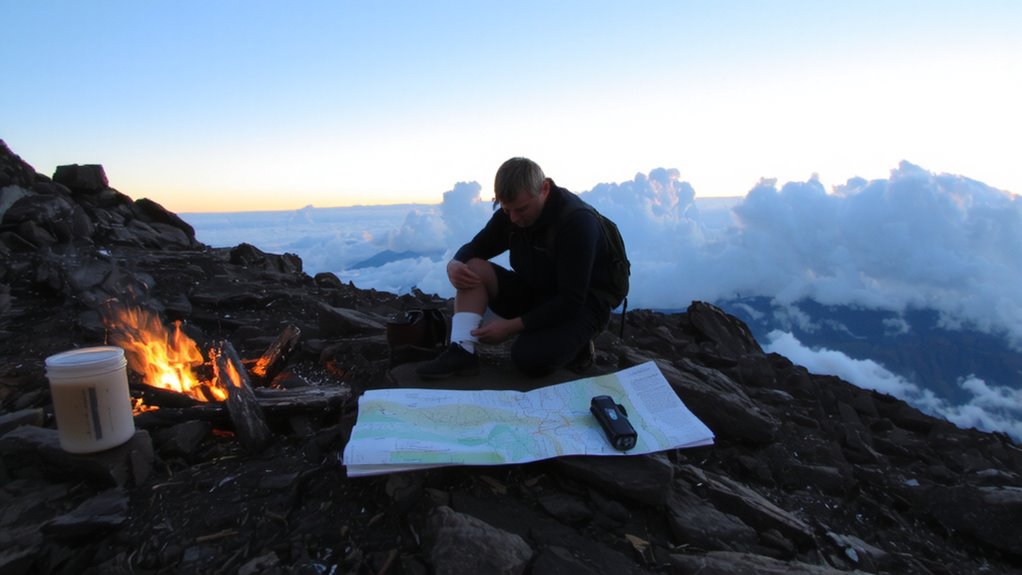
Safety’s the first thing you check-before water, before shelter, before food. You assess your condition immediately because untreated injuries compromise everything. Apply first aid with what’s available: pressure for bleeding, immobilization for fractures. Even minor wounds can become critical if ignored. Once stable, you begin resource gathering-water sources, usable materials, natural cover-but only within safe reach. Don’t risk exposure or injury for marginal gains. Prioritize clean water and thermal protection, as hypothermia and dehydration impair judgment fast. A basic first aid kit with bandages, antiseptic, and pain relief improves outcomes, but improvisation matters more when supplies run low. Resource gathering isn’t about collecting everything-it’s selective, efficient, and goal-driven. You take only what increases survival odds without overextending. Every action balances risk, energy cost, and immediate need. Stay mobile, stay aware, and keep systems simple. Be sure to include Top Emergency Medical Supplies in your planning to ensure you’re prepared for a range of injuries and illnesses.
Assess Immediate Dangers Around You
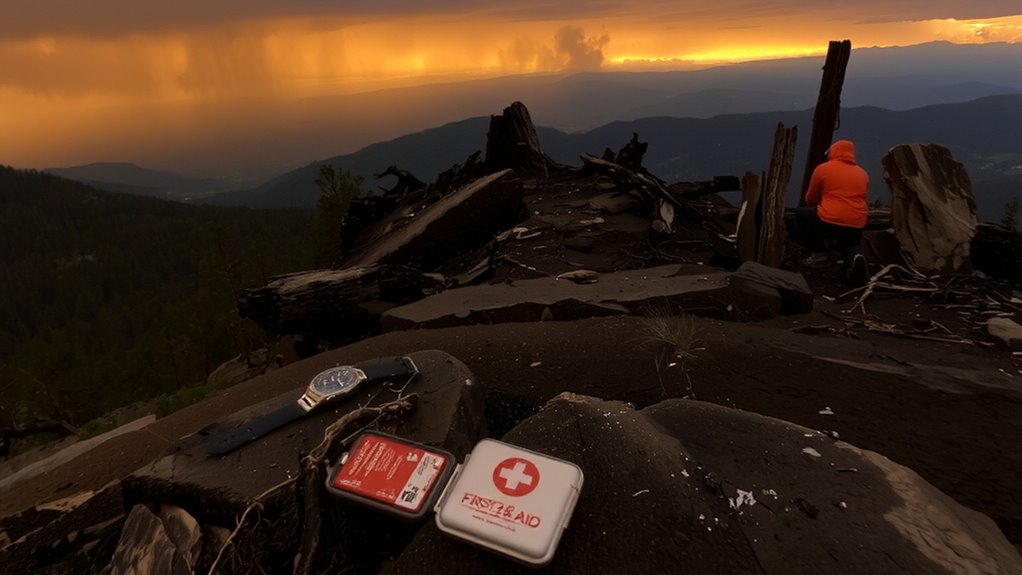
You’ve checked your body for injuries and stabilized any immediate health issues-now shift focus outward. Scan your surroundings for threats that could escalate quickly. Watch for signs of recent wildlife encounters-tracks, scat, or disturbed vegetation-as these indicate potential danger nearby, especially at dusk or dawn. Avoid areas with high animal activity, particularly if you’re near water or food sources they might use. Assess terrain navigation challenges: steep slopes, loose rocks, or unstable ground increase risk of falls or entrapment. Note natural hazards like cliffs, dead trees, or flash flood zones. Stay alert for changing weather patterns that affect visibility and ground stability. Use natural landmarks to orient yourself and avoid getting disoriented. Keep movements slow and deliberate to minimize noise and reduce the chance of provoking aggressive animals. Immediate awareness cuts danger markedly.
Prioritize Shelter, Water, and Fire in Order
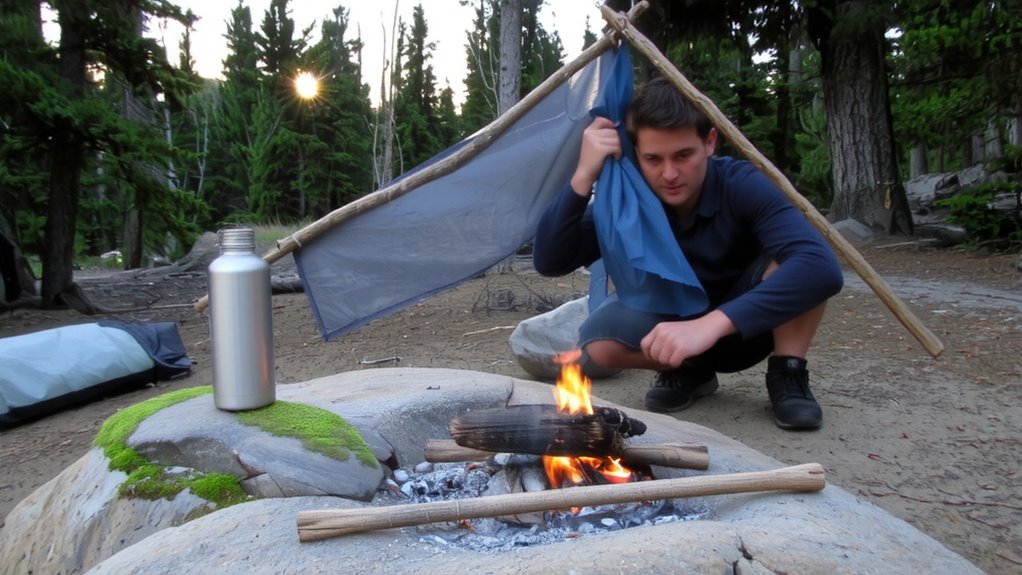
If you’re exposed to wind, rain, or extreme temperatures, hypothermia or heat stress can set in faster than dehydration or hunger, so shelter comes first. A proper shelter with adequate insulation retains body heat and blocks environmental exposure-critical for maintaining core temperature. Natural formations or tarps with debris walls offer moderate insulation, while emergency bivvies reflect up to 90% of radiated heat. Once shelter is secured, focus shifts to water. You can survive days without food, but not without water. Prioritize water purification using tablets, filters, or boiling-each method removes pathogens effectively, though boiling requires fuel. Fire supports both water purification and shelter insulation by drying wet materials and heating enclosed spaces. A compact fire starter and waterproof matches are reliable. Relying on cotton or damp wood reduces flame duration. Shelter, then water, then fire isn’t arbitrary-it’s a sequence based on physiological need and survival timelines. A reliable cutting tool like a best hand tree saw can aid in gathering dry wood and building shelter components efficiently.
Signal for Help Only When It’s Safe
While signaling can accelerate rescue, doing so prematurely might waste energy or risk exposure before survival priorities are stable. You should only deploy visual signals when shelter, water, and fire are secured and you’re certain it won’t draw unwanted attention or deplete limited resources. Use mirrors, smoke, or bright fabric only in daylight or clear conditions-timing risks include signaling too early or too often, which reduces effectiveness. A signal mirror can reflect sunlight up to 10 miles, but it’s useless at night. Flares offer high visibility but burn fast and can’t be reused. Consider your position: if you’re mobile or in range of air traffic, wait for ideal conditions. Don’t sacrifice safety for visibility-you’re not rescued until help arrives and confirms your location. Signal only when it’s safe, targeted, and likely to be seen. Including a reliable signaling tool in your one-person survival kit ensures you’re prepared without improvising under stress.
Stay Calm and Make Smart Survival Choices
Why do some people survive tough situations while others don’t? It often comes down to mental clarity and logical thinking under pressure. You can’t make smart survival choices if you’re panicking. Staying calm sharpens your focus, improves awareness, and helps prioritize actions effectively.
| State | Mental Clarity | Logical Thinking |
|---|---|---|
| Panic | Low | Impaired |
| Stress | Reduced | Slowed |
| Calm | High | Best |
| Training | Enhanced | Consistent |
When your mind stays clear, you assess risks accurately and respond efficiently. Panic leads to wasted energy and poor decisions. With practice, like repeating breathing techniques or using checklists, you build resilience. Real-world survival isn’t about strength-it’s about choosing the right action at the right time. You need measurable control, not instinct alone. Train your mind like any other tool. It’s the most reliable gear you carry.
On a final note
You stay calm because panic wastes energy and clouds judgment. You assess danger first-no shelter or fire matters if the area’s unsafe. You prioritize shelter, then water, then fire-this order keeps core needs met efficiently. Signaling comes only when risks are low. Every move is deliberate, based on need, not emotion. You carry gear that’s proven, not flashy-reliability beats features in real conditions.