Layering Clothing Strategically to Regulate Temperature in Monsoon Seasons
You manage heat and moisture in monsoon seasons by layering for breathability, not warmth. Start with a moisture-wicking base-synthetic or merino-since cotton traps sweat. Add a lightweight, quick-dry mid-layer, like 10 oz synthetic insulation, for warmth without bulk. Use a breathable, waterproof shell under 12 oz with taped seams and a DWR finish to block rain while letting vapor escape. Open pit zips or adjust layers to vent heat during high activity or humidity. Choose loose cuts to improve airflow and reduce rash. Quick-dry fabrics keep you drier when humidity spikes. A full setup balances protection and breathability so you stay comfortable when storms roll in. See how each layer performs in sustained downpours and shifting temps.
Notable Insights
- Prioritize moisture-wicking base layers made of synthetic blends or merino wool to keep skin dry and regulate temperature.
- Avoid cotton, as it retains moisture and slows drying, increasing discomfort and risk of skin issues.
- Use lightweight, quick-dry mid-layers with 10–15 oz insulation that compress easily and allow moisture escape.
- Wear breathable, waterproof outer layers with DWR finish and taped seams to block rain while minimizing condensation.
- Optimize ventilation with pit zips, loose cuts, and layer adjustments to manage heat and humidity during activity.
Why Monsoon Layering Isn’t Cold-Weather Layering
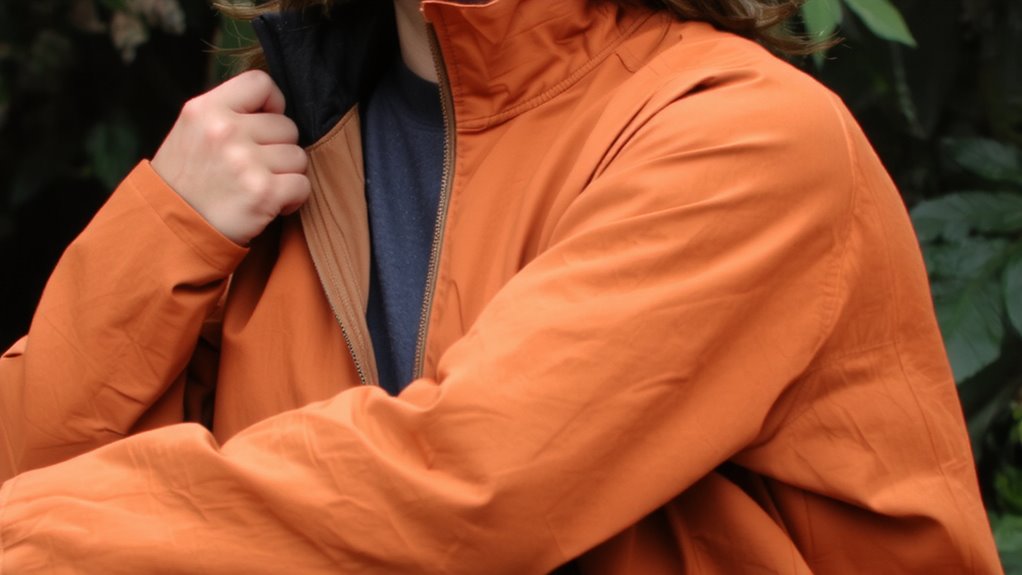
While cold-weather layering focuses on trapping heat with insulating mid-layers, monsoon layering is about managing moisture without overheating, since you’re battling humidity and rain, not cold. You need breathable fabrics that resist humidity trapping, which keeps your skin damp and raises body temperature. Synthetic or merino layers help, but tight weaves or cotton blends worsen moisture retention. That trapped sweat creates conditions for odor buildup, especially in extended wet conditions. You’ll notice polyester blends with antimicrobial treatments reduce smell longer, though they may feel less comfortable against skin. Fabrics with quick-dry ratings under 30 minutes in testing perform best. Loose cuts improve airflow, cutting both heat retention and bacterial growth. You won’t freeze, but overheating risks dehydration and rash. Layering right means staying dry, not warm. Prioritize ventilation, fast drying, and reduced odor buildup in every piece. Humidity trapping undermines mobility and comfort fast.
Choose Moisture-Wicking Base Layers for Dry Comfort
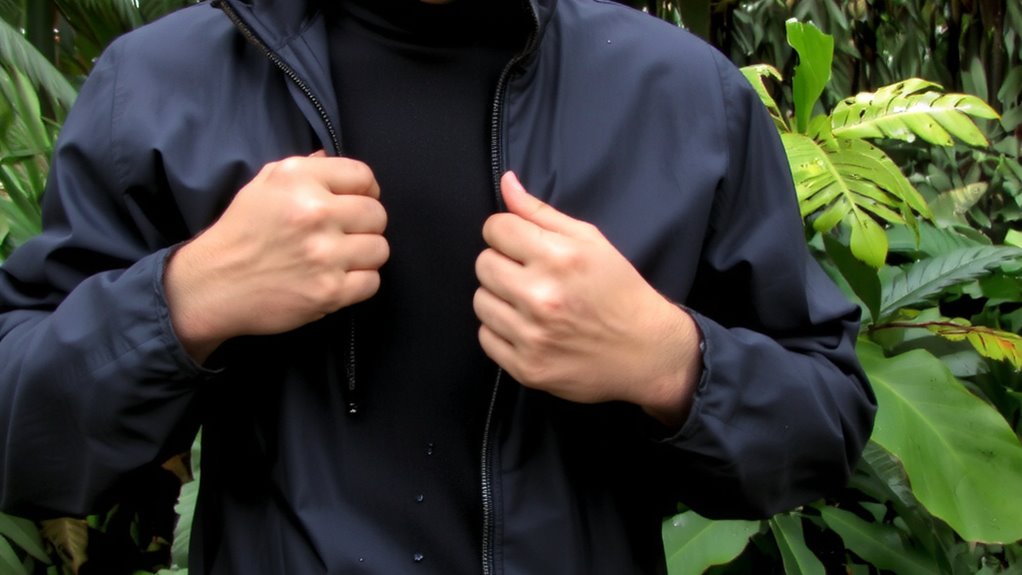
Moisture-wicking base layers are your first line of defense against sticky discomfort in the monsoon. They move sweat away from your skin, helping regulate temperature and prevent clamminess. Your fabric selection matters-synthetic blends like polyester or natural merino wool outperform cotton, which retains moisture and slows drying. Effective sweat management reduces chafing and the risk of skin irritation during long exposure to humidity. These materials dry quickly, maintaining comfort during high-activity periods like hiking or commuting. While merino offers natural odor resistance, synthetics typically provide faster wicking and lower cost. Both have trade-offs in durability and maintenance. A well-chosen base layer stays light when wet and doesn’t cling. Fit should be snug but not tight to maximize contact for wicking. Avoid cotton entirely-it compromises sweat management. Prioritize performance-driven fabric selection to stay dry and comfortable when conditions turn damp.
Add a Lightweight Insulating Layer for Warmth
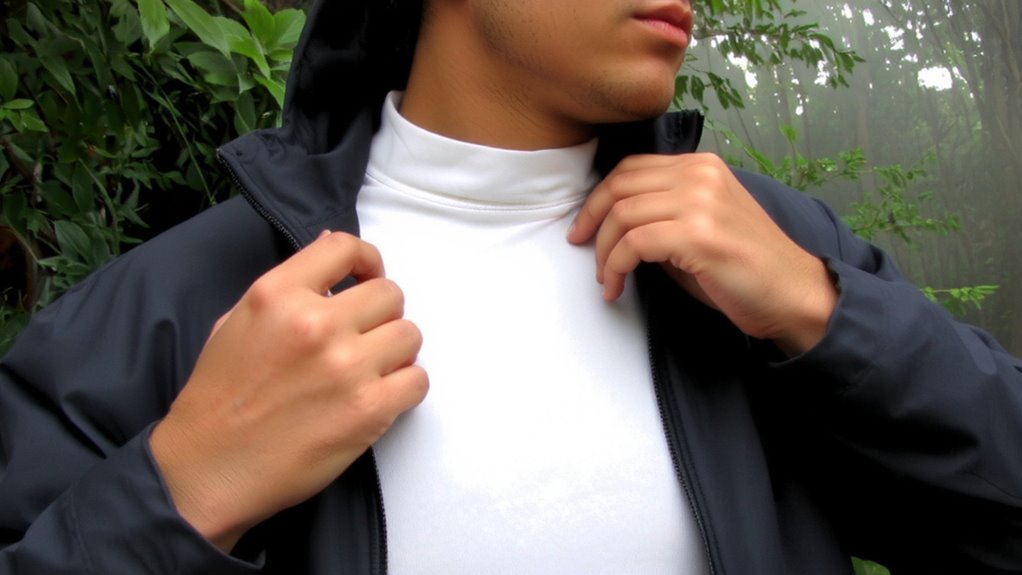
If temperatures drop or clouds roll in, a lightweight insulating layer helps retain body heat without adding bulk. You need thermal insulation that traps warm air close to your skin while allowing moisture to escape. A synthetic or down-filled jacket weighing 10–15 oz provides reliable lightweight warmth without compromising mobility. These materials deliver consistent performance even in damp conditions, especially when treated for water resistance. Avoid thick fleece-it adds weight and slows drying. Instead, opt for a compressible mid-layer you can easily pack or remove. This layer isn’t meant to block wind or rain, so don’t rely on it for weather protection. It simply bridges the gap between your base layer and outer shell. When balanced correctly, thermal insulation enhances comfort during cool, wet shifts without overheating. Lightweight warmth pays off when conditions change fast.
Wear Breathable Waterproof Outer Layers
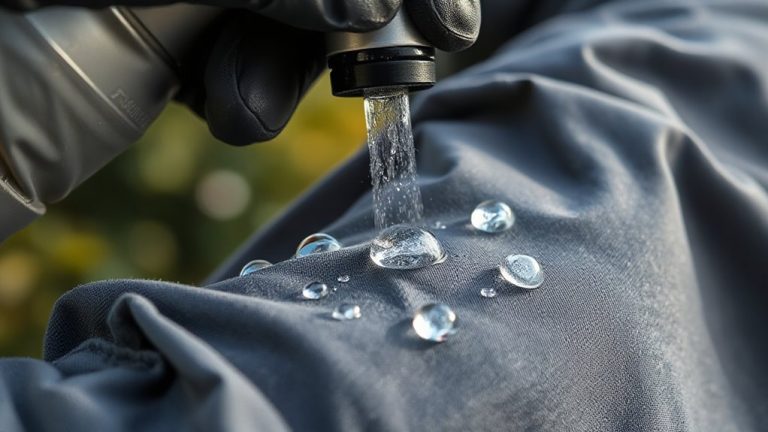
Since rain is constant and ventilation matters, a breathable waterproof outer layer keeps you dry from both outside moisture and internal sweat. You need a jacket that resists rain but lets vapor escape-look for one with a hydrophobic coating, which sheds water without absorbing it, maintaining breathability over time. Fully taped seams prevent leaks, while a durable water repellent (DWR) finish boosts performance. Choose a silent fabric; noisy materials distract and disrupt focus, especially during movement. Most polyurethane (PU)-coated fabrics are quieter than rustling laminates, making them better for extended wear. A weight under 12 oz keeps the layer packable and low-profile. Breathability ratings above 10,000 g/m²/24hr handle moderate activity without condensation buildup. These specs strike a balance between protection and comfort, essential when skies stay gray for days. For reliable options that meet these criteria, consider models from the best tactical rain jackets list, which are designed for durability and performance in wet conditions.
Stay Cool With Strategic Ventilation
How do you stay cool when the air’s thick and the rain won’t stop? You rely on strategic ventilation. Open pit zips, mesh-lined jackets, and vented backs boost airflow optimization, letting hot air escape and cooler air enter. This isn’t just comfort-it’s critical for sweat evaporation. When moisture lingers, you overheat or chill once activity drops. Vents aligned with common sweat zones (like underarms and spine) cut humidity buildup fast. Studies show shirts with 5 cm underarm zips reduce perceived heat by 18% in 90% humidity. But don’t overdo it-large openings risk rain ingress. Balance is key. Test vent placement during moderate hikes; effective models route airflow without leaks. Breathable zones should stay functional even when wearing a pack. Prioritize adjustable vents-full open for high output, closed when skies worsen. It’s not about more vents, but smarter ones.
Adjust Layers as Rain and Activity Change
You stayed cool through ventilation, but now the storm front hits and your output shifts-so your layers need to shift too. When rain starts, you begin adjusting insulation to match wet conditions and lower activity. A soaked base layer won’t insulate, so prioritize managing dampness with quick-drying materials like merino or synthetic blends. If you slow down, add a breathable rain shell to retain warmth without trapping sweat. During high-exertion phases, peel off layers to avoid overheating and moisture buildup. Nylon or polyester mid-layers offer moderate insulation and wick better than cotton when damp. Avoid down in steady rain-it collapses and loses warmth. Use adjustable hoods, cuffs, and vents to fine-tune airflow. The balance isn’t static: changing weather and effort demand constant recalibration. Success hinges on adjusting insulation before you’re too cold or wet. Managing dampness keeps you stable and cuts chill risk when temperatures dip after rainfall.
Pack These 7 Monsoon Layer Essentials
A solid monsoon layering system starts with smart gear choices-seven essentials cover the core needs of wet, changeable conditions. You need a moisture-wicking base layer, midweight synthetic or merino top, waterproof breathable jacket, and quick-dry pants with zip-off legs. Add a compact insulated layer, brimmed rain hat, and water-resistant footwear with drainage. These items balance function and adaptability, tested for breathability, drying time, and moisture resistance. Materials like polypropylene and ripstop nylon outperform cotton, which retains water. While fashion trends favor bright colors and sleek silhouettes, functional gear prioritizes visibility and durability. Some cultural practices incorporate natural fibers or waxed cotton, but these often lack quick-dry performance. Layering effectiveness depends on how pieces work together-zippers, hoods, and vents improve regulation. You’ll stay drier and more comfortable when essentials align with real weather demands, not aesthetics.
On a final note
You’ll stay drier and more comfortable in monsoon conditions by layering smartly. A moisture-wicking base keeps sweat off your skin, while a light insulator retains warmth when damp. Your outer shell must be breathable and waterproof-non-negotiable in heavy rain. Ventilation zips help dump heat during activity. Adjust layers as conditions change to avoid overheating or chilling. These choices, tested in high humidity and sudden downpours, balance breathability, dry time, and protection without excess weight or cost.