Using Satellite Messaging Devices to Send Emergency Alerts in Zero-Signal Zones
You can send emergency alerts in zero-signal zones using satellite messengers like the Garmin inReach Mini 2 or Zoleo, which connect directly to orbiting satellites. These devices transmit SOS signals and two-way texts within 30 seconds, provided you have a clear view of the sky. GPS guarantees rescuers get accurate coordinates, even in rugged terrain. Activate only in true emergencies-false alarms waste critical resources. Proper setup and testing prevent failures when it matters most. There’s more to examine about which device fits your needs.
Notable Insights
- Satellite messengers connect directly to orbiting satellites, enabling emergency alerts in areas with no cell coverage.
- Devices like Garmin inReach and Spot X allow two-way messaging and SOS activation from remote locations.
- A clear view of the sky is required to send signals, as dense canopy or deep canyons can block transmission.
- GPS in satellite devices sends precise location coordinates to rescue teams during an SOS alert.
- Always test device connectivity and fully charge before trips to ensure reliable emergency communication.
How Satellite Messaging Works Off the Grid

Even if you’re miles from the nearest cell tower, satellite messaging still works by connecting your device directly to orbiting satellites instead of relying on ground-based networks. You send a message, and signal propagation carries it upward through the atmosphere to a satellite in low Earth orbit. Orbit mechanics guarantee these satellites move predictably, maintaining regular coverage over remote areas. Because the signal travels a long way-up to the satellite and back down to a ground station-there’s a slight delay, usually under 30 seconds. Devices use tight beam signals to preserve battery and improve reliability, though you’ll need a clear view of the sky. Obstructions like deep canyons or dense tree cover can block transmission. Most systems use constellations of satellites to reduce gaps in coverage, but not all devices support every network. You trade instant delivery for reach, and success often depends on timing and positioning. For reliable communication in extreme conditions, consider a dedicated satellite phone, designed to operate across global networks with enhanced signal resilience.
Best Satellite Messengers for Emergency Alerts

You’ve seen how satellite messaging works off the grid, relying on orbiting networks to relay your signal when cell service drops out. Now, choosing the right device matters-especially for emergency alerts. These models balance device durability, features, and reliable connectivity under stress.
| Device | Key Strength |
|---|---|
| Garmin inReach Mini 2 | Global SOS, two-way texting |
| Zoleo Satellite Communicator | Low-cost subscription plans |
| Spot X | Simple interface, rugged build |
| Garmin inReach Messenger | Integrated maps, solid durability |
| Apple Emergency SOS (via satellite) | iPhone 14+, limited third-party use |
Each supports emergency alerts, but varies in device durability and required subscription plans. The inReach series offers full two-way messaging and robustness in extreme conditions. Zoleo keeps costs down with flexible plans. Spot X is durable but less responsive. Consider how long you’ll need coverage and whether message reliability justifies the price.
How to Set Up Your Device Before You Go
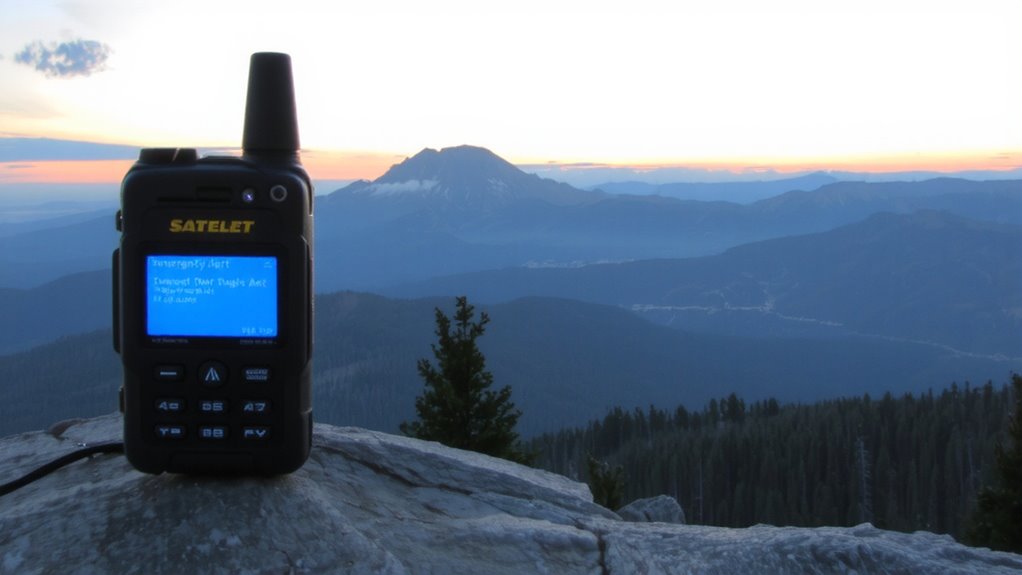
Before heading out, make sure your satellite messenger is fully charged and powered on so it can acquire satellites, a process that takes 5–15 minutes depending on conditions. Perform battery calibration monthly to maintain accurate charge readings-drain the device fully, then charge to 100% without interruption. This improves reliability during long trips. Use device pairing with your smartphone via Bluetooth to enable message syncing and app-based controls. Pairing guarantees you can send pre-written messages quickly, reducing user error in emergencies. Test the connection before departure to confirm both devices communicate. Check firmware updates through the manufacturer’s app, as updates often improve GPS speed and signal transmission. Register your device with the service provider to activate emergency functions. Confirm your subscription plan includes SOS coverage. Skipping setup steps compromises functionality. Solid performance depends on preparation, not the device alone. For reliable off-grid communication, consider choosing from the best emergency communication devices based on expert testing and real-world performance.
How GPS Helps Rescue Teams Find You
When you trigger an SOS, your satellite messenger sends GPS coordinates to search and rescue networks, and those precise location data points are what make a fast response possible. GPS uses signal reflection from multiple satellites to calculate your exact position, even in canyons or dense forests where reception is weak. Modern devices pair this with terrain mapping to improve accuracy, adjusting for elevation and land features that might delay or block signals. Rescue teams rely on this data to plan approaches, avoiding impassable routes and focusing efforts where you are.
| Feature | Benefit |
|---|---|
| GPS with signal reflection | Improves location accuracy in rugged terrain |
| Integrated terrain mapping | Helps rescuers navigate complex landscapes |
| Fast coordinate transmission | Reduces response time in emergencies |
Stay in Contact With Two-Way Texting
Getting a rescue team to your location starts with accurate GPS data, but staying in contact once help is on the way makes a big difference in how smoothly things go. Two-way texting lets you confirm arrival times, report injuries, or update conditions without delay. Unlike one-way devices, models with two-way capability offer better signal reliability, especially in rugged terrain where messages may need resending. You can verify delivery and receive replies, ensuring coordination stays tight. Message encryption protects your data from unauthorized access, a key feature when using shared satellite networks. Not all devices support encrypted two-way messaging, so check specs before buying. In testing, units with regular signal reliability and end-to-end encryption performed best during prolonged outages. Being reachable isn’t just convenient-it’s a critical part of modern emergency response when every minute counts.
How to Decide When to Send an SOS?
How do you know when it’s time to hit that SOS button? You activate it when immediate danger threatens life, limb, or safety and local help isn’t reachable. Evaluating injury severity helps determine urgency-if someone can’t walk, shows signs of shock, or has a serious head injury, it’s likely time. Evaluating resource availability matters just as much. If you’re out of food, water, or medical supplies and can’t get help without satellite support, an SOS becomes necessary. Minor issues, like a sprained ankle or low battery, don’t warrant it unless conditions worsen. False alarms strain rescue systems. Use the SOS only when evacuation is the only option. Practice judgment. Reliable devices send alerts in under two minutes with GPS coordinates. Know your limits, weigh the facts, and act when delayed response could result in harm.
On a final note
You’ll stay connected when phones fail, but satellite messengers vary in speed and coverage. Devices like Garmin inReach Mini 2 offer two-way texting and reliable SOS signaling via global networks, while cheaper models may lack real-time confirmation. GPS accuracy typically falls within 10 meters, helping rescuers pinpoint your location fast. Activate SOS only for life-threatening emergencies-false alerts waste resources. Test your device before heading out; setup matters. No battery life? You’re on your own.