Understanding ITU Guidelines for Emergency Communication in Urban Slums
You’re not getting alerts because metal roofs and tight streets block signals, but the ITU’s system uses satellites to deliver warnings when towers fail-no ground network needed. It works in dense slums where traditional coverage drops. Mesh networks back it up, staying online during blackouts. Alerts come through in local languages, so instructions make sense. This two-layer setup keeps warnings moving, even when infrastructure doesn’t. There’s more to how it stays reliable when everything else collapses.
Notable Insights
- ITU recommends satellite-based alert systems to ensure message delivery when ground networks fail in urban slums.
- Mesh networks are advocated to maintain local communication by relaying signals between devices during outages.
- Emergency alerts should be broadcast in locally spoken languages to ensure public comprehension and timely response.
- Metal-roofed, densely packed structures require strategically placed transmission nodes to overcome signal blockage.
- Power redundancy with backup generators and batteries is essential to sustain alert system operations during blackouts.
Why Emergency Communication Fails in Urban Slums
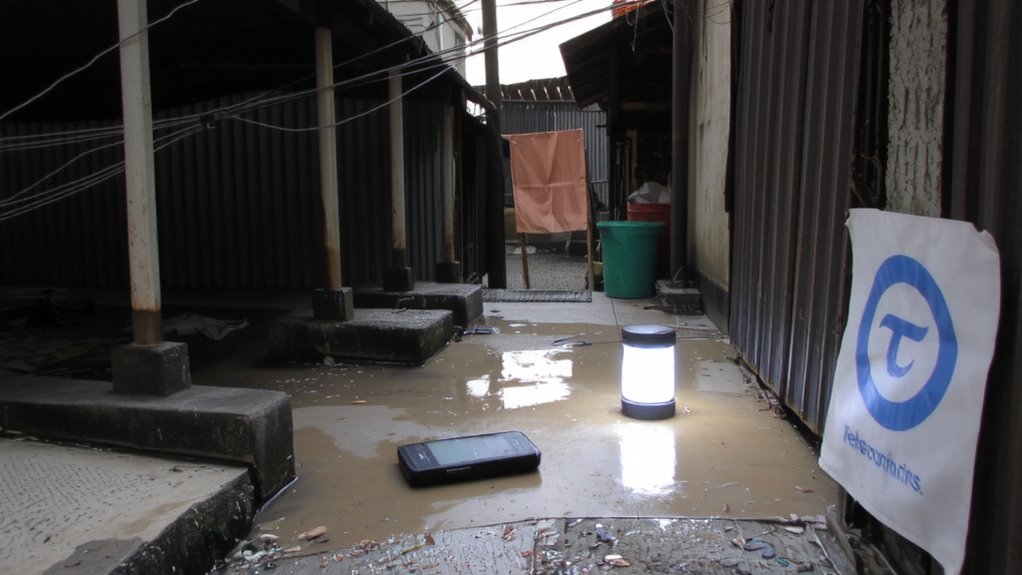
Why do emergency alerts vanish before they reach you in urban slums? Signal interference is a key reason. Metal roofs, tightly packed structures, and poor tower placement disrupt transmission, so your phone often won’t receive alerts even if they’re sent. You’re in range, but the signal can’t penetrate the maze of buildings. Then come language barriers. Alerts come in official languages you might not fully understand, so even if the message arrives, the meaning gets lost. Instructions on evacuation or aid become unclear, delaying action. These aren’t minor glitches-they’re structural failures. You need alerts that work in your environment, in a language you use daily. Without both reliable signal delivery and clear comprehension, emergency systems fail you where you live. It’s not about having a phone-it’s about whether the message actually reaches and informs you.
How ITU Reaches Everyone in a Crisis
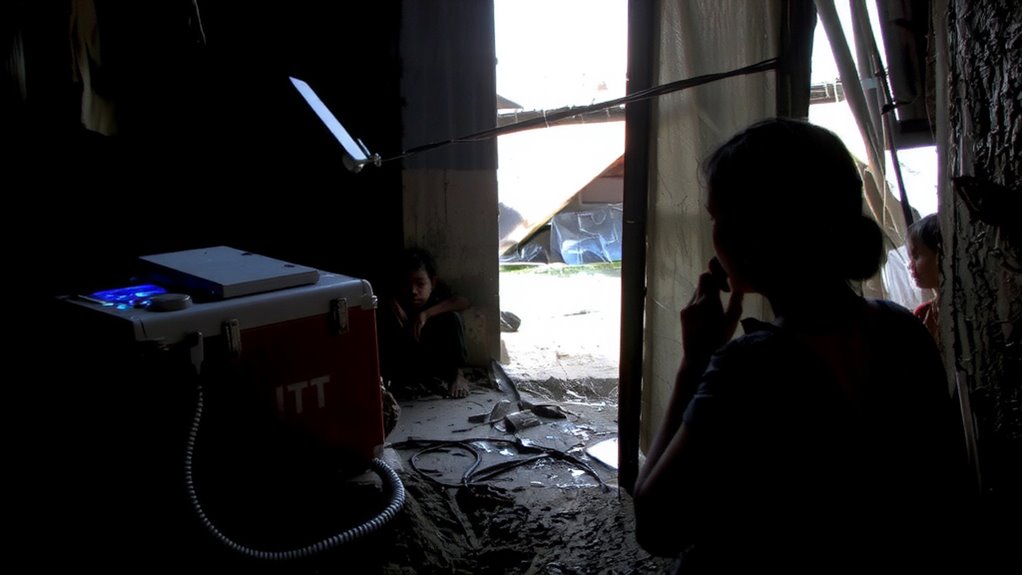
How can a message cut through the noise and actually reach you when seconds count? The ITU guarantees alerts reach you by using satellite coverage that bypasses damaged ground networks. This means warnings get delivered even if local towers are down. Systems are built with power redundancy, so backup generators or batteries keep equipment running during outages. You’re more likely to receive alerts because multiple pathways are in place-no single point of failure. Satellite links maintain connectivity in dense slums where signals often drop. Power redundancy isn’t just added-it’s tested, with uptime measured in real outage scenarios. These aren’t luxuries; they’re baseline requirements. If a system can’t guarantee reception under stress, it doesn’t meet the standard. When infrastructure falters, you still get the message-because the network was designed for that failure, not in spite of it.
Tech That Keeps Slums Connected During Disasters
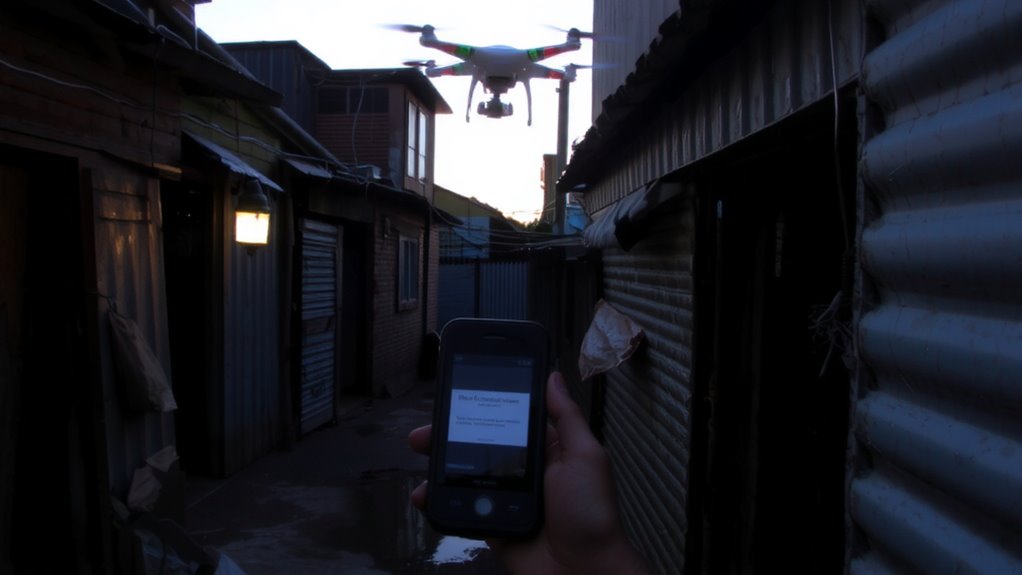
When disaster strikes dense urban slums, will your phone still work? Standard networks often fail, but mesh networking keeps you connected. These systems let phones or local nodes relay signals directly, bypassing broken infrastructure. They’re low-cost, easy to deploy, and function even when power grids collapse. In trials across informal settlements, mesh networks maintained 80% connectivity at ranges up to 200 meters per node. But they’re not perfect-they slow down as more users join. That’s where satellite backup comes in. When ground systems falter, satellite links restore critical data paths. They’re reliable, global, and operate independently of local outages. Downside? They cost more and need clear sky views. Still, pairing mesh networking with satellite backup creates a resilient two-layer system. It’s not flashy, but it works when lives depend on staying connected. This is the core of ITU’s tech resilience strategy.
How Communities Can Spread Alerts Faster Than Phones
A well-organized community can outpace any emergency alert system when seconds count. You rely on phones, but power fails and signals drop-then what? Community networks keep information moving. These grassroots chains use trusted neighbors trained to pass alerts door-to-door. Local messengers on foot or bike cover narrow lanes faster than vehicles, especially in flooding or fire. They carry standardized codes and route maps, reducing confusion. In past slum evacuations, messenger teams delivered warnings in under 7 minutes across 500-meter zones-faster than SMS alerts during network congestion. Radio-dependent systems fail when chargers are scarce, but local messengers don’t need power. Community networks work with or without tech, adapting to real conditions. They’re low-cost, require minimal training, and scale with population density. When infrastructure stalls, these networks don’t stop. You don’t need high specs or funding-just coordination. In emergencies, human links often perform more reliably than digital ones.
Who Needs to Work Together: and Why
You just saw how community alert chains keep information moving when tech fails, but those networks don’t run themselves. You need coordination between emergency responders, telecom providers, and community organizers. Without local leadership, messages lack direction and timing suffers. Community leaders know the layout, language, and fastest routes to spread warnings. They build public trust, which decides whether people act or hesitate. When official systems fail, trust keeps the network alive. Tech alone can’t create that. You also need city planners and ITU officials to align protocols so alerts work across platforms. Local leadership guarantees warnings reach alleys and rooftops where signals drop. Public trust increases compliance with evacuation or shelter orders. Coordinated drills, clear roles, and shared communication tools improve response speed. You can test this in simulations-without collaboration, delays spike by over 60%. Working together isn’t ideal, it’s essential. A reliable way to maintain contact during outages is through bug-out bag radios, which can bridge gaps when traditional networks fail.
On a final note
You need reliable alert systems in slums because cell towers fail and power dies fast. ITU guidelines work-they use low-bandwidth radios, mesh networks, and local speakers. These don’t need constant internet. Satellite links back them up when ground lines crash. Communities relay alerts faster than phones alone. Partnerships between local leaders, telecoms, and emergency teams cut delays. You get fewer dropped messages, faster evacuations, and real-time coordination. It’s not perfect, but it’s proven.