Scheduling Mid-Spring Expeditions for Oyster Mushrooms on Dead Oak Logs
Pick white or scarlet oak logs cut within six weeks, 3–8 inches wide, with intact bark. Inoculate fast, drill holes 10–12 inches apart, seal plugs with wax. Keep logs shaded, moist, and off the ground. Harvest first flush 5–7 days after pinning, when caps are firm and 2–4 inches wide. Avoid red oak or sun-cracked logs-they slow growth. Mid-spring rains and rising humidity boost yield. Watch for pests; re-inoculate only after sterilizing. You’ll get cleaner flushes with these steps-and see how timing shapes success.
Notable Insights
- Inoculate oak logs within one week of cutting to ensure successful mycelial colonization before mid-spring conditions.
- Use white or scarlet oak logs 3–8 inches in diameter with intact bark for optimal oyster mushroom growth.
- Position logs off the ground in dappled shade or under 70% shade cloth to maintain ideal moisture and airflow.
- Monitor logs daily after inoculation, adjusting misting or soaking to maintain moisture during spring temperature shifts.
- Harvest first oyster flush 5–7 days after pinning, cutting at the base before caps release spores.
Choose the Best Dead Oak Logs for Oyster Mushrooms
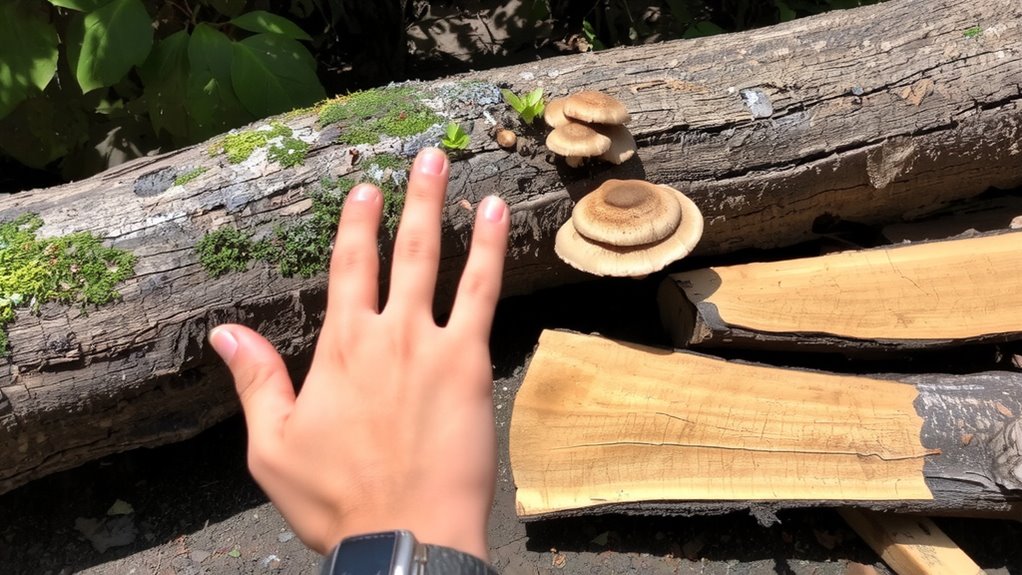
When hunting for logs, dead oak is your best bet-specifically white or scarlet oak-because they strike a balance between hardness and nutrient availability that oyster mushrooms prefer. You’ll want logs cut within the last six weeks, ideally 3–8 inches in diameter and 3–4 feet long. Freshness matters-bark should be intact, with minimal cracks or signs of decay. During log inspection, look for firm texture and absence of competing fungi; soft spots or mold indicate poor fungal compatibility. Avoid wet or overly sun-cracked wood, as both reduce colonization success. Hardwoods like red oak work, but they’re denser and slow to colonize. White and scarlet oak decay at a rate that matches oyster mushroom growth, giving you reliable fruiting in 6–12 months. Store logs off the ground and shaded until inoculation. Proper selection now reduces contamination risk and boosts yield later-no shortcuts pay off here.
Inoculate Logs With Oyster Mushroom Spawn
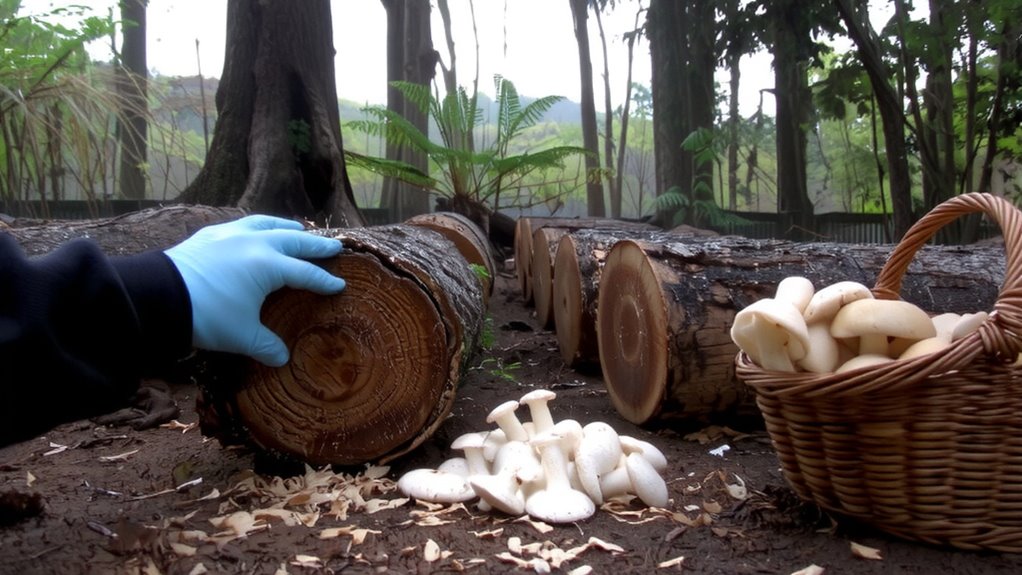
You’ll need to act fast after sourcing your logs-ideally inoculating within a week of cutting-to give the spawn the upper hand. Delaying increases contamination risk. Use spawn insertion methods that guarantee direct contact between mycelium and fresh wood. Drill holes 10–12 inches apart in staggered rows, about 1.25 inches deep. Plug with sawdust spawn and immediately follow with log sealing to retain moisture and block competitors. Wax works better than tape for sealing-longer-lasting and more reliable under mid-spring humidity shifts.
| Method | Effectiveness (1–5) |
|---|---|
| Drill + plugs | 5 |
| Inoculation | 4 |
| Wax sealing | 5 |
| Tape sealing | 3 |
Spawn insertion depth and log sealing integrity directly affect colonization speed. Skip steps, and you’ll lose viability.
Keep Logs Moist and Shaded After Inoculation
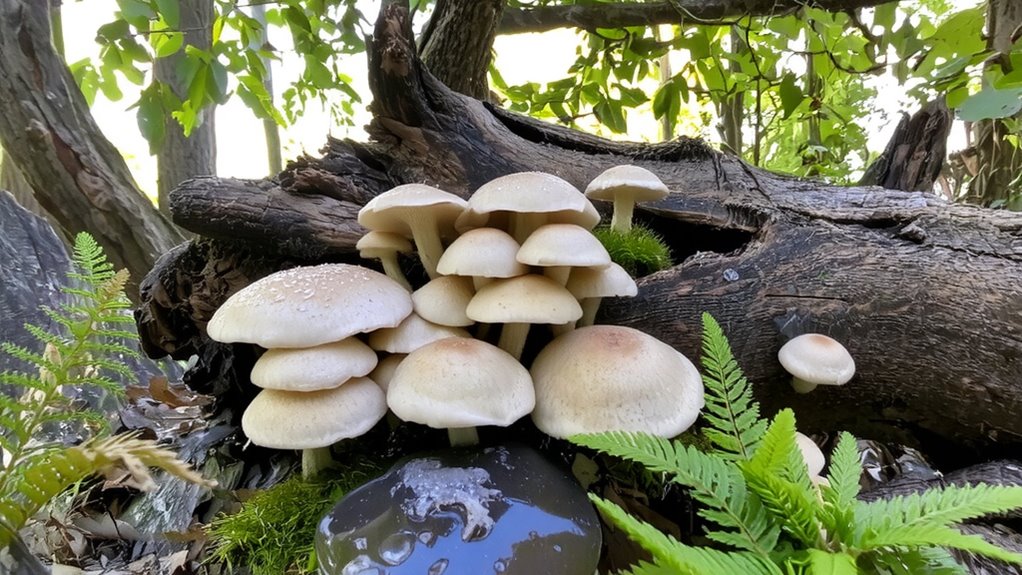
Though keeping inoculated logs moist and shaded seems basic, skipping even short steps risks total failure during mid-spring’s fluctuating conditions. You need consistent moisture-without it, spawn won’t colonize. Water frequency matters: mist or soak logs every 2–3 days if rainfall is under 1 inch per week, especially during dry spells. Overwatering won’t help and may encourage contaminants, so let logs breathe between wettings. Shade positioning is just as critical. Place logs under dappled tree cover or use shade cloths (70%) to block direct midday sun while allowing airflow. Full sun dries logs fast, halting mycelial growth. Too much shade with poor air movement promotes mold. Orient logs north-south to balance sun exposure. Elevate them on racks or pallets to prevent waterlogging and reduce pest contact. Monitor daily for moisture retention and adjust water frequency or shade positioning as needed-small fixes now prevent bigger losses later.
When to Harvest Your First Oyster Flush
How do you know when it’s time to cut your first oyster mushrooms? Look for firm, convex caps that haven’t yet flattened or turned upward. That’s your window-typically 5 to 7 days after visible pinning. Harvest before spore maturation begins, indicated by a grayish tint under the cap; once spores drop, texture degrades and flavor diminishes. Fruiting triggers like spring rains and rising humidity jumpstart this phase, so monitor logs closely after wet periods. Delaying harvest risks toughness and invites contamination. Cut flush at the base with a clean knife-no twisting. Each cluster should snap off cleanly, minimizing damage to the log for future flushes. You’ll get one prime harvest per flush, maybe two if you’re prompt. Don’t wait for bigger caps-optimal size is 2 to 4 inches. Past that, quality drops fast. Timing beats size every time.
Fix Failed Colonization and Pest Problems
A clean harvest sets the stage for healthy regrowth, but even well-timed cuts won’t fix underlying issues if the mycel kuk never took hold or pests moved in. Failed colonization often stems from poor log sterilization-skip this, and competitors win. If your oak logs show little white mycelium after four weeks, assume contamination. Re-inoculate only after solarizing logs or using steam sterilization to reset the substrate. Pest barriers are non-negotiable: wrap log ends in breathable mesh or wax to block insects without suffocating growth. Check logs weekly; if you spot beetle larvae or mites, remove affected zones immediately. Physical barriers outperform chemical sprays, which can harm mycelium. Even strong spawn strains fail without clean logs and basic pest barriers. Your success hinges on preparation, not luck. Stick to proven methods-sterilization and passive defenses-for reliable, repeatable runs.
Why Mid-Spring Is Best for Oyster Mushroom Logs
Why is mid-spring the sweet spot for starting oyster mushroom logs? Because temperatures are stable, usually between 55–75°F, which mycelium needs to colonize efficiently. You’ll find ambient humidity naturally higher this time of year, reducing drying risks and cutting down on manual misting. Rainfall patterns support consistent moisture without waterlogging. Soil composition under oak logs also begins to stabilize-microbial activity increases without overwhelming the logs. This balance helps prevent contamination while supporting strong mycelial growth. Starting too early risks frost damage; too late exposes logs to summer heat, which stresses the spawn. Mid-spring gives you the best window for reliable colonization with minimal intervention. You’re working with nature’s timing, not against it. Logs inoculated now typically fruit well the following season. It’s not magic-just timing, moisture, and substrate alignment.
On a final note
You’ll get the best results by starting oyster mushroom logs in mid-spring, when temps stay between 60–75°F. Logs from freshly cut oak colonize faster and yield more. Keep them shaded and wet-dry logs fail. If spawn doesn’t take, re-inoculate or switch to a cooler spot. Pests like mites mean poor hygiene or excess moisture. First flush usually comes in 6–12 months. After that, expect two crops yearly for 3–5 years.