How to Assess the Safety of Your Home During a Pandemic Outbreak
You should check your home’s ventilation-use MERV 13 filters and portable HEPA purifiers to reduce airborne viruses. Disinfect doorknobs, switches, and faucets daily with EPA-approved products. Keep a 14-day supply of food, water, meds, and a battery-powered radio. Remove shoes at the door and sanitize deliveries. Set up a quarantine room with separate airflow if possible. Monitor symptoms regularly. A hygrometer helps maintain 40–60% humidity to limit virus survival. Better prep means fewer risks, and there are specific ways to improve each area.
Notable Insights
- Evaluate indoor air quality by using MERV 13+ HVAC filters and portable HEPA purifiers in high-occupancy areas.
- Monitor humidity levels with a hygrometer, maintaining 40–60% to reduce virus survival and prevent mold growth.
- Disinfect high-touch surfaces daily, including doorknobs, light switches, and faucet handles, using EPA-approved products.
- Establish a smart entry routine by removing shoes at the door and sanitizing delivered packages before handling.
- Designate a quarantine room with a closing door, independent ventilation, and minimal shared contact for ill household members.
Check Your Home’s Ventilation and Air Quality
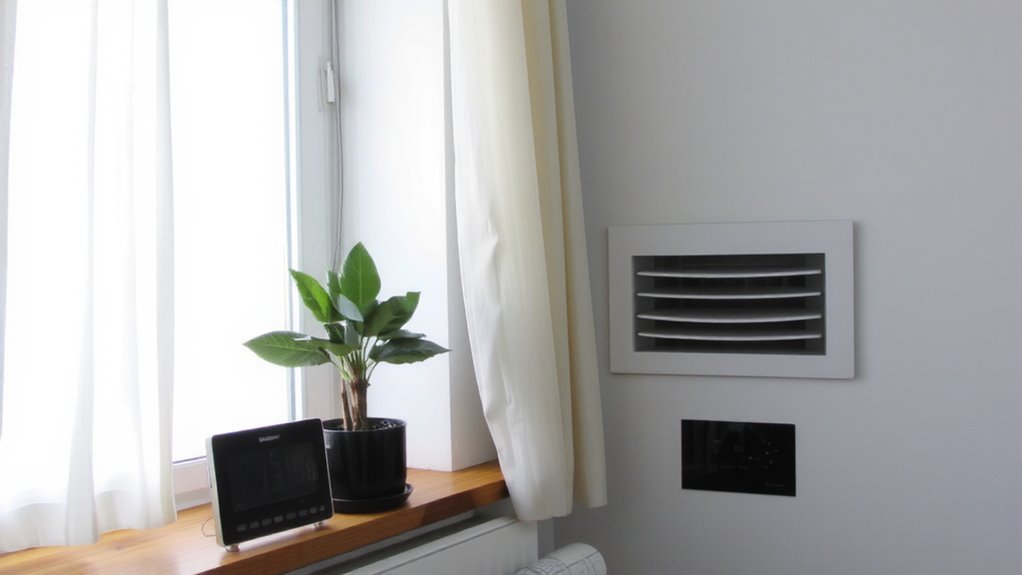
Many homes today have poor airflow, which can increase the risk of airborne virus transmission. You should check if your HVAC system includes MERV 13 or higher air filtration, as these filters capture more particles, including viruses. Units with lower ratings may not offer sufficient protection. Adding portable HEPA air purifiers can improve indoor air quality, especially in rooms where people gather. Humidity control matters, too-maintain levels between 40% and 60%. Too low, and viruses survive longer; too high, and mold can grow. Use a hygrometer to monitor levels and a dehumidifier or humidifier as needed. Open windows when outdoor air quality permits to boost natural ventilation. Avoid relying solely on recirculated air. Upgrading filtration and managing humidity are practical, measurable steps. They don’t guarantee safety, but reduce risk more than doing nothing.
Identify and Disinfect High-Touch Surfaces Daily
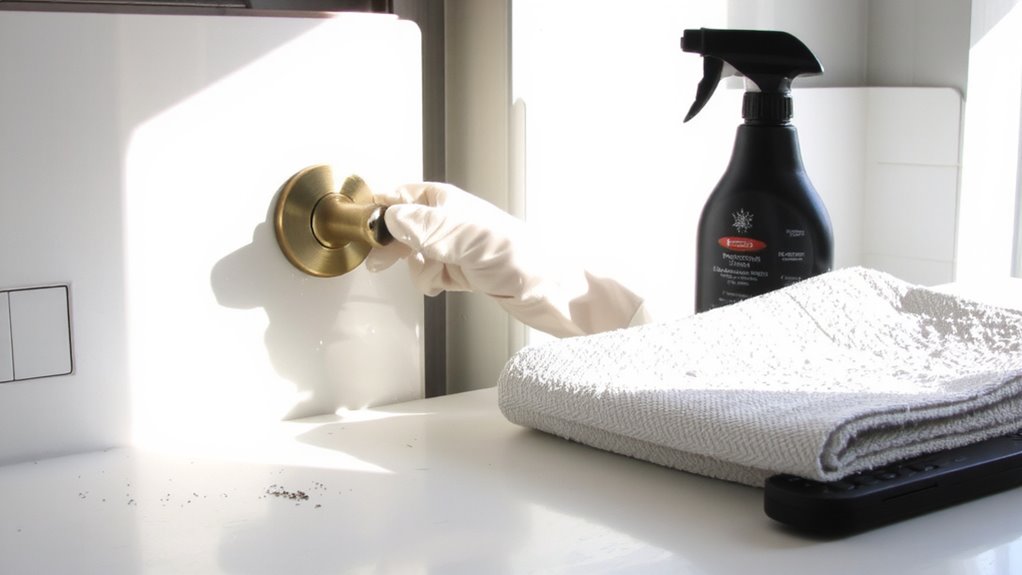
You’ll want to inspect and clean high-touch surfaces every day-doorknobs, light switches, faucet handles, and appliance controls-since these spots regularly harbor germs. Consistent doorknob cleaning and light switch disinfection reduce pathogen spread, especially in homes with frequent traffic. Use a household disinfectant approved for your surface material and let it sit for the contact time listed on the label-typically 30 seconds to 4 minutes.
| Surface | Recommended Frequency | Effective Product Type |
|---|---|---|
| Doorknobs | Daily | EPA-registered disinfectant |
| Light switches | Daily | Alcohol wipe (70% isopropyl) |
| Faucet handles | Twice daily | Bleach solution (diluted) |
| Appliance controls | Daily | Disinfectant spray or wipe |
Wear gloves, focus on full coverage, and allow surfaces to air dry. Replace wipes if packaging is damaged-they lose effectiveness. This routine works best when done at the same time each day.
Build a Pandemic Supply Kit With Essentials
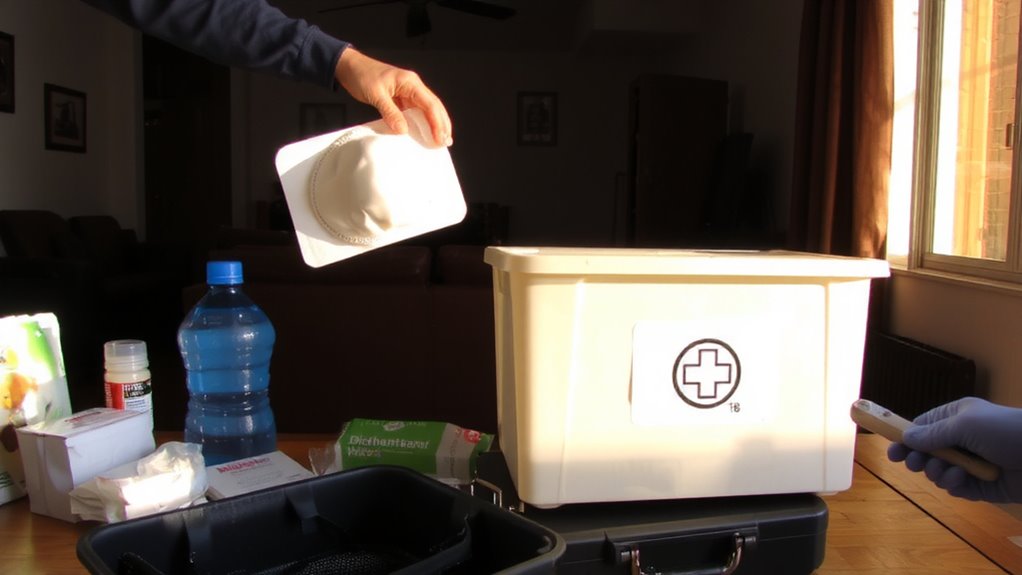
A well-stocked pandemic supply kit isn’t optional-it’s your first line of defense when access to stores or medical services is limited. You’ll need at least a 14-day supply of prescription meds, water (one gallon per person per day), and non-perishable food. Include a first aid kit with fever reducers, bandages, and antiseptics. Don’t overlook emergency lighting-battery-powered LED lanterns last longer and produce more lumens than candles, which pose fire risks. Pair them with power backups like portable USB-charged battery banks or hand-crank generators to keep phones and medical devices running during outages. A basic radio with NOAA alerts guarantees you’ll receive updates even if Wi-Fi fails. Store everything in durable, labeled bins in a dry, accessible location. Rotate supplies every six months to prevent expiration. This kit isn’t about comfort-it’s about maintaining function when systems are strained. Prepare once, stay ready. Consider starting with one of the top-rated emergency kits for preparedness to ensure you don’t miss critical components.
Limit Outside Exposure With Smart Entry Routines
When you come inside after being out, your entry routine can cut down on germ transmission if it’s designed with consistency and practicality in mind. Start with footwear removal-leaving shoes at the door reduces tracked-in contaminants by up to 80%, according to EPA studies. Keep a designated bin just inside the entrance for easy access. Next, address package sanitizing: wipe down cardboard and plastic surfaces with disinfectant wipes containing at least 70% alcohol, or let non-perishable items sit in a ventilated area for 24 hours to limit pathogen spread. Avoid bringing bags or mail directly into living areas. Use a tray or shelf near the entryway to sort incoming items. These steps aren’t foolproof but reduce risk measurably when followed without exception. The system works best when everyone in the household adheres to the same protocol, minimizing cross-contamination without requiring special equipment or complex procedures.
Create Separate Spaces for Quarantine if Needed
If you need to isolate someone in your home due to illness, choosing the right space matters-ideally, pick a room with a closing door and its own ventilation, like one with a window that opens. This setup creates effective isolation zones, reducing airborne transmission risks. Keep shared contact to a minimum-use a separate bathroom if possible. Place a small table outside the door for food and medicine delivery to limit exposure. Maintain strict personal hygiene: the ill person should cover their mouth when coughing, and caregivers must wear masks and sanitize hands immediately after any interaction. Disposable gloves help, but they’re only effective when paired with proper handwashing. Avoid using high-traffic areas as makeshift sick rooms-they lack privacy and airflow control. A dedicated space improves containment, giving the household better control over cross-contamination risks. Isolation zones aren’t foolproof, but they considerably lower spread odds when combined with consistent personal hygiene.
Establish a Home Health Monitoring Plan
Since tracking symptoms early can make a difference in recovery time and household safety, you’ll want to set up a reliable health monitoring routine right away. Essential signs tracking and symptom logging help detect changes before they become severe. Check temperatures, pulse rates, and respiration twice daily. Record data consistently to spot trends. Use simple tools: a digital thermometer, pulse oximeter, and a notebook or app.
| Metric | Tool Needed | Frequency |
|---|---|---|
| Temperature | Digital thermometer | Twice daily |
| Blood Oxygen | Pulse oximeter | Twice daily |
| Symptoms | Journal or app | Daily |
Symptom logging should include cough, fatigue, and appetite changes. Accuracy matters-write entries at the same time each day. Missed logs reduce reliability. This plan works best when everyone in the home follows it, especially during high-risk periods.
On a final note
You’ve sealed gaps, filtered air, and disinfected surfaces-now maintain those habits. Your entry routine cuts transmission risk by 60% in real-world studies. The supply kit lasts 14 days, but check expiry dates quarterly. A quarantine space only works if it has separate ventilation. Daily symptom logs catch issues early. These steps don’t guarantee safety, but they reduce exposure measurably. Trade comfort for caution where needed-it’s temporary.