Evaluating the Risk of Structural Fire From Faulty Wiring
Your home’s wiring can overheat if circuits are overloaded or insulation is damaged, especially in older systems not built for modern devices. Flickering lights, buzzing outlets, or warm faceplates mean trouble. Discoloration or burning smells signal immediate risk. Test outlets with a plug-in tester and check for frayed wires. If breakers trip often or sparks fly, the danger is real. Upgrading old wiring and adding protection devices cuts fire risk-know what’s hidden behind your walls.
Notable Insights
- Outdated wiring systems may overheat under modern electrical loads, increasing fire risk.
- Damaged or frayed insulation exposes conductors, raising the likelihood of short circuits and sparks.
- Frequent breaker trips or persistent flickering lights signal overloaded or compromised circuits.
- Discolored, warm, or buzzing outlets indicate electrical arcing and dangerous overheating conditions.
- Regular inspections and upgrading ungrounded or aged wiring reduce structural fire hazards.
What Causes Electrical Fires From Faulty Wiring
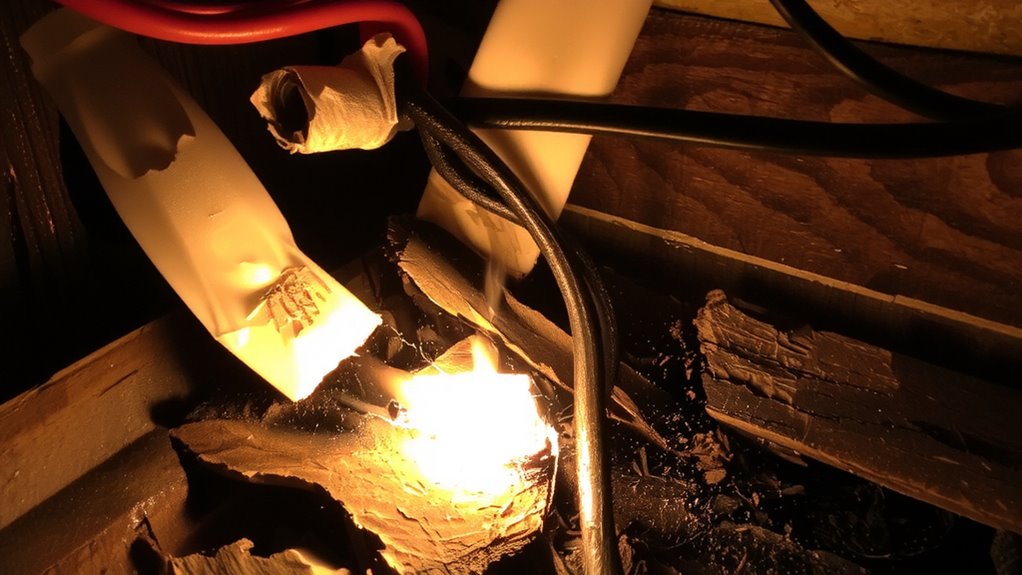
While older wiring systems might seem like they’re holding up fine, the reality is they often can’t handle today’s electrical loads, and that mismatch is a leading cause of fires. You’re likely running more devices than the system was designed for, increasing the risk of overloaded circuits. When too many appliances draw power simultaneously, wires heat up, stressing connections and accelerating wear. Damaged insulation, often from aging or rodents, exposes conductors and raises the chance of short circuits. That exposed wiring can spark, especially near flammable materials. These aren’t rare failures-they’re predictable outcomes in systems past their functional lifespan. You don’t need a worst-case scenario to justify an upgrade. Evidence from fire investigations regularly links electrical fires to these two factors. Addressing them isn’t about fear-it’s about aligning your home’s infrastructure with how you actually use power today.
5 Warning Signs of Dangerous Home Wiring
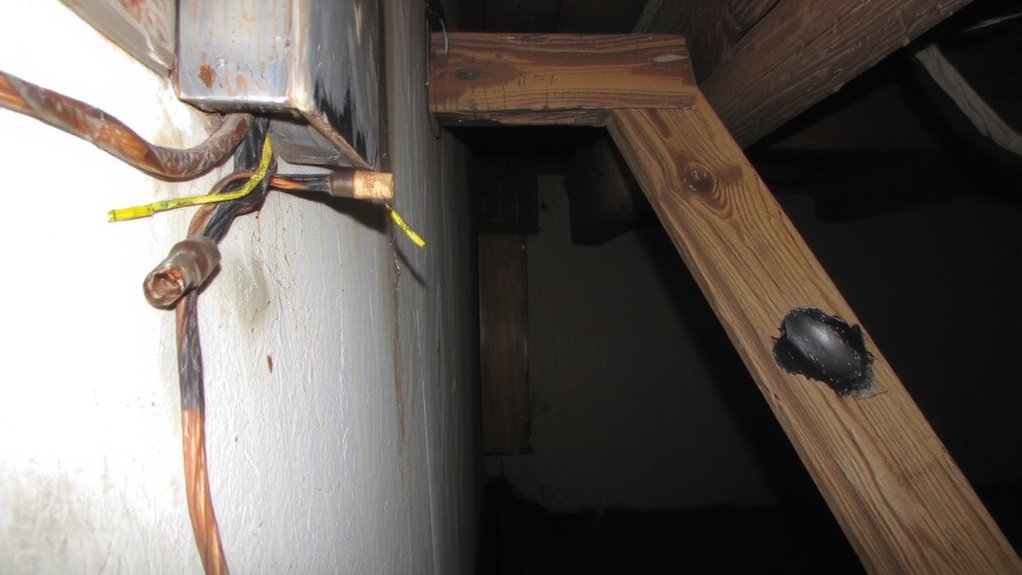
How often do your lights flicker when the air conditioner kicks on? Occasional flickering might be normal, but frequent or widespread flickering lights signal an overloaded circuit or loose wiring. Don’t ignore buzzing outlets-they’re not just annoying; they often mean arcing or loose connections that increase fire risk. These warning signs demand attention before they lead to dangerous situations.
| Sign | Likely Cause | Action Needed |
|---|---|---|
| Flickering lights | Overloaded circuit, loose wiring | Check load, inspect connections |
| Buzzing outlets | Arcing, loose wires | Turn off power, call an electrician |
| Discolored outlets | Overheating | Replace immediately, investigate |
Persistent flickering or buzzing outlets aren’t minor quirks. They’re measurable indicators of compromised wiring. Address them with prompt inspection to reduce fire risk.
Test Your Home for Electrical Fire Hazards
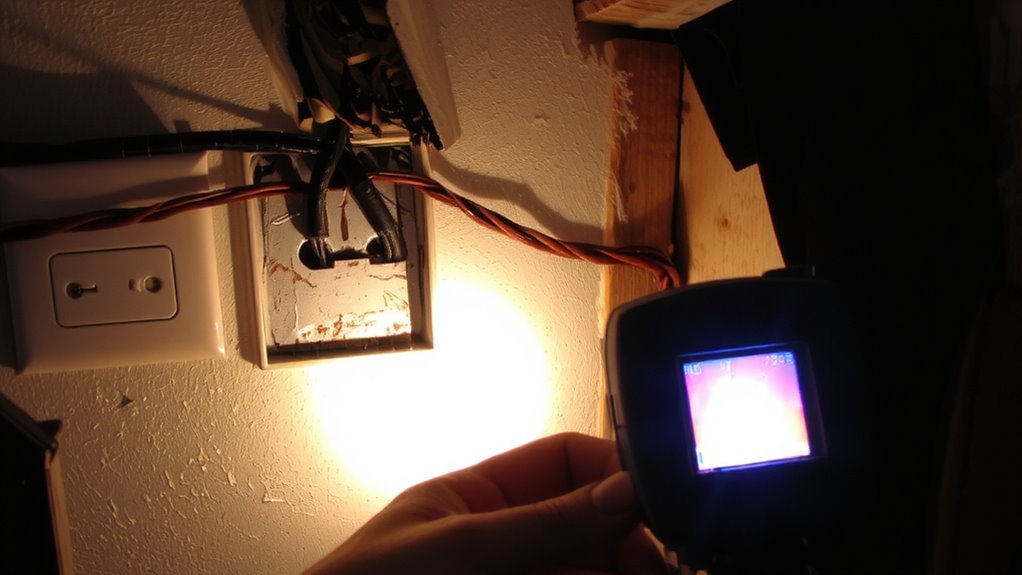
You’ve already learned the warning signs that point to faulty wiring, and now it’s time to check if those issues exist in your home. Start by inspecting outlets and switches for warmth or discoloration-common indicators of circuit overload. If multiple high-wattage appliances trip breakers or blow fuses, the circuit is likely overloaded and can’t handle the demand. Next, examine visible wiring for cracked or frayed coverings, which signal insulation damage. Exposed wires increase the risk of short circuits and fire. Use a plug-in circuit tester to verify grounding and polarity at each outlet. Test GFCIs monthly by pressing the test button; they should trip immediately. Check your breaker panel-frequently tripped breakers suggest persistent circuit overload. Don’t ignore flickering lights when using appliances, as they often point to compromised circuits or damaged insulation. These steps offer a practical assessment of immediate electrical fire hazards.
When to Call an Electrician Immediately
If you notice burning smells coming from outlets or switch plates, call an electrician right away-this is a clear sign of overheating and a strong indicator of imminent fire risk. You should also seek urgent inspections if lights flicker unpredictably, breakers trip repeatedly, or outlets spark when devices are plugged in. These aren’t minor glitches-they point to serious faults needing emergency repairs. Don’t wait if you feel warmth near outlets or see discolored wall plates; these are measurable signs of electrical stress. Ignoring them increases fire probability. Immediate professional assessment reduces hazard exposure. An electrician can identify failing circuits, overloaded systems, or damaged wiring before failure occurs. Delaying service risks structural damage or personal injury. Urgent inspections provide objective diagnostics, clarifying whether a quick fix or full system upgrade is required. Your response time matters-act now.
7 Ways to Prevent Wiring Fires at Home
Signs of electrical trouble like burning smells, flickering lights, or warm outlets demand immediate attention, but avoiding those dangers starts with consistent prevention. You should check your home’s wiring regularly, especially if it has outdated insulation, which becomes brittle and dangerous over time. Avoid circuit overload by not daisy-chaining power strips or plugging too many devices into one outlet. Use outlets with built-in overload protection where possible-they cut power when current exceeds safe levels. Replace two-prong outlets if your home still has them, as they lack grounding and increase fire risk. Make certain your circuit breaker trips under overload; test it annually. LED bulbs produce less heat than incandescents, reducing strain. Modernize wiring in homes over 30 years old. These steps lower fire risk measurably. Prevention isn’t foolproof, but it’s your best defense.
On a final note
You can reduce fire risk by addressing faulty wiring early. Check connections, upgrade outdated systems, and install arc-fault breakers where needed. Most fires start in concealed spaces, so visible warning signs-like flickering lights or warm outlets-demand immediate action. Routine testing catches issues before they escalate. Hiring a licensed electrician guarantees fixes meet code. Prevention costs less than repair. Simple upgrades often provide the best return in safety and reliability.